

Excellence: How To Pursue An Excellent Spirit Order Printed Copy
- Author: Andrew Wommack
- Size: 463KB | 44 pages
- |
Others like excellence: how to pursue an excellent spirit Features >>

Excellence In Leadership

Excellence In Attitude

How To Live An Extraordinary Life

The Jelly Effect: How To Make Your Communication Stick
-160.webp)
Better Decisions, Fewer Regrets (5 Questions To Help You Determine Your Next Move)

Emotional Intelligence

Think And Make Impact

The Search For Significance

The Leader Who Had No Title

Consecrated Business
About the Book
"Excellence: How to Pursue an Excellent Spirit" by Andrew Wommack is a guide to understanding and achieving excellence in every area of life. Wommack emphasizes the importance of having a positive mindset, setting high standards, and consistently striving for improvement. He offers practical advice on how to develop discipline, focus, and perseverance in order to achieve excellence in all aspects of life. Overall, the book encourages readers to pursue excellence with a spirit of determination and commitment.
Kathryn Kuhlman
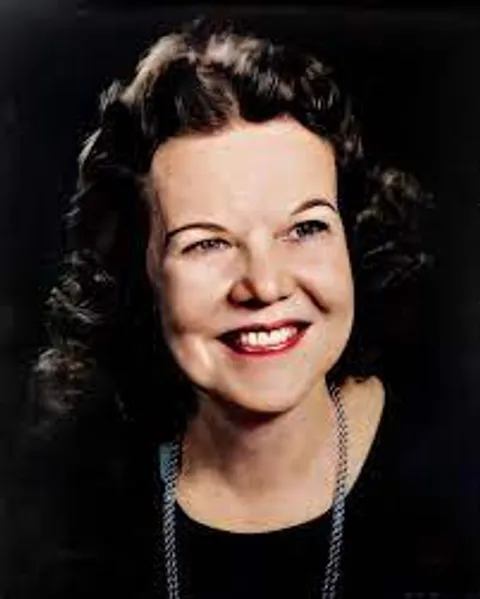 Kathryn Johanna Kuhlman was born on May 9, 1907, in Concordia, Missouri. Her parents were German and she was one of four children. Her mother was a harsh disciplinarian, who showed little love or affection. On the other hand, she had an extremely close and loving relationship with her father. She would describe, as a small child how, her father would come home from work and she would hang on his leg and cling to him. She often said that her relationship with God the Father was extremely real because of her relationship with her own father.
Kuhlman was converted, when she was 14, at an evangelistic meeting held in a small Methodist church. When she was 16 she graduated from high school, which only went to tenth grade in their town. He older sister Myrtle had married an itinerant evangelist, Everett B. Parrott. They spent their time traveling and asked that Kathryn could join them for the summer. Her parents agreed and she went to Oregon to help out. She worked with them, and often gave her testimony. When the summer was over she wanted to stay, and the couple agreed. She ended up working with them for five years.
The evangelistic team was made up of four people, Everette, Myrtle, Kathryn, and pianists named Helen Gulliford. In 1928 Everette missed a meeting in Boise, Idaho. Myrtle and Kathryn preached to cover for Everette. The pastor of the church encouraged Kathryn to step out on her own. Helen agreed to join her. Her first sermon was in a run-down pool hall in Boise, Idaho. The team covered Idaho, Utah, and Colorado for the following five years. In 1933 they moved into Pueblo, Colorado. They set up in an abandoned Montgomery Ward warehouse. They stayed there for six months.
Denver, being a much bigger city, was the next stop. They moved several times but ended up in a paper company's warehouse, which they named the Kuhlman Revival Tabernacle. Then in 1935 they moved once more to an abandoned truck garage they named the Denver Revival Tabernacle. Kathryn was seeing a lot of success in Denver. The church grew to about 2000 members. She began a radio show called "Smiling Through" and invited speakers from all over the country. One of them was Phil Kerr who taught on divine healing. In 1935 another invited evangelist was Burroughs Waltrip.
Waltrip was bad news for Kuhlman. He was a charismatic, handsome man several years older than she was. There was an immediate attraction, and one family claims to have seen the couple embracing in 1935, but he was married and had two children. Waltrip left Denver and went home to Austin, Texas, but the relationship simmered between Kuhlman and Waltrip. In 1937 he was invited back to Denver to take the pulpit for two months. Shortly after he divorced his wife and abandoned his two sons. He then spread the story that his wife had left him. He moved to Mason City, Iowa, where he told everyone he was single, and started a new ministry. Waltrip raised pledges of $70,000 to build a ministry building called Radio Chapel. It was state of the art with a disappearing pulpit and an art deco style. He appeared to be a successful and dynamic preacher.
There was an ongoing relationship between Kuhlman and Waltrip, and they married in September 1938. Kuhlman was naive about the consequences of her choices and the marriage was a disaster. She announced to her church that she and Waltrip were married and they would go between Denver and Mason City preaching at their two churches. Most of the people in her congregation left due to her relationship with Waltrip. She gave up her church in Denver, lost some of her closest associates, and moved to Mason City. Waltrip's success turned out to be a pipe dream as well. The Radio Chapel was completed in June of 1938. By October 1938 Waltrip could not meet his debts. In December Waltrip was demanding a higher salary, even with the shortfall in income. His Board of Directors quit and left him to deal with the finances. His solution was not to pay the mortgage or debts on the Chapel. Radio Chapel went into bankruptcy. Waltrip's last sermon was in May 1939. The Waltrips were on their own. Kathryn's happy vision of she and her husband flying back and forth between Denver and Mason City with a successful preaching careers was utterly demolished.
The next few years were very hard for the couple. They embarked on the road as traveling evangelists, primarily staying in the Midwest. They were not accepted in many places due to their marriage history. Initial advertisements listed Waltrip as the primary evangelist. Then occasionally Mrs. Waltrip was also mentioned. By the early 1940s Kathryn Kuhlman Waltrip was given equal billing. Finally by the mid-1940s Kathryn was using only Kathryn Kuhlman in meetings where she was the primary speaker. In 1944 Kuhlman went on an evangelistic tour on the east coast without Waltrip. It may have been a conscious decision to leave him, or she may also have taken the opportunity to reassess her life. It appears to have been more gradual as Waltrip wrote about them as a couple as late as 1946. Kuhlman never returned to Waltrip and they eventually divorced in 1947. She left her marriage behind and from then on acted as if it never existed in the first place.
In 1946 Kuhlman was asked to speak in Franklin, Pennsylvania. She was well received and decided to stay in the area. Kuhlman began preaching on radio broadcasts in Oil City, Pennsylvania. These became so popular they were picked up in Pittsburgh, and she was preaching throughout the area. She began to preach about the healing power of God. In 1947 a woman was healed of a tumor while listening to Kuhlman preach. Several Sundays later a man was also healed while she was teaching on the Holy Spirit. She was now convinced of God's healing work. One important thing to note is the context and timing of this breakout period in Kuhlman's life. 1947 was the beginning of the Healing Revival (sometimes referred to as the Latter Rain Revival) that would last for the next 10 years. What was happening in Kuhlman's meetings was breaking out across the United States. It was in this time frame that the Voice of Healing Ministry was established and men like William Branham, Oral Roberts, A.A. Allen and many others were propelled onto the public stage. Kuhlman was not associated with those groups, but stepped into the flow of what God's Spirit was doing across the nation and the world.
In 1948 Kuhlman held a series of meetings at Carnegie Hall in Pittsburgh. She eventually moved to Pittsburgh in 1950, and continued to hold meetings at Carnegie Hall until 1971. She was used by God to bring the charismatic message to many denominational churches, including the Catholic Church. (She received a lot of criticism over this and was accused of being a closet Catholic.) These were her best known years. Her style was flamboyant. She would hold her famous miracle services and the auditorium was filled to capacity every time. She was on radio and television shows. She was ordained in 1968 by the Evangelical Church Alliance. Hundreds of people were healed in her meetings, and even while listening to her on the radio or television. People she prayed for would often be hit with the power of God and be "slain in the Spirit." Kuhlman never claimed that she was the healer. She always pointed people to Jesus as their healer.
Kuhlman had been diagnosed with a heart problem in 1955. She kept a very busy schedule and overworked herself, especially in the 1970's. She traveled back and forth from Pittsburgh to Los Angeles frequently, as well as taking trips around the world. Her heart was enlarged and Kuhlman died on February 20, 1976, in Tulsa, following open-heart surgery. Videos of some of her services are still available and continue to be popular today.
Kathryn Johanna Kuhlman was born on May 9, 1907, in Concordia, Missouri. Her parents were German and she was one of four children. Her mother was a harsh disciplinarian, who showed little love or affection. On the other hand, she had an extremely close and loving relationship with her father. She would describe, as a small child how, her father would come home from work and she would hang on his leg and cling to him. She often said that her relationship with God the Father was extremely real because of her relationship with her own father.
Kuhlman was converted, when she was 14, at an evangelistic meeting held in a small Methodist church. When she was 16 she graduated from high school, which only went to tenth grade in their town. He older sister Myrtle had married an itinerant evangelist, Everett B. Parrott. They spent their time traveling and asked that Kathryn could join them for the summer. Her parents agreed and she went to Oregon to help out. She worked with them, and often gave her testimony. When the summer was over she wanted to stay, and the couple agreed. She ended up working with them for five years.
The evangelistic team was made up of four people, Everette, Myrtle, Kathryn, and pianists named Helen Gulliford. In 1928 Everette missed a meeting in Boise, Idaho. Myrtle and Kathryn preached to cover for Everette. The pastor of the church encouraged Kathryn to step out on her own. Helen agreed to join her. Her first sermon was in a run-down pool hall in Boise, Idaho. The team covered Idaho, Utah, and Colorado for the following five years. In 1933 they moved into Pueblo, Colorado. They set up in an abandoned Montgomery Ward warehouse. They stayed there for six months.
Denver, being a much bigger city, was the next stop. They moved several times but ended up in a paper company's warehouse, which they named the Kuhlman Revival Tabernacle. Then in 1935 they moved once more to an abandoned truck garage they named the Denver Revival Tabernacle. Kathryn was seeing a lot of success in Denver. The church grew to about 2000 members. She began a radio show called "Smiling Through" and invited speakers from all over the country. One of them was Phil Kerr who taught on divine healing. In 1935 another invited evangelist was Burroughs Waltrip.
Waltrip was bad news for Kuhlman. He was a charismatic, handsome man several years older than she was. There was an immediate attraction, and one family claims to have seen the couple embracing in 1935, but he was married and had two children. Waltrip left Denver and went home to Austin, Texas, but the relationship simmered between Kuhlman and Waltrip. In 1937 he was invited back to Denver to take the pulpit for two months. Shortly after he divorced his wife and abandoned his two sons. He then spread the story that his wife had left him. He moved to Mason City, Iowa, where he told everyone he was single, and started a new ministry. Waltrip raised pledges of $70,000 to build a ministry building called Radio Chapel. It was state of the art with a disappearing pulpit and an art deco style. He appeared to be a successful and dynamic preacher.
There was an ongoing relationship between Kuhlman and Waltrip, and they married in September 1938. Kuhlman was naive about the consequences of her choices and the marriage was a disaster. She announced to her church that she and Waltrip were married and they would go between Denver and Mason City preaching at their two churches. Most of the people in her congregation left due to her relationship with Waltrip. She gave up her church in Denver, lost some of her closest associates, and moved to Mason City. Waltrip's success turned out to be a pipe dream as well. The Radio Chapel was completed in June of 1938. By October 1938 Waltrip could not meet his debts. In December Waltrip was demanding a higher salary, even with the shortfall in income. His Board of Directors quit and left him to deal with the finances. His solution was not to pay the mortgage or debts on the Chapel. Radio Chapel went into bankruptcy. Waltrip's last sermon was in May 1939. The Waltrips were on their own. Kathryn's happy vision of she and her husband flying back and forth between Denver and Mason City with a successful preaching careers was utterly demolished.
The next few years were very hard for the couple. They embarked on the road as traveling evangelists, primarily staying in the Midwest. They were not accepted in many places due to their marriage history. Initial advertisements listed Waltrip as the primary evangelist. Then occasionally Mrs. Waltrip was also mentioned. By the early 1940s Kathryn Kuhlman Waltrip was given equal billing. Finally by the mid-1940s Kathryn was using only Kathryn Kuhlman in meetings where she was the primary speaker. In 1944 Kuhlman went on an evangelistic tour on the east coast without Waltrip. It may have been a conscious decision to leave him, or she may also have taken the opportunity to reassess her life. It appears to have been more gradual as Waltrip wrote about them as a couple as late as 1946. Kuhlman never returned to Waltrip and they eventually divorced in 1947. She left her marriage behind and from then on acted as if it never existed in the first place.
In 1946 Kuhlman was asked to speak in Franklin, Pennsylvania. She was well received and decided to stay in the area. Kuhlman began preaching on radio broadcasts in Oil City, Pennsylvania. These became so popular they were picked up in Pittsburgh, and she was preaching throughout the area. She began to preach about the healing power of God. In 1947 a woman was healed of a tumor while listening to Kuhlman preach. Several Sundays later a man was also healed while she was teaching on the Holy Spirit. She was now convinced of God's healing work. One important thing to note is the context and timing of this breakout period in Kuhlman's life. 1947 was the beginning of the Healing Revival (sometimes referred to as the Latter Rain Revival) that would last for the next 10 years. What was happening in Kuhlman's meetings was breaking out across the United States. It was in this time frame that the Voice of Healing Ministry was established and men like William Branham, Oral Roberts, A.A. Allen and many others were propelled onto the public stage. Kuhlman was not associated with those groups, but stepped into the flow of what God's Spirit was doing across the nation and the world.
In 1948 Kuhlman held a series of meetings at Carnegie Hall in Pittsburgh. She eventually moved to Pittsburgh in 1950, and continued to hold meetings at Carnegie Hall until 1971. She was used by God to bring the charismatic message to many denominational churches, including the Catholic Church. (She received a lot of criticism over this and was accused of being a closet Catholic.) These were her best known years. Her style was flamboyant. She would hold her famous miracle services and the auditorium was filled to capacity every time. She was on radio and television shows. She was ordained in 1968 by the Evangelical Church Alliance. Hundreds of people were healed in her meetings, and even while listening to her on the radio or television. People she prayed for would often be hit with the power of God and be "slain in the Spirit." Kuhlman never claimed that she was the healer. She always pointed people to Jesus as their healer.
Kuhlman had been diagnosed with a heart problem in 1955. She kept a very busy schedule and overworked herself, especially in the 1970's. She traveled back and forth from Pittsburgh to Los Angeles frequently, as well as taking trips around the world. Her heart was enlarged and Kuhlman died on February 20, 1976, in Tulsa, following open-heart surgery. Videos of some of her services are still available and continue to be popular today.
the courage you need in life’s uncertainty
“Jump! I’ll catch you!” When my son was young, getting him from the side of the pool into the water was difficult. His eyes darted side to side, quickly losing confidence, as his imagination surmised all the horrors associated with jumping. Only when I could get him to fix his attention on me would he find the confidence to bend his knees and spring off the side of the pool. Like my son, we are regularly confronted with situations that are overwhelming, unknown, or threatening. What does it look like for us to spring with confidence into every situation that the Lord brings into our lives? Four Ways to Walk in Faith Isaiah 7 tells the story of a king in crisis. When the Judean King Ahaz heard that Syria and Israel created an alliance to withstand the advancing Assyrian threat, his heart shook with fear (Isaiah 7:2). Seeking to strengthen their hand against Assyria, the Syro-Ephraimite coalition intended to use military force to depose Ahaz and coerce Judah to join them, as well. Ahaz responded to the imminent threat like a good king. He inspected the city’s water supply. How long can the city withstand a siege? Ahaz had been conditioned to believe that military threats require military responses. Yet, God responds to Ahaz by sending the prophet Isaiah, who relayed four commands from the Lord, each of which recalls other parts of the Old Testament: be careful, be quiet, do not fear, do not let your heart be faint. These four commands echo down the halls of Israel’s collective memory with the intention of reminding Ahaz of the provisions of faith. These commands are helpful for us too as we fight for faith amidst the challenges of our lives. 1. Be Mindful Moses instructed the Israelites before they entered the Promised Land: they will live in houses they did not build, drink wine from vineyards they did not plant, eat until they are full. But, Moses warns them in Deuteronomy 6:12, “take care lest you forget the Lord, who brought you out of the land of Egypt, out of the house of slavery.” At the moment of crisis, God acknowledged that Ahaz’s battle was not just outside the city walls, but also in his mind. It was essential for Ahaz to remember who he was and the history he had with God. In the same way, during times of uncertainty, cultivating memory and identity as those who are in Christ is essential for accessing the resources of faith to respond to present challenges. 2. Be Quiet This is an important theme in Isaiah. In Isaiah 30:15, God says, “In quietness and in trust shall be your strength.” Quietness in Isaiah does not mean the absence of noise, but the absence of agitation. In fact, peace and joyful shouting are themes that merge together in Isaiah 14:7 and 55:12. At the moment of crisis, Ahaz needed to find calm and certain confidence in God — something his water supply could never fully provide. 3. Do Not Fear The phrase recalls God’s providence, promises, and purposes. God uses these words when he appears to Abram, Moses, Joshua, and Elijah. It may seem trite to tell Ahaz not to fear. But the rationale is implicit: God was with him, for him, and had made promises to him. Ahaz, then, needed to respond on the basis of that conviction. Similarly, I need to recalibrate my perspective around God when faced with uncertain circumstances. John Oswalt summarizes, “If we can believe that the transcendent One is really immanent, and the immanent One truly transcendent, then there is reason to live courageously and unselfishly” ( Isaiah, 211). 4. Do Not Faint This is an exact quotation from Deuteronomy 20:3–4, where Moses prepares the Israelites for facing their enemies in battle. The priest was to come to the front of the line of soldiers and say, “let not your heart faint. Do not fear or panic or be in dread of them, for the Lord your God is he who goes with you to fight for you.” At the moment of crisis, with a mind that remembers, a soul free from agitation, and a renewed conviction that God is for me and with me, I can respond with courageous faith. A Picture of Courageous Faith In southwest Rwanda, along the shores of Lake Kivu, is a peninsula, where missionaries from the region have gathered annually since 1942 for spiritual renewal. On the far end of the peninsula is a cliff, into which thrill-seeking missionaries from a previous generation lodged a long, rigid, slab of wood — called “the plank” — thirty feet off the surface of the water. I have approached the plank many times. I stand looking, hearing my children behind me. “Come on, Dad!” “He won’t jump!” I am distracted by local children gathering in canoes to watch. I think about others who have jumped — and hurt themselves. I feel certain that I will fall off the cliff by even getting near the plank! I have never jumped. I have a friend named Jeff, who does not blink at the threats imposed by the plank. He steps onto the plank, walks a few paces, pulls himself up into an overhanging tree, climbs even higher, turns backward, and launches into a backflip as he springs out over the water. This is a picture of how I want to live — not carelessly, but confidently — springing with confidence into every situation that the Lord brings into my life — not simply conditioned to respond according to my own resources, but convinced that the provisions of faith provide all that I need to respond with confidence in any situation.