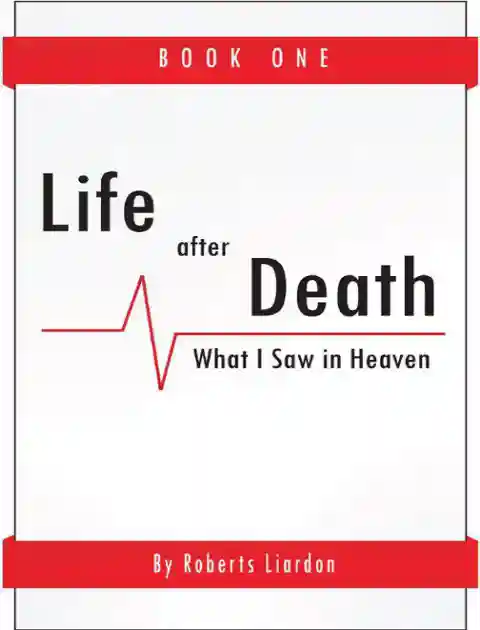

Life After Death - What I Saw In Heaven Order Printed Copy
- Author: Roberts Liardon
- Size: 493KB | 80 pages
- |
Others like life after death - what i saw in heaven Features >>

Engaging The Revelatory Realm Of Heaven: Entrance To Hidden Mysteries

Our Greatest Gift

Earth's Final Moments

The Rapture: What The Bible Says
Divine Revelation Of Gods Holiness And Judgement
23 Minutes In Hell

Rapture, Revelation, And The End Times: Exploring The Left Behind Series
-160.webp)
Proof Of Heaven: A Neurosurgeon's Journey Into The Afterlife

The World's Last Night

The Great Divorce
About the Book
"Life After Death - What I Saw In Heaven" by Roberts Liardon is a personal account of the author's near-death experience and his encounters with heavenly beings. He shares his journey through the afterlife, describing the beauty and peace he found in heaven. Liardon's book aims to provide comfort and inspiration to readers, offering insights into the reality of life after death.
Brother Yun
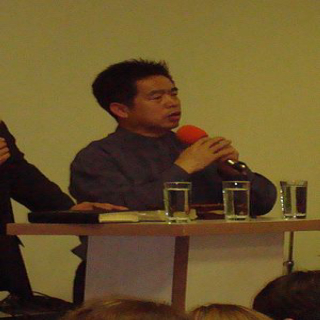 Brother Yun was born in February 1958 in the province of Henan. His original name was Liu Zhenying (刘振营).
Brother Yun became a believer at the age of 16. Soon after he became a Christian, God called him to be His witness in the west and south. As he was obedient to the calling, he eventually became a witness of Christ not just in the western and southern parts of China, but throughout China and in the nations beyond China as well.
Brother Yun was born into a poor family. His family’s financial situation took a turn for the worst when his father became ill with an asthmatic condition that led to lung cancer eventually. His life got worse when he became a Christian as he suffered severe trials and persecutions. In the midst of suffering for the Lord, however, he experienced miracle after miracle, which helped to strengthen his faith.
HOW BROTHER YUN BECAME A BELIEVER
In 1974, Brother Yun’s father became ill with lung cancer. His mother, who had been a Christian for many years but had become spiritually cold after the expulsion of Western missionaries during the Cultural Revolution, felt a deep sense of desperation because if her husband had died then, it would leave the family in dire straits. She thought of committing suicide. One evening, as she was lying in bed, she heard a voice saying to her that Jesus loved her. In tears and in repentance, she rededicated her life to God and gathered her family to pray for her husband. The next morning, her husband got better and as a result, everyone in the family, including Brother Yun, put their faith in God.
HIS HUNGER FOR THE WORD OF GOD
Brother Yun was 16 when he became a Christian. Soon after, he started hungering for the Word of God. However, his family did not have a Bible. He began asking his mother who Jesus was. In response, his mother would tell him that Jesus was the Son of God and that He had recorded all His teachings in the Bible.
Brother Yun wanted a Bible and his mother recalled that there was a man in another village who had one. So she brought him to see the man. The man was too afraid to show Brother Yun his Bible. So he suggested to the latter that he could pray and ask God for one.
Brother Yun decided to fast and pray for a Bible. For the next 100 days, he ate only one bowl of steamed rice everyday. One day at 4am, after fasting for 100 days, he saw a vision. In the vision, he was walking up a steep hill and trying to push a heavy cart at the same time. He was heading towards a village where he intended to beg for food for his family. He struggled greatly as he continued his climb uphill. The cart was about to roll back and fall on him when he saw three men walking down the hill in the opposite direction. One of them was a kind old man and he was pulling a large cart of fresh bread. When the old man saw Brother Yun, he asked him if he was hungry. He said ‘yes’ and started crying. The old man then took a red bag of bread from his cart and asked his two servants to give it to Brother Yun. As he put the bread into his mouth, it immediately turned into a Bible.
Upon waking up, Brother Yun began to search for the Bible. His search, however, was in vain. All of a sudden, he heard a faint knock on the door and someone was calling out his name. Immediately, he recognised the voice – it was the same voice he had heard in the vision. He quickly opened the door and standing before him were the two servants he had seen in the vision. One of them held a red bag in his hand. In this red bag was a Bible.
It was later that Brother Yun found out the names of the two men. One was Brother Wang while the other was Brother Sung. They were sent by an evangelist to give Brother Yun the Bible. The evangelist, who had suffered terribly during the Cultural Revolution and had nearly died while being tortured, had received a vision from God. In the vision, God showed him Brother Yun’s house and the location of his village. He was asked to give his Bible to Brother Yun. However, he did not obey God until three months later.
Brother Yun began to devour the Word of God. Even though he could hardly read, this did not deter him at all. When he had finished reading the entire Bible, he started to memorise one chapter per day. In 28 days, he had memorised the Gospel of Matthew. Then he went on to memorise the Book of Acts and so forth.
OBEDIENT TO THE CALL OF GOD
One morning at 4am, Brother Yun had a dream. In the dream, God asked him to be His witness in the west and south. In the same dream, he saw a young man from the south coming to his house. And so at daybreak, he told his mother to expect the young man’s visit and to ask him to wait for him. Then he sat off to a village he had never heard of in the west. The people in this village had been praying for him to visit as they had heard about how he had prayed for a Bible and got it.
When the meeting at the village concluded and Brother Yun got ready to leave, the villagers refused to let him go. So he stayed on and recited to them the first twelve chapters from the Book of Acts. After that, the villagers finally let him go. From the village to his house, it could take up to 2 hours to walk. Because he did not want to make the young man from the south wait too long, he decided to run home. All of a sudden, he found himself entering his village without any apparent time lapse. What should have taken him a few hours took him just a few moments. It was as if God had supernaturally transported him back to his village.
PERSECUTIONS AND MIRACLES IN HIS LIFE
Brother Yun was arrested by security police numerous times and was thrown into prison three times for sharing the gospel in communist China.
When Brother Yun was arrested the first time, he was only 17 years old. At that time, he was ministering at a meeting far away from home. After he was caught, he was thrown into a freezing cold prison cell. There was no heat in the cell and his winter coat had been thrown into the snow by the security police who had caught him. He began to sing Psalm 150 aloud. The more he sang, the more he was filled with joy. Gradually, his frozen hands and feet regained feeling and he no longer felt cold.
During his first imprisonment in Nanyang, Brother Yun felt that God wanted him to fast without food and water until he could see his family again. This fast lasted 74 days, which was humanly impossible but yet was made possible because he chose to obey God.
During those times when Brother Yun was in the hands of government officials, he was repeatedly beaten and tortured with electric batons. He was also kicked and trampled upon. Furthermore, he had needles being jabbed underneath his fingernails.
Once, Brother Yun was paraded through the streets with a red cross tied behind him for half a day. When night fell, he was locked and left alone inside a large interrogation room. The wooden cross was taken off his back but his hands were still tied up. All of a sudden, the rope that was used to tie his hands snapped by itself. He immediately walked out of the interrogation room and walked through the courtyard in the midst of onlookers. Nobody stopped him or said anything to him. It was as if God had blinded their eyes and they did not even recognise who he was.
Because the front gate was locked, the only way Brother Yun could get out was to climb over an eight-foot high cement wall. He climbed up as much as he could manage. Then he looked over the wall and saw that there was a ten-foot wide open tank directly below. Suddenly, he felt as if someone had lifted him up and thrown him over. He was thrown so far that he did not land in the tank.
Brother Yun’s 3rd imprisonment was a very dark period in his life as the prison guards in the maximum security prison were determined to prevent his escape. So they beat his legs to cripple him permanently. They had him beaten up everyday, even in his crippled state. One day, God instructed him to escape from the prison. This was confirmed by a brother-in-Christ. Thus, on May 5, 1997, he miraculously walked past dozens of prison guards and out of the maximum security prison. It was as if he had become invisible to the guards. He did not realise that his legs had been miraculously healed until later.
Throughout all the horrendous and painful experiences that Brother Yun went through, the word of the Lord kept coming to him, encouraging him and strengthening his faith.
BROTHER YUN’S MINISTRY
Brother Yun eventually escaped China and sought asylum in Germany in 2001. Since then, he has been continuing his ministry from there and has spoken to congregations internationally. He has founded “Back to Jerusalem” Movement and has been sending missionaries out from China to share the gospel in the least-reached nations.
Brother Yun’s life and ministry have impacted many lives. Thousands of people have become Christians through his ministry. It is thus inevitable that fellow Christians have allowed themselves to be used as instruments of wickedness to attack his reputation. The co-author of The Heavenly Man, Paul Hattaway has aptly put it this way, “Many of the great Christian leaders throughout history have been the subject of brutal attacks from other Christians.”
AFTERTHOUGHT
Brother Yun’s childlike faith and his prompt obedience to God’s call are exemplary. It is incredible that he has remained faithful to God despite the tremendous suffering and persecutions he has gone through.
Brother Yun was born in February 1958 in the province of Henan. His original name was Liu Zhenying (刘振营).
Brother Yun became a believer at the age of 16. Soon after he became a Christian, God called him to be His witness in the west and south. As he was obedient to the calling, he eventually became a witness of Christ not just in the western and southern parts of China, but throughout China and in the nations beyond China as well.
Brother Yun was born into a poor family. His family’s financial situation took a turn for the worst when his father became ill with an asthmatic condition that led to lung cancer eventually. His life got worse when he became a Christian as he suffered severe trials and persecutions. In the midst of suffering for the Lord, however, he experienced miracle after miracle, which helped to strengthen his faith.
HOW BROTHER YUN BECAME A BELIEVER
In 1974, Brother Yun’s father became ill with lung cancer. His mother, who had been a Christian for many years but had become spiritually cold after the expulsion of Western missionaries during the Cultural Revolution, felt a deep sense of desperation because if her husband had died then, it would leave the family in dire straits. She thought of committing suicide. One evening, as she was lying in bed, she heard a voice saying to her that Jesus loved her. In tears and in repentance, she rededicated her life to God and gathered her family to pray for her husband. The next morning, her husband got better and as a result, everyone in the family, including Brother Yun, put their faith in God.
HIS HUNGER FOR THE WORD OF GOD
Brother Yun was 16 when he became a Christian. Soon after, he started hungering for the Word of God. However, his family did not have a Bible. He began asking his mother who Jesus was. In response, his mother would tell him that Jesus was the Son of God and that He had recorded all His teachings in the Bible.
Brother Yun wanted a Bible and his mother recalled that there was a man in another village who had one. So she brought him to see the man. The man was too afraid to show Brother Yun his Bible. So he suggested to the latter that he could pray and ask God for one.
Brother Yun decided to fast and pray for a Bible. For the next 100 days, he ate only one bowl of steamed rice everyday. One day at 4am, after fasting for 100 days, he saw a vision. In the vision, he was walking up a steep hill and trying to push a heavy cart at the same time. He was heading towards a village where he intended to beg for food for his family. He struggled greatly as he continued his climb uphill. The cart was about to roll back and fall on him when he saw three men walking down the hill in the opposite direction. One of them was a kind old man and he was pulling a large cart of fresh bread. When the old man saw Brother Yun, he asked him if he was hungry. He said ‘yes’ and started crying. The old man then took a red bag of bread from his cart and asked his two servants to give it to Brother Yun. As he put the bread into his mouth, it immediately turned into a Bible.
Upon waking up, Brother Yun began to search for the Bible. His search, however, was in vain. All of a sudden, he heard a faint knock on the door and someone was calling out his name. Immediately, he recognised the voice – it was the same voice he had heard in the vision. He quickly opened the door and standing before him were the two servants he had seen in the vision. One of them held a red bag in his hand. In this red bag was a Bible.
It was later that Brother Yun found out the names of the two men. One was Brother Wang while the other was Brother Sung. They were sent by an evangelist to give Brother Yun the Bible. The evangelist, who had suffered terribly during the Cultural Revolution and had nearly died while being tortured, had received a vision from God. In the vision, God showed him Brother Yun’s house and the location of his village. He was asked to give his Bible to Brother Yun. However, he did not obey God until three months later.
Brother Yun began to devour the Word of God. Even though he could hardly read, this did not deter him at all. When he had finished reading the entire Bible, he started to memorise one chapter per day. In 28 days, he had memorised the Gospel of Matthew. Then he went on to memorise the Book of Acts and so forth.
OBEDIENT TO THE CALL OF GOD
One morning at 4am, Brother Yun had a dream. In the dream, God asked him to be His witness in the west and south. In the same dream, he saw a young man from the south coming to his house. And so at daybreak, he told his mother to expect the young man’s visit and to ask him to wait for him. Then he sat off to a village he had never heard of in the west. The people in this village had been praying for him to visit as they had heard about how he had prayed for a Bible and got it.
When the meeting at the village concluded and Brother Yun got ready to leave, the villagers refused to let him go. So he stayed on and recited to them the first twelve chapters from the Book of Acts. After that, the villagers finally let him go. From the village to his house, it could take up to 2 hours to walk. Because he did not want to make the young man from the south wait too long, he decided to run home. All of a sudden, he found himself entering his village without any apparent time lapse. What should have taken him a few hours took him just a few moments. It was as if God had supernaturally transported him back to his village.
PERSECUTIONS AND MIRACLES IN HIS LIFE
Brother Yun was arrested by security police numerous times and was thrown into prison three times for sharing the gospel in communist China.
When Brother Yun was arrested the first time, he was only 17 years old. At that time, he was ministering at a meeting far away from home. After he was caught, he was thrown into a freezing cold prison cell. There was no heat in the cell and his winter coat had been thrown into the snow by the security police who had caught him. He began to sing Psalm 150 aloud. The more he sang, the more he was filled with joy. Gradually, his frozen hands and feet regained feeling and he no longer felt cold.
During his first imprisonment in Nanyang, Brother Yun felt that God wanted him to fast without food and water until he could see his family again. This fast lasted 74 days, which was humanly impossible but yet was made possible because he chose to obey God.
During those times when Brother Yun was in the hands of government officials, he was repeatedly beaten and tortured with electric batons. He was also kicked and trampled upon. Furthermore, he had needles being jabbed underneath his fingernails.
Once, Brother Yun was paraded through the streets with a red cross tied behind him for half a day. When night fell, he was locked and left alone inside a large interrogation room. The wooden cross was taken off his back but his hands were still tied up. All of a sudden, the rope that was used to tie his hands snapped by itself. He immediately walked out of the interrogation room and walked through the courtyard in the midst of onlookers. Nobody stopped him or said anything to him. It was as if God had blinded their eyes and they did not even recognise who he was.
Because the front gate was locked, the only way Brother Yun could get out was to climb over an eight-foot high cement wall. He climbed up as much as he could manage. Then he looked over the wall and saw that there was a ten-foot wide open tank directly below. Suddenly, he felt as if someone had lifted him up and thrown him over. He was thrown so far that he did not land in the tank.
Brother Yun’s 3rd imprisonment was a very dark period in his life as the prison guards in the maximum security prison were determined to prevent his escape. So they beat his legs to cripple him permanently. They had him beaten up everyday, even in his crippled state. One day, God instructed him to escape from the prison. This was confirmed by a brother-in-Christ. Thus, on May 5, 1997, he miraculously walked past dozens of prison guards and out of the maximum security prison. It was as if he had become invisible to the guards. He did not realise that his legs had been miraculously healed until later.
Throughout all the horrendous and painful experiences that Brother Yun went through, the word of the Lord kept coming to him, encouraging him and strengthening his faith.
BROTHER YUN’S MINISTRY
Brother Yun eventually escaped China and sought asylum in Germany in 2001. Since then, he has been continuing his ministry from there and has spoken to congregations internationally. He has founded “Back to Jerusalem” Movement and has been sending missionaries out from China to share the gospel in the least-reached nations.
Brother Yun’s life and ministry have impacted many lives. Thousands of people have become Christians through his ministry. It is thus inevitable that fellow Christians have allowed themselves to be used as instruments of wickedness to attack his reputation. The co-author of The Heavenly Man, Paul Hattaway has aptly put it this way, “Many of the great Christian leaders throughout history have been the subject of brutal attacks from other Christians.”
AFTERTHOUGHT
Brother Yun’s childlike faith and his prompt obedience to God’s call are exemplary. It is incredible that he has remained faithful to God despite the tremendous suffering and persecutions he has gone through.
when they hurt you with words
The spirit of the old adage “words will never harm me” is not the sentiment of the Scriptures. Words can hurt, even when directed from an unknown profile online. God made a world in which words are powerful. “Death and life are in the power of the tongue” (Proverbs 18:21). And as public discourse falls to new lows in the digital age, God has not left us without a guide for how to respond to the pain when we are persecuted with words. Leaf through the New Testament, and you’ll find verbal attacks on Jesus, his apostles, and his church on nearly every page. At times, these attacks escalate to physical persecution — the stoning of Stephen, the martyrdom of James, the imprisonments of Peter and Paul, the crucifixion of Christ — but what remains constant, and significant, is a torrent of verbal persecution against Jesus and his people. And verbal persecution is not less than persecution because it’s verbal. Have You Been Reviled? Slander and revile are two of the main words for verbal attack in the English New Testament, and both occur frequently. Early Christians were so accustomed to being spoken against that they developed a rich vocabulary (if you call it that) of being slandered, reviled, insulted, maligned, mocked, and spoken evil against (at least six different Greek verbs, along with several related nouns and adjectives). Of the English terms, revile may be the least common in normal usage today. One dictionary defines it as “to criticize in an abusive or angrily insulting manner.” To take our cues from specific biblical texts, revile can mean “to speak evil against” (Matthew 5:11; Mark 9:39; Acts 19:9; 23:4); it is the opposite of verbally honoring someone (Mark 7:10). Reviling is an attempt to injure with words (1 Peter 3:16). We see it at Jesus’s crucifixion, where “those who passed by derided him” with their words, and the chief priests, scribes, and elders “mocked him,” and “the robbers who were crucified with him also reviled him in the same way” (Matthew 27:39–44). But Jesus not only endured it; he prepared us for it as well. He and his apostles, and the early church, model for us how to receive and respond to slander and reviling. 1. Expect the world to say the worst. Amid this rich vocabulary of verbal attack, the New Testament sends no mixed signals as to whether Christians will be maligned. We will. Jews and Gentiles together bombarded Jesus and his disciples with verbal attacks. Physical persecution came and went, but reviling remained constant. When Paul arrived in Rome, the Jews reported to him, about Christianity, “With regard to this sect we know that everywhere it is spoken against” (Acts 28:22). For Christians, being reviled is not a matter of if but when : “when they speak against you” (1 Peter 2:12). Unbelievers “are surprised when you do not join them in the same flood of debauchery” — so what do they do? “They malign you” (1 Peter 4:4). After all, should we not expect the world, under the power of the devil (1 John 5:19; Ephesians 2:2), to lie about us? The Greek for devil ( diabolos ) actually means slanderer (1 Timothy 3:11; Titus 2:3). As Jesus said to his revilers in John 8:44, “You are of your father the devil, and your will is to do your father’s desires. . . . When he lies, he speaks out of his own character, for he is a liar and the father of lies.” 2. Consider the cause. We should not assume that all verbal opposition we receive is good. Being reviled for Jesus’s sake and for his gospel is one thing; being reviled for our own folly and sin is another (1 Peter 3:17; 4:15–16). As far as it depends on us, we want to “give the adversary no occasion for slander” (1 Timothy 5:14). Slander itself is no win for the church. We want to do what we can, within reason and without compromise, to keep God’s name and word and teaching from reviling (1 Timothy 6:1; Titus 2:5). “Do not let what you regard as good be spoken of as evil” (Romans 14:16). But when the world speaks evil against us because of Jesus, we embrace it. “If you are insulted for the name of Christ , you are blessed, because the Spirit of glory and of God rests upon you” (1 Peter 4:14). 3. Do not revile in return. Christ’s calling to his church is crystal clear: Do not respond in kind. Do not stoop to the level of your revilers. “Keep your conduct honorable” (1 Peter 2:12). “Speak evil of no one” (Titus 3:2), including those who have spoken evil of you. Do not become a verbal vigilante, but “entrust yourself to him who judges justly” (1 Peter 2:23). And as his redeemed, taste the joy of walking in his steps: “When he was reviled, he did not revile in return” (1 Peter 2:23). Paul took up the same mantle: “When reviled, we bless; when persecuted, we endure; when slandered, we entreat” (1 Corinthians 4:12–13). So also Peter charges us to respond “with gentleness and respect, having a good conscience, so that, when you are slandered, those who revile your good behavior in Christ may be put to shame” (1 Peter 3:15–16). When we do not “revile in return,” we put our revilers to shame. Christians do not respond in kind. We lose the battle, and undermine our commission, when we let revilers make us into revilers. And it’s not just a matter of strategy, but of spiritual life and death. “Revilers,” 1 Corinthians 6:10 warns, “will not inherit the kingdom of God,” and Christians are instructed “not to associate with anyone who bears the name of brother if he is . . . a reviler” (1 Corinthians 5:11). Christ expects, even demands, that our speech be different from the world’s, even when we respond to the world’s mean words. 4. Leap for joy. Leap for joy? That might seem way over the top. Can’t we just take our cues from the apostles in Acts 5:41? “They left the presence of the council, rejoicing that they were counted worthy to suffer dishonor for the name.” Amen, rejoice. Yes. Jesus’s own words in the Sermon on the Mount guide us: “Blessed are you when others revile you and persecute you and utter all kinds of evil against you falsely on my account. Rejoice and be glad , for your reward is great in heaven, for so they persecuted the prophets who were before you.” (Matthew 5:11–12). But Luke 6:22–23 doesn’t leave it at simply rejoicing: “Blessed are you when people hate you and when they exclude you and revile you and spurn your name as evil, on account of the Son of Man! Rejoice in that day, and leap for joy , for behold, your reward is great in heaven; for so their fathers did to the prophets.” Whether you’re just rejoicing in God deep down, or finding the emotional wherewithal, in the Spirit, to “leap for joy,” the point is clear: When others dishonor you, and exclude you, and utter all manner of evil against you, and even spurn your name as evil — and that on Jesus’s account , not on the account of your own folly — this is not new, and you are not alone (“so their fathers did to the prophets”). You have a great cause for joy. Their reviling you for his sake means you are with him! And you will know him more as you share in the verbal persecution he endured (Philippians 3:10). 5. On the contrary, bless. There is one more shocking possibility for Christians, even more astounding than leaping for joy: “Do not repay evil for evil or reviling for reviling, but on the contrary, bless , for to this you were called, that you may obtain a blessing” (1 Peter 3:9). This indeed is the spirit of Christ, and gives the most striking testimony of the Spirit of Christ at work in us. The grace and power of God not only enable us to expect and evaluate reviling, and not respond in kind but even rejoice, but also repay reviling with blessing . This is Christlikeness. This is Christian maturity (Matthew 5:48). This reflects the magnanimous heart of our Father in heaven (Matthew 5:45). This is the enemy-love to which Jesus not only calls us but works in us by his Spirit. “Love your enemies and pray for those who persecute you” (Matthew 5:44). In Christ, we have found ourselves blessed when we deserved to be cursed. We have come to know a Father who does not revile those who humbly seek him (James 1:5). When reviled, we now have the opportunity to bless undeserving revilers, just as we have been blessed from above — and will be further blessed for doing so (“that you may obtain a blessing,” 1 Peter 3:9). The swelling ocean of reviling in our day is not just an obstacle to be endured. It is an opportunity for gospel advance — and for deeper joy.