









About the Book
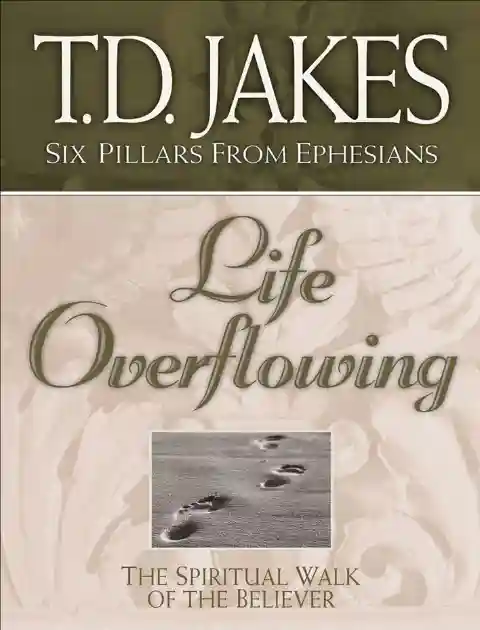
"Kingdom Man" by Tony Evans explores what it means to be a man who aligns his life with the purposes and principles of God's kingdom. Through biblical teachings and practical advice, Evans guides men on how to be leaders in their families, communities, and workplaces, ultimately living out their calling as kingdom men. The book challenges men to step up and take responsibility for their spiritual growth and impact on the world around them.
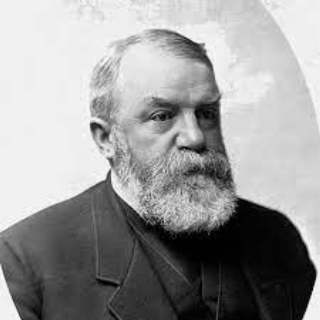
John Wesley
John Wesley, (born June 17, 1703, Epworth, Lincolnshire, Englandâdied March 2, 1791, London), Anglican clergyman, evangelist, and founder, with his brother Charles, of the Methodist movement in the Church of England.
John Wesley was the second son of Samuel, a former Nonconformist (dissenter from the Church of England) and rector at Epworth, and Susanna Wesley. After six years of education at the Charterhouse, London, he entered Christ Church, Oxford University, in 1720. Graduating in 1724, he resolved to become ordained a priest; in 1725 he was made a deacon by the bishop of Oxford and the following year was elected a fellow of Lincoln College. After assisting his father at Epworth and Wroot, he was ordained a priest on September 22, 1728.
Recalled to Oxford in October 1729 to fulfill the residential requirements of his fellowship, John joined his brother Charles, Robert Kirkham, and William Morgan in a religious study group that was derisively called the âMethodistsâ because of their emphasis on methodical study and devotion. Taking over the leadership of the group from Charles, John helped the group to grow in numbers. The âMethodists,â also called the Holy Club, were known for their frequent communion services and for fasting two days a week. From 1730 on, the group added social services to their activities, visiting Oxford prisoners, teaching them to read, paying their debts, and attempting to find employment for them. The Methodists also extended their activities to workhouses and poor people, distributing food, clothes, medicine, and books and also running a school. When the Wesleys left the Holy Club in 1735, the group disintegrated.
Following his fatherâs death in April 1735, John was persuaded by an Oxford friend, John Burton, and Col. James Oglethorpe, governor of the colony of Georgia in North America, to oversee the spiritual lives of the colonists and to missionize the Native Americans as an agent for the Society for the Propagation of the Gospel. Accompanied by Charles, who was ordained for this mission, John was introduced to some Moravian emigrants who appeared to him to possess the spiritual peace for which he had been searching. The mission to the indigenous peoples proved abortive, nor did Wesley succeed with most of his flock. He served them faithfully, but his stiff high churchmanship antagonized them. He had a naive attachment to Sophia Hopkey, niece of the chief magistrate of Savannah, who married another man, and Wesley unwisely courted criticism by repelling her from Holy Communion. In December 1737 he fled from Georgia; misunderstandings and persecution stemming from the Sophia Hopkey episode forced him to go back to England.
In London John met a Moravian, Peter Böhler, who convinced him that what he needed was simply faith, and he also discovered Martin Lutherâs commentary on the Letter of Paul to the Galatians, which emphasized the scriptural doctrine of justification by grace through faith alone. On May 24, 1738, in Aldersgate Street, London, during a meeting composed largely of Moravians under the auspices of the Church of England, Wesleyâs intellectual conviction was transformed into a personal experience while Lutherâs preface to the commentary to the Letter of Paul to the Romans was being read.
From this point onward, at the age of 35, Wesley viewed his mission in life as one of proclaiming the good news of salvation by faith, which he did whenever a pulpit was offered him. The congregations of the Church of England, however, soon closed their doors to him because of his enthusiasm. He then went to religious societies, trying to inject new spiritual vigour into them, particularly by introducing âbandsâ similar to those of the Moraviansâi.e., small groups within each society that were confined to members of the same sex and marital status who were prepared to share intimate details of their lives with each other and to receive mutual rebukes. For such groups Wesley drew up Rules of the Band Societies in December 1738.
For a year he worked through existing church societies, but resistance to his methods increased. In 1739 George Whitefield, who later became an important preacher of the Great Awakening in Great Britain and North America, persuaded Wesley to go to the unchurched masses. Wesley gathered converts into societies for continuing fellowship and spiritual growth, and he was asked by a London group to become their leader. Soon other such groups were formed in London, Bristol, and elsewhere. To avoid the scandal of unworthy members, Wesley published, in 1743, Rules for the Methodist societies. To promote new societies he became a widely travelled itinerant preacher. Because most ordained clergymen did not favour his approach, Wesley was compelled to seek the services of dedicated laymen, who also became itinerant preachers and helped administer the Methodist societies.
Many of Wesleyâs preachers had gone to the American colonies, but after the American Revolution most returned to England. Because the bishop of London would not ordain some of his preachers to serve in the United States, Wesley controversially took it upon himself, in 1784, to do so. In the same year he pointed out that his societies operated independently of any control by the Church of England.
Toward the end of his life, Wesley became an honoured figure in the British Isles.
5 Important Heart Lessons from the Woman at the Well
At times, we may need to have a heart-to-heart with someone we love. Those conversations can be difficult. We may be afraid to say whatâs needed because we donât know how the other person might react when we get the courage to speak up. Maybe we donât want to hurt their feelings, but we canât continue without change in some way. The longest one-on-one conversation Jesus had with someone in the Bible was with a woman. She went to the well to draw water and Jesus was waiting there. Like many of us, she didnât know him very well. Sheâd heard of the Messiah but didnât realize He was right there with her. Her daily duties were keeping her occupied and he appeared in her life out of left field. She wasnât expecting him to show up and she sure didnât expect him to change her life. But He was expecting her. He had plans she knew nothing about. He used her powerfully even though her life was far from picturesque. Itâs an encouraging story and beautiful. Encouraging to us because God allows us to participate in His work here on earth. It doesnât matter where weâve been or what weâve done in the past. He can use us and will for His purposes. Itâs beautiful because when we have a personal relationship with Him, He gives us what we deeply need â the satisfying, living water to quench our spiritual thirst. Here are 5 heart lessons we can learn from the woman at the well in the Bible: 1. We might find Jesus waiting for us. Now he had to go through Samaria. So he came to a town in Samaria called Sychar, near the plot of ground Jacob had given to his son Joseph. Jacobâs well was there, and Jesus, tired as he was from the journey, sat down by the well. It was about noon. When a Samaritan woman came to draw water, Jesus said to her, âWill you give me a drink?â John 4:7 The woman at the well was doing a routine chore â drawing water from the well. Nothing was out of the ordinary, except for who was sitting at the well, resting â waiting for her. I love how the Scripture mentions that Jesus is tired. Iâm sure Heâs been exhausted with my own spiritual immaturity, rebellion, and stubbornness at times. But He patiently waits for us. He wants us to be honest with him about our life. He waits until the perfect time to work things for good or to change us in some way for the better. 2. When we know Him â weâll love Him. The Samaritan woman said to him, âYou are a Jew and I am a Samaritan woman. How can you ask me for a drink?â (For Jews do not associate with Samaritans.) Jesus answered her, âIf you knew the gift of God and who it is that asks you for a drink, you would have asked him and he would have given you living water.â John 4:9-10 Jesus doesnât even acknowledge her comment about their differences but goes straight to the heart of the matter. She doesnât know him. Itâs one thing to know who Jesus is but itâs the real deal when we know Him in our hearts. Then itâs love. Iâll never forget figuring out I was âin loveâ with Jesus. (I didnât even realize we could fall in love with Him. Iâd never heard anything about that in the church I grew up in.) I couldnât stop thinking about Him. For years. Everything reminded me of Him, and I saw God in creation everywhere I looked. Why do I think about God 24/7? We think of someone constantly for years and canât get them out of our thoughts because weâre in love. When we truly know Jesus, we will love Him. 3. Sometimes, we donât believe. âSir,â the woman said, âyou have nothing to draw with and the well is deep. Where can you get this living water? Are you greater than our father Jacob, who gave us the well and drank from it himself, as did his sons and his livestock?â Jesus answered, âEveryone who drinks this water will be thirsty again, but whoever drinks the water I give them will never thirst. Indeed, the water I give them will become in them a spring of water welling up to eternal life.â The woman said to him, âSir, give me this water so that I wonât get thirsty and have to keep coming here to draw water.â John 4:11-15 She must be wondering how something as natural as water can become something that seems impossible. Living water? It doesnât make sense. Jesus is about to transform her natural way of thinking into spiritual drinking. Theyâre alone when this intimate relationship begins. We may discover our own relationship with Him requires alone time, too. He works best in us when weâre not distracted by the world. Maybe weâre in a hospital bed or down on our backs with nothing else but Him to keep us company. Itâs in these moments, he gets our attention and speaks to our spirit, making his presence known and drawing us close. 4. Jesus opens our eyes to see the truth clearly. He told her, âGo, call your husband and come back.â âI have no husband,â she replied. Jesus said to her, âYou are right when you say you have no husband. The fact is, you have had five husbands, and the man you now have is not your husband. What you have just said is quite true.â âSir,â the woman said, âI can see that you are a prophet. Our ancestors worshiped on this mountain, but you Jews claim that the place where we must worship is in Jerusalem.â âWoman,â Jesus replied, âbelieve me, a time is coming when you will worship the Father neither on this mountain nor in Jerusalem. You Samaritans worship what you do not know; we worship what we do know, for salvation is from the Jews. Yet a time is coming and has now come when the true worshipers will worship the Father in the Spirit and in truth, for they are the kind of worshipers the Father seeks. God is spirit, and his worshipers must worship in the Spirit and in truth.â The woman said, âI know that Messiahâ (called Christ) âis coming. When he comes, he will explain everything to us.â Then Jesus declared, âI, the one speaking to you â I am he.â John 16-26 It didnât take her long to realize Jesus was telling the truth. Her eyes were opened, and his words helped her know Him better. The same is true for us. It can take a long time to truly get to know someone. He shows us who He is as we go through the troubles of life. We get to know Him better as we go along putting our trust in Him through lifeâs difficulties. Jesus will replace natural thought with spiritual insight. He takes lies we believe and gives us truth through His word. Helping us worship Him in spirit and in truth. 5. Donât linger in a place you should leave. Just then his disciples returned and were surprised to find him talking with a woman. But no one asked, âWhat do you want?â or âWhy are you talking with her?â Then, leaving her water jar, the woman went back to the town and said to the people, âCome, see a man who told me everything I ever did. Could this be the Messiah?â They came out of the town and made their way toward him. Many of the Samaritans from that town believed in him because of the womanâs testimony, âHe told me everything I ever did.â So when the Samaritans came to him, they urged him to stay with them, and he stayed two days. And because of his words many more became believers. They said to the woman, âWe no longer believe just because of what you said; now we have heard for ourselves, and we know that this man really is the Savior of the world.â John 4:27-30, 39-42 She didnât linger when it was time to leave. Her water jar was left behind as evidence of what she forgot about when she met Jesus at the well. Literally leading others to Jesus with her powerful testimony. They went to him and asked Jesus to come stay with them. And (my favorite part) because of his words many more became believers. It can be hard to distinguish Godâs direction when weâre not in a close relationship with Him. But when we spend time with him in prayer, reading the Bible, and surrendered in obedience, we will act out of our personal relationship. Weâll want to share what Heâs done for us with others. We want everyone to know Jesus the way we do. As Jesus rested by the well, waiting for the woman, Heâs patiently waiting for us, too. He knows us quite well even if we donât really know Him. He wants to have a heart-to-heart conversation with us, as well. Open your eyes and see Him. Know Him. Your heart will never be the same. Melinda Eye Cooper Crosswalk.com Contributing Writer