
Others like life overflowing Features >>
Overcoming The Accuser

The Overcoming Life
-160.webp)
Discovering God's Will For Your Life
Overcoming Racism
Overcoming The Enemy

Developing A Strong Spirit
-160.webp)
Overcoming Familiar Spirits (Deliverance From Unseen Demonic Enemies And Spiritual Debt)

Overcoming Addictive Behavior

Rediscovering The Kingdom
Overcoming The Religious Spirit
About the Book
"Life Overflowing" by T.D. Jakes is a Christian guide to living a fulfilling and abundant life through faith in God. Jakes encourages readers to seek spiritual fulfillment through prayer, worship, and trust in God's plan for their lives. He emphasizes the importance of cultivating a close relationship with God in order to experience true joy and abundance. The book offers practical advice and inspirational messages to help readers overcome challenges and find purpose and meaning in their lives.
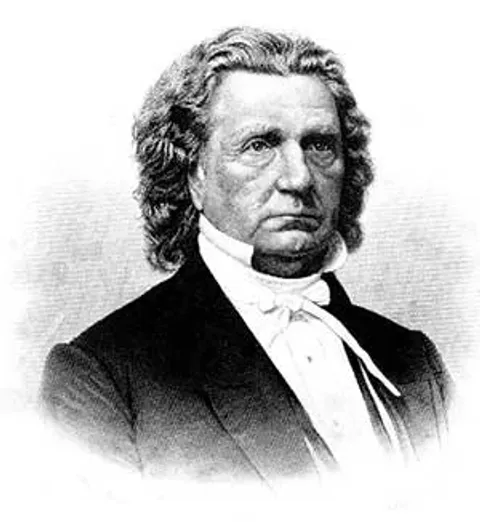
Emerson Andrews
 His Early life
Emerson Andrews was born in Mansfield, Bristol County, Massachusetts in 1806 to godly parents, James and Mercy Andrews. They were from English stock and were strict Puritans in faith and lifestyle. Although young Emerson was raised in the Congregational Church he was far from God in his teens and twenties.
Nevertheless, periodically, he experienced intense conviction, usually through his parents’ counsels and prayers but particularly through two unforgettable sermons delivered by the eccentric revivalist, Lorenzo Dow. Soon after this he was converted under the ministry of another revival preacher, Asahel Nettleton.
He was a very educated man formerly studying at Chesterfield Academy and, at the time of his conversion, at Plainfield Kimball Union Academy, in New Hampshire. In the spring of 1832 whilst studying further at Union College in Schenectady, New York, he was baptised by immersion in the Mohawk River. It was his convictions about the Bible’s teaching on water baptism that caused him to join the Baptist’s instead of the Congregationalists or Presbyterians.
A Lover of Revival
He wrote “Many revivals and protracted meetings of one, two, or more days, and some for weeks and months, have been held, in New England and elsewhere, within, my personal remembrance. These have sent out their hallowed influences, as the light of the world and salt of the earth. Just before and at the time of my second birth, many sweeping and glorious revivals, under the celebrated Dr. Netteton, John Leland, Jedediah Burchard, C. G. Finney, were hailed, enjoyed, and sounded all around and over the country.
As soon as I was converted I cherished the good news of revivals; and I sought a place and portion with live Christians, that I might speak for Christ and win souls to salvation. I asked God for direction and help, and was answered.
His first visit to a Revival
He describes his first visit to a Revival “The first meeting that I attended after my regeneration was held in the town of Windsor, Vt. It was called a “four days’ meeting.” But many such were held in different places about that time. This came off in the summer of l830. I was much delighted, fed, and strengthened by such a sight, experience, exercise, and spiritual supper. It was a precious banquet, adapted to develop and enlarge the young convert’s soul.
The four pastors of the town, with their respective churches and congregations, and some from neighboring towns, met with the Baptist church, of which Elder Leland Howard was the long-honored pastor. Some twenty other pastors also came in from adjacent towns, and a few Lawyers and teachers, who took leading parts in the services. Large congregations were constantly in attendance, and all the various exercises and meetings were interesting and profitable.
Some of the sermons and prayers were most powerful, melting, and effective. Sinners often arose, requesting prayers, or sent up short petitions to be read. A lawyer by the name of Shepherd, from New York, was found to be very able, pointed, and specific in prayer, and so effective and precise in noting each different request more perfectly than the ministers, that he was often invited to lead in prayer — especially when there were some ten or twenty different, or some difficult requests presented.
He seemed to be full of the Spirit, and was especially gifted and successful. Ministers learned something valuable from his wisdom and tact. I confess that his pointedness made a powerful and lasting impression on my mind and practice.
The professors and ministers were much blessed, and many sinners were converted in the meetings. The gospel was preached and the Spirit poured out, prayer and sacrifices made. Novelty and wonder attracted many. Here God crowned the effort.”
Mentored by Jacob Knapp
He writes. ” ROCHESTER, N.Y. 1839. Here I assisted in a powerful meeting, under the preaching of the celebrated Elder Jacob Knapp, for three weeks. Marvellous things were done. The wicked raged, the Spirit worked, grace prevailed, and hundreds were converted — a glorious triumph over rum, gambling, and infidelity. Jesus reigned.” This exposure to revival power whetted his appetite for an evangelistic ministry.
His first revival efforts
“WHITE DEER, PENN. 1839. In this rich farming district I had a revival meeting of five weeks, with a feeble Baptist church. We began at the close of the Association; but, with all the eloquent pastoral preaching in it, the brethren were not aroused, nor sinners much convicted.
Here my first sermon was from the text, “O Lord, revive thy work!” And he did so immediately. Some half a dozen persons were convicted and converted, and the church was revived by the power of God on that evening’s effort. The whole region, then, for seven miles around, was awakened, and some forty converts were immersed by Elder Spratt, D.D.
Here, too, we experienced severe opposition and much persecution from outside professors and sinners, but God strengthened our hands for a triumphant work. This was a blessed era with the church, and it is fragrant still.
“CLINTON, PENN. I had a revival meeting in this township. It was very great and powerful. Satan and sinners raged, at times, terribly, but the cross was triumphant. Many were immersed by the beloved pastor, Elder Spratt, D.D.
Hugh Donelly, the postmaster, rum-selling merchant, and an avowed infidel, who had slandered me and ridiculed the meeting, crept in away back, then into the middle seats; then, after a few nights, fell on his knees groaning and crying for mercy. I soon aided him in coming forward.
Then out came his wife and sister. We all prayed, and soon the three rejoiced in hope, and spoke boldly for Jesus. Brother Donelly has made a noble record in Pennsylvania and Indiana for Jesus and his cause…..
PARMA, N.Y. In this western village, in mid-winter, I preached night and day, for three weeks, to overflowing houses and attentive hearers. Christians renewed their “first love and vows,” and many sinners were converted and baptized.
An infidel, hearing a few sermons, was struck under conviction, and fled away thirty miles for comfort; but, feeling worse and worse, returned like the prodigal, feeling wretched and lost. He came forward, prayer was offered, and he soon yielded and believed, giving glory to God. Then he told his experience, and exhorted his old Universalist and infidel friends to repent and be saved from hell.
Emerson Andrews Preaching
His preaching zeal and effectiveness were quickly recognised and he was soon licensed to preach and for a four year period served brief pastorates in New York State – Waterford, West Troy, Lansingburg and Rome (1834-1838)
In 1838 began an itinerant evangelist for thirty-five years, mainly in America, but also in Europe, Africa, Asia and Canada. His estimates were that 40,000 were converted through his ministry.
His Early life
Emerson Andrews was born in Mansfield, Bristol County, Massachusetts in 1806 to godly parents, James and Mercy Andrews. They were from English stock and were strict Puritans in faith and lifestyle. Although young Emerson was raised in the Congregational Church he was far from God in his teens and twenties.
Nevertheless, periodically, he experienced intense conviction, usually through his parents’ counsels and prayers but particularly through two unforgettable sermons delivered by the eccentric revivalist, Lorenzo Dow. Soon after this he was converted under the ministry of another revival preacher, Asahel Nettleton.
He was a very educated man formerly studying at Chesterfield Academy and, at the time of his conversion, at Plainfield Kimball Union Academy, in New Hampshire. In the spring of 1832 whilst studying further at Union College in Schenectady, New York, he was baptised by immersion in the Mohawk River. It was his convictions about the Bible’s teaching on water baptism that caused him to join the Baptist’s instead of the Congregationalists or Presbyterians.
A Lover of Revival
He wrote “Many revivals and protracted meetings of one, two, or more days, and some for weeks and months, have been held, in New England and elsewhere, within, my personal remembrance. These have sent out their hallowed influences, as the light of the world and salt of the earth. Just before and at the time of my second birth, many sweeping and glorious revivals, under the celebrated Dr. Netteton, John Leland, Jedediah Burchard, C. G. Finney, were hailed, enjoyed, and sounded all around and over the country.
As soon as I was converted I cherished the good news of revivals; and I sought a place and portion with live Christians, that I might speak for Christ and win souls to salvation. I asked God for direction and help, and was answered.
His first visit to a Revival
He describes his first visit to a Revival “The first meeting that I attended after my regeneration was held in the town of Windsor, Vt. It was called a “four days’ meeting.” But many such were held in different places about that time. This came off in the summer of l830. I was much delighted, fed, and strengthened by such a sight, experience, exercise, and spiritual supper. It was a precious banquet, adapted to develop and enlarge the young convert’s soul.
The four pastors of the town, with their respective churches and congregations, and some from neighboring towns, met with the Baptist church, of which Elder Leland Howard was the long-honored pastor. Some twenty other pastors also came in from adjacent towns, and a few Lawyers and teachers, who took leading parts in the services. Large congregations were constantly in attendance, and all the various exercises and meetings were interesting and profitable.
Some of the sermons and prayers were most powerful, melting, and effective. Sinners often arose, requesting prayers, or sent up short petitions to be read. A lawyer by the name of Shepherd, from New York, was found to be very able, pointed, and specific in prayer, and so effective and precise in noting each different request more perfectly than the ministers, that he was often invited to lead in prayer — especially when there were some ten or twenty different, or some difficult requests presented.
He seemed to be full of the Spirit, and was especially gifted and successful. Ministers learned something valuable from his wisdom and tact. I confess that his pointedness made a powerful and lasting impression on my mind and practice.
The professors and ministers were much blessed, and many sinners were converted in the meetings. The gospel was preached and the Spirit poured out, prayer and sacrifices made. Novelty and wonder attracted many. Here God crowned the effort.”
Mentored by Jacob Knapp
He writes. ” ROCHESTER, N.Y. 1839. Here I assisted in a powerful meeting, under the preaching of the celebrated Elder Jacob Knapp, for three weeks. Marvellous things were done. The wicked raged, the Spirit worked, grace prevailed, and hundreds were converted — a glorious triumph over rum, gambling, and infidelity. Jesus reigned.” This exposure to revival power whetted his appetite for an evangelistic ministry.
His first revival efforts
“WHITE DEER, PENN. 1839. In this rich farming district I had a revival meeting of five weeks, with a feeble Baptist church. We began at the close of the Association; but, with all the eloquent pastoral preaching in it, the brethren were not aroused, nor sinners much convicted.
Here my first sermon was from the text, “O Lord, revive thy work!” And he did so immediately. Some half a dozen persons were convicted and converted, and the church was revived by the power of God on that evening’s effort. The whole region, then, for seven miles around, was awakened, and some forty converts were immersed by Elder Spratt, D.D.
Here, too, we experienced severe opposition and much persecution from outside professors and sinners, but God strengthened our hands for a triumphant work. This was a blessed era with the church, and it is fragrant still.
“CLINTON, PENN. I had a revival meeting in this township. It was very great and powerful. Satan and sinners raged, at times, terribly, but the cross was triumphant. Many were immersed by the beloved pastor, Elder Spratt, D.D.
Hugh Donelly, the postmaster, rum-selling merchant, and an avowed infidel, who had slandered me and ridiculed the meeting, crept in away back, then into the middle seats; then, after a few nights, fell on his knees groaning and crying for mercy. I soon aided him in coming forward.
Then out came his wife and sister. We all prayed, and soon the three rejoiced in hope, and spoke boldly for Jesus. Brother Donelly has made a noble record in Pennsylvania and Indiana for Jesus and his cause…..
PARMA, N.Y. In this western village, in mid-winter, I preached night and day, for three weeks, to overflowing houses and attentive hearers. Christians renewed their “first love and vows,” and many sinners were converted and baptized.
An infidel, hearing a few sermons, was struck under conviction, and fled away thirty miles for comfort; but, feeling worse and worse, returned like the prodigal, feeling wretched and lost. He came forward, prayer was offered, and he soon yielded and believed, giving glory to God. Then he told his experience, and exhorted his old Universalist and infidel friends to repent and be saved from hell.
Emerson Andrews Preaching
His preaching zeal and effectiveness were quickly recognised and he was soon licensed to preach and for a four year period served brief pastorates in New York State – Waterford, West Troy, Lansingburg and Rome (1834-1838)
In 1838 began an itinerant evangelist for thirty-five years, mainly in America, but also in Europe, Africa, Asia and Canada. His estimates were that 40,000 were converted through his ministry.
five ways to build stronger relationships
“That used to be nice.” That was the first response when I recently asked a group of men what comes to mind when they think about friendship. Once they entered their upper twenties and thirties, many of them no longer had close friendships. We mostly laughed when joking about Jesus’s “miracle” of having twelve close friends in his thirties. Many factors combine to make friendship difficult for men. Personally, time for friends seems unrealistic in light of work or family responsibilities. Culturally, we don’t have a shared understanding of what friendships among men should look like. We also find ourselves connecting more digitally than deeply. We’ve lost a vision for strong, warm, face-to-face and side-by-side male friendship. But God made us for more. He made us in his own image, the image of a triune God who exists in communal love. Therefore, friendship is not a luxury; it’s a relational necessity. We glorify God by enjoying him and reflecting his relational love with one another. If you are a man who has struggled to go deeper with other men, here are five concrete steps to cultivate deeper friendships. 1. Establish rhythms for your relationships. Without rhythms in our lives, the important priorities don’t get done. If we value communing with God through his word and prayer, we form a habit. If we want to exercise consistently, we create a pattern. Here’s a proposal for cultivating friendship: Build it into your schedule. Establish a regular rhythm for coffee together. Devote a meal each week — say, Monday breakfasts or Wednesday dinners — to share with others. Plan to meet up to take walks together. Reserve an extended weekend each year to get away and enjoy God’s creation together. 2. Drop each conversation one notch deeper. Conversations about sports and daily activities are worthwhile. But if that’s all we talk about, it’s like snorkeling on the surface while missing the deeper wonders of the ocean. But how do we take our conversations deeper? First, ask thoughtful questions. When you’re driving to meet your friend, think about what you want to learn about him. Think about the main aspects of his life right now — his relationship with the Lord, his family, his work — and ask him about how things are going. When he shares about a challenge, ask how his internal life (his heart, his disposition toward God) is doing in the midst of this. From there, stay curious and ask more questions. Second, talk about what you’re each reading. Ask how God’s word has convicted or encouraged him recently. Ask what book he’s recently read that helped him know God or live more faithfully as a disciple. Consider reading through Scripture or a Scripture-saturated book together and meeting to talk about it. 3. Overcome our cultural aversion to expressing affection. “Love one another with brotherly affection” (Romans 12:10). We don’t usually put those last two words next to one another — brotherly feels masculine; affection feels feminine. But there they are together, inviting us to cultivate genuine, non-weird, affectionate brotherhood. We see this affectionate bond with Jonathan and David: “The soul of Jonathan was knit to the soul of David, and Jonathan loved him as his own soul” (1 Samuel 18:1). We see it with Paul and the Ephesian elders: “And there was much weeping on the part of all; they embraced Paul and kissed him” (Acts 20:37). Expressing affection feels uncomfortable to men today because our culture has slowly shifted its understanding of masculinity. Rather than combining strength and tenderness, we view manhood as muscular and aggressive. Our culture has also sexualized love, interpreting affection between men as something other than friendship. But we can build a better way. 4. Oxygenate your friendships with affirmation. What happens without oxygen? We become sluggish and lethargic. This is what relationships feel like without affirmation. This may be why some of your relationships feel withered, thin, or tired. Affirmation is relational oxygen. One of the most powerful tools for cultivating true friendship is Romans 12:10: “Outdo one another in showing honor.” Men find it hard to give and receive honor and affirmation. It feels uncomfortable at first to tell someone why you thank God for him or why you respect him. But only at first. I’ve seen many men work through their initial hesitations and start cultivating a culture of sincere encouragement around them. And I’ve seen the other men flourish because of it. 5. Invite friends into what you’re already doing. Our schedules are full and we rush from one thing to the next. We don’t see how we can find time for friends. But what if you don’t need to open up your schedule? What if you can include friends into the activities you already do? Here are a few suggestions I’ve seen work: When you plan to watch a sports game or weekly show, find out who else would want to watch it and invite them to join you. If you exercise a few times each week, do it with a friend. Invite friends or family members to join you for dinner or dessert. If you have young kids, let your guests participate in the bedtime routine and then stay around afterward. If you have young kids, invite someone to join your family at the park. Put a few friends on speed dial and call them on your daily commute home. If you have a home project to complete, invite someone to help you and offer to help him with his. Hope and Help for Forging Friendship Jesus is our greatest model of male friendship. He initiated relationships and he invited men to be with him (Mark 3:14). He continually asked thought-provoking questions. He loved his disciples with brotherly affection (John 13:1). He calls us his friends (John 15:13–15). He also gives us the great privilege of reflecting and enjoying this kind of true friendship to other men. Maybe as you consider taking these steps, you look ahead with both hope and hesitancy. Maybe you think back to when you experienced deeper community and think you won’t find that again. Or maybe you still feel pain from failed attempts at connecting with others. You wonder if forging friendship is harder, even impossible, for you. Before you give up, remember two truths: First, Jesus isn’t just the model for true friendship; he is himself our truest friend. He initiates friendship with us, and we receive it on terms of grace. Now “no one need ever say I have no ‘friend’ to turn to, so long as Christ is in heaven” (J.C. Ryle, Expository Thoughts , 3:114). And second, he delights for us to ask for true community in his name. God alone is able to create, renew, and strengthen the deepest human relationships. So, pray. Ask God to make your efforts at friendship fruitful. Then trust him, stay patient, and keep taking steps toward others in the strength he provides.