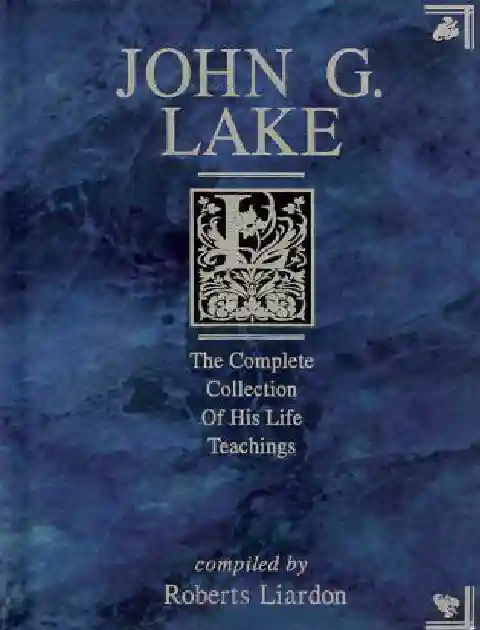

John G. Lake, The Complete Collection Of His Life Teachings Order Printed Copy
- Author: Roberts Liardon
- Size: 6.62MB | 2217 pages
- |
Others like john g. lake, the complete collection of his life teachings Features >>
-160.webp)
John G. Lake: Apostle To Africa

Joshua: God's Chosen Warrior
-160.webp)
God's Generals (Jack Coe)

Hearts Of Fire - Eight Women In The Underground Church And Their Stories Of Costly Faith
The Apostolic Fathers II
-160.webp)
God's Generals (William J. Seymour)

A Joyful Pilgrimage
Jerusalem In The Time Of Jesus
-160.webp)
God's Generals (Evan Roberts)

The Great Controversy
About the Book
"John G. Lake, The Complete Collection Of His Life Teachings" by Roberts Liardon offers a comprehensive look at the life and teachings of renowned healing evangelist John G. Lake. This book provides insight into Lake's powerful faith, miracles, and impactful ministry, offering inspiration and practical guidance for those seeking to deepen their own spiritual journey.
Amy Carmichael
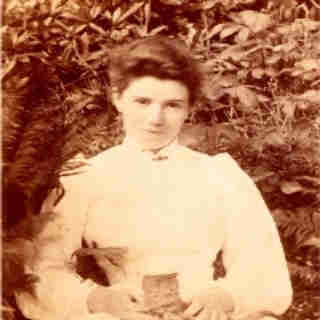 Born in Belfast Ireland, to a devout family of Scottish ancestry, Carmichael was educated at home and in England, where she lived with the familt of Robert Wilson after her father’s death. While never officially adopted, she used the hyphenated name Wilson-Carmichael as late as 1912. Her missionary call came through contacts with the Keswick movement. In 1892 she volunteered to the China Inland Mission but was refused on health grounds. However, in 1893 she sailed for Japan as the first Keswick missionary to join the Church Missionary Society (CMS) work led by Barclay Buxton. After less than two years in Japan and Ceylon, she was back in England before the end of 1894. The next year she volunteered to the Church of England Zenana Missionary Society, and in November 1895 she arrived in South India, never to leave. While still learning the difficult Tamil language, she commenced itinerant evangelism with a band of Indian Christian women, guided by the CMS missionary Thomas Walker. She soon found herself responsible for Indian women converts, and in 1901, she, the Walkers, and their Indian colleagues settled in Dohnavur. During her village itinerations, she had become increasingly aware of the fact that many Indian children were dedicated to the gods by their parents or guardians, became temple children, and lived in moral and spiritual danger. It became her mission to rescue and raise these children, and so the Dohnavur Fellowship came into being (registered 1927). Known at Dohnavur as Amma (Mother), Carmichael was the leader, and the work became well known through her writing. Workers volunteered and financial support was received, though money was never solicited. In 1931 she had a serious fall, and this, with arthritis, kept her an invalid for the rest of her life. She continued to write, and identified leaders, missionary and Indian, to take her place. The Dohnavur Fellowship still continues today.
Jocelyn Murray, “Carmichael, Amy Beatrice,” in Biographical Dictionary of Christian Missions, ed. Gerald H. Anderson (New York: Macmillan Reference USA, 1998), 116.
This article is reprinted from Biographical Dictionary of Christian Missions, Macmillan Reference USA, copyright © 1998 Gerald H. Anderson, by permission of Macmillan Reference USA, New York, NY. All rights reserved.
“Ammai” of orphans and holiness author
Amy Carmichael was born in Ireland in 1867, the oldest of seven children. As a teen, she attended a Wesleyan Methodist girls boarding school, until her father died when she was 18. Carmichael twice attended Keswick Conventions and experienced a holiness conversion which led her to work among the poor in Belfast. Through the Keswick Conventions, Carmichael met Robert Wilson. He developed a close relationship with the young woman, and invited her to live with his family. Carmichael soon felt a call to mission work and applied to the China Inland Mission as Amy Carmichael-Wilson. Although she did not go to China due to health reasons, Carmichael did go to Japan for a brief period of time. There she dressed in kimonos and began to learn Japanese. Her letters home from Japan became the basis for her first book, From Sunrise Land. Carmichael left Japan due to health reasons, eventually returning to England. She soon accepted a position with the Church of England’s Zenana Missionary Society, serving in India. From 1895 to 1925, her work with orphans in Tinnevelly (now Tirunelveli) was supported by the Church of England. After that time, Carmichael continued her work in the faith mission style, establishing an orphanage in Dohnavur. The orphanage first cared for girls who had been temple girls, who would eventually become temple prostitutes. Later the orphanage accepted boys as well.
Carmichael never returned to England after arriving in India. She wrote prolifically, publishing nearly 40 books. In her personal devotions, she relied on scripture and poetry. She wrote many of her own poems and songs. Carmichael had a bad fall in 1931, which restricted her movement. She stayed in her room, writing and studying. She often quoted Julian of Norwich when she wrote of suffering and patience. Many of Carmichael’s books have stories of Dohnavur children, interspersed with scripture, verses, and photographs of the children or nature. Carmichael never directly asked for funding, but the mission continued to be supported through donations. In 1951 Carmichael died at Dohnavur. Her headstone is inscribed “Ammai”, revered mother, which the children of Dohnavur called Carmichael.
Carmichael’s lengthy ministry at Dohnavur was sustained through her strong reliance upon scripture and prayer. Her early dedication to holiness practices and her roots in the Keswick tradition helped to guide her strong will and determination in her mission to the children of southern India.
by Rev. Lisa Beth White
Born in Belfast Ireland, to a devout family of Scottish ancestry, Carmichael was educated at home and in England, where she lived with the familt of Robert Wilson after her father’s death. While never officially adopted, she used the hyphenated name Wilson-Carmichael as late as 1912. Her missionary call came through contacts with the Keswick movement. In 1892 she volunteered to the China Inland Mission but was refused on health grounds. However, in 1893 she sailed for Japan as the first Keswick missionary to join the Church Missionary Society (CMS) work led by Barclay Buxton. After less than two years in Japan and Ceylon, she was back in England before the end of 1894. The next year she volunteered to the Church of England Zenana Missionary Society, and in November 1895 she arrived in South India, never to leave. While still learning the difficult Tamil language, she commenced itinerant evangelism with a band of Indian Christian women, guided by the CMS missionary Thomas Walker. She soon found herself responsible for Indian women converts, and in 1901, she, the Walkers, and their Indian colleagues settled in Dohnavur. During her village itinerations, she had become increasingly aware of the fact that many Indian children were dedicated to the gods by their parents or guardians, became temple children, and lived in moral and spiritual danger. It became her mission to rescue and raise these children, and so the Dohnavur Fellowship came into being (registered 1927). Known at Dohnavur as Amma (Mother), Carmichael was the leader, and the work became well known through her writing. Workers volunteered and financial support was received, though money was never solicited. In 1931 she had a serious fall, and this, with arthritis, kept her an invalid for the rest of her life. She continued to write, and identified leaders, missionary and Indian, to take her place. The Dohnavur Fellowship still continues today.
Jocelyn Murray, “Carmichael, Amy Beatrice,” in Biographical Dictionary of Christian Missions, ed. Gerald H. Anderson (New York: Macmillan Reference USA, 1998), 116.
This article is reprinted from Biographical Dictionary of Christian Missions, Macmillan Reference USA, copyright © 1998 Gerald H. Anderson, by permission of Macmillan Reference USA, New York, NY. All rights reserved.
“Ammai” of orphans and holiness author
Amy Carmichael was born in Ireland in 1867, the oldest of seven children. As a teen, she attended a Wesleyan Methodist girls boarding school, until her father died when she was 18. Carmichael twice attended Keswick Conventions and experienced a holiness conversion which led her to work among the poor in Belfast. Through the Keswick Conventions, Carmichael met Robert Wilson. He developed a close relationship with the young woman, and invited her to live with his family. Carmichael soon felt a call to mission work and applied to the China Inland Mission as Amy Carmichael-Wilson. Although she did not go to China due to health reasons, Carmichael did go to Japan for a brief period of time. There she dressed in kimonos and began to learn Japanese. Her letters home from Japan became the basis for her first book, From Sunrise Land. Carmichael left Japan due to health reasons, eventually returning to England. She soon accepted a position with the Church of England’s Zenana Missionary Society, serving in India. From 1895 to 1925, her work with orphans in Tinnevelly (now Tirunelveli) was supported by the Church of England. After that time, Carmichael continued her work in the faith mission style, establishing an orphanage in Dohnavur. The orphanage first cared for girls who had been temple girls, who would eventually become temple prostitutes. Later the orphanage accepted boys as well.
Carmichael never returned to England after arriving in India. She wrote prolifically, publishing nearly 40 books. In her personal devotions, she relied on scripture and poetry. She wrote many of her own poems and songs. Carmichael had a bad fall in 1931, which restricted her movement. She stayed in her room, writing and studying. She often quoted Julian of Norwich when she wrote of suffering and patience. Many of Carmichael’s books have stories of Dohnavur children, interspersed with scripture, verses, and photographs of the children or nature. Carmichael never directly asked for funding, but the mission continued to be supported through donations. In 1951 Carmichael died at Dohnavur. Her headstone is inscribed “Ammai”, revered mother, which the children of Dohnavur called Carmichael.
Carmichael’s lengthy ministry at Dohnavur was sustained through her strong reliance upon scripture and prayer. Her early dedication to holiness practices and her roots in the Keswick tradition helped to guide her strong will and determination in her mission to the children of southern India.
by Rev. Lisa Beth White
you still need good friends
Few realities in human life are as captivating, fulfilling, and elusive as friendship. Most of us have tasted its deep and dynamic potential for good at some point along our journeys, and yet most of us can also testify to having neglected friendship, maybe for years. Maybe for decades. As Drew Hunter observes, “Friendship is, for many of us, one of the most important but least thought about aspects of life” ( Made for Friendship , 23). How much time do you spend thinking about your friendships? Many of us give our friendships less attention than they deserve, and we suffer for it. The absence of good friends slowly starves everything else we do. A husband without good friends will be a worse husband. A mother without good friends will be a worse mother. A pastor, a doctor, a teacher, and an engineer will all be less effective at their callings without the support and camaraderie of friends. And this thread weaves quietly through Scripture. How many saints can you think of who do something worth imitating while friendless? To be sure, Jesus stormed the grave by himself. It had to be so. And yet even he spent most of his life and ministry with a handful of guys. And as the cross drew near, he said to them, “No longer do I call you servants . . . but I have called you friends, for all that I have heard from my Father I have made known to you” (John 15:15). He may have died alone, but he lived among brothers, because friendship is an essential part of being fully human. Unnecessary and Vital Love That being said, friendship is an unusual relationship because it’s not essential to existence. It’s why friendship is so often neglected — and, ironically, why it holds so much power and potential. C.S. Lewis writes, “Friendship is unnecessary, like philosophy, like art, like the universe itself (for God did not need to create). It has no survival value; rather it is one of those things which give value to survival” ( Four Loves , 90). We spend tens of hours a week on work because we would die without food and shelter. Friendship isn’t feeding the kids or paying the mortgage. But it can make parenting richer and more bearable, and make a home feel a lot more like home. We may be able to live — to eat, drink, work, sleep, and survive — without friends, but what kind of life would that be? The truly good life, we all know by experience, is a shared life. Lewis goes on, Our ancestors regarded Friendship as something that raised us almost above humanity. This love, free from instinct, free from all duties but those which love has freely assumed, almost wholly free from jealousy, and free without qualification from the need to be needed, is eminently spiritual. It is the sort of love one can imagine between angels. (98) “We may be able to eat, drink, work, sleep, and survive without friends, but what kind of life would that be?” Unnecessary and angelic — this describes the mysterious reality of friendship. It raises, or even removes, the ceiling on all our other experiences. Most of what we love to do, we love to do all the more with friends. Those who find meaningful friendship experience a nearly super-human life. Why? Because they get to see more of God, and because they get so much more done, together . Personal Windows into God How does Christian friendship raise us above the unremarkable rhythms of our humanity? First, by intimately introducing us to more of God’s creativity and supremacy. Those who see him together will see more of him. Lewis captures this capacity of friendship when he writes, Friendship exhibits a glorious “nearness by resemblance” to Heaven itself where the very multitude of the blessed (which no man can number) increases the fruition which each has of God. For every soul, seeing Him in her own way, doubtless communicates that unique vision to all the rest. . . . The more we thus share the Heavenly Bread between us, the more we shall all have. (79) The beauty and worth of God cannot be exhausted by one pair of eyes, by one finite mind and heart. Therefore, two really can see more than one. The more we share of him, the more we have of him. Surely, this is one reason why God plans to redeem people from every tribe, tongue, people, and nation, right (Revelation 7:9). Because whatever makes each of them unique prepares them to notice and treasure dimensions of Christ that millions of others might miss. So it is in friendship. As we gaze at God together, over months and years and longer, walking through joys and sorrows, victories and losses, blessings and adversity, we get to see him through each other’s eyes. Worship is communal and contagious. Every human life has the potential to be a unique window into the divine. Because that’s who God is — Father, Son, and Spirit forever adoring and glorifying one another. Courage in Flesh and Blood As friendships help us see more of God, though, they also unleash us to live more radically for God. What good have any of us done in the world without the help or encouragement of friends? As you take yourself back through anything you’ve accomplished in life and ministry, and then allow yourself to look around for a minute, what do you see? For many of us, we see faces . The most defining moments of our lives have been most defined not by addresses, degrees, or promotions, but by people — often, by friends. Hunter highlights the unusual and spiritual productivity of friendship: One of the greatest gifts we can offer our friends is sheer encouragement. As we listen and light up to their ideas, we stir their souls into action. We lift their hearts and spur them on. Much of what is truly good in the world is the fruit of friendship. (71) Why did Jesus send the disciples out in twos (Mark 6:7)? Perhaps he was concerned for their safety on the road (a kind of grown-up buddy-system). It seems far more likely to me that he wanted them each to have built-in, by-their-side courage to keep going when ministry got hard. He knew they would do far more good as twelve pairs than they would on twenty-four different paths. He knew they would conquer sin and Satan together in ways they couldn’t alone. Friendship Isn’t About Friendship These two insights about friendship — that friends helps us see more of God and that they free us to do more for his glory — explain what makes friendship precious. And what makes it possible. Good friendships, after all, aren’t about friendship, which means we won’t experience them by focusing on them. Again, Lewis, wisely observes, Lovers are always talking to one another about their love; Friends hardly every about their Friendship. Lovers are normally face to face, absorbed in each other; Friends, side by side, absorbed in some interest. (78) “Good friendships aren’t about friendship, which means we won’t experience them by focusing on them.” Lovers often find one another looking for love. Friends find one another while chasing something else. They providentially collide while striving after God, while studying his word, while loving their families, while meeting needs in the church, while discipling younger believers, while pursuing the lost. “The very condition of having Friends,” Lewis continues, “is that we should want something else besides Friends. . . . Those who have nothing can share nothing; those who are going nowhere can have no fellow-travelers” (85). If you want to experience real friendship, go hard after God, take bigger risks to glorify him with your life, and then look around to see who’s running with you.