
If You Need To Overcome Grief Do These Things Order Printed Copy
- Author: Oral Roberts
- Size: 1.6MB | 32 pages
- |
Others like if you need to overcome grief do these things Features >>

Shine On - Overcoming Persecution

In The Zone

Everybody’s Normal Till You Get To Know Them
-1-160.webp)
Shifting Shadows Of Supernatural Power: A Prophetic Manual For Those Wanting To Move In God's Supernatural Power

Avoiding Foreign Spirits

Know Your Enemy
-160.webp)
Discovering God's Will For Your Life

There Were Two Trees In The Garden
The School Of The Seers
.epub-160.webp)
Falling Upward: A Spirituality For The Two Halves Of Life
About the Book
"If You Need To Overcome Grief Do These Things" by Oral Roberts offers practical advice and guidance for those struggling with grief. The book emphasizes the importance of finding hope and healing through faith, prayer, and connecting with others. Through personal stories and biblical teachings, Roberts provides tools to help readers navigate through their grief and find peace and comfort.
William Booth
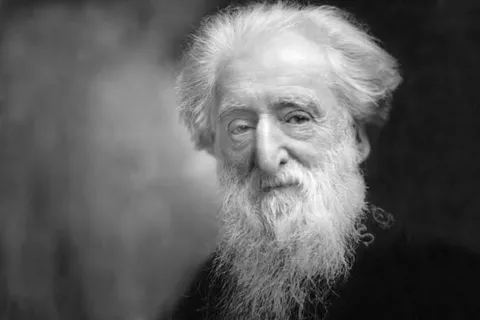 General William Booth’s early life
William Booth was born in Nottingham in 1829 of well-bred parents who had become poor. He was a lively lad nicknamed Wilful Wil. At the age of fifteen he was converted in the Methodist chapel and became the leader of a band of teenage evangelists who called him Captain and held street meetings with remarkable success.
In 1851 he began full-time Christian work among the Methodist Reformers in London and later in Lincolnshire. After a period in a theological college he became a minister of the Methodist New Connexion. His heart however was with the poor people unreached by his church, and in 1861 he left the Methodists to give himself freely to the work of evangelism. Joined by Catherine, his devoted wife, they saw their ministry break out into real revival, which in Cornwall spread far and wide.
One memorable day in July 1865, after exploring the streets in an East End district where he was to conduct a mission, the terrible poverty, vice and degradation of these needy people struck home to his heart. He arrived at his Hammersmith home just before midnight and greeted his waiting Catherine with these words: “Darling, I have found my destiny!” She understood him. Together they had ministered God’s grace to God’s poor in many places.
Now they were to spend their lives bringing deliverance to Satan”s captives in the evil jungle of London”s slums. One day William took Bramwell, his son, into an East End pub which was crammed full of dirty, intoxicated creatures. Seeing the appalled look on his son”s face, he said gently, “Bramwell, these are our people—the people I want you to live for.”
William and Catherine loved each other passionately all their lives. And no less passionately did they love their Lord together. Now, although penniless, together with their dedicated children, they moved out in great faith to bring Christ”s abundant life to London”s poverty-stricken, devil-oppressed millions.
At first their organisation was called the Christian Mission. In spite of brutal opposition and much cruel hardship, the Lord blessed this work, and it spread rapidly.
William Booth was the dynamic leader who called young men and women to join him in this full-time crusade. With enthusiastic abandon, hundreds gave up all to follow him.
“Make your will, pack your box, kiss your girl and be ready in a week”, he told one young volunteer.
Salvation Army born
One day as William was dictating a report on the work to George Railton, his secretary, he said, “We are a volunteer army,”
“No”, said Bramwell, “I am a regular or nothing.”
His father stopped in his stride, bent over Railton, took the pen from his hand, and crossing out the word “volunteer”, wrote “salvation”. The two young men stared at the phrase “a salvation army”, then both exclaimed “Hallelujah”. So the Salvation Army was born.
As these dedicated, Spirit-filled soldiers of the cross flung themselves into the battle against evil under their blood and fire banner, amazing miracles of deliverance occurred. Alcoholics, prostitutes and criminals were set free and changed into workaday saints.
Cecil Rhodes once visited the Salvation Army farm colony for men at Hadleigh, Essex, and asked after a notorious criminal who had been converted and rehabilitated there.
“Oh”, was the answer, “He has left the colony and has had a regular job outside now for twelve months.”
“Well” said Rhodes in astonishment, “if you have kept that man working for a year, I will believe in miracles.”
Slave traffic
The power that changed and delivered was the power of the Holy Spirit. Bramwell Booth in his book Echoes and Memories describes how this power operated, especially after whole nights of prayer. Persons hostile to the Army would come under deep conviction and fall prostrate to the ground, afterward to rise penitent, forgiven and changed. Healings often occurred and all the gifts of the Spirit were manifested as the Lord operated through His revived Body under William Booth’s leadership.
Terrible evils lay hidden under the curtain of Victorian social life in the nineteenth century. The Salvation Army unmasked and fought them. Its work among prostitutes soon revealed the appalling wickedness of the white slave traffic, in which girls of thirteen were sold by their parents to the pimps who used them in their profitable brothels, or who traded them on the Continent.
“Thousands of innocent girls, most of them under sixteen, were shipped as regularly as cattle to the state-regulated brothels of Brussels and Antwerp.” (Collier).
Imprisoned
In order to expose this vile trade, W. T. Stead (editor of The Pall Mall Gazette) and Bramwell Booth plotted to buy such a child in order to shock the Victorians into facing the fact of this hidden moral cancer in their society. This thirteen-year-old girl, Eliza Armstrong, was bought from her mother for £5 and placed in the care of Salvationists in France.
W. T. Stead told the story in a series of explosive articles in The Pall Mall Gazette which raised such a furore that Parliament passed a law raising the age of consent from thirteen to sixteen. However, Booth and Stead were prosecuted for abduction, and Stead was imprisoned for three months.
William Booth always believed the essential cause of social evil and suffering was sin, and that salvation from sin was its essential cure. But as his work progressed, he became increasingly convinced that social redemption and reform should be an integral part of Christian mission.
So at the age of sixty he startled England with the publication of the massive volume entitled In Darkest England, and the Way Out. It was packed with facts and statistics concerning Britain’s submerged corruption, and proved that a large proportion of her population was homeless, destitute and starving. It also outlined Booth’s answer to the problem — his own attempt to begin to build the welfare state.
All this was the result of two years” laborious research by many people, including the loyal W. T. Stead. On the day the volume was finished and ready for publication, Stead was conning its final pages in the home of the Booths. At last he said, “That work will echo round the world. I rejoice with an exceeding great joy.”
“And I”, whispered Catherine, dying of cancer in a corner of the room, “And I most of all thank God. Thank God!” As the work of the Salvation Army spread throughout Britain and into many countries overseas, it met with brutal hostility. In many places Skeleton Armies were organised to sabotage this work of God. Hundreds of officers were attacked and injured (some for life). Halls and offices were smashed and fired. Meetings were broken up by gangs organised by brothel keepers and hostile publicans.
One sympathiser in Worthing defended his life and property with a revolver. But Booth’s soldiers endured the persecution for many years, often winning over their opponents by their own offensive of Christian love.
The Army that William Booth created under God was an extension of his own dedicated personality. It expressed his own resolve in his words which Collier places on the first page of his book:
“While women weep as they do now, I’ll fight; while little children go hungry as they do now, I’ll fight; while men go to prison, in and out, in and out, as they do now, I’ll fight—I’ll fight to the very end!”
Toward the end of his life, he became blind. When he heard the doctor’s verdict that he would never see again, he said to his son: “Bramwell, I have done what I could for God and the people with my eyes. Now I shall see what I can do for God and the people without my eyes.”
But the old warrior had finally laid down his sword. His daughter, Eva, head of the Army’s work in America, came home to say her last farewell. Standing at the window she described to her father the glory of that evening’s sunset.
“I cannot see it,” said the General, “but I shall see the dawn.”
General William Booth’s early life
William Booth was born in Nottingham in 1829 of well-bred parents who had become poor. He was a lively lad nicknamed Wilful Wil. At the age of fifteen he was converted in the Methodist chapel and became the leader of a band of teenage evangelists who called him Captain and held street meetings with remarkable success.
In 1851 he began full-time Christian work among the Methodist Reformers in London and later in Lincolnshire. After a period in a theological college he became a minister of the Methodist New Connexion. His heart however was with the poor people unreached by his church, and in 1861 he left the Methodists to give himself freely to the work of evangelism. Joined by Catherine, his devoted wife, they saw their ministry break out into real revival, which in Cornwall spread far and wide.
One memorable day in July 1865, after exploring the streets in an East End district where he was to conduct a mission, the terrible poverty, vice and degradation of these needy people struck home to his heart. He arrived at his Hammersmith home just before midnight and greeted his waiting Catherine with these words: “Darling, I have found my destiny!” She understood him. Together they had ministered God’s grace to God’s poor in many places.
Now they were to spend their lives bringing deliverance to Satan”s captives in the evil jungle of London”s slums. One day William took Bramwell, his son, into an East End pub which was crammed full of dirty, intoxicated creatures. Seeing the appalled look on his son”s face, he said gently, “Bramwell, these are our people—the people I want you to live for.”
William and Catherine loved each other passionately all their lives. And no less passionately did they love their Lord together. Now, although penniless, together with their dedicated children, they moved out in great faith to bring Christ”s abundant life to London”s poverty-stricken, devil-oppressed millions.
At first their organisation was called the Christian Mission. In spite of brutal opposition and much cruel hardship, the Lord blessed this work, and it spread rapidly.
William Booth was the dynamic leader who called young men and women to join him in this full-time crusade. With enthusiastic abandon, hundreds gave up all to follow him.
“Make your will, pack your box, kiss your girl and be ready in a week”, he told one young volunteer.
Salvation Army born
One day as William was dictating a report on the work to George Railton, his secretary, he said, “We are a volunteer army,”
“No”, said Bramwell, “I am a regular or nothing.”
His father stopped in his stride, bent over Railton, took the pen from his hand, and crossing out the word “volunteer”, wrote “salvation”. The two young men stared at the phrase “a salvation army”, then both exclaimed “Hallelujah”. So the Salvation Army was born.
As these dedicated, Spirit-filled soldiers of the cross flung themselves into the battle against evil under their blood and fire banner, amazing miracles of deliverance occurred. Alcoholics, prostitutes and criminals were set free and changed into workaday saints.
Cecil Rhodes once visited the Salvation Army farm colony for men at Hadleigh, Essex, and asked after a notorious criminal who had been converted and rehabilitated there.
“Oh”, was the answer, “He has left the colony and has had a regular job outside now for twelve months.”
“Well” said Rhodes in astonishment, “if you have kept that man working for a year, I will believe in miracles.”
Slave traffic
The power that changed and delivered was the power of the Holy Spirit. Bramwell Booth in his book Echoes and Memories describes how this power operated, especially after whole nights of prayer. Persons hostile to the Army would come under deep conviction and fall prostrate to the ground, afterward to rise penitent, forgiven and changed. Healings often occurred and all the gifts of the Spirit were manifested as the Lord operated through His revived Body under William Booth’s leadership.
Terrible evils lay hidden under the curtain of Victorian social life in the nineteenth century. The Salvation Army unmasked and fought them. Its work among prostitutes soon revealed the appalling wickedness of the white slave traffic, in which girls of thirteen were sold by their parents to the pimps who used them in their profitable brothels, or who traded them on the Continent.
“Thousands of innocent girls, most of them under sixteen, were shipped as regularly as cattle to the state-regulated brothels of Brussels and Antwerp.” (Collier).
Imprisoned
In order to expose this vile trade, W. T. Stead (editor of The Pall Mall Gazette) and Bramwell Booth plotted to buy such a child in order to shock the Victorians into facing the fact of this hidden moral cancer in their society. This thirteen-year-old girl, Eliza Armstrong, was bought from her mother for £5 and placed in the care of Salvationists in France.
W. T. Stead told the story in a series of explosive articles in The Pall Mall Gazette which raised such a furore that Parliament passed a law raising the age of consent from thirteen to sixteen. However, Booth and Stead were prosecuted for abduction, and Stead was imprisoned for three months.
William Booth always believed the essential cause of social evil and suffering was sin, and that salvation from sin was its essential cure. But as his work progressed, he became increasingly convinced that social redemption and reform should be an integral part of Christian mission.
So at the age of sixty he startled England with the publication of the massive volume entitled In Darkest England, and the Way Out. It was packed with facts and statistics concerning Britain’s submerged corruption, and proved that a large proportion of her population was homeless, destitute and starving. It also outlined Booth’s answer to the problem — his own attempt to begin to build the welfare state.
All this was the result of two years” laborious research by many people, including the loyal W. T. Stead. On the day the volume was finished and ready for publication, Stead was conning its final pages in the home of the Booths. At last he said, “That work will echo round the world. I rejoice with an exceeding great joy.”
“And I”, whispered Catherine, dying of cancer in a corner of the room, “And I most of all thank God. Thank God!” As the work of the Salvation Army spread throughout Britain and into many countries overseas, it met with brutal hostility. In many places Skeleton Armies were organised to sabotage this work of God. Hundreds of officers were attacked and injured (some for life). Halls and offices were smashed and fired. Meetings were broken up by gangs organised by brothel keepers and hostile publicans.
One sympathiser in Worthing defended his life and property with a revolver. But Booth’s soldiers endured the persecution for many years, often winning over their opponents by their own offensive of Christian love.
The Army that William Booth created under God was an extension of his own dedicated personality. It expressed his own resolve in his words which Collier places on the first page of his book:
“While women weep as they do now, I’ll fight; while little children go hungry as they do now, I’ll fight; while men go to prison, in and out, in and out, as they do now, I’ll fight—I’ll fight to the very end!”
Toward the end of his life, he became blind. When he heard the doctor’s verdict that he would never see again, he said to his son: “Bramwell, I have done what I could for God and the people with my eyes. Now I shall see what I can do for God and the people without my eyes.”
But the old warrior had finally laid down his sword. His daughter, Eva, head of the Army’s work in America, came home to say her last farewell. Standing at the window she described to her father the glory of that evening’s sunset.
“I cannot see it,” said the General, “but I shall see the dawn.”
the most wonderful books on earth
As many begin a new year of Bible reading, we would do well to remember one of the chief dangers: searching the Scriptures, and missing the Savior. Recall Jesus’s words to the Jewish leaders of John 5, those most devoted of Bible readers: You search the Scriptures because you think that in them you have eternal life; and it is they that bear witness about me, yet you refuse to come to me that you may have life. (John 5:39–40) Amazingly, it is possible to know your Bible and not know your God. It is possible to study the word and neglect the Word. It is possible to search the Scriptures and miss the Savior. How can we guard ourselves from such a deadly yet subtle danger? Ultimately, we need the Holy Spirit to breathe Christ into the dry bones of our devotions. We need him to come, morning by morning, and turn our living room or desk into a Mount of Transfiguration. And so, we pray. But alongside prayer, we can also resolve to keep one goal of Bible reading high above the rest: Catch as much of Jesus as you can. Know and enjoy him. See and savor him. Study and love him. And to that end, let me offer a modest proposal for your consideration: as you read the Bible this year, plant your soul especially in the Gospels. Keep a Foot in the Four I am not proposing that you read only the Gospels this year, but that you consider finding some special way to plant (and keep) your soul in them. You could, for example, use the one-year Discipleship Journal Bible Reading Plan, which includes a Gospel reading for every day. Or you could memorize an extended portion of the Gospels, like the Sermon on the Mount (Matthew 5–7) or the Upper Room Discourse (John 13–17). Or you could read and reread one of the Gospels, perhaps with journal and commentary in hand. This proposal will not fit every reader. Some, perhaps, have spent most of their Christian life in the Gospels, and this may be the year to wander with Moses in the wilderness, or hear what Ezekiel has to say, or trace the logic of Romans. But I suspect many, like myself, would benefit from the counsel of J.I. Packer and J.C. Ryle. First, hear Packer: We could . . . correct woolliness of view as to what Christian commitment involves, by stressing the need for constant meditation on the four Gospels, over and above the rest of our Bible reading; for Gospel study enables us both to keep our Lord in clear view and to hold before our minds the relational frame of discipleship to him. “We should never let ourselves forget,” Packer continues, “that the four Gospels are, as has often and rightly been said, the most wonderful books on earth” ( Keep in Step with the Spirit , 61). Now listen to Ryle: It would be well if professing Christians in modern days studied the four Gospels more than they do. No doubt all Scripture is profitable. It is not wise to exalt one part of the Bible at the expense of another. But I think it should be good for some who are very familiar with the Epistles, if they knew a little more about Matthew, Mark, Luke, and John. ( Holiness , 247) Neither Packer nor Ryle sought to create red-letter Christians, who treat the words of Jesus as more inspired than the rest of Scripture. All the Bible is God-breathed, and the Son of God speaks as fully in the black syllables as he does in the red. Why then would whole-Bible lovers like these two men counsel Christians to give themselves to the Gospels? Consider four reasons. The Gospels give glory a texture. Matthew, Mark, Luke, and John could have given us a summary of Jesus’s life, death, and resurrection in their own words. Instead, the Gospels take us among the twelve, where we see and hear Jesus for ourselves. Why? John tells us: “The Word became flesh and dwelt among us, and we have seen his glory, glory as of the only Son from the Father, full of grace and truth” (John 1:14). For John and the other disciples, the glory of Christ was not a vague or summarized or paraphrased glory; it was a particular glory, a textured glory, a glory they had “seen and heard” (1 John 1:3) in the specific words, deeds, joys, heartaches, and sufferings of the Word made flesh. And by Gospel’s end, they want us to join them in saying, “We have seen his glory” (John 20:30–31). “Sinners and strugglers like us need more than general notions of Jesus in our most desperate moments.” Sinners and strugglers like us need more than general notions of Jesus in our most desperate moments; we need his particular glories. The fearful soul needs more than to remember that Jesus gives peace — it needs to hear him say in the upper room, “Let not your hearts be troubled” (John 14:1). The oppressed mind needs more than a vague idea of Jesus’s power over darkness — it needs to watch him send demons fleeing (Mark 1:25–26). The guilty heart needs more than to say, “Jesus forgives” — it needs to feel Calvary shake under the force of “It is finished” (John 19:30). Sin is not vague. Sorrow is not vague. Satan is not vague. Therefore, we cannot allow Christ to be. The Gospels shatter false Christs. Ever since the real Jesus ascended, we have been in danger of embracing “another Jesus” (2 Corinthians 11:4) — or at least a distorted Jesus. Some do so deliberately, in search of a more convenient Messiah. Many, however, just struggle to faithfully uphold what Jonathan Edwards calls the “diverse excellencies” of Jesus Christ, the lamblike Lion and lionlike Lamb ( Seeing and Savoring Jesus Christ , 29). We understand lions, and we understand lambs, but what do we make of a Lion-Lamb? Imagine yourself in Peter’s shoes. Just when you think you’ve discovered Jesus’s tenderness, he goes and calls someone a dog (Matthew 15:25–26). Just when you imagine you’ve grasped his toughness, he takes the children in his arms (Mark 10:16). Just when you pride yourself for seeing him clearly, he turns and says, “Get behind me, Satan!” (Mark 8:33). And just when you’re sure you’ve failed beyond forgiveness, he meets you with threefold mercy (John 21:15–19). “We need our vision of Jesus regularly shattered — or at least refined — by the real, unexpected Jesus of the Gospels.” “My idea of God is not a divine idea,” C.S. Lewis writes. “It has to be shattered time after time” ( A Grief Observed , 66). So too with every one of us. We tend to remake the full, surprising, perfect humanity of Jesus in the image of our partial, predictable, distorted humanity. So, like Peter, we need our vision of Jesus regularly shattered — or at least refined — by the real, unexpected Jesus of the Gospels. The Gospels make Bible reading Personal. When we talk of “personal Bible study,” we may say more than we mean. The best Bible study is indeed Personal — centered on the Person of Jesus Christ. His presence rustles through every page of Scripture, Old Testament or New. All the prophets foretell him; all the apostles preach him. And the Gospel writers in particular display him. Yet how easily Bible reading becomes an abstract, impersonal affair — even, at times, when we are reading about Christ . To know Christ doctrinally and theologically is not necessarily to know him personally. To follow old-covenant shadows to their substance is not necessarily to follow him . To grasp the logic of redemption is not necessarily to grasp his love. To be sure, we cannot commune with Christ without knowing something about him. But we can certainly know much about Christ without communing with him. “It is well to be acquainted with the doctrines and principles of Christianity. It is better to be acquainted with Christ himself,” Ryle writes ( Holiness , 247). And nowhere does the Bible acquaint us with Christ the Person better than in the Gospels. Matthew, Mark, Luke, and John especially are written for those who, like the visitors in John 12, come to Scripture saying, “Sir, we wish to see Jesus” (John 12:21). The Gospels are bigger than they look. The four Gospels are relatively small compared to most of the books on our shelves. If we wanted, we could read through each in a single sitting. But like the Narnian stable in The Last Battle , the inside of the Gospels is bigger than the outside. Between their covers lies an infinite glory — a Jesus whose riches are not metaphorically but literally “unsearchable” (Ephesians 3:8). We will never catch all there is to know and love about Jesus, but we can catch something more next year. So come again and walk with him on the waters. Come and watch a few loaves feed five thousand. Come and sing with Zechariah, rise with Lazarus, and walk with the women to the empty tomb. Come and remember why the Gospels are indeed “the most wonderful books on earth” — because they give us the most wonderful Person.