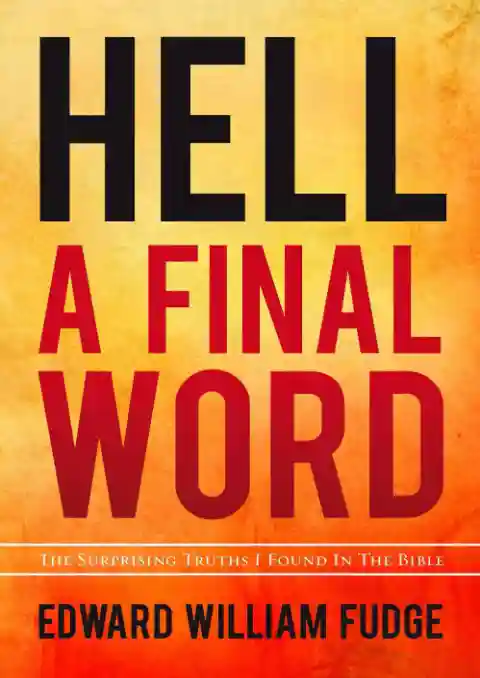

Others like hell: a final word Features >>

Epic Battles Of The Last Days

The Great Divorce

End Of Days

Angels And Demons
The Last Hours Of Jesus - From Gethsemane To Golgotha

Living In The End Times - Study

Four Blood Moons: Something Is About To Change

Eschatology - The High King Of Heaven

From Daniel To Doomsday
Angels On Assignment As Told By Roland H. Buck
About the Book
"Hell: A Final Word" by Edward William Fudge explores the concept of hell from a biblical and theological perspective, challenging traditional views of eternal conscious torment. Fudge argues for a more merciful understanding of hell as a place of remedial punishment where ultimately all will be reconciled to God. He presents a thought-provoking and hopeful interpretation of a controversial topic.
William Still
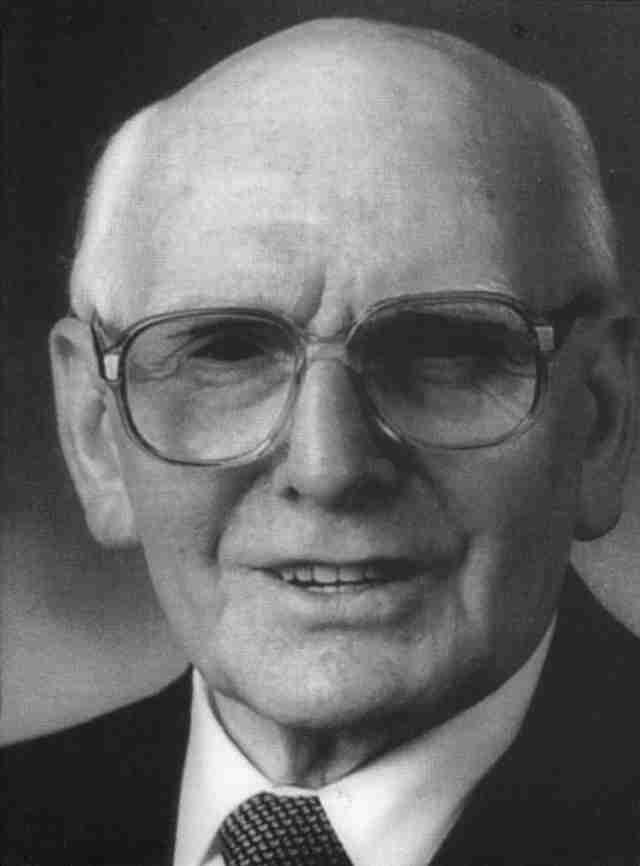 I recently read Dying to Live (Christian Focus, 1991), the autobiography of Scottish pastor William Still. I became interested in Still after reading his book The Work of the Pastor earlier this year.
The first half of Dying to Live tells about Still’s early years into young adulthood and his beginning in pastoral ministry. Still had an unsettled childhood. His parents were separated in his early years, and his father was an alcoholic. He was a sickly child who took refuge in music and became an accomplished pianist. He was part of the Salvation Army as a young man but then entered ministry in the Church of Scotland and served at the Gilcomston Church in his hometown of Aberdeen from 1945-1997.
The second half of the book deals with various aspects of Still’s pastoral ministry. Still was an evangelical. In his early ministry he worked with Billy Graham, Alan Redpath, and others in evangelistic events. With time, however, he moved away from what he came to call “evangelisticism” to develop a solid expositional ministry.
Still faced his fair share of hardships during the course of his ministry. When he moved away from pragmatic evangelistic methods, for example, more than two hundred people stopped attending his church almost overnight. In the preface, he references Martin Luther’s observation that there are three things which make a minister: study, prayer, and afflictions. He observes, “He who is not prepared to make enemies for Christ’s sake by the faithful preaching of the Word will never make lasting friends for Christ, either” (p. 93).
He describes one particularly difficult controversy early in his ministry when he confronted a group of disgruntled elders. At the end of one Sunday service, he read a statement confronting these men, which ended, “There you sit, with your heads down, guilty men. What would you say if I named you before the whole congregation? You stand condemned before God for your contempt of the Word and of his folk.” He adds, “The moment I had finished, I walked out of the pulpit. There was no last hymn—no benediction. I went right home. It was the hardest and most shocking thing I ever had to do in Gilcomston” (p. 124). That same week seven of his elders resigned and Still was called twice before his Presbytery to answer for the controversy. Yet, he endured.
Still maintains that in light of the unpleasantness one will face in the ministry that the minister of the Word must possess one quality in particular: “…I would say that this quality is courage: guts, sheer lion-hearted bravery, clarity of mind and purpose, grit. Weaklings are no use here. They have a place in the economy of God if they are not deliberate weaklings and stunted adults as Paul writes of both to the Romans and to the Corinthians. But weaklings are no use to go out and speak prophetically to men from God and declare with all compassion, as well as with faithfulness, the truth: the divine Word that cuts across all men’s worldly plans for their lives” (p. 140).
Still was a pioneer in several areas. First, he developed a pattern of preaching and teaching systematically through books of the Bible at a time when this was rarely done. He began a ministry of “consecutive Bible teaching” starting with the book of Galatians in 1947, calling this transition from “evangelisticism to systematic exposition … probably the most significant decision in my life” (p. 191).
He was also a pioneer in simplifying and integrating the ministry of the church. After noting how youth in the church were drifting away, even after extensive involvement in the church’s children’s ministry, Still writes, “I conceived the idea of ceasing all Sunday School after beginners and Primary age (seven years) and invited parents to have their children sit with them in the family pew from the age of eight” (p. 171). He laments “the disastrous dispersion of congregations by the common practice of segregating the church family into every conceivable category of division of ages, sexes, etc.” (p. 173).
Dying to Live is a helpful and encouraging work about the life and work of the minister and is to be commended to all engaged in the call of gospel ministry. As the title indicates, Still’s essential thesis is that in order to be effective in ministry the minister must suffer a series of deaths to himself (cf. John 12:24). On this he writes:
The deaths one dies before ministry can be of long duration—it can be hours and days before we minister, before the resurrection experience of anointed preaching. And then there is another death afterwards, sometimes worse than the death before. From the moment that you stand there dead in Christ and dead to everything you are and have and ever shall be and have, every breath you breathe thereafter, every thought you think, every word you say and deed you do, must be done over the top of your own corpse or reaching over it in your preaching to others. Then it can only be Jesus that comes over and no one else. And I believe that every preacher must bear the mark of that death. Your life must be signed by the Cross, not just Christ’s cross (and there is really no other) but your cross in his Cross, your particular and unique cross that no one ever died—the cross that no one ever could die but you and you alone: your death in Christ’s death (p. 136).
I recently read Dying to Live (Christian Focus, 1991), the autobiography of Scottish pastor William Still. I became interested in Still after reading his book The Work of the Pastor earlier this year.
The first half of Dying to Live tells about Still’s early years into young adulthood and his beginning in pastoral ministry. Still had an unsettled childhood. His parents were separated in his early years, and his father was an alcoholic. He was a sickly child who took refuge in music and became an accomplished pianist. He was part of the Salvation Army as a young man but then entered ministry in the Church of Scotland and served at the Gilcomston Church in his hometown of Aberdeen from 1945-1997.
The second half of the book deals with various aspects of Still’s pastoral ministry. Still was an evangelical. In his early ministry he worked with Billy Graham, Alan Redpath, and others in evangelistic events. With time, however, he moved away from what he came to call “evangelisticism” to develop a solid expositional ministry.
Still faced his fair share of hardships during the course of his ministry. When he moved away from pragmatic evangelistic methods, for example, more than two hundred people stopped attending his church almost overnight. In the preface, he references Martin Luther’s observation that there are three things which make a minister: study, prayer, and afflictions. He observes, “He who is not prepared to make enemies for Christ’s sake by the faithful preaching of the Word will never make lasting friends for Christ, either” (p. 93).
He describes one particularly difficult controversy early in his ministry when he confronted a group of disgruntled elders. At the end of one Sunday service, he read a statement confronting these men, which ended, “There you sit, with your heads down, guilty men. What would you say if I named you before the whole congregation? You stand condemned before God for your contempt of the Word and of his folk.” He adds, “The moment I had finished, I walked out of the pulpit. There was no last hymn—no benediction. I went right home. It was the hardest and most shocking thing I ever had to do in Gilcomston” (p. 124). That same week seven of his elders resigned and Still was called twice before his Presbytery to answer for the controversy. Yet, he endured.
Still maintains that in light of the unpleasantness one will face in the ministry that the minister of the Word must possess one quality in particular: “…I would say that this quality is courage: guts, sheer lion-hearted bravery, clarity of mind and purpose, grit. Weaklings are no use here. They have a place in the economy of God if they are not deliberate weaklings and stunted adults as Paul writes of both to the Romans and to the Corinthians. But weaklings are no use to go out and speak prophetically to men from God and declare with all compassion, as well as with faithfulness, the truth: the divine Word that cuts across all men’s worldly plans for their lives” (p. 140).
Still was a pioneer in several areas. First, he developed a pattern of preaching and teaching systematically through books of the Bible at a time when this was rarely done. He began a ministry of “consecutive Bible teaching” starting with the book of Galatians in 1947, calling this transition from “evangelisticism to systematic exposition … probably the most significant decision in my life” (p. 191).
He was also a pioneer in simplifying and integrating the ministry of the church. After noting how youth in the church were drifting away, even after extensive involvement in the church’s children’s ministry, Still writes, “I conceived the idea of ceasing all Sunday School after beginners and Primary age (seven years) and invited parents to have their children sit with them in the family pew from the age of eight” (p. 171). He laments “the disastrous dispersion of congregations by the common practice of segregating the church family into every conceivable category of division of ages, sexes, etc.” (p. 173).
Dying to Live is a helpful and encouraging work about the life and work of the minister and is to be commended to all engaged in the call of gospel ministry. As the title indicates, Still’s essential thesis is that in order to be effective in ministry the minister must suffer a series of deaths to himself (cf. John 12:24). On this he writes:
The deaths one dies before ministry can be of long duration—it can be hours and days before we minister, before the resurrection experience of anointed preaching. And then there is another death afterwards, sometimes worse than the death before. From the moment that you stand there dead in Christ and dead to everything you are and have and ever shall be and have, every breath you breathe thereafter, every thought you think, every word you say and deed you do, must be done over the top of your own corpse or reaching over it in your preaching to others. Then it can only be Jesus that comes over and no one else. And I believe that every preacher must bear the mark of that death. Your life must be signed by the Cross, not just Christ’s cross (and there is really no other) but your cross in his Cross, your particular and unique cross that no one ever died—the cross that no one ever could die but you and you alone: your death in Christ’s death (p. 136).
Finding Financial Freedom
The smartest thing we can do financially is to make God’s kingdom and His righteousness our top priority. Since true financial freedom is based largely on the condition of our heart and attitude, we must consciously embrace truth not fear, contentment not greed, humility not pride, gratitude not resentment, righteousness not deceit, generosity not selfishness. The following suggestions are financial strategies that have helped many people. Look at the list, pray over it, and apply what will benefit you and your family with the goal of changing bad habits, reducing stress, and gaining financial freedom. Make a Plan Everything starts with a plan. After you do that, you’re ready to move forward with it. Set specific goals, short-term and long-term. Write them down and refer to them regularly. This will give clarity. Create a budget. This brings freedom. Seek accountability. This will provide encouragement. Give regularly. This will break the grip of selfishness. Eliminate personal debt. This will set you free. Fund an emergency account, save, invest. This will help you have margin. Change your withholding if you get tax refunds. This will boost cash flow. Celebrate milestones with gratitude. This will keep you motivated. Reduce Expenses You can take action now to reduce your expenses. Here are several actions. Keep track of all expenses for at least 30 days to learn your spending habits. Use extra money (tax refunds, raises, gifts) wisely. Become frugal. Live like you’re poor. Buy only what you need. Cancel cable and subscriptions. Limit or drop TV and social media. Find free entertainment. Read more books — use the library. Eat out only for special occasions. Recruit a couple or family to join you on this journey. Challenge yourself to eat the pantry. The smartest thing we can do financially is to make God’s kingdom and His righteousness our top priority. Chuck Bentley in Finding Financial Freedom This Year Go on a “Spending Fast.” Use cash when possible to limit credit card debt. Change your lifestyle. Move, drive cheaper cars, and so on. Reduce utility costs. Avoid “window shopping.” Assess your friendships. Plan ahead for holidays. Grocery shop with a list. Cook large meals, freeze leftovers, and take meals from home to work Say no to impulse purchases. Use coupons or buy what is on sale. Shop consignment or thrift shops. Drop gym memberships. Make coffee at home. Skip soft drinks and bottled water. Find a mobile discount plan. Trade skills with a friend (cooking, yard care, haircuts, and so on). Avoid financing cars and loans. Don’t gamble. Increase Income By taking just a few deliberate actions, you can increase your income. Work hard and ask for a raise. Improve your job skills. Obtain certifications and online training. Take on a part-time job. Sell what you don’t need. Think outside the box. Find creative solutions to problems. Improve Your Health Your health impacts your finances in several ways, including the cost of insurance, your ability to work, your energy level, your ability to sleep, and your state of mind. Sleep a minimum of seven hours. God designed you to function best when rested. Drink more water, much more than you think you need. Eat healthily. Grow food if you can. Exercise daily and spend time in nature. Sunshine is an essential part of your health. Eliminate stress and guard your mental health. Limit prescription drug use. Research natural remedies. Plan for the Future By taking just a few deliberate actions, you can increase your income. Organize your finances and emergency information. Gather documents to prepare taxes. Make a will and plan burial options. Carry adequate insurance: life, health, car, home, or rental. Plan education costs for children. Begin funding retirement accounts. Diversify your investments. Principles and best practices are of no value if we only know them intellectually. Knowing and doing is the key to experiencing God’s promises. Living accordingly will help you to thrive.