
Others like god told me to marry you Features >>









About the Book
"God Told Me To Marry You" by Kingsley O. is a Christian relationship guide that provides practical advice and guidance on how to navigate the complexities of marriage using biblical principles. The book emphasizes the importance of seeking God's will in choosing a life partner and offers tips on building a strong and lasting marital relationship. Through personal anecdotes and scripture-based teachings, the author highlights the significance of obedience to God's guidance in the journey of marriage.
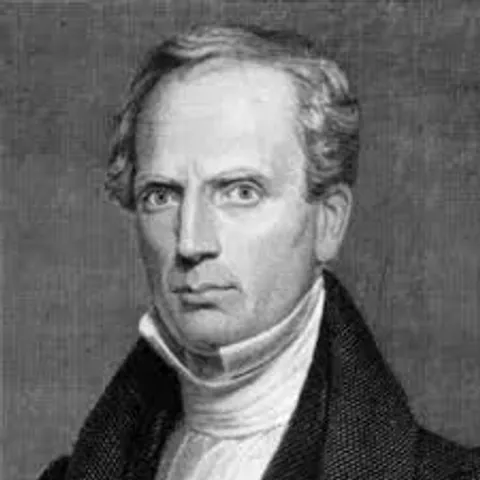
Charles Finney
 Childhood and Teen years
Charles Grandison Finney was born the year after Wesley died on 29th August, 1792 in Warren, Connecticut. In 1794 his family moved to New York state, eventually settling at Henderson, near Lake Ontario. Although he received only a brief formal education he decided to study law and joined the practice of a local lawyer, Benjamin Wright. He was also very musical, played the cello and directed the choir at the local Presbyterian Church pastured by Rev. George Gale.
His conversion
His conversion on October 10th 1821 reads like something out of the book of Acts. Smitten with conviction from Bible reading he decided to ‘settle the question of my soul’s salvation at once, that if it were possible, I would make my peace with God.’ (Autobiography)
This conviction increased to an unbearable level over the next couple of days and came to an head when he was suddenly confronted with an ‘inward voice.’ He was inwardly questioned about his spiritual condition and finally received revelation about the finished work of Christ and his own need to give up his sins and submit to Christ’s righteousness.
As he sought God in a nearby wood he was overwhelmed with an acute sense of his own wickedness and pride but finally submitted his life to Christ. Back at work that afternoon he was filled with a profound sense of tenderness, sweetness and peace. When work was over and he bade his employer goodnight, he then experienced a mighty baptism in the Holy Spirit, which was recorded as vividly as the day he experienced it, though it was penned some fifty years later.
The next morning Finney announced to a customer that he was leaving his law studies to become a preacher of the Gospel.
Charles Finney licensed to preach
He was licensed to preach in 1823 and ordained as an evangelist in 1824. His penetrating preaching was quite different from many local ministers and included an obvious attempt to break away from the traditional and, as he saw it, dead, orthodox Calvinism. He married to Lydia Andrews in October 1824 and was also joined by Daniel Nash (1774-1831), known popularly as ‘Father Nash.’ Undoubtedly Nash’s special ministry of prayer played a great part in Finney’s growing success as an evangelist.
Things really took off when he preached in his old church, where Rev. Gale still ministered. Numerous converts and critics followed! Similar results were experienced in nearby towns of Rome and Utica. Soon newspapers were reporting his campaigns and he began drawing large crowds with dramatic responses.
Soon he was preaching in the largest cities of the north with phenomenal results. Campaign after campaign secured thousands of converts.
The high point of Finney’s revival career was reached at Rochester, New York, during his 1830-1 meetings. Shopkeepers closed their businesses and the whole city seemed to centre on the revivalist. Responding to his irresistible logic and passionate arguments many of his converts were lawyers, merchants and those from a higher income and professional status.
His Preaching
Finney openly preached a modified Calvinism, influenced with his own theology of conversion and used what were perceived to be ‘revivalistic techniques.’
These ‘means’ included the use of the anxious bench (a special place for those under conviction), protracted meetings, women allowed to pray in mixed meetings, publicly naming those present resisting God in meetings and the hurried admission of new converts into church membership. Opponents viewed his preaching of the law as ‘scare tactics’ and his persuasive appeals for sinners to come to Christ for salvation were seen as over-emphasising the responsibility of men and ignoring the sovereignty of God.
His theology and practise soon became known as the ‘New Measures’ and attracted many opponents from the Old School Presbyterians led by Asahel Nettleton (himself no stranger to true revival and , the revivalistic Congregationalists headed by Lyman Beecher.
Pastor at Chatham Street Chapel
Finney accepted an appointment as pastor of Chatham Street Chapel in New York City in 1832 where he remained until 1837. It was during this time that he delivered a series of sermons published in 1835 as ‘Lectures on Revivals of Religion.’ Here he clearly stated his views regarding revivals being products of the correct use of human means. Such was the controversy that he left the Presbyterian denomination and joined the Congregationalists in 1836.
Oberlin College
The next year he became professor of theology at Oberlin College (Ohio) where he taught until his death. He was President here from 1851 until 1866, but still continued regular revival meetings in urban settings (twice in England, 1848, 1851) until 1860. During his stay at Oberlin he produced his, Lectures to Professing Christians (1836), Sermons on Important Subjects (1839) and his famous Memoirs.
The Father of Modern Revivalism
There is no doubt that Charles Grandison Finney well-deserves the title ‘The Father of Modern Revivalism.’ He was an evangelistic pioneer whose model was followed by a long line of revivalists from D. L. Moody to Billy Graham. His writing have made a massive impact on the entire evangelical world and particularly the ‘Lectures on Revivals’ which has, arguably, ignited more fires of revival than any other single piece literature in evangelical history.
This ‘Prince of Revivalists’ passed away peacefully at Oberlin on Sunday, 16th August, 1875 aged almost 83 years.
Bibliography: I Will Pour Out My Spirit, R. E. Davies, 1997; Ed: A. Scott Moreau, Baker Evangelical Dictionary of World Missions, 2000; Dictionary of Evangelical Biography 1730-1860, Vol. 1, 1995.
Tony Cauchi
Childhood and Teen years
Charles Grandison Finney was born the year after Wesley died on 29th August, 1792 in Warren, Connecticut. In 1794 his family moved to New York state, eventually settling at Henderson, near Lake Ontario. Although he received only a brief formal education he decided to study law and joined the practice of a local lawyer, Benjamin Wright. He was also very musical, played the cello and directed the choir at the local Presbyterian Church pastured by Rev. George Gale.
His conversion
His conversion on October 10th 1821 reads like something out of the book of Acts. Smitten with conviction from Bible reading he decided to ‘settle the question of my soul’s salvation at once, that if it were possible, I would make my peace with God.’ (Autobiography)
This conviction increased to an unbearable level over the next couple of days and came to an head when he was suddenly confronted with an ‘inward voice.’ He was inwardly questioned about his spiritual condition and finally received revelation about the finished work of Christ and his own need to give up his sins and submit to Christ’s righteousness.
As he sought God in a nearby wood he was overwhelmed with an acute sense of his own wickedness and pride but finally submitted his life to Christ. Back at work that afternoon he was filled with a profound sense of tenderness, sweetness and peace. When work was over and he bade his employer goodnight, he then experienced a mighty baptism in the Holy Spirit, which was recorded as vividly as the day he experienced it, though it was penned some fifty years later.
The next morning Finney announced to a customer that he was leaving his law studies to become a preacher of the Gospel.
Charles Finney licensed to preach
He was licensed to preach in 1823 and ordained as an evangelist in 1824. His penetrating preaching was quite different from many local ministers and included an obvious attempt to break away from the traditional and, as he saw it, dead, orthodox Calvinism. He married to Lydia Andrews in October 1824 and was also joined by Daniel Nash (1774-1831), known popularly as ‘Father Nash.’ Undoubtedly Nash’s special ministry of prayer played a great part in Finney’s growing success as an evangelist.
Things really took off when he preached in his old church, where Rev. Gale still ministered. Numerous converts and critics followed! Similar results were experienced in nearby towns of Rome and Utica. Soon newspapers were reporting his campaigns and he began drawing large crowds with dramatic responses.
Soon he was preaching in the largest cities of the north with phenomenal results. Campaign after campaign secured thousands of converts.
The high point of Finney’s revival career was reached at Rochester, New York, during his 1830-1 meetings. Shopkeepers closed their businesses and the whole city seemed to centre on the revivalist. Responding to his irresistible logic and passionate arguments many of his converts were lawyers, merchants and those from a higher income and professional status.
His Preaching
Finney openly preached a modified Calvinism, influenced with his own theology of conversion and used what were perceived to be ‘revivalistic techniques.’
These ‘means’ included the use of the anxious bench (a special place for those under conviction), protracted meetings, women allowed to pray in mixed meetings, publicly naming those present resisting God in meetings and the hurried admission of new converts into church membership. Opponents viewed his preaching of the law as ‘scare tactics’ and his persuasive appeals for sinners to come to Christ for salvation were seen as over-emphasising the responsibility of men and ignoring the sovereignty of God.
His theology and practise soon became known as the ‘New Measures’ and attracted many opponents from the Old School Presbyterians led by Asahel Nettleton (himself no stranger to true revival and , the revivalistic Congregationalists headed by Lyman Beecher.
Pastor at Chatham Street Chapel
Finney accepted an appointment as pastor of Chatham Street Chapel in New York City in 1832 where he remained until 1837. It was during this time that he delivered a series of sermons published in 1835 as ‘Lectures on Revivals of Religion.’ Here he clearly stated his views regarding revivals being products of the correct use of human means. Such was the controversy that he left the Presbyterian denomination and joined the Congregationalists in 1836.
Oberlin College
The next year he became professor of theology at Oberlin College (Ohio) where he taught until his death. He was President here from 1851 until 1866, but still continued regular revival meetings in urban settings (twice in England, 1848, 1851) until 1860. During his stay at Oberlin he produced his, Lectures to Professing Christians (1836), Sermons on Important Subjects (1839) and his famous Memoirs.
The Father of Modern Revivalism
There is no doubt that Charles Grandison Finney well-deserves the title ‘The Father of Modern Revivalism.’ He was an evangelistic pioneer whose model was followed by a long line of revivalists from D. L. Moody to Billy Graham. His writing have made a massive impact on the entire evangelical world and particularly the ‘Lectures on Revivals’ which has, arguably, ignited more fires of revival than any other single piece literature in evangelical history.
This ‘Prince of Revivalists’ passed away peacefully at Oberlin on Sunday, 16th August, 1875 aged almost 83 years.
Bibliography: I Will Pour Out My Spirit, R. E. Davies, 1997; Ed: A. Scott Moreau, Baker Evangelical Dictionary of World Missions, 2000; Dictionary of Evangelical Biography 1730-1860, Vol. 1, 1995.
Tony Cauchi
Did God Hear Me - Where Was He When My Sister Died
The ancient Hebrew songwriter of Psalm 116 sings with joy, I love the Lord, because he has heard my voice and my pleas for mercy. . . . The snares of death encompassed me; the pangs of Sheol laid hold on me; I suffered distress and anguish. Then I called on the name of the Lord: “O Lord, I pray, deliver my soul!” Gracious is the Lord, and righteous; our God is merciful. . . . For you have delivered my soul from death, my eyes from tears, my feet from stumbling. (Psalm 116:1–8) This is the collective testimony of God’s people — he loves us, and we love him. And because he loves us, our Savior has promised that when we pray for anything according to his will, he will answer us (John 14:13–14). In two previous articles, I wrote about how I prayed for my daughter’s life when she was diagnosed with a terminal form of cancer and how Jesus answered my prayer. In nothing short of a miracle, Jesus healed her and delivered me and my wife from inconsolable sorrows (Philippians 2:27). God is good, and he is merciful, and, yes, he hears our cries for help. Then March of this year happened. My sister was diagnosed with a terminal form of cancer. My family was still grieving her 40-year-old son who, just months earlier, died tragically and unexpectedly from a heart attack. The news of my sister’s cancer emotionally overwhelmed us. We prayed for a miracle. Trusting in her Lord with whether she lived or died, my sister breathed her last breath on June 3rd. My heart is broken, and I’m still grieving. There have been days when I didn’t think I would be able to get out of bed. Everything is harder. Writing an article about death is harder. “God hears the prayers of the righteous — and he is still righteous and good when he answers no.” After praying with me for my sister’s life and then mourning with me over her death, Desiring God gave me an opportunity to share from our mourning. So I want to try to comfort others with the comfort of God that I am seeking. I want to help Christians see how enduring suffering rests on an important truth. Our comfort comes from embracing the truth that God hears the prayers of the righteous — and that he is still righteous and good when he answers no. What We Don’t Understand Yet The Bible teaches that when God’s children are in despair, he wants us to pray, knowing that he will answer (1 Peter 5:7). But the Bible doesn’t promise to limit the infinite answers of God to our finite understandings. While God’s answers are always consistent with who he is (good, all-wise, righteous, and merciful), his thoughts and ways are incalculably higher than ours. So sometimes when we pray for God to keep us from the sorrows that fill this broken world, his perfect answer will be, “No, my grace is sufficient for you” (2 Corinthians 12:9). Consider the agony of seeing your miraculously born, perfectly just, and sinless son hanging from a wickedly unjust, cruel Roman cross. Mary didn’t knowingly pray for that. Wasn’t the horror of the cross crushing to her? Yet God ordained the cross, and for the joy set before him, Jesus willingly submitted to the Father and endured it. Before we see him on the cross, we see him alone in the garden. And there, we see him in agony, trembling and pleading with his Father three times to take his cup of wrath away (Matthew 26:39–44). Yes, God is good, and whenever he allows suffering, he has good purposes behind it, even when we don’t understand (Genesis 50:20). Jesus knew that and surrendered to his Father’s perfect will and drank the full cup of God’s wrath. He endured the greatest suffering of all, and by doing so, brought about the greatest good of all, redemption — the overthrow of death, sin, and all that is evil. The Real Problem with Death When we pray for our dying loved ones, what are we really asking for? Like Hezekiah, are we asking God to give them more years (2 Kings 20:1, 5–6)? God heard his prayers and saw his tears and extended his life by fifteen years. When we pray, and our loved ones are with us for another day, or month, or year, we should give thanks through tears. I treasured the three months that God gave us with my sister. She was able to say her final goodbyes, see her grandchildren, and express her unwavering faith in Jesus. She glorified God in her death (Philippians 1:20). However, we should also remember eternity in our prayers. In our pleading with God, we should first pray for our loved one’s salvation — that whether they live or die, they make their calling and election sure. For even if God extends their lives, what are years in light of eternity? All our lives are just a vapor. The real problem with death isn’t when we die . The real problem is that we will die . The sage of Ecclesiastes bluntly writes, “No man has power to retain the spirit, or power over the day of death” (Ecclesiastes 8:8). Jesus came for that reason. He came to abolish death and bring life and immortality to light (2 Timothy 1:10). Because the wages of sin is death, the Son of God became man, so that he could live a sinless life and then give that life as the payment for our sin (1 Peter 3:18). Prayer for Your Mourning Jesus’s resurrection validated his victory and authority over death. He is the resurrection and the life. Our loved ones who die in Christ go directly into his presence. We can comfort ourselves with that truth. No one has to mourn without hope when their loved ones die in Christ (1 Thessalonians 4:13–14). In the end, Christ will remove death from creation when he makes a new heaven and a new earth (1 Corinthians 15:26; Revelation 21:4). Until then, we do deeply mourn (Philippians 2:27), but because of Christ we have a balm to heal our broken hearts. In a confession of desperation, when facing an insurmountable enemy, Judah’s King Jehoshaphat cried out to the Lord, “We are powerless against this great horde that is coming against us. We do not know what to do, but our eyes are on you” (2 Chronicles 20:12). May I encourage you to make this your prayer as you mourn? “You won’t always understand why you suffer, but you must believe that God does.” Perhaps you have prayed and asked God to heal your loved one. Instead, you’ve been struck like Job by the cruelty of our mortal enemy — death (Job 1:4–5, 18–19). Your songs aren’t songs of joy. They are laments from a heart that is reeling from the jarring pain that comes with the death of a spouse, a child, a sibling, a best friend, or someone whom you’ve deeply loved. You won’t always understand why you suffer, but you must believe that God does. You can, therefore, pray and ask God to comfort you, knowing that he is good even when he ordains that you suffer. How I Comfort My Soul As you mourn, perhaps your prayer can sound like this: Jesus, I believe that you love me. You went to the cross for me and saved me. Fill my heart with the light of your love when the darkness of sorrow encompasses me. Jesus, you are the infinite, all-powerful Son of God, and you became man so that you could be my sympathetic High Priest, who feels all my weaknesses and pains (Hebrews 4:15). Help me to mourn. You know the pain of death. You wept over your friend Lazarus, and you mourned with his sisters. Remind me that you are bottling up every tear that falls from my eyes (Psalm 56:8). Jesus, you are not indifferent to death nor to my struggle with it. You hate death (John 11:33; Ezekiel 18:32) and came to put death to death. When you rose from the dead, you conquered death, and you shared your victory over death with all who believe in you. Comfort me with the reality that you are the resurrection and the life, and because of this, my believing loved one has eternal life in your presence. Lord, you appoint the day when everyone dies and stands before you in judgment (Hebrews 9:27). I can’t put people into heaven or hell. You are the judge of all the earth, and you always do what is right even when I can’t comprehend it (Genesis 18:25). You mourned over an unbelieving Israel (Matthew 23:37). Help me to know that you are good even when I mourn the death of unbelieving loved ones. Father, all good gifts come from you. Through my tears, I thank you for giving me my loved one, and for the time that you gave me as I mourn the years that I won’t have. This is how I am comforting my soul. I thank God for making my sister to be our family evangelist. She brought me to church when I was twenty. I heard the gospel, and God saved me. I thank God for giving her eternal life so that she never saw death (John 8:51). When she breathed her last breath here, she opened her eyes looking into the radiance of the glory that shines from his face. And I thank God for his word that teaches all of us that Jesus is the ultimate gift, and God is enough to satisfy our souls (Psalms 73:25–26). Until Christ comes or brings us home, I pray that God will comfort our hearts with these precious truths so that we can comfort others who are mourning.