
GIP Library icon

LOG IN TO REVIEW
About the Book


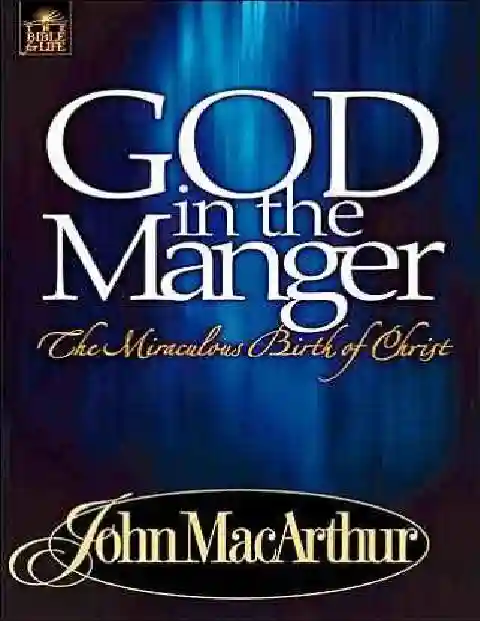
"God in the Manger" by John MacArthur is a collection of Christmas reflections that explore the significance of Jesus' birth. The book delves into the theology behind the incarnation and the impact of Jesus' birth on humanity. MacArthur encourages readers to reflect on the true meaning of Christmas and to embrace the hope and joy that come from God becoming man.

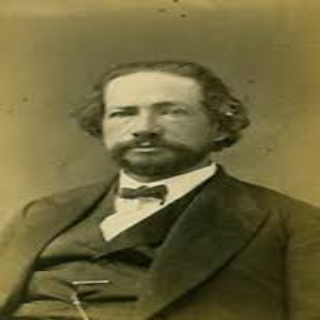
Abraham Kuyper

Abraham Kuyper Abraham Kuyper, (born Oct. 29, 1837, Maassluis, Neth.—died Nov. 8, 1920, The Hague), Dutch theologian, statesman, and journalist who led the Anti-Revolutionary Party, an orthodox Calvinist group, to a position of political power and served as prime minister of the Netherlands from 1901 to 1905. After serving as a pastor in Beesd, Utrecht, and Amsterdam (1863–74), Kuyper adopted the orthodox Calvinist views of Guillaume Groen van Prinsterer. De Standaard, the newspaper Kuyper founded in 1872, became an organ for Groen’s ideas. Elected to the States General (national assembly) in 1874, he became the leader of Groen’s political group, expanding it to form the Anti-Revolutionary Party (1878), the first properly organized Dutch political party. A far more practical politician than Groen, he built up a large lower-middle-class following with a program combining orthodox religious views and a progressive social program. To provide a more thorough training in Calvinist doctrine for pastors, Kuyper founded the Free University at Amsterdam in 1880. After seceding from the Reformed Church (Hervormde Kerk) of the Netherlands (1886), which he viewed as overly aristocratic, he founded the Reformed Churches (Gereformeerde Kerken) in the Netherlands in 1892. In 1888 Kuyper formed a coalition of the Anti-Revolutionary Party and the Roman Catholic group led by Hermanus Schaepman, which gained power and ended the era of Liberal rule. An education act passed by the coalition in 1889 introduced the first state subsidies for parochial schools. Having returned to the States General in 1894, Kuyper formed a coalition in 1897 of the three “church” groups: Catholic, Anti-Revolutionary, and Christian Historical parties, the last-named an aristocratic splinter group from the Anti-Revolutionaries. Becoming prime minister and home affairs minister in 1901, he mediated between England and the Boers during the South African War (1899–1902). Although Kuyper repressed the railway and harbour workers’ strike of 1903, he also advocated a wider franchise and social benefits. “Private” (denominational) universities first received official recognition in his administration. After the victory of a Liberal coalition in the 1905 elections, Kuyper’s political influence declined. He was a representative in the Second Chamber (1908–12) and then in the First Chamber until his death.

you still need good friends

Few realities in human life are as captivating, fulfilling, and elusive as friendship. Most of us have tasted its deep and dynamic potential for good at some point along our journeys, and yet most of us can also testify to having neglected friendship, maybe for years. Maybe for decades. As Drew Hunter observes, “Friendship is, for many of us, one of the most important but least thought about aspects of life” ( Made for Friendship , 23). How much time do you spend thinking about your friendships? Many of us give our friendships less attention than they deserve, and we suffer for it. The absence of good friends slowly starves everything else we do. A husband without good friends will be a worse husband. A mother without good friends will be a worse mother. A pastor, a doctor, a teacher, and an engineer will all be less effective at their callings without the support and camaraderie of friends. And this thread weaves quietly through Scripture. How many saints can you think of who do something worth imitating while friendless? To be sure, Jesus stormed the grave by himself. It had to be so. And yet even he spent most of his life and ministry with a handful of guys. And as the cross drew near, he said to them, “No longer do I call you servants . . . but I have called you friends, for all that I have heard from my Father I have made known to you” (John 15:15). He may have died alone, but he lived among brothers, because friendship is an essential part of being fully human. Unnecessary and Vital Love That being said, friendship is an unusual relationship because it’s not essential to existence. It’s why friendship is so often neglected — and, ironically, why it holds so much power and potential. C.S. Lewis writes, “Friendship is unnecessary, like philosophy, like art, like the universe itself (for God did not need to create). It has no survival value; rather it is one of those things which give value to survival” ( Four Loves , 90). We spend tens of hours a week on work because we would die without food and shelter. Friendship isn’t feeding the kids or paying the mortgage. But it can make parenting richer and more bearable, and make a home feel a lot more like home. We may be able to live — to eat, drink, work, sleep, and survive — without friends, but what kind of life would that be? The truly good life, we all know by experience, is a shared life. Lewis goes on, Our ancestors regarded Friendship as something that raised us almost above humanity. This love, free from instinct, free from all duties but those which love has freely assumed, almost wholly free from jealousy, and free without qualification from the need to be needed, is eminently spiritual. It is the sort of love one can imagine between angels. (98) “We may be able to eat, drink, work, sleep, and survive without friends, but what kind of life would that be?” Unnecessary and angelic — this describes the mysterious reality of friendship. It raises, or even removes, the ceiling on all our other experiences. Most of what we love to do, we love to do all the more with friends. Those who find meaningful friendship experience a nearly super-human life. Why? Because they get to see more of God, and because they get so much more done,  together . Personal Windows into God How does Christian friendship raise us above the unremarkable rhythms of our humanity? First, by intimately introducing us to more of God’s creativity and supremacy. Those who see him together will see more of him. Lewis captures this capacity of friendship when he writes, Friendship exhibits a glorious “nearness by resemblance” to Heaven itself where the very multitude of the blessed (which no man can number) increases the fruition which each has of God. For every soul, seeing Him in her own way, doubtless communicates that unique vision to all the rest. . . . The more we thus share the Heavenly Bread between us, the more we shall all have. (79) The beauty and worth of God cannot be exhausted by one pair of eyes, by one finite mind and heart. Therefore, two really can see more than one. The more we share of him, the more we have of him. Surely, this is one reason why God plans to redeem people from every tribe, tongue, people, and nation, right (Revelation 7:9). Because whatever makes each of them unique prepares them to notice and treasure dimensions of Christ that millions of others might miss. So it is in friendship. As we gaze at God together, over months and years and longer, walking through joys and sorrows, victories and losses, blessings and adversity, we get to see him through each other’s eyes. Worship is communal and contagious. Every human life has the potential to be a unique window into the divine. Because that’s who God is — Father, Son, and Spirit forever adoring and glorifying one another. Courage in Flesh and Blood As friendships help us see more of God, though, they also unleash us to live more radically for God. What good have any of us done in the world without the help or encouragement of friends? As you take yourself back through anything you’ve accomplished in life and ministry, and then allow yourself to look around for a minute, what do you see? For many of us, we see  faces . The most defining moments of our lives have been most defined not by addresses, degrees, or promotions, but by people — often, by friends. Hunter highlights the unusual and spiritual productivity of friendship: One of the greatest gifts we can offer our friends is sheer encouragement. As we listen and light up to their ideas, we stir their souls into action. We lift their hearts and spur them on. Much of what is truly good in the world is the fruit of friendship. (71) Why did Jesus send the disciples out in twos (Mark 6:7)? Perhaps he was concerned for their safety on the road (a kind of grown-up buddy-system). It seems far more likely to me that he wanted them each to have built-in, by-their-side courage to keep going when ministry got hard. He knew they would do far more good as twelve pairs than they would on twenty-four different paths. He knew they would conquer sin and Satan together in ways they couldn’t alone. Friendship Isn’t About Friendship These two insights about friendship — that friends helps us see more of God and that they free us to do more for his glory — explain what makes friendship precious. And what makes it possible. Good friendships, after all, aren’t about friendship, which means we won’t experience them by focusing on them. Again, Lewis, wisely observes, Lovers are always talking to one another about their love; Friends hardly every about their Friendship. Lovers are normally face to face, absorbed in each other; Friends, side by side, absorbed in some interest. (78) “Good friendships aren’t about friendship, which means we won’t experience them by focusing on them.” Lovers often find one another looking for love. Friends find one another while chasing something else. They providentially collide while striving after God, while studying his word, while loving their families, while meeting needs in the church, while discipling younger believers, while pursuing the lost. “The very condition of having Friends,” Lewis continues, “is that we should want something else besides Friends. . . . Those who have nothing can share nothing; those who are going nowhere can have no fellow-travelers” (85). If you want to experience real friendship, go hard after God, take bigger risks to glorify him with your life, and then look around to see who’s running with you.

Feedback
Suggestionsuggestion box
x