Others like god’s battle plan for purity Features >>

God's Master Plan For Your Life
-160.webp)
God's Will For Your Life
God's Timing For Your Life

God’s Answers To Life’s Difficult Questions

God Built - Forged By God In The Bad And Good Of Life

How To Live A Successful Christian Life

God's Armor Bearer

The Sins Of The Mouth
-160.webp)
Endued With Power: How To Activate The Gifts Of The Holy Spirit In Your Life
Becoming A Vessel Of Honor
About the Book
"God’s Battle Plan For Purity" by Gregory Brown offers practical and biblical strategies for overcoming temptations and living a life of sexual purity. The book provides guidance on how to combat lust, maintain healthy boundaries, and seek God’s strength in the pursuit of purity. It emphasizes the importance of relying on God’s Word and prayer to resist sexual sin and honor Him in all areas of life.
Brother Yun
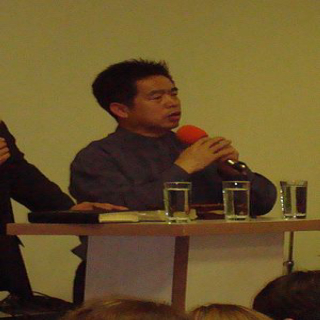 Brother Yun was born in February 1958 in the province of Henan. His original name was Liu Zhenying (刘振营).
Brother Yun became a believer at the age of 16. Soon after he became a Christian, God called him to be His witness in the west and south. As he was obedient to the calling, he eventually became a witness of Christ not just in the western and southern parts of China, but throughout China and in the nations beyond China as well.
Brother Yun was born into a poor family. His family’s financial situation took a turn for the worst when his father became ill with an asthmatic condition that led to lung cancer eventually. His life got worse when he became a Christian as he suffered severe trials and persecutions. In the midst of suffering for the Lord, however, he experienced miracle after miracle, which helped to strengthen his faith.
HOW BROTHER YUN BECAME A BELIEVER
In 1974, Brother Yun’s father became ill with lung cancer. His mother, who had been a Christian for many years but had become spiritually cold after the expulsion of Western missionaries during the Cultural Revolution, felt a deep sense of desperation because if her husband had died then, it would leave the family in dire straits. She thought of committing suicide. One evening, as she was lying in bed, she heard a voice saying to her that Jesus loved her. In tears and in repentance, she rededicated her life to God and gathered her family to pray for her husband. The next morning, her husband got better and as a result, everyone in the family, including Brother Yun, put their faith in God.
HIS HUNGER FOR THE WORD OF GOD
Brother Yun was 16 when he became a Christian. Soon after, he started hungering for the Word of God. However, his family did not have a Bible. He began asking his mother who Jesus was. In response, his mother would tell him that Jesus was the Son of God and that He had recorded all His teachings in the Bible.
Brother Yun wanted a Bible and his mother recalled that there was a man in another village who had one. So she brought him to see the man. The man was too afraid to show Brother Yun his Bible. So he suggested to the latter that he could pray and ask God for one.
Brother Yun decided to fast and pray for a Bible. For the next 100 days, he ate only one bowl of steamed rice everyday. One day at 4am, after fasting for 100 days, he saw a vision. In the vision, he was walking up a steep hill and trying to push a heavy cart at the same time. He was heading towards a village where he intended to beg for food for his family. He struggled greatly as he continued his climb uphill. The cart was about to roll back and fall on him when he saw three men walking down the hill in the opposite direction. One of them was a kind old man and he was pulling a large cart of fresh bread. When the old man saw Brother Yun, he asked him if he was hungry. He said ‘yes’ and started crying. The old man then took a red bag of bread from his cart and asked his two servants to give it to Brother Yun. As he put the bread into his mouth, it immediately turned into a Bible.
Upon waking up, Brother Yun began to search for the Bible. His search, however, was in vain. All of a sudden, he heard a faint knock on the door and someone was calling out his name. Immediately, he recognised the voice – it was the same voice he had heard in the vision. He quickly opened the door and standing before him were the two servants he had seen in the vision. One of them held a red bag in his hand. In this red bag was a Bible.
It was later that Brother Yun found out the names of the two men. One was Brother Wang while the other was Brother Sung. They were sent by an evangelist to give Brother Yun the Bible. The evangelist, who had suffered terribly during the Cultural Revolution and had nearly died while being tortured, had received a vision from God. In the vision, God showed him Brother Yun’s house and the location of his village. He was asked to give his Bible to Brother Yun. However, he did not obey God until three months later.
Brother Yun began to devour the Word of God. Even though he could hardly read, this did not deter him at all. When he had finished reading the entire Bible, he started to memorise one chapter per day. In 28 days, he had memorised the Gospel of Matthew. Then he went on to memorise the Book of Acts and so forth.
OBEDIENT TO THE CALL OF GOD
One morning at 4am, Brother Yun had a dream. In the dream, God asked him to be His witness in the west and south. In the same dream, he saw a young man from the south coming to his house. And so at daybreak, he told his mother to expect the young man’s visit and to ask him to wait for him. Then he sat off to a village he had never heard of in the west. The people in this village had been praying for him to visit as they had heard about how he had prayed for a Bible and got it.
When the meeting at the village concluded and Brother Yun got ready to leave, the villagers refused to let him go. So he stayed on and recited to them the first twelve chapters from the Book of Acts. After that, the villagers finally let him go. From the village to his house, it could take up to 2 hours to walk. Because he did not want to make the young man from the south wait too long, he decided to run home. All of a sudden, he found himself entering his village without any apparent time lapse. What should have taken him a few hours took him just a few moments. It was as if God had supernaturally transported him back to his village.
PERSECUTIONS AND MIRACLES IN HIS LIFE
Brother Yun was arrested by security police numerous times and was thrown into prison three times for sharing the gospel in communist China.
When Brother Yun was arrested the first time, he was only 17 years old. At that time, he was ministering at a meeting far away from home. After he was caught, he was thrown into a freezing cold prison cell. There was no heat in the cell and his winter coat had been thrown into the snow by the security police who had caught him. He began to sing Psalm 150 aloud. The more he sang, the more he was filled with joy. Gradually, his frozen hands and feet regained feeling and he no longer felt cold.
During his first imprisonment in Nanyang, Brother Yun felt that God wanted him to fast without food and water until he could see his family again. This fast lasted 74 days, which was humanly impossible but yet was made possible because he chose to obey God.
During those times when Brother Yun was in the hands of government officials, he was repeatedly beaten and tortured with electric batons. He was also kicked and trampled upon. Furthermore, he had needles being jabbed underneath his fingernails.
Once, Brother Yun was paraded through the streets with a red cross tied behind him for half a day. When night fell, he was locked and left alone inside a large interrogation room. The wooden cross was taken off his back but his hands were still tied up. All of a sudden, the rope that was used to tie his hands snapped by itself. He immediately walked out of the interrogation room and walked through the courtyard in the midst of onlookers. Nobody stopped him or said anything to him. It was as if God had blinded their eyes and they did not even recognise who he was.
Because the front gate was locked, the only way Brother Yun could get out was to climb over an eight-foot high cement wall. He climbed up as much as he could manage. Then he looked over the wall and saw that there was a ten-foot wide open tank directly below. Suddenly, he felt as if someone had lifted him up and thrown him over. He was thrown so far that he did not land in the tank.
Brother Yun’s 3rd imprisonment was a very dark period in his life as the prison guards in the maximum security prison were determined to prevent his escape. So they beat his legs to cripple him permanently. They had him beaten up everyday, even in his crippled state. One day, God instructed him to escape from the prison. This was confirmed by a brother-in-Christ. Thus, on May 5, 1997, he miraculously walked past dozens of prison guards and out of the maximum security prison. It was as if he had become invisible to the guards. He did not realise that his legs had been miraculously healed until later.
Throughout all the horrendous and painful experiences that Brother Yun went through, the word of the Lord kept coming to him, encouraging him and strengthening his faith.
BROTHER YUN’S MINISTRY
Brother Yun eventually escaped China and sought asylum in Germany in 2001. Since then, he has been continuing his ministry from there and has spoken to congregations internationally. He has founded “Back to Jerusalem” Movement and has been sending missionaries out from China to share the gospel in the least-reached nations.
Brother Yun’s life and ministry have impacted many lives. Thousands of people have become Christians through his ministry. It is thus inevitable that fellow Christians have allowed themselves to be used as instruments of wickedness to attack his reputation. The co-author of The Heavenly Man, Paul Hattaway has aptly put it this way, “Many of the great Christian leaders throughout history have been the subject of brutal attacks from other Christians.”
AFTERTHOUGHT
Brother Yun’s childlike faith and his prompt obedience to God’s call are exemplary. It is incredible that he has remained faithful to God despite the tremendous suffering and persecutions he has gone through.
Brother Yun was born in February 1958 in the province of Henan. His original name was Liu Zhenying (刘振营).
Brother Yun became a believer at the age of 16. Soon after he became a Christian, God called him to be His witness in the west and south. As he was obedient to the calling, he eventually became a witness of Christ not just in the western and southern parts of China, but throughout China and in the nations beyond China as well.
Brother Yun was born into a poor family. His family’s financial situation took a turn for the worst when his father became ill with an asthmatic condition that led to lung cancer eventually. His life got worse when he became a Christian as he suffered severe trials and persecutions. In the midst of suffering for the Lord, however, he experienced miracle after miracle, which helped to strengthen his faith.
HOW BROTHER YUN BECAME A BELIEVER
In 1974, Brother Yun’s father became ill with lung cancer. His mother, who had been a Christian for many years but had become spiritually cold after the expulsion of Western missionaries during the Cultural Revolution, felt a deep sense of desperation because if her husband had died then, it would leave the family in dire straits. She thought of committing suicide. One evening, as she was lying in bed, she heard a voice saying to her that Jesus loved her. In tears and in repentance, she rededicated her life to God and gathered her family to pray for her husband. The next morning, her husband got better and as a result, everyone in the family, including Brother Yun, put their faith in God.
HIS HUNGER FOR THE WORD OF GOD
Brother Yun was 16 when he became a Christian. Soon after, he started hungering for the Word of God. However, his family did not have a Bible. He began asking his mother who Jesus was. In response, his mother would tell him that Jesus was the Son of God and that He had recorded all His teachings in the Bible.
Brother Yun wanted a Bible and his mother recalled that there was a man in another village who had one. So she brought him to see the man. The man was too afraid to show Brother Yun his Bible. So he suggested to the latter that he could pray and ask God for one.
Brother Yun decided to fast and pray for a Bible. For the next 100 days, he ate only one bowl of steamed rice everyday. One day at 4am, after fasting for 100 days, he saw a vision. In the vision, he was walking up a steep hill and trying to push a heavy cart at the same time. He was heading towards a village where he intended to beg for food for his family. He struggled greatly as he continued his climb uphill. The cart was about to roll back and fall on him when he saw three men walking down the hill in the opposite direction. One of them was a kind old man and he was pulling a large cart of fresh bread. When the old man saw Brother Yun, he asked him if he was hungry. He said ‘yes’ and started crying. The old man then took a red bag of bread from his cart and asked his two servants to give it to Brother Yun. As he put the bread into his mouth, it immediately turned into a Bible.
Upon waking up, Brother Yun began to search for the Bible. His search, however, was in vain. All of a sudden, he heard a faint knock on the door and someone was calling out his name. Immediately, he recognised the voice – it was the same voice he had heard in the vision. He quickly opened the door and standing before him were the two servants he had seen in the vision. One of them held a red bag in his hand. In this red bag was a Bible.
It was later that Brother Yun found out the names of the two men. One was Brother Wang while the other was Brother Sung. They were sent by an evangelist to give Brother Yun the Bible. The evangelist, who had suffered terribly during the Cultural Revolution and had nearly died while being tortured, had received a vision from God. In the vision, God showed him Brother Yun’s house and the location of his village. He was asked to give his Bible to Brother Yun. However, he did not obey God until three months later.
Brother Yun began to devour the Word of God. Even though he could hardly read, this did not deter him at all. When he had finished reading the entire Bible, he started to memorise one chapter per day. In 28 days, he had memorised the Gospel of Matthew. Then he went on to memorise the Book of Acts and so forth.
OBEDIENT TO THE CALL OF GOD
One morning at 4am, Brother Yun had a dream. In the dream, God asked him to be His witness in the west and south. In the same dream, he saw a young man from the south coming to his house. And so at daybreak, he told his mother to expect the young man’s visit and to ask him to wait for him. Then he sat off to a village he had never heard of in the west. The people in this village had been praying for him to visit as they had heard about how he had prayed for a Bible and got it.
When the meeting at the village concluded and Brother Yun got ready to leave, the villagers refused to let him go. So he stayed on and recited to them the first twelve chapters from the Book of Acts. After that, the villagers finally let him go. From the village to his house, it could take up to 2 hours to walk. Because he did not want to make the young man from the south wait too long, he decided to run home. All of a sudden, he found himself entering his village without any apparent time lapse. What should have taken him a few hours took him just a few moments. It was as if God had supernaturally transported him back to his village.
PERSECUTIONS AND MIRACLES IN HIS LIFE
Brother Yun was arrested by security police numerous times and was thrown into prison three times for sharing the gospel in communist China.
When Brother Yun was arrested the first time, he was only 17 years old. At that time, he was ministering at a meeting far away from home. After he was caught, he was thrown into a freezing cold prison cell. There was no heat in the cell and his winter coat had been thrown into the snow by the security police who had caught him. He began to sing Psalm 150 aloud. The more he sang, the more he was filled with joy. Gradually, his frozen hands and feet regained feeling and he no longer felt cold.
During his first imprisonment in Nanyang, Brother Yun felt that God wanted him to fast without food and water until he could see his family again. This fast lasted 74 days, which was humanly impossible but yet was made possible because he chose to obey God.
During those times when Brother Yun was in the hands of government officials, he was repeatedly beaten and tortured with electric batons. He was also kicked and trampled upon. Furthermore, he had needles being jabbed underneath his fingernails.
Once, Brother Yun was paraded through the streets with a red cross tied behind him for half a day. When night fell, he was locked and left alone inside a large interrogation room. The wooden cross was taken off his back but his hands were still tied up. All of a sudden, the rope that was used to tie his hands snapped by itself. He immediately walked out of the interrogation room and walked through the courtyard in the midst of onlookers. Nobody stopped him or said anything to him. It was as if God had blinded their eyes and they did not even recognise who he was.
Because the front gate was locked, the only way Brother Yun could get out was to climb over an eight-foot high cement wall. He climbed up as much as he could manage. Then he looked over the wall and saw that there was a ten-foot wide open tank directly below. Suddenly, he felt as if someone had lifted him up and thrown him over. He was thrown so far that he did not land in the tank.
Brother Yun’s 3rd imprisonment was a very dark period in his life as the prison guards in the maximum security prison were determined to prevent his escape. So they beat his legs to cripple him permanently. They had him beaten up everyday, even in his crippled state. One day, God instructed him to escape from the prison. This was confirmed by a brother-in-Christ. Thus, on May 5, 1997, he miraculously walked past dozens of prison guards and out of the maximum security prison. It was as if he had become invisible to the guards. He did not realise that his legs had been miraculously healed until later.
Throughout all the horrendous and painful experiences that Brother Yun went through, the word of the Lord kept coming to him, encouraging him and strengthening his faith.
BROTHER YUN’S MINISTRY
Brother Yun eventually escaped China and sought asylum in Germany in 2001. Since then, he has been continuing his ministry from there and has spoken to congregations internationally. He has founded “Back to Jerusalem” Movement and has been sending missionaries out from China to share the gospel in the least-reached nations.
Brother Yun’s life and ministry have impacted many lives. Thousands of people have become Christians through his ministry. It is thus inevitable that fellow Christians have allowed themselves to be used as instruments of wickedness to attack his reputation. The co-author of The Heavenly Man, Paul Hattaway has aptly put it this way, “Many of the great Christian leaders throughout history have been the subject of brutal attacks from other Christians.”
AFTERTHOUGHT
Brother Yun’s childlike faith and his prompt obedience to God’s call are exemplary. It is incredible that he has remained faithful to God despite the tremendous suffering and persecutions he has gone through.
Who Might Find God in Your Suffering
Do you feel prepared today to defend your faith in Jesus? If not, what would it take for you to feel ready? Have no fear of them, nor be troubled, but in your hearts honor Christ the Lord as holy, always being prepared to make a defense to anyone who asks you for a reason for the hope that is in you. (1 Peter 3:14–15) These verses are often quoted in conversations about evangelistic and apologetic strategies: Be prepared to make a defense. Meaning, study up on arguments against the Christian faith, anticipate the hardest questions someone might ask, and prepare convincing answers. However, while it is good and loving to carefully think through objections to Christianity, that is not the primary focus or emphasis of this charge. Peter is not encouraging merely a more informed faith, but a more sincere faith — a more fearful, joyful, and active faith. “Have no fear of them, nor be troubled,” he says, “but in your hearts honor Christ the Lord as holy, always being prepared to make a defense to anyone who asks you for a reason for the hope that is in you.” This kind of defense is not captured in apologetics books, but in our hearts. It’s not merely a matter of reading and thinking more (though both are essential), but of fearing, loving, and enjoying more. The best way to be prepared to defend your hope in Jesus is not to learn new, sophisticated arguments, but to honor Jesus as much as possible with what you already know. The best apologetic for Christianity is the real transformation already happening in you. Honor Christ as Holy Do you want to be prepared to make a defense for your hope? Pray then like this: “Our Father in heaven, hallowed be your name” (Matthew 6:9). Not just in my neighborhood, or city, or nation, but first and most deeply in me. Lord, make my heart a deep and vibrant reflection of your worth. Help me honor you as holy. “Peter is not encouraging merely a more informed faith, but a more sincere faith.” When it comes to witnessing, some of us might spend too much time worrying about intellectual answers to philosophical questions, rather than meditating on the holiness, the glorious otherness, of God. We may not mainly need to read more but to sit longer beneath the galaxies of what we know of him. We need to linger along the streams of his mercy. We need to sit near the window and listen to the thunder of his justice. We need to hike higher up the mountains of his authority and power. We need to wade a little farther out into the depths of his wisdom. For some, our hearts do not need to be piled high with information to be inflamed with the holiness of God but to take more seriously what we know and ask him to light it on fire. And as his holiness burns hotter within us, his light will shine brighter and brighter through us. Our passion and devotion will testify that he made and rules over all; that he loves and redeems sinners; that he satisfies the aches and longings we each carry; that he can be trusted, even through suffering; that he’s returning to make all things new. And as his holiness rises in our hearts, holiness increasingly invades our lives — how we speak and act and love (1 Peter 1:15–16; 2 Corinthians 3:18). Those who honor Christ as holy in their hearts cannot help but witness to him. Their lives and conversations are filled with evidence of sovereign love. Why Would Anyone Ask? But even if we honor Christ as holy in our hearts, even if we feel ready to give a defense for the hope within us, what would make someone ask (1 Peter 3:15)? When Peter wrote to these believers scattered across several regions (1 Peter 1:1), they were not safe believers sheltered in secure churches protected by tolerant governments. These Christians were following Jesus into the growing fires of hostility. They were challenging their culture’s favorite sins, claiming a Lord higher than the emperor, and choosing him over friends, parents, and even spouses, believing Jesus when he said they would receive a hundredfold (Matthew 19:29). And in the weeks and months that followed, they inherited not peace and comfort, but insults and slander (1 Peter 3:9; 4:4). And that suffering became a stunning platform for their hope. Why did anyone ask about their hope? Because they had hope when few others would — when they were treated unfairly. Because they did not fear what man said or did to them. Because trouble did not seem to trouble them anymore (1 Peter 3:14). They should have been anxious, but they weren’t. They should have been defensive, but they weren’t. They should have been bitter, but they weren’t. Their hope was surprising, confusing, odd. Odd enough to pique a neighbor’s curiosity. And when a neighbor’s curiosity compelled them to ask, they were met with surprising “gentleness and respect” (1 Peter 3:15). How these believers shared about Jesus proved their hope as much as anything they said about him. They spoke truth to cruelty with kindness. They received shame and yet held out dignity. They had the spiritual strength, by grace, both to endure abuse and to remain gentle. Do Not Be Surprised What might all of that mean, though, for Christians in less hostile times and places? If we don’t suffer like they did, should we expect anyone to ask about our hope? Well, we shouldn’t assume we won’t suffer like they did. Faithful followers of Jesus in Western societies either already have, or soon will, experience greater opposition to our faith — in our families, our workplaces, our neighborhoods, our social media feeds. In other words, we are likely about to experience (apart from revival) what the vast majority of faithful followers of Jesus in history have experienced. As John Piper observes, The church in America is slowly awakening from the distortion of 350 years of dominance and prosperity. Until recently, being a Christian in America has been viewed as normal, good, patriotic, culturally acceptable, even beneficial. (“Navigating Trials in the New America”) Christians have always been strangers and aliens in America, but some of us are finally beginning to feel just how foreign we are here. So, “do not be surprised at the fiery trial when it comes upon you to test you, as though something strange were happening to you” (1 Peter 4:12). They Will Malign Us Also, the fiery trials in Peter’s letters actually may be surprisingly similar to what we can increasingly expect today. While the persecution he was speaking into was pointed and intense, it seems to have been social and verbal, not physical: “They malign you” could be a good summary (1 Peter 4:4; see also 4:14). And the world will malign us for what we believe about Jesus, about abortion, about homosexuality, about race, about hell. In most places in America today, if everyone in our lives knew what we really believe, many would hate what we believe. And they may hate us — whether loudly or quietly, whether to our faces or to a coworker — for what we believe. The apostle Paul warns, “All who desire to live a godly life in Christ Jesus will be persecuted” (2 Timothy 3:12). Those of us who have not been persecuted in some way ought to begin asking some hard questions about all of the acceptance and approval we enjoy. Jesus said, “Woe to you, when all people speak well of you” (Luke 6:26). So do they? Does the warm admiration of a world that hates God alarm us? When You Suffer Even apart from potential social or political hostility, though, every follower of Christ still suffers in various ways. “The best apologetic for Christianity is the real transformation already happening in you.” James 1:2 says, “Count it all joy, my brothers, when you meet trials of various kinds” — not if, but when. Peter says that these trials are necessary “so that the tested genuineness of your faith — more precious than gold that perishes though it is tested by fire — may be found to result in praise and glory and honor at the revelation of Jesus Christ” (1 Peter 1:7). For any Christian in any society during any century, the question is not if we will suffer, but when we will suffer. And more importantly, will how we suffer call attention to our hope in Jesus — or call it into question? Whether our suffering is large or small, whether we endure persecution or infection or some other affliction, our pain exposes the world to our hope. Where do we look when life inevitably gets hard? What do we cling to when all else fails? Can the Christ we proclaim really bear the awful weight of our fears, anxieties, insecurities, and sins? He can, and he does, and he will. So honor him as holy, especially when suffering comes, and be ready to tell whoever might ask why you still have hope. Article by Marshall Segal Staff writer, desiringGod.org