
Others like god's plan for man Features >>
The Coming Of God's Kingdom
The Canon Of Scripture

Manual Of Christian Doctrine
Knowing God
Aspersions
-160.webp)
The Genesis Flood (The Biblical Records And Its Scientific Implications)
Truth And The New Kind Of Christian
An Exposition Of The Seven Church Ages
The Case For A Creator
The Authority Of The Bible And The Rise Of The Modern World
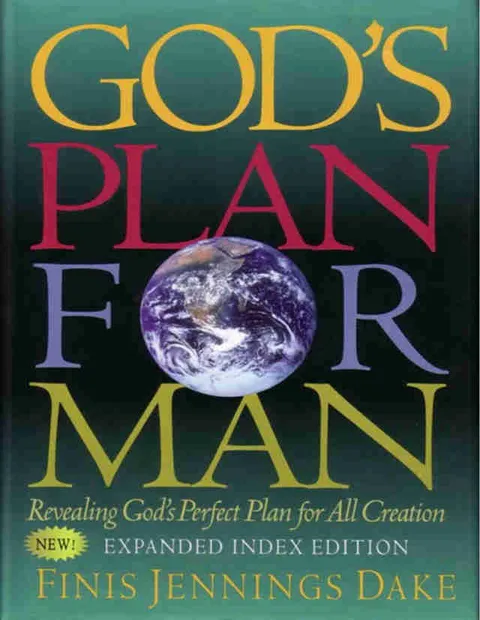
About the Book
"God's Plan for Man" by Finis Dake explores the concept of God's plan for humanity and the individual. It delves into topics such as salvation, the purpose of life, and the destiny of believers according to the teachings of the Bible. Dake emphasizes the importance of understanding and following God's plan in order to live a fulfilling and purposeful life.
Sophie Scholl

if you could see the end - the story god writes in suffering
A strange grief crept upon me as the final Lord of the Rings movie came to an end. An unliterary man at the time, I watched the doors to Middle Earth close. The story would not continue. A sense of silliness accompanied the sadness. Why should a boy, let alone a young man, lament saying goodbye to an imaginary friend whom he knew all along to be imaginary? This is exactly what great stories do to us. Whether captured on screen or between covers of a book, to finally arrive at the end can seem as though palace doors were closing to us. The adventure concludes — with all its dangers, losses, courage, companionship, thrill, and great loves worth living and dying for. They leave us again, to our world. As credits roll, we are made to feel like we are leaving the momentous, the beautiful, the good, and returning to, well, the ordinary. But what if the ache one feels at the conclusion of these tales, the bitter loss in the happily ever after, is not unreality mocking, but Reality inviting? Keep Your Hobbitry What if epic stories cast a spell, not because they are fictional, but because they stir suppressed longings that we just might, in fact, live in such a Story? Perhaps we all hunger to be characters in a grand Story, a heroic tale, a high Romance, a story without end. “He has,” after all, “put eternity into man’s heart” (Ecclesiastes 3:11). The lines between our favorite stories and our own story in this life may be thinner than we have yet dreamed. J.R.R. Tolkien himself captures this in a letter to his son, Christopher, who was serving in the Air Force during World War II: Well, there you are: a hobbit amongst the Urukhai [a deadly enemy]. Keep your hobbitry in heart, and think that all stories feel like that when you are in them. You are inside a very great story! (183) Do you know yourself to be in a very great story? Do the elves and kings, the lovers and heroes, the characters of your favorite tales have a right to envy you? Until we smile at and embrace the story we find ourselves in, we will not have the hope, the joy, the strength to live to the fullest in this life — and then everlastingly in the next. Designed for Story We are a people of story — delighted by them, taught by them, shaped by them. We starve for meaning. We long for dots to connect. For a golden Thread to run through. Otherwise, we are left in bitter realms of nothingness. “We are a people of story — delighted by them, taught by them, shaped by them.” To reckon with life among us, we search for the Story beyond us. From the beginning, many claimed to do just that. Different prophets from different peoples brought down different explanations from tall mountains to interpret the joys and horrors, hills and valleys, sunrays and shadows of this life. Ancient myths rode to meet ancient desires not so easily filled in hearts hungering for forever. Shared stories made up culture. Shared stories made up religion. Men lived from story and died for story — stories designed to provide answers to life’s biggest questions. And hope needs answers that Story provides. The marketplace is full of stories, of worldviews trying to answer those great questions for us. Andrew Delbanco, in his meditation on hope, identifies that the general narrative that united Americans has shifted from a story about God, to that of nation, to that of self. We have moved from the cross, to the flag, and now landed on the narrow and perilous path of me . Of all people at all times, none has been more driven by story than followers of Christ. Even if an angel came down from heaven with a new story, we would refuse it with disdain (Galatians 1:8). And yet, while we often remain orthodox, despair still emerges when we focus solely on the real sadness in our single sentence called life, and our hearts forget the tale beyond. Hope, however, considers that sentence in the whole Story, a Story written by one who did not spare his own Son. Hope reaches past the groans, for that part of the Story with no more sin, no more suffering, no more separation. Joseph: A Case Study Hope stays attuned to God’s Story, because it withers with forgetting. Take as a test case of someone who didn’t sink in the swamp of self, an Old Testament man of God, Joseph. His life is full of many valleys. Betrayed, assaulted, and sold into slavery, Joseph found himself in Potiphar’s house. After being exalted to Potiphar’s right hand, Joseph is sexually harassed, falsely accused, and sent to prison. After correctly interpreting one of Pharaoh’s servant’s dreams, he is betrayed and forgotten. And then after two more long years in prison, he is exalted to become “a father to Pharaoh” (Genesis 45:8). His human story — full of abuse, betrayal, accusation, and lies — fell purposefully within God’s bigger story, and he knew it . When he reveals his identity to his brothers who sold him, he says to his brothers, “Come near to me, please.” And they came near. And he said, “I am your brother, Joseph, whom you sold into Egypt. And now do not be distressed or angry with yourselves because you sold me here, for God sent me before you to preserve life. For the famine has been in the land these two years, and there are yet five years in which there will be neither plowing nor harvest. And God sent me before you to preserve for you a remnant on earth, and to keep alive for you many survivors. So it was not you who sent me here, but God . He has made me a father to Pharaoh, and lord of all his house and ruler over all the land of Egypt.” (Genesis 45:4–8) He and his brothers knew his story. Twice he acknowledges what was obvious to them all: “ You sold me here.” Joseph had not forgotten the nights — the years — in prison away from friends and family, the horror of their closing ears to his pleading as they cast him in the pit, their cruelty to sell him to those who would mistreat and perhaps murder him. The darkness, though past, was still dark. Memories remained. But when he calls them near, he remembers more than just his story as seen from ground level — and this gives power to forgive and love his guilty brothers. He tells them not to be distressed or angry with themselves. Why? “ For God sent me before you to preserve life.” In their selling, God was sending. In their evil, God intended good. In the darkest scene of the play, God was still writing. That Story smothered bitterness and revenge. That Story and its Author allowed him to forgive, bless, and love where a different story would have had him calculate the wrongs, grip firmly the treachery, and use his power to exact revenge. And the Story gave him hope for the future promises of his God, recorded as the radiant triumph of his life in Hebrews 11: “By faith Joseph, at the end of his life, made mention of the exodus of the Israelites and gave directions concerning his bones” (Hebrews 11:22). He knew, as those of us who fall asleep in the Lord do as well, that we shall wake in the Promised Land. When Elves Envy Men Although it may not feel like it, we live in a very great story. Have we forgotten? “We, in America, have moved from the cross, to the flag, and now landed on the narrow and perilous path of me.” Our hearts grow accustomed to the extraordinary as it becomes familiar. We lose a sense of where we live when we can drive home without a map. Life no longer invigorates. God’s epic plays out all around us, and he draws us in to play our part, and yet we halfheartedly read our lines or escape into other people’s lives. We are bored. But awake, we live in a great Story. Wild and throbbing with adventure, trying and terrible at parts. Eternity hanging in the balance. A fierce Dragon threatens. Demons surround. Hell gapes. The Light still shines in the darkness. Angels assemble. The Spirit animates. Christians stand clad in armor. The church marches on hades. Judgment hastens. Salvation is ready to be revealed. The True King — whose sandals no other character is worthy to unlatch — has died for sinners and lives forevermore. He is coming. This tale plays out on earth in what we blaspheme and call “ordinary.” With all its details and drudgery, its paying bills and crying babies, its baseball games and rush-hour traffic, an eternal drama plays. One that draws heaven’s attention. Angels ache to leave the theater. You are on the inside of a very great Story — a story to be remembered, cherished, and clung to during the most difficult scenes. Is there any other tale you would rather find was true?
-480.webp)