

Others like the case for a creator Features >>






About the Book
"The Case for a Creator" by Lee Strobel explores the evidence for intelligent design in the universe. Strobel interviews scientists and experts in various fields to make a compelling argument for the existence of a creator. He presents scientific evidence that supports the idea of a designer behind the complexity and order found in the natural world. The book challenges readers to consider the possibility of a higher power shaping the universe.
Gordon Lindsay
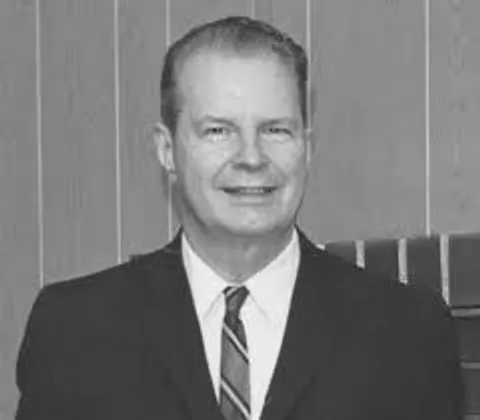 Gordon Lindsay’s Early life
Gordon Lindsay’s parents were members of J. A. Dowie’s Zion City, Illinois when he was born. The city’s financial difficulties forced the family west in 1904, where they temporarily joined another Christian-based community led by Finis Yoakum at Pisgah Grande, California. When similar problems emerged the family moved to Oregon after only a few months. From here the family moved to Portland, Oregon where Lindsay attended high school and was converted during a Charles F. Parham evangelistic campaign.
During his youth he came under the influence of John G. Lake, former resident of Zion City, missionary to South Africa, and founder of the Divine Healing missions in Spokane, Washington, and Portland, Oregon in 1920. Lindsay joined the healing and evangelistic campaigns of Lake, traveling throughout California and the southern states.
Lindsay began his own ministry in California as pastor of small churches in Avenal and San Fernando and for the next eighteen years, he travelled acros s the country holding revivals in full gospel churches. This period of travel prepared him as perhaps no other man in the nation to establish communication among a variety of Pentecostals.
When World War II began, Lindsay felt compelled to give up his evangelistic ministry because its rigorous lifestyle was taking its toll on his young family. He accepted a call to pastor a church in Ashland, Oregon.
William Branham enters Gordon Lindsay’s life
By 1947 he had witnessed the extraordinary ministry of William Branham and responded to the invitation to become Branham’s manager. His managerial skills were soon obvious in the Branham campaigns, and in April 1948, he furthered the cause of the of the revival when he produced the first issue of The Voice of Healing, specifically to promote Branham’s ministry. To Lindsay’s great surprise Branham announced that he “would not continue on the field more than a few weeks more.”
At great financial cost Lindsay decided to continue the publication of the new magazine in cooperation with his long-time friends, Jack Moore and his talented daughter Anna Jeanne Moore. He broadened the scope of the magazine by including more of the lesser known healing evangelists who were beginning to hold campaigns and were drawing large audiences.
One such evangelist was William Freeman who had been holding meetings in small churches. Lindsay visited one of his campaigns and immediately felt it was the will of God to team up with him and organise a series of meetings through 1948. The Voice of Healing featured the miracles of the Freeman campaigns.
Voice of Healing Conventions
By March 1949 The Voice of Healing circulation had grown to nearly 30,000 per month and had clearly become the voice of the healing movement. It’s pages successfully spread the message of the Salvation-Deliverance-Healing revival across the world.
In December 1949, Lindsay arranged the first convention of healing revivalists in Dallas, Texas. The assembly was addressed by Branham, Lindsay, Moore, old-timers such as F. F. Bosworth and Raymond T. Richey, and a number of rising revivalists including O. L. Jaggers, Gayle Jackson, Velmer Gardner, and Clifton Erickson. This historic conference symbolized the vitality and cohesion of the revival.
The following year, the convention, now about 1,000 strong, met in Kansas City, with virtually every important revivalist in the nation, with the notable exceptions of William Branham and Oral Roberts. Lindsay exercised great skill and wisdom exposing several points of danger and tension in the movement proposed guidelines for the future. Lindsay understood the fears of the older Pentecostal denominations and leaders and tried his utmost to deal with the offending issues.
In an article announcing “the purpose, plan and policy of the Voice of Healing Convention,” he denounced “free-lancers who violently and indiscriminately attack organization in general,” and he urged avoidance of “novel prophetic interpretations, dogmatic doctrinal assertions, sectarian predilections, theological hair-splitting.”
The Voice of Healing Association
The 1950 meeting made the Voice of Healing convention into a loose association of healing revivalists. The evangelists officially associated with The Voice of Healing magazine held “family meetings” at the conventions, at the same time maintaining their desire to “prove to the world that those associated with The Voice of Healing have no intention to organize another movement.” Through the decade the Voice of Healing conventions were showcases for healing revivalism.
The conference programs were workshops on the problems of healing evangelists. Typical topics were “prayer and fasting,” “preparation for a campaign,” “the follow-up work after a campaign,” “the system of cards for the prayer tent and the healing line” and the delicate issue of finances. As the association grew in importance in the 1950s, the program was frequently headed by Roberts or Branham; though every new revivalist aspired to be a speaker on the program.
The Voice of Healing family of evangelists flowered in the early 1950s. Lindsay continued to publicize Branham’s work, although he was not formally associated with the organization; the nucleus of the fellowship was an influential clique which included O. L. Jaggers, William Freeman, Jack Coe, T. L. Osborn, A. A. Allen, and Velmer Gardner.
Gradually major ministries began their own magazines and had no further need for Voice of Healing promotion. Nevertheless, by 1954 the “associate editors and evangelists” listed in The Voice of Healing numbered nearly fifty.
Though Lindsay became personally involved with healing evangelism from 1949, especially with other revivalists such as T. L. Osborn, he confined his best work to organization and management of the Voice of Healing magazine. By 1956 the expenses of the Voice of Healing were running $1,000 a day. In addition to the national and regional conventions sponsored by his organization, Lindsay also began to sponsor missions and a radio program.
“Lindsay was more than an advisor during the first decade of the healing revival; he was much like the director of an unruly orchestra. He tried desperately to control the proliferation of ministries in an effort to keep the revival respectable. He repeatedly advised, “It is better for one to go slow. Get your ministry on a solid foundation. . . . By all means avoid Hollywood press agent stuff.”
Many of the new leaders of the early 1950s owed their early success to the literary support of Gordon Lindsay through the Voice of Healing, but by 1958, many of the revivalists believed that Lindsay’s work was over.
An evolving ministry
Lindsay’s efforts to consolidate and coordinate the healing movement and its ministries became an impossible task. The increasing independence of ministries and the burgeoning charismatic movement caused Lindsay to reconsider his goals. He took the example of T. L. Osborn and concentrated on missionary endeavours. He remained the historian and theologian of the healing movement but began to produce teaching and evangelistic materials which were sent across the world.
The Voice of Healing ultimately became Christ for the Nations. Native church programs, literature, teaching tapes and funds were distributed to hundreds of locations. The organization had changed from one of healing revivalists into an important missionary society.
His ministry was always to those involved in the healing revival, independents and mainline Pentecostals, but the new charismatics – Lutherans, Methodists and Baptists – became his new audience. His encouragement of, and involvement with, the Full Gospel Businessmen’s Fellowship was designed to provide teaching and wisdom for charismatic leaders, many of whom held Lindsay in high regard.
His death on April 1st 1971
Suddenly, on April 1, 1973, Gordon Lindsay died. His wife, Freda, stepped into the breach and was able to stabilize and advance the ministry of Christ for the Nations. Lindsay’s death brought unparalleled financial support paying off all debts and expanding most of its programs.
David Harrel summarises the life of Gordon Lindsay perfectly: ‘The death of Gordon Lindsay closed a major chapter in the charismatic revival. No single man knew the revival and its leaders so well. No man understood its origins, its changes, and its diversity as did Lindsay. A shrewd manager and financier, Lindsay had been as nearly the coordinator of the healing revival as any man could be.
When the revival began to wane, Lindsay was faced with a crisis more severe than those of most of the evangelists themselves. Never a dynamic preacher, he found himself virtually abandoned by his most successful protégés. But Lindsay proved able to adapt. Always a balanced person, Lindsay built a balanced and enduring ministry.’
Tony Cauchi
Gordon Lindsay’s Early life
Gordon Lindsay’s parents were members of J. A. Dowie’s Zion City, Illinois when he was born. The city’s financial difficulties forced the family west in 1904, where they temporarily joined another Christian-based community led by Finis Yoakum at Pisgah Grande, California. When similar problems emerged the family moved to Oregon after only a few months. From here the family moved to Portland, Oregon where Lindsay attended high school and was converted during a Charles F. Parham evangelistic campaign.
During his youth he came under the influence of John G. Lake, former resident of Zion City, missionary to South Africa, and founder of the Divine Healing missions in Spokane, Washington, and Portland, Oregon in 1920. Lindsay joined the healing and evangelistic campaigns of Lake, traveling throughout California and the southern states.
Lindsay began his own ministry in California as pastor of small churches in Avenal and San Fernando and for the next eighteen years, he travelled acros s the country holding revivals in full gospel churches. This period of travel prepared him as perhaps no other man in the nation to establish communication among a variety of Pentecostals.
When World War II began, Lindsay felt compelled to give up his evangelistic ministry because its rigorous lifestyle was taking its toll on his young family. He accepted a call to pastor a church in Ashland, Oregon.
William Branham enters Gordon Lindsay’s life
By 1947 he had witnessed the extraordinary ministry of William Branham and responded to the invitation to become Branham’s manager. His managerial skills were soon obvious in the Branham campaigns, and in April 1948, he furthered the cause of the of the revival when he produced the first issue of The Voice of Healing, specifically to promote Branham’s ministry. To Lindsay’s great surprise Branham announced that he “would not continue on the field more than a few weeks more.”
At great financial cost Lindsay decided to continue the publication of the new magazine in cooperation with his long-time friends, Jack Moore and his talented daughter Anna Jeanne Moore. He broadened the scope of the magazine by including more of the lesser known healing evangelists who were beginning to hold campaigns and were drawing large audiences.
One such evangelist was William Freeman who had been holding meetings in small churches. Lindsay visited one of his campaigns and immediately felt it was the will of God to team up with him and organise a series of meetings through 1948. The Voice of Healing featured the miracles of the Freeman campaigns.
Voice of Healing Conventions
By March 1949 The Voice of Healing circulation had grown to nearly 30,000 per month and had clearly become the voice of the healing movement. It’s pages successfully spread the message of the Salvation-Deliverance-Healing revival across the world.
In December 1949, Lindsay arranged the first convention of healing revivalists in Dallas, Texas. The assembly was addressed by Branham, Lindsay, Moore, old-timers such as F. F. Bosworth and Raymond T. Richey, and a number of rising revivalists including O. L. Jaggers, Gayle Jackson, Velmer Gardner, and Clifton Erickson. This historic conference symbolized the vitality and cohesion of the revival.
The following year, the convention, now about 1,000 strong, met in Kansas City, with virtually every important revivalist in the nation, with the notable exceptions of William Branham and Oral Roberts. Lindsay exercised great skill and wisdom exposing several points of danger and tension in the movement proposed guidelines for the future. Lindsay understood the fears of the older Pentecostal denominations and leaders and tried his utmost to deal with the offending issues.
In an article announcing “the purpose, plan and policy of the Voice of Healing Convention,” he denounced “free-lancers who violently and indiscriminately attack organization in general,” and he urged avoidance of “novel prophetic interpretations, dogmatic doctrinal assertions, sectarian predilections, theological hair-splitting.”
The Voice of Healing Association
The 1950 meeting made the Voice of Healing convention into a loose association of healing revivalists. The evangelists officially associated with The Voice of Healing magazine held “family meetings” at the conventions, at the same time maintaining their desire to “prove to the world that those associated with The Voice of Healing have no intention to organize another movement.” Through the decade the Voice of Healing conventions were showcases for healing revivalism.
The conference programs were workshops on the problems of healing evangelists. Typical topics were “prayer and fasting,” “preparation for a campaign,” “the follow-up work after a campaign,” “the system of cards for the prayer tent and the healing line” and the delicate issue of finances. As the association grew in importance in the 1950s, the program was frequently headed by Roberts or Branham; though every new revivalist aspired to be a speaker on the program.
The Voice of Healing family of evangelists flowered in the early 1950s. Lindsay continued to publicize Branham’s work, although he was not formally associated with the organization; the nucleus of the fellowship was an influential clique which included O. L. Jaggers, William Freeman, Jack Coe, T. L. Osborn, A. A. Allen, and Velmer Gardner.
Gradually major ministries began their own magazines and had no further need for Voice of Healing promotion. Nevertheless, by 1954 the “associate editors and evangelists” listed in The Voice of Healing numbered nearly fifty.
Though Lindsay became personally involved with healing evangelism from 1949, especially with other revivalists such as T. L. Osborn, he confined his best work to organization and management of the Voice of Healing magazine. By 1956 the expenses of the Voice of Healing were running $1,000 a day. In addition to the national and regional conventions sponsored by his organization, Lindsay also began to sponsor missions and a radio program.
“Lindsay was more than an advisor during the first decade of the healing revival; he was much like the director of an unruly orchestra. He tried desperately to control the proliferation of ministries in an effort to keep the revival respectable. He repeatedly advised, “It is better for one to go slow. Get your ministry on a solid foundation. . . . By all means avoid Hollywood press agent stuff.”
Many of the new leaders of the early 1950s owed their early success to the literary support of Gordon Lindsay through the Voice of Healing, but by 1958, many of the revivalists believed that Lindsay’s work was over.
An evolving ministry
Lindsay’s efforts to consolidate and coordinate the healing movement and its ministries became an impossible task. The increasing independence of ministries and the burgeoning charismatic movement caused Lindsay to reconsider his goals. He took the example of T. L. Osborn and concentrated on missionary endeavours. He remained the historian and theologian of the healing movement but began to produce teaching and evangelistic materials which were sent across the world.
The Voice of Healing ultimately became Christ for the Nations. Native church programs, literature, teaching tapes and funds were distributed to hundreds of locations. The organization had changed from one of healing revivalists into an important missionary society.
His ministry was always to those involved in the healing revival, independents and mainline Pentecostals, but the new charismatics – Lutherans, Methodists and Baptists – became his new audience. His encouragement of, and involvement with, the Full Gospel Businessmen’s Fellowship was designed to provide teaching and wisdom for charismatic leaders, many of whom held Lindsay in high regard.
His death on April 1st 1971
Suddenly, on April 1, 1973, Gordon Lindsay died. His wife, Freda, stepped into the breach and was able to stabilize and advance the ministry of Christ for the Nations. Lindsay’s death brought unparalleled financial support paying off all debts and expanding most of its programs.
David Harrel summarises the life of Gordon Lindsay perfectly: ‘The death of Gordon Lindsay closed a major chapter in the charismatic revival. No single man knew the revival and its leaders so well. No man understood its origins, its changes, and its diversity as did Lindsay. A shrewd manager and financier, Lindsay had been as nearly the coordinator of the healing revival as any man could be.
When the revival began to wane, Lindsay was faced with a crisis more severe than those of most of the evangelists themselves. Never a dynamic preacher, he found himself virtually abandoned by his most successful protégés. But Lindsay proved able to adapt. Always a balanced person, Lindsay built a balanced and enduring ministry.’
Tony Cauchi
Kindness in a World Gone Mad
I was waiting in line with my sons for a roller coaster when the T-shirt caught my eye: Kindness is free — so sprinkle that stuff everywhere . I’m sympathetic to the message at one level. To many, the world feels meaner in recent years, and perhaps especially so since the last election cycle, COVID-19, and civil unrest. Yes, genuine human kindness, in the most basic of senses, has often been sorely lacking. More kindness would indeed be nice, and perhaps shine in new ways in times when we’re coming to expect meanness and outrage everywhere. But as admirable as the instincts behind the message are, the initial claim is badly mistaken. No, real kindness — the kind we really long for and need — is not free. And perhaps it would help us all to come to terms with that up front. Real kindness is costly. This Harsh World Deep down, we know that we live in a mean world — too mean to keep the meanness constantly at the forefront of our minds. Yet at times — more frequent for some than others — the meanness, the evil afoot in this world, accosts us. Even as bright as some days appear, there is a “present darkness” ( Ephesians 6:12 ), still under the sway of “the god of this world” ( 2 Corinthians 4:4 ). Pretender though he is, and numbered his days, his “domain of darkness” ( Colossians 1:13 ) is real, and “the power of darkness” ( Luke 22:53 ) treacherous. And not only has the world out there gone mad, but far too often the sway of the world, and the indwelling sin in us all, brings that meanness in here , into the people who profess to be Christ’s. Tragically, the very people who are to make Jesus known by their love for each other ( John 13:35 ) can be harsh, quarrelsome, impatient, shrill, nasty. It’s only human to respond in kind. But Christ requires of his church what is more than human: respond in kindness . Virtue in a Vacuum? In part, internal conflict in the Ephesian church prompted Paul’s second letter to Timothy. At the letter’s heart, the aging apostle gives his protégé this arresting charge: The Lord’s servant must not be quarrelsome but kind to everyone , able to teach, patiently enduring evil, correcting his opponents with gentleness. God may perhaps grant them repentance leading to a knowledge of the truth, and they may come to their senses and escape from the snare of the devil, after being captured by him to do his will. ( 2 Timothy 2:24–26 ) Christians have long celebrated kindness as one of the heavenly virtues . Yet we live in a day that often makes very little of kindness. We assume it’s free. We celebrate “random acts of kindness.” We think of kindness without context . Of course, in our mean world, it is pleasant to be surprised by a stranger’s kindness, free and random as it may seem. Sure, sprinkle that stuff everywhere. But the Christian vision of kindness is far deeper, more significant, and contextualized. “Kindness is not random or free, but a costly, counter-intuitive response to meanness, rather than responding in kind.” Christian kindness is no common courtesy or virtue in a vacuum, but a surprising response to mistreatment and hurt. It is not random or free, but a costly, counterintuitive response to meanness, to outrage, rather than responding in kind. As Don Carson comments on 1 Corinthians 13:4 , “Love is kind — not merely patient or long-suffering in the face of injury, but quick to pay back with kindness what it received in hurt” ( Showing the Spirit , 79). Companions of Kindness One way to see that Christian kindness is not random is to observe the kind of company it keeps, especially in the letters of Paul — who would be “the apostle of kindness,” if there were one. No one sprinkles costly kindness like Paul. Among other graces, kindness often appears hand in hand with patience and compassion. Patience appears side by side with kindness, and in the same order, in 2 Corinthians 6:6 and Galatians 5:22 : “patience, kindness.” So also, Paul presses them together in Romans 2:4 , in speaking of divine patience and kindness: “Do you presume on the riches of his kindness and forbearance and patience, not knowing that God’s kindness is meant to lead you to repentance?” So too, as we’ve seen, Christian pastors — “the Lord’s servant” in the midst of conflict — “must not be quarrelsome but kind to everyone, . . . patiently enduring evil” ( 2 Timothy 2:24 ). Kind to everyone — isn’t that surprising? The opponents here are false teachers. They must not be coddled or encouraged. Rather, they must be exposed and corrected — and yet that is no license to treat them harshly or with meanness. Opponents can be patiently endured and gently corrected. In fact, it would not be kind to a false teacher, or the church, to let him continue in error. Exposing his error and gently correcting him is kindness. As for compassion, Ephesians 4:32 memorably explains the command to “be kind to one another” with the word “tenderhearted” (or “compassionate,” Greek eusplanchnos ). Kindness is an expression of a tender, compassionate heart. Colossians 3:12 puts all three together, with humility and meekness: “Put on then, as God’s chosen ones, holy and beloved, compassionate hearts, kindness, humility, meekness, and patience.” Kindness, we might say, is a kind of secondary virtue. Compassion and patience, in various ways, make kindness possible. A compassionate heart leads to kindness, and external actions that give expression to that kindness. So also, patience makes internal kindness and its external acts possible. Patience gives emotional and practical space for kindness to ripen and move outward in physical acts. True kindness and its expressions (which are not random or free) complete and extend its companion virtues. The fruit of kindness needs the roots of patience and compassion, and they need kindness. Costly Kind Our young kids are still honest enough with themselves, and us, to admit to how costly kindness can be. When a sibling is mean, or someone on the playground, their natural response (and ours) is not to be kind, but to respond in kind. Which is why we consider kindness a Christian virtue — which doesn’t just happen spontaneously without practice and the enabling of the Holy Spirit. Kindness, Paul says, is the produce of the Spirit ( Galatians 5:22–23 ; 2 Corinthians 6:6 ), not of the natural human heart. Real kindness requires intervention from the outside, both from God’s Spirit and also his divine Son stepping into our mean world, showing us a different way, and doing it, climactically, to our eternal salvation and joy. As my wife and I have learned in almost fifteen years of marriage, kindness toward each other begins with God’s kindness toward us in Christ. Only then can we really find the resources to overcome evil with good, triumph over annoyance with patience, and rise above meanness with kindness. In other words, the heart of how we become kinder — not with free, random, imitation kindness, but with thick, genuine, Christian kindness — is knowing and enjoying the kindness of God toward us, and doing so specifically by feeding on, and taking our cues from, the very words of God. Behold His Kindness Our world, in its rebellion and cosmic treason, is no meaner than in its meanness to God himself — God who is holy and just. And yet what shocking kindness he displays, even toward the unbelieving. Our heavenly Father “is kind to the ungrateful and the evil” ( Luke 6:35 ). Even those who live the hardest, meanest of lives are surrounded by rays of God’s common kindness , as we might call it: beautiful days, human minds and bodies and words, friends and family, food and shelter, the everyday divine kindnesses we take for granted until they’re gone. “Even those who live the hardest, meanest of lives are surrounded by rays of God’s common kindness.” As Paul preached at Lystra, even “in past generations,” before Christ, when God “allowed all the nations to walk in their own ways,” he showed the unbelieving his common kindness, and “did not leave himself without witness, for he did good by giving you rains from heaven and fruitful seasons, satisfying your hearts with food and gladness” ( Acts 14:16–17 ). Such kindness even in our day, gratuitous as it may seem to us, is not wasted. It is not random but has purpose: “meant to lead you to repentance” ( Romans 2:4 ). Yet in the fullness of time, “the goodness and loving kindness of God our Savior appeared” ( Titus 3:4 ), bringing salvation — God’s special kindness — through faith in Christ. Such divine kindness not only brought eternal rescue for God’s long-chosen people, but it engrafts even strangers into God’s ancient tree of blessing through faith ( Romans 11:22 ). Jesus is Kindness incarnate, whose yoke is not severe, but (literally) kind ( Matthew 11:30 ). He is the Lord whom we, with new Spirit-given palates, taste as kind ( 1 Peter 2:3 ). Kindness Coming As Christ, by his Spirit, shows kindness to us, in his word and in our lives, he also forms us into instruments of his kindness to others. “God in Christ forgave you,” Paul says in Ephesians 4:32 . Therefore, “Be kind to one another, tenderhearted, forgiving one another.” Ultimately, it is the kindness of God that melts an unforgiving spirit, softens a hard heart, and transforms unkind actions. In Christ, we become the kind of people who see others , and have compassion for them, and exercise patience toward them, and show kindness to them, knowing not only that we ourselves have been shown kindness but that “in the coming ages [God himself will] show the immeasurable riches of his grace in kindness toward us in Christ Jesus” ( Ephesians 2:7 ). We have only begun to taste the kindness of our God.