-480.webp)

Others like getting to know god Features >>
Letting Go Of Your Past
Getting Anger Under Control
The Kingdom Of God In You
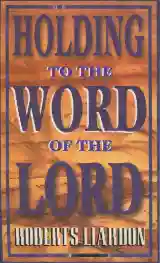
Holding To The Word Of The Lord

Learning To Flow With The Spirit Of God

Longing For Godliness - Restoring God’s Image Within Us
%20-%20Patricia%20King-160.webp)
Activating Your God-Given Power To Create Realms And Atmospheres (Create Your World)

How To Know The Will Of God

How To Know The Will Of God

Harnessing Your Emotions
About the Book
"Getting to Know God" by Novel Hayes is a spiritual guide that explores the ways in which individuals can deepen their relationship with God through prayer, meditation, and self-reflection. The book offers practical advice and exercises to help readers connect with their spiritual side and experience the presence of God in their lives. Hayes encourages readers to embrace faith, trust in God's plan, and cultivate a sense of peace and gratitude.
Calvin Miller
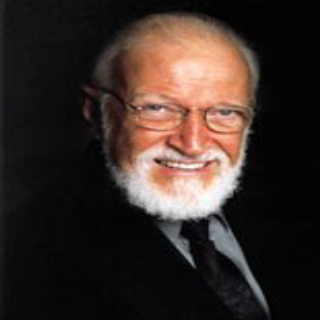 Calvin Miller was a pastor, professor and storyteller, best known for The Singer Trilogy, a mythic retelling of the New Testament story in the spirit of C. S. Lewis and J. R. R. Tolkien. Miller passed away on the afternoon of August 19, 2012, due to complications after heart surgery. He was 75.
A prolific artist and a writer's writer, Miller garnered respect and praise throughout his career from peers like Luci Shaw, Max Lucado and Philip Yancey. He was the author of more than forty books of popular theology and Christian inspiration including such recent books as Letters to Heaven, The Path of Celtic Prayer, Letters to a Young Pastor and his memoir Life Is Mostly Edges.
In addition to his twenty years of pastoral service at Westside Church in Omaha, Nebraska, Miller was also a great mentor to many students and leaders through his preaching and pastoral ministry classes at Beeson Divinity School. Calvin Miller, never one to multiply words, used just four to describe his rule of life: "Time is a gift."
RESCUE FROM THE SLUSH PILE
In October 1973 one important book was rescued from the slush pile (the stack of unsolicited manuscripts every publisher receives) by assistant editor Don Smith. He read a manuscript by a little-known Baptist pastor in Nebraska that was a poetic retelling of the life of Jesus—portraying him as a Troubadour. Both he and Linda Doll excitedly encouraged Jim Sire to take this imaginative manuscript seriously. In February 1974 Sire wrote the author, Calvin Miller, that IVP wanted to publish his book The Singer.
Months before, Miller had been waking up nights, stirred to write this tale, perhaps unconsciously inspired by the recent Broadway hits Jesus Christ Superstar and Godspell. Later Miller wrote:
When the manuscript was done, I sent it to Jim Sire at InterVarsity Press. “It’s good,” he said, “but we want to think about it a couple of weeks before we give you an answer.” So I waited until finally the letter came. They were going to do it. Jim Sire had done his Ph.D. on John Milton, and the fact that he liked it was joy immeasurable to me. “But,” he cautioned, “we’re going to print five thousand of these. They may not do well—in fact we may end up with four thousand of them on skids in our basement for the next ten years. Still, it’s a good book and deserves to be in print.”
Far more than a thousand copies sold. Actually, over three hundred times that amount sold in its first decade. It became “the most successful evangelical publication in this genre.” The Singer was followed in two years by The Song (paralleling the story of the early church in Acts) and two years after that by The Finale (inspired by the book of Revelation). Publication of The Singer changed Miller’s life. Even though he stayed in the pastorate for many years, it set him on a course of writing and speaking that he could not have imagined.
Calvin Miller was a pastor, professor and storyteller, best known for The Singer Trilogy, a mythic retelling of the New Testament story in the spirit of C. S. Lewis and J. R. R. Tolkien. Miller passed away on the afternoon of August 19, 2012, due to complications after heart surgery. He was 75.
A prolific artist and a writer's writer, Miller garnered respect and praise throughout his career from peers like Luci Shaw, Max Lucado and Philip Yancey. He was the author of more than forty books of popular theology and Christian inspiration including such recent books as Letters to Heaven, The Path of Celtic Prayer, Letters to a Young Pastor and his memoir Life Is Mostly Edges.
In addition to his twenty years of pastoral service at Westside Church in Omaha, Nebraska, Miller was also a great mentor to many students and leaders through his preaching and pastoral ministry classes at Beeson Divinity School. Calvin Miller, never one to multiply words, used just four to describe his rule of life: "Time is a gift."
RESCUE FROM THE SLUSH PILE
In October 1973 one important book was rescued from the slush pile (the stack of unsolicited manuscripts every publisher receives) by assistant editor Don Smith. He read a manuscript by a little-known Baptist pastor in Nebraska that was a poetic retelling of the life of Jesus—portraying him as a Troubadour. Both he and Linda Doll excitedly encouraged Jim Sire to take this imaginative manuscript seriously. In February 1974 Sire wrote the author, Calvin Miller, that IVP wanted to publish his book The Singer.
Months before, Miller had been waking up nights, stirred to write this tale, perhaps unconsciously inspired by the recent Broadway hits Jesus Christ Superstar and Godspell. Later Miller wrote:
When the manuscript was done, I sent it to Jim Sire at InterVarsity Press. “It’s good,” he said, “but we want to think about it a couple of weeks before we give you an answer.” So I waited until finally the letter came. They were going to do it. Jim Sire had done his Ph.D. on John Milton, and the fact that he liked it was joy immeasurable to me. “But,” he cautioned, “we’re going to print five thousand of these. They may not do well—in fact we may end up with four thousand of them on skids in our basement for the next ten years. Still, it’s a good book and deserves to be in print.”
Far more than a thousand copies sold. Actually, over three hundred times that amount sold in its first decade. It became “the most successful evangelical publication in this genre.” The Singer was followed in two years by The Song (paralleling the story of the early church in Acts) and two years after that by The Finale (inspired by the book of Revelation). Publication of The Singer changed Miller’s life. Even though he stayed in the pastorate for many years, it set him on a course of writing and speaking that he could not have imagined.
The Silent Marriage-Killer
Most Christian couples would not list shame as one of the top struggles in their marriage. However, in almost a decade of counseling, I’ve seen very few marriages that aren’t hampered by shame on some level. It’s just not often the first thing that’s identified, but it underlies so many other common struggles, especially communication and sex. How can you know if this silent marriage-killer is present in your relationship? Consider the following self-evaluative questions: Are there topics that have become off-limits because you or your spouse get too prickly, defensive, or embarrassed? Can you share embarrassing stories or painful struggles with your spouse and expect empathy, or would you be more likely to receive further ridicule or condemnation? Do you talk openly about your failures, past and present? Is your spouse the first person you turn to for support, comfort, or celebration? And does your spouse do the same to you? When you confront sin in your spouse, do you do so with gentleness and humility as a fellow struggler, or with the posture of one who would never sin in that way ? How comfortable are you in your sexual relationship? Do you share your emotions with your spouse and vice versa? When conflicts arise between you, are you able to resolve them, or do you seem to stall out frequently when one of you withdraws indefinitely? Do you regularly share with each other what God is teaching you through his word, church, and your personal devotional life? Do you pray together? Do you confess your sins to one another as needed, as often as sin arises? Would you prefer not to talk about sin at all, because it’s just too uncomfortable for both of you? None of us have a perfect marriage, or should expect it, but what holds us back too often is the presence of shame — the fear that I will be rejected if I am vulnerable with you. The way to fight shame, and be part of shame’s healing for one another, is to risk openness in these areas where we want to hide from one another. Help Your Spouse Heal We may have been hiding like Adam and Eve since the garden of Eden, but the hope is that God covers our shame and enables us to help cover one another’s shame. If redeemed marital intimacy is to be naked and unashamed (Genesis 2:25), the way to move towards this goal is to become part of healing shame for each other. We have the opportunity to do this in a more powerful way for our spouse than anyone else. We have the unique chance to see them at their most vulnerable, and to bestow grace and compassion instead of judgment and rejection. And the only way we can do this for one another is as we experience this grace from God to us in Jesus Christ. In Christ, we realize that on our own we stand unclothed before God — that our best attempts at righteousness, with the help of his Spirit, are like filthy rags — but that he has clothed us with the perfect righteousness of his own Son, the God-man, so that there is no condemnation nor any threat of separation from God’s love (Romans 8:1, 38–39). Name the Shame Emboldened by the gospel, and empowered by the Spirit, we then can be a reflection of this covering and healing grace for our spouse. We can begin by acknowledging (naming) the areas where shame has held us back from unashamed intimacy in our marriage. Start with yourself. Where have you unwittingly shamed your spouse? Name this, and express that you want to be a place of refuge and safety for your spouse from the shame instead of a contributor to it. Then with gentleness and love, speak about ways you’ve felt shame from your spouse, and offer a few practical ways that he or she could grow in becoming a safe place for you. For example, you might start with, “I have realized how much I tend to offer advice before I listen when you’re discussing a problem from work or home with me. I bet this contributes to a sense that I’m not always a safe person for you to go to when you’re struggling. I want to do better — will you help me?” You Are a Team Then, you could say something like the following to address the ways you’ve experienced shame from your spouse: “When you criticize [the meal I cooked/or my appearance/or how I haven’t been a spiritual leader in our relationship], it makes me doubt my value and your love. I know this isn’t what you mean, but it’s how my own struggle with shame twists your words. It would be great for you to help me fight against shame by refraining from such criticism and affirming your love for me. I’m well aware of the problem, and I want to do better in this area, but what will help me the most is to know that you’re praying with me and for me and that you support me through the struggle.” Remember, you and your spouse are a team. God has joined you together closer than any other human relationship will or can be, and naked and unashamed intimacy is how he created marriage to be. Through the empowering grace of Jesus Christ, we can walk towards more of this created intention of unashamed intimacy together.