
Others like freedom from debts Features >>


About the Book
"Freedom from Debts" by Sam Adeyemi is a practical guide that offers strategies and tips on how individuals can break free from the burden of debt. The book emphasizes the importance of financial discipline, budgeting, investing wisely, and creating multiple sources of income to achieve financial freedom. Through real-life examples and practical advice, Adeyemi shows readers how to take control of their finances and live a debt-free life.
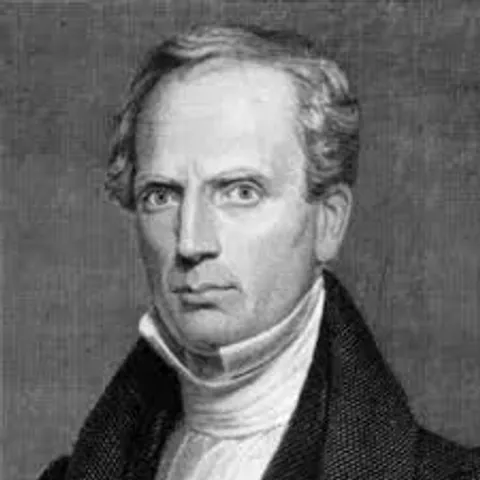
Charles Finney
 Childhood and Teen years
Charles Grandison Finney was born the year after Wesley died on 29th August, 1792 in Warren, Connecticut. In 1794 his family moved to New York state, eventually settling at Henderson, near Lake Ontario. Although he received only a brief formal education he decided to study law and joined the practice of a local lawyer, Benjamin Wright. He was also very musical, played the cello and directed the choir at the local Presbyterian Church pastured by Rev. George Gale.
His conversion
His conversion on October 10th 1821 reads like something out of the book of Acts. Smitten with conviction from Bible reading he decided to ‘settle the question of my soul’s salvation at once, that if it were possible, I would make my peace with God.’ (Autobiography)
This conviction increased to an unbearable level over the next couple of days and came to an head when he was suddenly confronted with an ‘inward voice.’ He was inwardly questioned about his spiritual condition and finally received revelation about the finished work of Christ and his own need to give up his sins and submit to Christ’s righteousness.
As he sought God in a nearby wood he was overwhelmed with an acute sense of his own wickedness and pride but finally submitted his life to Christ. Back at work that afternoon he was filled with a profound sense of tenderness, sweetness and peace. When work was over and he bade his employer goodnight, he then experienced a mighty baptism in the Holy Spirit, which was recorded as vividly as the day he experienced it, though it was penned some fifty years later.
The next morning Finney announced to a customer that he was leaving his law studies to become a preacher of the Gospel.
Charles Finney licensed to preach
He was licensed to preach in 1823 and ordained as an evangelist in 1824. His penetrating preaching was quite different from many local ministers and included an obvious attempt to break away from the traditional and, as he saw it, dead, orthodox Calvinism. He married to Lydia Andrews in October 1824 and was also joined by Daniel Nash (1774-1831), known popularly as ‘Father Nash.’ Undoubtedly Nash’s special ministry of prayer played a great part in Finney’s growing success as an evangelist.
Things really took off when he preached in his old church, where Rev. Gale still ministered. Numerous converts and critics followed! Similar results were experienced in nearby towns of Rome and Utica. Soon newspapers were reporting his campaigns and he began drawing large crowds with dramatic responses.
Soon he was preaching in the largest cities of the north with phenomenal results. Campaign after campaign secured thousands of converts.
The high point of Finney’s revival career was reached at Rochester, New York, during his 1830-1 meetings. Shopkeepers closed their businesses and the whole city seemed to centre on the revivalist. Responding to his irresistible logic and passionate arguments many of his converts were lawyers, merchants and those from a higher income and professional status.
His Preaching
Finney openly preached a modified Calvinism, influenced with his own theology of conversion and used what were perceived to be ‘revivalistic techniques.’
These ‘means’ included the use of the anxious bench (a special place for those under conviction), protracted meetings, women allowed to pray in mixed meetings, publicly naming those present resisting God in meetings and the hurried admission of new converts into church membership. Opponents viewed his preaching of the law as ‘scare tactics’ and his persuasive appeals for sinners to come to Christ for salvation were seen as over-emphasising the responsibility of men and ignoring the sovereignty of God.
His theology and practise soon became known as the ‘New Measures’ and attracted many opponents from the Old School Presbyterians led by Asahel Nettleton (himself no stranger to true revival and , the revivalistic Congregationalists headed by Lyman Beecher.
Pastor at Chatham Street Chapel
Finney accepted an appointment as pastor of Chatham Street Chapel in New York City in 1832 where he remained until 1837. It was during this time that he delivered a series of sermons published in 1835 as ‘Lectures on Revivals of Religion.’ Here he clearly stated his views regarding revivals being products of the correct use of human means. Such was the controversy that he left the Presbyterian denomination and joined the Congregationalists in 1836.
Oberlin College
The next year he became professor of theology at Oberlin College (Ohio) where he taught until his death. He was President here from 1851 until 1866, but still continued regular revival meetings in urban settings (twice in England, 1848, 1851) until 1860. During his stay at Oberlin he produced his, Lectures to Professing Christians (1836), Sermons on Important Subjects (1839) and his famous Memoirs.
The Father of Modern Revivalism
There is no doubt that Charles Grandison Finney well-deserves the title ‘The Father of Modern Revivalism.’ He was an evangelistic pioneer whose model was followed by a long line of revivalists from D. L. Moody to Billy Graham. His writing have made a massive impact on the entire evangelical world and particularly the ‘Lectures on Revivals’ which has, arguably, ignited more fires of revival than any other single piece literature in evangelical history.
This ‘Prince of Revivalists’ passed away peacefully at Oberlin on Sunday, 16th August, 1875 aged almost 83 years.
Bibliography: I Will Pour Out My Spirit, R. E. Davies, 1997; Ed: A. Scott Moreau, Baker Evangelical Dictionary of World Missions, 2000; Dictionary of Evangelical Biography 1730-1860, Vol. 1, 1995.
Tony Cauchi
Childhood and Teen years
Charles Grandison Finney was born the year after Wesley died on 29th August, 1792 in Warren, Connecticut. In 1794 his family moved to New York state, eventually settling at Henderson, near Lake Ontario. Although he received only a brief formal education he decided to study law and joined the practice of a local lawyer, Benjamin Wright. He was also very musical, played the cello and directed the choir at the local Presbyterian Church pastured by Rev. George Gale.
His conversion
His conversion on October 10th 1821 reads like something out of the book of Acts. Smitten with conviction from Bible reading he decided to ‘settle the question of my soul’s salvation at once, that if it were possible, I would make my peace with God.’ (Autobiography)
This conviction increased to an unbearable level over the next couple of days and came to an head when he was suddenly confronted with an ‘inward voice.’ He was inwardly questioned about his spiritual condition and finally received revelation about the finished work of Christ and his own need to give up his sins and submit to Christ’s righteousness.
As he sought God in a nearby wood he was overwhelmed with an acute sense of his own wickedness and pride but finally submitted his life to Christ. Back at work that afternoon he was filled with a profound sense of tenderness, sweetness and peace. When work was over and he bade his employer goodnight, he then experienced a mighty baptism in the Holy Spirit, which was recorded as vividly as the day he experienced it, though it was penned some fifty years later.
The next morning Finney announced to a customer that he was leaving his law studies to become a preacher of the Gospel.
Charles Finney licensed to preach
He was licensed to preach in 1823 and ordained as an evangelist in 1824. His penetrating preaching was quite different from many local ministers and included an obvious attempt to break away from the traditional and, as he saw it, dead, orthodox Calvinism. He married to Lydia Andrews in October 1824 and was also joined by Daniel Nash (1774-1831), known popularly as ‘Father Nash.’ Undoubtedly Nash’s special ministry of prayer played a great part in Finney’s growing success as an evangelist.
Things really took off when he preached in his old church, where Rev. Gale still ministered. Numerous converts and critics followed! Similar results were experienced in nearby towns of Rome and Utica. Soon newspapers were reporting his campaigns and he began drawing large crowds with dramatic responses.
Soon he was preaching in the largest cities of the north with phenomenal results. Campaign after campaign secured thousands of converts.
The high point of Finney’s revival career was reached at Rochester, New York, during his 1830-1 meetings. Shopkeepers closed their businesses and the whole city seemed to centre on the revivalist. Responding to his irresistible logic and passionate arguments many of his converts were lawyers, merchants and those from a higher income and professional status.
His Preaching
Finney openly preached a modified Calvinism, influenced with his own theology of conversion and used what were perceived to be ‘revivalistic techniques.’
These ‘means’ included the use of the anxious bench (a special place for those under conviction), protracted meetings, women allowed to pray in mixed meetings, publicly naming those present resisting God in meetings and the hurried admission of new converts into church membership. Opponents viewed his preaching of the law as ‘scare tactics’ and his persuasive appeals for sinners to come to Christ for salvation were seen as over-emphasising the responsibility of men and ignoring the sovereignty of God.
His theology and practise soon became known as the ‘New Measures’ and attracted many opponents from the Old School Presbyterians led by Asahel Nettleton (himself no stranger to true revival and , the revivalistic Congregationalists headed by Lyman Beecher.
Pastor at Chatham Street Chapel
Finney accepted an appointment as pastor of Chatham Street Chapel in New York City in 1832 where he remained until 1837. It was during this time that he delivered a series of sermons published in 1835 as ‘Lectures on Revivals of Religion.’ Here he clearly stated his views regarding revivals being products of the correct use of human means. Such was the controversy that he left the Presbyterian denomination and joined the Congregationalists in 1836.
Oberlin College
The next year he became professor of theology at Oberlin College (Ohio) where he taught until his death. He was President here from 1851 until 1866, but still continued regular revival meetings in urban settings (twice in England, 1848, 1851) until 1860. During his stay at Oberlin he produced his, Lectures to Professing Christians (1836), Sermons on Important Subjects (1839) and his famous Memoirs.
The Father of Modern Revivalism
There is no doubt that Charles Grandison Finney well-deserves the title ‘The Father of Modern Revivalism.’ He was an evangelistic pioneer whose model was followed by a long line of revivalists from D. L. Moody to Billy Graham. His writing have made a massive impact on the entire evangelical world and particularly the ‘Lectures on Revivals’ which has, arguably, ignited more fires of revival than any other single piece literature in evangelical history.
This ‘Prince of Revivalists’ passed away peacefully at Oberlin on Sunday, 16th August, 1875 aged almost 83 years.
Bibliography: I Will Pour Out My Spirit, R. E. Davies, 1997; Ed: A. Scott Moreau, Baker Evangelical Dictionary of World Missions, 2000; Dictionary of Evangelical Biography 1730-1860, Vol. 1, 1995.
Tony Cauchi
Are You a Friend to the Poor
God’s heart is for the least of these: the suffering, lost, and lonely. "Do you know the name of a poor person?" a young man in his twenties who was sharing about his experiences as a missionary in Moldova posed the question to me in church. His phrase was tricky because if he'd said, "Do you care about the poor?" I might have tossed it in that drawer where you keep all the stuff you've heard a million times and are supposed to ponder but probably won't do much with. When he asked if I knew the name of a poor person he exposed a glaring gap in my Christianity: Whose name did I know? Not whose face had I passed on 21st Street on my way to grab coffee; not what homeless man had I handed a dollar for the paper he peddles at the stoplight; not what anonymous tsunami victim had received an online donation I'd made. Whose name did I know? I was left to consider this very important question because if I didn't know the name of a poor person, I didn't really know a poor person. (This is one of the biggest problems with going to church — the possibility of getting all convicted and stuff.) I always knew that if God's heart was for anything it was for the least of these: the suffering, sick, needy, uneducated, foreigner, lost, lonely — this much was clear. And it's true that these were people I cared about, prayed for, and on whose behalf I tithed, but how many of them called me friend? Who had my phone number, been to dinner at my house, or sat beside me at church? Without condemnation, I had to recognize that I was someone who cared for the poor mostly from a distance but who had yet to intimately involve herself. My first step: Learn a name. In the Law of Moses God commanded the Israelites to leave their extra sheaves, olives, and grapes for the alien, fatherless, and widow — for all the people who didn't have what the Israelites had and who didn't have the means to get what they had. At the end of this recurring command the Lord gave His people an intriguing reason for why He required this, "Remember that you were slaves in Egypt. That is why I command you to do this" (Deut. 24:22, NIV). Didn't God want them to leave their excess food for the poor and outsider because these people were hungry, because they needed community, because they couldn't provide for themselves, because He loved them? Wasn't that why? Oh I'm sure those were all reasons, but I believe God first had to deal with that sneaky mind-set, the one that tries to trick us into thinking that when we step over a stalk of wheat to leave it for the poor we're doing something really noble, plain over-the-top gracious. That we're going above and beyond by giving away what is rightfully "ours." The Lord was staving off this kind of thinking by saying, "Hold your fancy horses. Remember you used to be slaves too! Don't forget to tap into what that felt like." The Israelites were no strangers to poverty, oppression, or powerlessness as ones who had once been enslaved in Egypt. It was only because of God's deliverance they were now free, only because of His goodness they were blessed with flourishing fields and bursting branches. By remembering their once low estate, they were poised to welcome the foreigner, fatherless, and widow, not out of self-righteousness, guilt, or duty, but out of the love God had shown them. Last night I served dinner to an Iraqi couple and their 2-year-old daughter, a family some of my friends and I have gotten to know. I'd hoped that chicken, broccoli, and couscous were safe selections to serve these well-dressed Middle Easterners, though I sensed I may have been pushing it with the hot apple cider. I was going for the American autumn experience, and judging by their first and only sip, this went over moderately. As we settled around the table I asked them why they'd left Baghdad to come to America. The husband replied, "Because there are less car bombings here," and then he broke out into hysterical laughter. (Safwat's a sanguine.) His wife was less buoyant, confiding that the war had been devastating and that they'd fled here as refugees hoping to find jobs but so far without any success. My eyes welled up as she spoke because her suffering was not that of a nameless Iraqi, but it belonged to her, a real-life woman with a name, Rida. As the adults carried on, Rubaa fingered the icing on her cupcake and tapped her shoes on the hardwood floors, just like any other baby girl in a bright red dress who wanted the room to be enchanted with her — some things are the same everywhere. When it was time for them to leave, Safwat shook my hand, Rubaa blew me a kiss at her mother's urging, and Rida kissed my right cheek, left cheek, and then back to my right cheek again (it's that third one I always forget). As we said our good-byes I realized what a privilege it was to know their names, because knowing their names meant I was getting to know their stories. And knowing their stories reminded me in deeply spiritual and emotional places that I, too, was once a foreigner outside of God's kingdom, but because of Christ, I am now a daughter. Kelly Minter