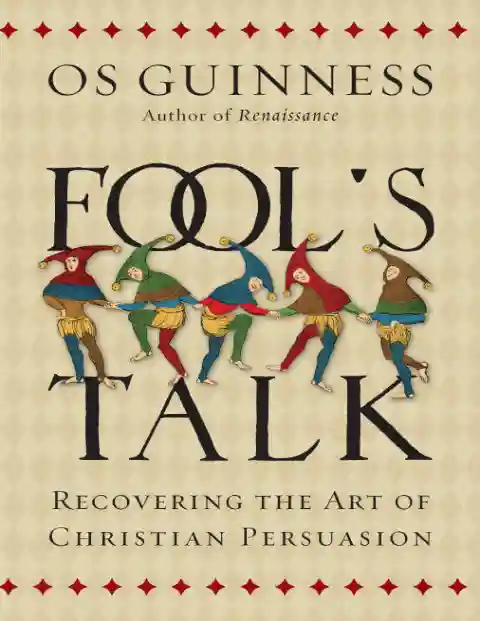

Fools Talk - Recovering The Art Of Christian Persuasion Order Printed Copy
- Author: Os Guinness
- Size: 2.05MB | 297 pages
- |
Others like fools talk - recovering the art of christian persuasion Features >>
Gospel - Recovering The Power That Made Christianity Revolutionary
-160.webp)
Out Of Commission (Getting Every Christian Back To The Great Commission)
True Christianity

Signs And Wonders
A Lesson From The Arabs
Taking God's Power

How To Win Your City To Jesus
Repentance And Soul Winning

Blood In The Sand

Evangelism
About the Book
"Fool's Talk" by Os Guinness explores the art of Christian persuasion in today's secular world. Guinness argues that the Christian voice is often marginalized and even silenced in modern society, and he offers insights on how believers can effectively communicate their faith without compromising their beliefs. He emphasizes the importance of engaging in meaningful dialogue, listening to others, and building bridges of understanding in order to share the message of Christianity in a persuasive and respectful manner.
John Alexander Dowie
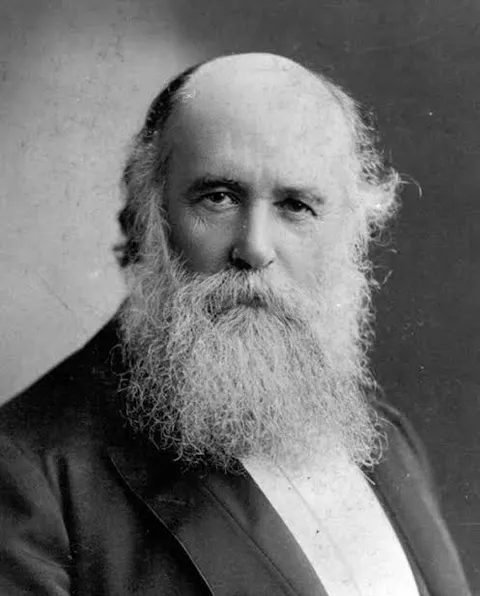 By John Alexander Dowie (1847 – 1907)
I sat in my study in the parsonage of the Congregational Church at Newtown, a suburb of the beautiful city of Sydney, Australia. My heart was very heavy, for I had visited the sick and dying beds of more than thirty of my flock, and I had cast the dust to its kindred dust into more than forty graves within a few weeks. Where, oh where, was He Who used to heal His suffering children? No prayer for healing seemed to reach His ear, and yet I knew His hand had not been shortened. Still it did not save from death even those for whom there was so much in life to live for God and others. Strong men, fathers, good citizens, and more than all, true Christians sickened with a putrid fever, suffered nameless agonies, passed into delirium, sometimes with convulsions, and then died.
Oh, what aching voids were left in many a widowed or orphaned heart. There were many homes where, one by one, the little children, the youths and the maidens lay stricken, and after a hard struggle with the foul disease, they too, lay cold and dead. It seemed sometimes as if I could almost hear the triumphant mockery of evil ringing in my ear whilst I spoke to the bereaved ones the words of Christian hope and consolation. Disease, the foul offspring of its father, Satan, and its mother Sin, was defiling and destroying the earthly temples of God’s children and there was no deliverance.
There I sat with sorrow-bowed head for my afflicted people, until the bitter tears came to relieve my burning heart. Then I prayed for some message, and oh, how I longed to hear some words from Him Who wept and sorrowed for the suffering long ago, a Man of Sorrows and Sympathies. The words of the Holy Ghost inspired In Acts 10:38, stood before me all radiant with light, revealing Satan as the Defiler, and Christ as the Healer. My tears were wiped away, my heart strong, I saw the way of healing, and the door thereto was opened wide, so I said, “God help me now to preach the Word to all the dying around, and tell them how Satan still defiles, and Jesus still delivers, for He is just the same today.”
A loud ring and several raps at the outer door, a rush of feet, and there at my door stood two panting messengers who said, “Oh, come at once, Mary is dying; come and pray. “With just a feeling as a shepherd has who hears that his sheep are being torn from the fold by a cruel wolf, I rushed from my house, ran without my hat down the street, and entered the room of the dying maiden. There she lay groaning and grinding her clenched teeth in the agony of the conflict with the destroyer. The white froth, mingled with her blood, oozing from her pale and distorted mouth. I looked at her and then my anger burned. “Oh,” I thought, “for some sharp sword of heavenly temper keen to slay this cruel foe who is strangling that lovely maiden like an invisible serpent, tightening his deadly coils for a final victory.”
In a strange way, It came to pass; I found the sword I needed was in my hands, and in my hand I hold it still and never will I lay It down. The doctor, a good Christian man, was quietly walking up and down the room, sharing the mother’s pain and grief. Presently he stood at my side and said, “Sir, are not God’s ways mysterious?” Instantly the sword was flashed in my hand, the Spirit’s sword, the Word of God. “God’s way?!” I said, pointing to the scene of conflict, “How dare you call that God’s way of bringing His children home from earth to Heaven? No sir, that is the devil’s work and it is time we called on Him Who came to destroy the work of the devil, to slay that deadly foul destroyer, and to save this child. Can you pray, Doctor, can you pray the prayer of faith that saves the sick?” At once, offended at my words, my friend was changed, and saying,” You are too much excited, sir, it is best to say ‘God’s will be done,’” and he left the room.
Excited?! The word was quite inadequate for I was almost frenzied with divinely imparted anger and hatred of that foul destroyer, disease, which was doing Satan’s will. “It is not so,” I exclaimed, “no will of God sends such cruelty, and I shall never say ‘God’s will be done’ to Satan’s works, which God’s own Son came to destroy, and this is one of them.” Oh, how the Word of God was burning in my heart: “Jesus of Nazareth went about doing good, and healing all that were oppressed of the devil; for God was with Him.” And was not God with me? And was not Jesus there and all His promises true? I felt that it was even so, and turning to the mother I inquired,” Why did you send for me?” To which she answered, “Do pray, oh pray for her that God may raise her up.” So we prayed.
What did I say? It may be that I cannot recall the words without mistake, but words are in themselves of small importance. The prayer of faith may be a voiceless prayer, a simple heartfelt look of confidence into the face of Christ. At such moment, words are few, but they mean much, for God is looking at the heart. Still, I can remember much of that prayer unto this day, and asking God to aid, I will attempt to recall it. I cried, “Our Father, help! and Holy Spirit, teach me how to pray. Plead Thou for us, oh, Jesus, Savior, Healer, Friend, our Advocate with God the Father. Hear and heal, Eternal One! From all disease and death, deliver this sweet child of yours. I rest upon the Word. We claim the promise now. The Word is true, ‘I am the Lord that heals thee.’ Then heal her now. The Word is true, ‘I am the Lord, I change not.’ Unchanging God, then prove Yourself the healer now. The Word is true. ‘These signs shall follow them that believe in My Name, they shall lay hands on the sick, and they shall recover.’ And I believe and I lay hands in Jesus’ Name on her and claim this promise now. Your Word is true. ‘The prayer of faith shall save the sick. Trusting in You alone. I cry. Oh, save her now, for Jesus’ sake. Amen!”
Then, the maid lay in sleep so deep and sweet that the mother asked in a low whisper, “Is she dead?” “No,” I answered, in a whisper lower still. “Mary will live; the fever is gone. She is perfectly well and sleeping as an infant sleeps.” I was smoothing the long dark hair from her now peaceful brow, and feeling the steady pulsation of her heart and cool moist hands. I saw that Christ had heard, and that once more, as long ago in Peter’s house, “He touched her and the fever left her.” Turning to the nurse, I said, “Get me at once, please, a cup of cocoa and several slices of bread and butter.” Beside the sleeping maid we sat quietly and almost silently until the nurse returned, and then I bent over her and snapping my fingers called, “Mary!”
Instantly she woke, smiled and said, “Oh, sir, when did you come? I have slept so long;” then stretching her arms out to meet her mother’s embrace, she said, “Mother, I feel so well.” “And hungry, too?” I asked, pouring some of the cocoa in a saucer and offering it to her when cooled by my breath. “Yes, hungry too,” she answered with a little laugh, and drank and ate again, and yet again until all was gone. In a few minutes, she fell asleep, breathing easily and softly. Quietly thanking God. We left her bed and went to the next room where her brother and sister also lay sick of the same fever. With these two, we prayed and they were healed too. The following day all three were well and in a week or so they brought me a little letter and a gift of gold, two sleeve links with my monogram, which I wore for many years. As I went away from the home where Christ as the Healer had been victorious, I could not but have somewhat in my heart of the triumphant song that rang through Heaven, and yet I was not a little amazed at my own strange doings, and still more at my discovery that He is just the same today.
Excerpt from the Sermons of John Alexander Dowie Champions of Faith by Gordon Lindsay
By John Alexander Dowie (1847 – 1907)
I sat in my study in the parsonage of the Congregational Church at Newtown, a suburb of the beautiful city of Sydney, Australia. My heart was very heavy, for I had visited the sick and dying beds of more than thirty of my flock, and I had cast the dust to its kindred dust into more than forty graves within a few weeks. Where, oh where, was He Who used to heal His suffering children? No prayer for healing seemed to reach His ear, and yet I knew His hand had not been shortened. Still it did not save from death even those for whom there was so much in life to live for God and others. Strong men, fathers, good citizens, and more than all, true Christians sickened with a putrid fever, suffered nameless agonies, passed into delirium, sometimes with convulsions, and then died.
Oh, what aching voids were left in many a widowed or orphaned heart. There were many homes where, one by one, the little children, the youths and the maidens lay stricken, and after a hard struggle with the foul disease, they too, lay cold and dead. It seemed sometimes as if I could almost hear the triumphant mockery of evil ringing in my ear whilst I spoke to the bereaved ones the words of Christian hope and consolation. Disease, the foul offspring of its father, Satan, and its mother Sin, was defiling and destroying the earthly temples of God’s children and there was no deliverance.
There I sat with sorrow-bowed head for my afflicted people, until the bitter tears came to relieve my burning heart. Then I prayed for some message, and oh, how I longed to hear some words from Him Who wept and sorrowed for the suffering long ago, a Man of Sorrows and Sympathies. The words of the Holy Ghost inspired In Acts 10:38, stood before me all radiant with light, revealing Satan as the Defiler, and Christ as the Healer. My tears were wiped away, my heart strong, I saw the way of healing, and the door thereto was opened wide, so I said, “God help me now to preach the Word to all the dying around, and tell them how Satan still defiles, and Jesus still delivers, for He is just the same today.”
A loud ring and several raps at the outer door, a rush of feet, and there at my door stood two panting messengers who said, “Oh, come at once, Mary is dying; come and pray. “With just a feeling as a shepherd has who hears that his sheep are being torn from the fold by a cruel wolf, I rushed from my house, ran without my hat down the street, and entered the room of the dying maiden. There she lay groaning and grinding her clenched teeth in the agony of the conflict with the destroyer. The white froth, mingled with her blood, oozing from her pale and distorted mouth. I looked at her and then my anger burned. “Oh,” I thought, “for some sharp sword of heavenly temper keen to slay this cruel foe who is strangling that lovely maiden like an invisible serpent, tightening his deadly coils for a final victory.”
In a strange way, It came to pass; I found the sword I needed was in my hands, and in my hand I hold it still and never will I lay It down. The doctor, a good Christian man, was quietly walking up and down the room, sharing the mother’s pain and grief. Presently he stood at my side and said, “Sir, are not God’s ways mysterious?” Instantly the sword was flashed in my hand, the Spirit’s sword, the Word of God. “God’s way?!” I said, pointing to the scene of conflict, “How dare you call that God’s way of bringing His children home from earth to Heaven? No sir, that is the devil’s work and it is time we called on Him Who came to destroy the work of the devil, to slay that deadly foul destroyer, and to save this child. Can you pray, Doctor, can you pray the prayer of faith that saves the sick?” At once, offended at my words, my friend was changed, and saying,” You are too much excited, sir, it is best to say ‘God’s will be done,’” and he left the room.
Excited?! The word was quite inadequate for I was almost frenzied with divinely imparted anger and hatred of that foul destroyer, disease, which was doing Satan’s will. “It is not so,” I exclaimed, “no will of God sends such cruelty, and I shall never say ‘God’s will be done’ to Satan’s works, which God’s own Son came to destroy, and this is one of them.” Oh, how the Word of God was burning in my heart: “Jesus of Nazareth went about doing good, and healing all that were oppressed of the devil; for God was with Him.” And was not God with me? And was not Jesus there and all His promises true? I felt that it was even so, and turning to the mother I inquired,” Why did you send for me?” To which she answered, “Do pray, oh pray for her that God may raise her up.” So we prayed.
What did I say? It may be that I cannot recall the words without mistake, but words are in themselves of small importance. The prayer of faith may be a voiceless prayer, a simple heartfelt look of confidence into the face of Christ. At such moment, words are few, but they mean much, for God is looking at the heart. Still, I can remember much of that prayer unto this day, and asking God to aid, I will attempt to recall it. I cried, “Our Father, help! and Holy Spirit, teach me how to pray. Plead Thou for us, oh, Jesus, Savior, Healer, Friend, our Advocate with God the Father. Hear and heal, Eternal One! From all disease and death, deliver this sweet child of yours. I rest upon the Word. We claim the promise now. The Word is true, ‘I am the Lord that heals thee.’ Then heal her now. The Word is true, ‘I am the Lord, I change not.’ Unchanging God, then prove Yourself the healer now. The Word is true. ‘These signs shall follow them that believe in My Name, they shall lay hands on the sick, and they shall recover.’ And I believe and I lay hands in Jesus’ Name on her and claim this promise now. Your Word is true. ‘The prayer of faith shall save the sick. Trusting in You alone. I cry. Oh, save her now, for Jesus’ sake. Amen!”
Then, the maid lay in sleep so deep and sweet that the mother asked in a low whisper, “Is she dead?” “No,” I answered, in a whisper lower still. “Mary will live; the fever is gone. She is perfectly well and sleeping as an infant sleeps.” I was smoothing the long dark hair from her now peaceful brow, and feeling the steady pulsation of her heart and cool moist hands. I saw that Christ had heard, and that once more, as long ago in Peter’s house, “He touched her and the fever left her.” Turning to the nurse, I said, “Get me at once, please, a cup of cocoa and several slices of bread and butter.” Beside the sleeping maid we sat quietly and almost silently until the nurse returned, and then I bent over her and snapping my fingers called, “Mary!”
Instantly she woke, smiled and said, “Oh, sir, when did you come? I have slept so long;” then stretching her arms out to meet her mother’s embrace, she said, “Mother, I feel so well.” “And hungry, too?” I asked, pouring some of the cocoa in a saucer and offering it to her when cooled by my breath. “Yes, hungry too,” she answered with a little laugh, and drank and ate again, and yet again until all was gone. In a few minutes, she fell asleep, breathing easily and softly. Quietly thanking God. We left her bed and went to the next room where her brother and sister also lay sick of the same fever. With these two, we prayed and they were healed too. The following day all three were well and in a week or so they brought me a little letter and a gift of gold, two sleeve links with my monogram, which I wore for many years. As I went away from the home where Christ as the Healer had been victorious, I could not but have somewhat in my heart of the triumphant song that rang through Heaven, and yet I was not a little amazed at my own strange doings, and still more at my discovery that He is just the same today.
Excerpt from the Sermons of John Alexander Dowie Champions of Faith by Gordon Lindsay
The Hill We All Must Die On
The doctrine of penal substitution is under attack today — and that’s an understatement. From voices outside of evangelical theology to those within, the historic Reformation view of the cross is claimed to be a “modern” invention from the cultural West. Others criticize the doctrine as sanctioning violence, privileging divine retributive justice over God’s love, condoning a form of divine child abuse, reducing Scripture’s polychrome presentation of the cross to a lifeless monochrome, being too “legal” in orientation, and so on. All of these charges are not new. All of them have been argued since the end of the 16th century, and all of them are false. Yet such charges reflect the corrosive effects of false ideas on theology and a failure to account for how the Bible, on its own terms, interprets the cross. Given the limitations of this article, I cannot fully respond to these charges. Instead, I will briefly state four truths that unpack the biblical-theological rationale of penal substitution. In so doing, my goal is to explain why penal substitution should be embraced as God’s good news for sinners. Four Questions to Get Right It is only in viewing Christ as our penal substitute that we truly understand the depth of God’s holy love for us, the horrendous nature of our sin before God, and the glory of our substitute — Jesus Christ our Lord — whose obedient life and penal death achieved our right standing before God and the full forgiveness of our sins. Let us now turn to these truths that are crucial to affirm and that lead us to glory in our Lord Jesus Christ as our penal substitute. 1. Who Is God? First, we must get right who God is as our triune Creator-Covenant Lord. Mark it well: debates over the nature of the atonement are first and foremost doctrine of God debates. If our view of God is sub-biblical, we will never get the cross right. From the opening verses of Scripture, God is presented as eternal, a se (life from himself), holy love, righteous, and good — the triune God who is complete in himself and who needs nothing from us (Genesis 1–2; Psalm 50:12–14; Isaiah 6:1–3; Acts 17:24–25; Revelation 4:8–11). One crucial implication of this description is that God, in his very nature, is the moral standard of the universe. This is why we must not think of God’s law as something external to him that he may relax at will. Instead, the triune God of Scripture is the law; his will and nature determine what is right and wrong. This view of God is often forgotten in today’s discussion of the atonement. Following the “New Perspective on Paul,” some argue that God’s justice/righteousness is only “God’s covenant faithfulness,” that is, God remaining true to his promises. No doubt this is true. However, what this view fails to see is that “righteousness-justice-holiness” is first tied to God’s nature as God. That is why, in light of sin, God, who is the law, cannot overlook our sin. God’s holy justice demands that he not only punish all sin, but also, if he graciously chooses to justify the ungodly (Romans 4:5), he must do so by fully satisfying his own righteous, holy moral demand. Thus, given our sin and God’s gracious choice to redeem us, the question that emerges across redemptive history is this: How will God demonstrate his holy justice and covenant love and remain true to himself? The answer is only found in the Father’s gift of his Son, Jesus’s obedient life and substitutionary death, that results in our justification before God in Christ (Romans 3:21–26). 2. Who Is Man? Second, we must get right who humans are as God’s image-sons created to be in covenant relationship with God. Specifically, we must grasp who Adam is, not only as a historic person, but also as the covenant representative/head of the human race (Romans 5:12–21; 1 Corinthians 15:21–22). Why is this significant? Because in creation, our triune Creator-Covenant God sets the conditions of the covenant and rightly demands from Adam (and all of us) total trust, love, and obedience — a truth reflected in God’s first command. But the flip side is also true: If there is covenant disobedience, given who God is, there is also his holy judgment against our sin that results in the penalty of physical and spiritual death (Genesis 2:15–17; cf. Romans 6:23). 3. How Can God Justify Sinners? Third, we must get right the serious problem of our sin before God. Sadly, Adam did not love God with full covenant devotion. Instead, he disobeyed God, thus bringing sin, death, and God’s curse into the world. In the Bible’s storyline, Adam’s sin changes everything! From Genesis 3 forward, “in Adam,” the entire human race becomes guilty, corrupted, condemned, and under the judicial sentence of death (Genesis 3; Romans 5:12–21; Ephesians 2:1–3). If God is going to redeem, which he has graciously promised to do (Genesis 3:15), how is he going to do it? Remember, given who God is in all of his moral perfection, and given that he is the standard of holy justice who will not deny himself, how will God declare sinners justified before him apart from the full satisfaction of his moral demand? God must punish sin and execute perfect justice because he is holy, just, and good. He cannot overlook our sin nor relax the demands of his justice, and in truth, thankfully so! But to justify us, our sin must be fully atoned. How, then, can God punish our sin, satisfy his own righteous demand, and justify sinners? Add to this point: To undo, reverse, and pay for Adam’s sin, we need someone who will come from the human race and identify with us (Genesis 3:15), render our required covenantal obedience, and pay the penalty for our sin. We need someone who will become our covenant representative and substitute, and by his obedient life and penal death secure our justification before God. And wonder of wonders, Scripture gloriously announces that there is one man — and only one — who can do this for us, namely our Lord Jesus Christ (Hebrews 2:5–18). 4. Who Is Jesus? Fourth, we must get right who Jesus is, what he does for us, and that he alone can redeem, reconcile, and justify us before God. Who is the Jesus of the Bible? In short, he is God the Son incarnate, the second person of the triune Godhead. He is no abused child or some third-party individual who stands independent of God. We cannot think of his atoning work apart from thinking of the entire triune God accomplishing our salvation. Furthermore, as the eternal Son, eternally loved of his Father and the Spirit, in God’s plan, he voluntarily took on the role of becoming our Redeemer. And in his incarnation, he identified with us in order to represent us before God (Hebrews 5:1). In his obedient human life, Jesus, as the Mediator of the new covenant, obeyed for us as our legal covenant representative. In his obedient death, Jesus, as the divine Son, satisfied his own righteous demand against us by bearing the penalty of our sin as our substitute (Romans 5:18–19; Philippians 2:6–11; Hebrews 5:1–10). And in doing all of this, the Father’s love was revealed in Jesus’s penal substitution because of who Jesus is as the Son incarnate, the Last Adam, and the only Mediator of God’s people (Romans 5:8–11). Don’t Get Bored with the Gospel The truth of the matter is this: penal substitution is not a view to be replaced by something “better” or dismissed as a relic of the past. There is no greater news than this: Christ Jesus, as the divine Son incarnate, perfectly meets our need before God by his obedient life and substitutionary death. In Christ the triune love of God is gloriously revealed because in Christ we receive the gift of righteousness which is now ours by faith in him. In union with his people, Christ, as our new covenant head, obeys in our place, dies our death, and satisfies divine justice, which is evidenced in his glorious resurrection. As a result, by faith alone, in Christ alone, his righteousness is ours — now and forever (Romans 8:1; 2 Corinthians 5:21; Galatians 3:13). By faith-union in Christ, we stand complete: justified before God by the forgiveness of our sins and clothed in his righteousness (Romans 4:1–8; 5:1–2). Following the Bible’s teaching on this matter, may we learn anew to say with Paul, “For I decided to know nothing . . . except Jesus Christ and him crucified” (1 Corinthians 2:2). “Thanks be to God for his inexpressible gift!” (2 Corinthians 9:15). Article by Stephen Wellum