
.epub-480.webp)

Falling Upward: A Spirituality For The Two Halves Of Life Order Printed Copy
- Author: Richard Rohr
- Size: 1.97MB | 164 pages
- |
Others like falling upward: a spirituality for the two halves of life Features >>
Waging Spiritual Warfare
-160.webp)
The Law Of Recognition (The Laws Of Life Series)
48 Laws Of Spiritual Power
Emotionally Healthy Spirituality

Lost And Found - Finding Hope In The Detours Of Life
.epub-160.webp)
The Price Of Spiritual Power
The Art Of War For Spiritual Battle
Walking In The Spirit
-160.webp)
Spiritual Direction (Wisdom For The Long Walk Of Faith)
Smith Wigglesworth On Spiritual Gifts
About the Book
"Falling Upward" explores the concept of a two-stage spiritual journey, where the first half of life is focused on building up the ego and establishing an identity, while the second half involves letting go of the ego and opening up to a deeper sense of spirituality. Richard Rohr discusses how challenges and failures can lead to spiritual growth and transformation in the second half of life, ultimately leading to a greater sense of purpose and fulfillment.
Kenneth E. Hagin
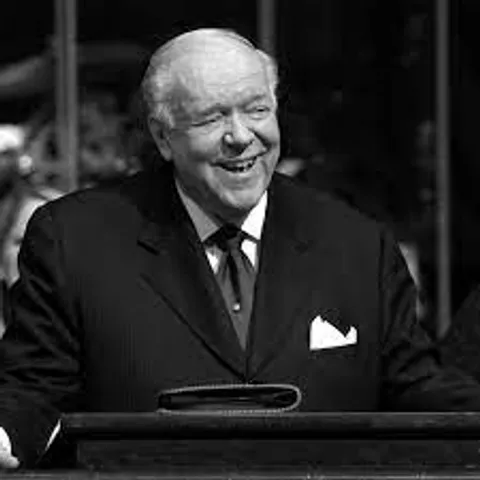 Rev. Kenneth Erwin Hagin was born on Aug. 20, 1917, in McKinney, Texas. Rev. Hagin was sickly as a child, suffering from a deformed heart and an incurable blood disease. He was not expected to live and became bedfast at age 15. In April 1933 during a dramatic conversion experience, he reported dying three times in 10 minutes, each time seeing the horrors of hell and then returning to life.
In August 1934, Rev. Hagin was miraculously healed, raised off a deathbed by the power of God and the revelation of faith in God’s Word. Jesus appeared to Rev. Hagin eight times over the next several years in visions that changed the course of his ministry. In 1967, he began a regular radio broadcast that continues today as Rhema for Today.
In 1968 Rev. Hagin published the first issues of The Word of Faith. That magazine, now produced nine times a year, has a circulation of over 200,000. The publishing outreach he founded, Faith Library Publications, has circulated worldwide more than 75 million copies of books by Rev. Hagin, Kenneth W. Hagin, Lynette Hagin, Craig W. Hagin, and several other authors. Faith Library Publications also has produced millions of audio and video teachings.
Other outreaches of Kenneth Hagin Ministries include Rhema Praise, a weekly television broadcast hosted by Revs. Kenneth and Lynette Hagin; Rhema Correspondence Bible School; Rhema Alumni Association; Rhema Ministerial Association International; the Rhema Prayer and Healing Center; and the Rhema prison ministry.
In 1974 Rev. Hagin founded what is now Rhema Bible Training College. The school has campuses all over the world and continues to expand.
Until shortly before his death, Rev. Hagin continued to travel and teach throughout the United States and into Canada conducting All Faiths’ Crusades and other special meetings.
Known as the “father of the modern faith movement,” Rev. Hagin was a dynamic preacher, teacher, and prophet. His teachings and books are filled with vivid stories that show God’s power and truth working in his life and the lives of others. He will be remembered not only as a great minister but as a great family man—for his family was his heart. He was there at every milestone ready to talk, to answer, to pray. He was a man whose belly laugh filled the room at the sight of one of his grandchildren or great-grandchildren.
Rev. Kenneth Erwin Hagin was born on Aug. 20, 1917, in McKinney, Texas. Rev. Hagin was sickly as a child, suffering from a deformed heart and an incurable blood disease. He was not expected to live and became bedfast at age 15. In April 1933 during a dramatic conversion experience, he reported dying three times in 10 minutes, each time seeing the horrors of hell and then returning to life.
In August 1934, Rev. Hagin was miraculously healed, raised off a deathbed by the power of God and the revelation of faith in God’s Word. Jesus appeared to Rev. Hagin eight times over the next several years in visions that changed the course of his ministry. In 1967, he began a regular radio broadcast that continues today as Rhema for Today.
In 1968 Rev. Hagin published the first issues of The Word of Faith. That magazine, now produced nine times a year, has a circulation of over 200,000. The publishing outreach he founded, Faith Library Publications, has circulated worldwide more than 75 million copies of books by Rev. Hagin, Kenneth W. Hagin, Lynette Hagin, Craig W. Hagin, and several other authors. Faith Library Publications also has produced millions of audio and video teachings.
Other outreaches of Kenneth Hagin Ministries include Rhema Praise, a weekly television broadcast hosted by Revs. Kenneth and Lynette Hagin; Rhema Correspondence Bible School; Rhema Alumni Association; Rhema Ministerial Association International; the Rhema Prayer and Healing Center; and the Rhema prison ministry.
In 1974 Rev. Hagin founded what is now Rhema Bible Training College. The school has campuses all over the world and continues to expand.
Until shortly before his death, Rev. Hagin continued to travel and teach throughout the United States and into Canada conducting All Faiths’ Crusades and other special meetings.
Known as the “father of the modern faith movement,” Rev. Hagin was a dynamic preacher, teacher, and prophet. His teachings and books are filled with vivid stories that show God’s power and truth working in his life and the lives of others. He will be remembered not only as a great minister but as a great family man—for his family was his heart. He was there at every milestone ready to talk, to answer, to pray. He was a man whose belly laugh filled the room at the sight of one of his grandchildren or great-grandchildren.
How to Pause in the Middle of the Pressure
“You should really just take a break.” I remember when he said those words. Then, I remember the overwhelming urge to punch him... in the face. “You have no idea how much pressure I’m under,” I thought. “If you carried the weight I carry, you’d never say such a thing.” The call to rest felt like just one more thing to do. Eventually, self-pity and self-aggrandizement partnered together to create a flurry of excuses. But a few months later, my friend was right. I did crash. Stuck in the pit of a depression, I learned the hard way what my friend was hoping to show me in an easier way. Because I didn’t know how to stop in the middle of the work of life, I crashed. I’m not alone, though. According to the CDC (American Center for Disease Control), we Americans work more than anyone else in the Western World. Presumably, this is to pursue the American Dream. But for many of us, busyness overtakes the dream, and, in a strange twist, becomes the way we determine who is important. For the people of the world, this is terrible. For the people of God, it’s unthinkable. So here are three ways to overcome the temptation to resist the urge to ignore rest: Realize You Need to Stop Of course you’re busy. Let’s just agree to agree on that. But the Scriptures don’t demand our ceaseless work. In fact, that’s one of the main differentiating features of the God of the Bible. He’s not like the pagan gods of the Ancient world, He doesn’t demand work from us. And He isn’t Pharoah either, so He doesn’t need us to toil for him so he can luxuriate. The exodus story tells us of a God who rescued his people from that kind of slavery. We need to stop to remember that we’ve be delivered from such bondage. Knowing this will change how you work, even in the busiest of times. Resist The Worship of Work Work is a wonderful gift, but it’s a terrible god. In the West, we’ve turned restlessness into a status symbol. But as the people of God we have our statuses secure, and we have our own symbol that points to it—the cross. It reminds us that God has done all the ultimately-justifying work for us. That frees us to be both diligent and done, to work hard and then stop. You can’t truly take up the yoke of Christ if you’re still peddling to find your purpose in work. Even in busyness, you really can put your labor down. Rework Your Schedule Everyone goes through seasons of busyness—moving, having a baby, starting a new job... But the thing about seasons is that they’re seasons, not lifestyles. I’d challenge you to take your newfound realization that you need to rest and place it in your calendar, regularly. You made room for the Yoga class, the extra meeting, and the soccer run. I’ll bet you can make room for rest. My friend was right. I needed to stop. But I only learned to pause in the midst of pressure only after first being crushed by it. Maybe you’re stronger than me. Maybe you’re better at getting things done. But, I doubt it. The crash is coming, so consider this bit of advice from a friend, “You really should just take a break.” Adam Mabry
-480.webp)
%20-%20Patricia%20King-480.webp)