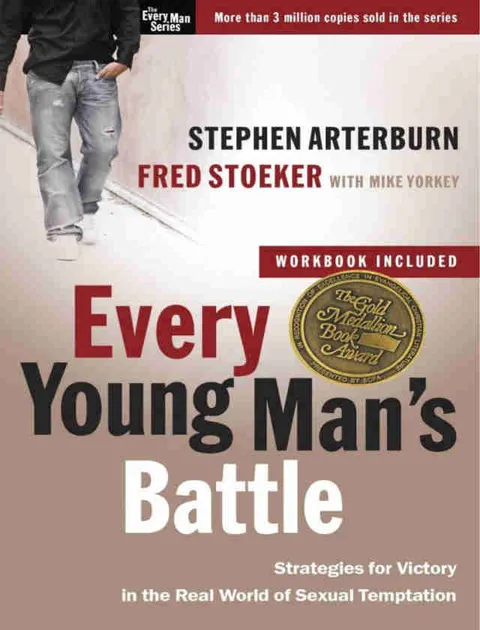

Every Man's Battle Order Printed Copy
- Author: S. Arterburn, F. Stoeker, M. Yorkey
- Size: 1.31MB | 453 pages
- |








About the Book
"Every Man's Battle" is a Christian self-help book that addresses the struggles men face with sexual temptation and provides biblical guidance on how to overcome it. The authors share personal stories and practical advice to help men honor God with their thoughts and actions in their daily lives.
Jerry Bridges
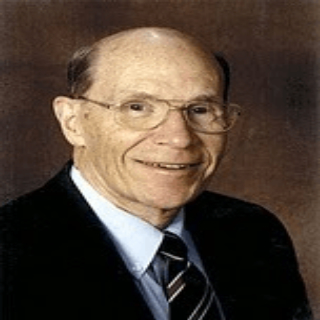 Jerry Bridges entered into the joy of his Master on Sunday evening, March 6, 2016, at Penrose Hospital in Colorado Springs, the day after he suffered cardiac arrest. He was 86 years old.
Childhood
Gerald Dean Bridges was born on December 4, 1929, in a cotton-farming home in Tyler, Texas, to fundamentalist parents, six weeks after the Black Tuesday stock market crash that led to the Great Depression.
Jerry was born with several disabilities: he was cross-eyed, he was deaf in his right ear (which was not fully developed), and he had spine and breastbone deformities. But given his family’s poverty, they were unable to afford medical care for these challenges.
The separatist church in East Texas where the Bridges were members had an altar call after every service. Jerry walked the aisle three times, at the ages of 9, 11, and 13. But he later realized that he had not been born again.
His mother Lillian passed away in 1944 when he was 14.
Conversion
In August of 1948, as an 18-year-old college student right before his sophomore year began, Jerry was home alone one night in bed. He acknowledged to the Lord that he was not truly a Christian, despite growing up in a Christian home and professing faith. He prayed, ”God whatever it takes, I want Christ to be my Savior.”
The next week in his dorm room at the University of Oklahoma he was working on a school assignment and reached for a textbook, when he noticed the little Bible his parents had given him in high school. He figured that since he was now a Christian, he ought to start reading it daily, which he did (and never stopped doing for the rest of his days).
The Navy
After graduating with an engineering degree on a Navy ROTC scholarship, he went on active duty with the Navy, serving as an officer during the Korean conflict (1951-1953). A fellow officer invited him to go to a Navigator Bible study. Jerry went and he was hooked. He had never experienced anything like this before.
When stationed on ship in Japan, he got to know several staff members of the Navigators quite well. One day, after Jerry had been in Japan for six months, a Navy worker asked him why he didn’t just throw in his lot with the Navigators and come to work for them. The very next day, December 26, 1952, Jerry failed a physical exam due to the hearing loss in his right ear, and he was given a medical discharge in July 1953, after being in the Navy for only two years. Jerry was not overly disappointed, surmising that perhaps this was the Lord’s way of steering him to the Navigators.
When he returned to the U.S., he began working for Convair, an airplane manufacturing company in southern California, writing technical papers for shop and flight line personnel. It was there that he learned to write simply and clearly—skills the Lord would later use to instruct and edify thousands of people from his pen.
The Navigators
Jerry was single at the time, living in the home of Navigator Glen Solum, a common practice in the early days of The Navigators. In 1955 Jim invited Jerry to go with him to a staff conference at the headquarters of The Navigators in Glen Eyrie at Colorado Springs. It was there that Jerry sensed a call from the Lord to be involved with vocational ministry. He was resistant to the idea of going on staff, but felt conviction and prayed to the Lord, “Whatever you want.” The following day he met Dawson Trotman, the 49-year-old founder of The Navigators, who wanted to interview Jerry for a position, which he received and accepted. Jerry was put in charge of the correspondence department—answering letters, handling receipts, and mainly the NavLog newsletter to supporters.
When Trotman died in June of 1956 (saving a girl who was drowning), Jim Downing took a position equivalent to a chief operations operator. A Navy man, Jim Downing knew that Jerry had also served in the Navy and tapped him to be his assistant.
Jerry struggled at times in his role, unsure if this was his calling since his position was so different from the typical campus reps. After ten years on staff he told the Lord, “I’m going to do this for the rest of my life. If you want me out of The Navigators you’ll have to let me know.”
Beginning in 1960, Jerry served for three years in Europe as administrative assistant to the Navigators’ Europe Director. In January of 1960, he read a booklet entitled The Doctrine of Election, which he first considered heresy but then embraced the following day.
In October of 1963, at the age of 34, he married his first wife, Eleanor Miller of The Navigators following a long-distance relationship. Two children followed: Kathy in 1966, and Dan in 1967. From 1965 to 1969 Jerry served as office manager for The Navigators’ headquarters office at Glen Eyrie.
From 1969 to 1979 Jerry served as the Secretary-Treasurer for The Navigators. It was during this time that NavPress was founded in 1975. Their first publications began by transcribing and editing audio material from their tape archives and turning them into booklets. They produced one by Jerry on Willpower. Leroy Eims—who started the Collegiate ministry—encouraged Jerry to try his hand at writing new material. Jerry had been teaching at conferences on holiness, so he suggested a book along those lines.
In 1978, NavPress published The Pursuit of Holiness, which has now sold over 1.5 million copies. Jerry assumed it would be his only book. A couple of years later, after reading about putting off the old self and putting on the new self from Ephesians 4, he decided to write The Practice of Godliness—on developing a Christlike character. That book went on to sell over half a million copies, and his 1988 book on Trusting God has sold nearly a million copies.
Jerry served as The Navigators’ Vice President for Corporate Affairs from 1979 to 1994. It was in this season of ministry that Eleanor developed non-Hodgkin’s lymphoma. She went to be with the Lord on November 9, 1988, just three weeks after their 25th wedding anniversary. On November 24, 1989, Jerry married Jane Mallot, who had known the Bridges family since the early ’70s.
Jerry’s final position with The Navigator’s was in the area of staff development with the Collegiate Mission. He saw this ministry as developing people, rather than teaching people how to do ministry. In addition to his work with The Navigators, he also maintained an active writing and teaching ministry, traveling the world to instruct and equip pastors and missionaries and other workers through conferences, seminars, and retreats.
Lessons
In 2014, Jerry published a memoir of his life, tracing the providential hand of God through his own story: God Took Me by the Hand: A Story of God’s Unusual Providence (NavPress, 2014). He closes the work with seven spiritual lessons he learned in his six decades of the Christian life:
The Bible is meant to be applied to specific life situations.
All who trust in Christ as Savior are united to Him in a loving way just as the branches are united to the vine.
The pursuit of holiness and godly character is neither by self-effort nor simply letting Christ “live His life through you.”
The sudden understanding of the doctrine of election was a watershed event for me that significantly affected my entire Christian life.
The representative union of Christ and the believer means that all that Christ did in both His perfect obedience and His death for our sins is credited to us.
The gospel is not just for unbelievers in their coming to Christ.
We are dependent on the Holy Spirit to apply the life of Christ to our lives.
His last book, The Blessing of Humility: Walk within Your Calling, will be published this summer by NavPress.
Legacy
One of the great legacies of Jerry Bridges is that he combined—to borrow some titles from his books—the pursuit of holiness and godliness with an emphasis on transforming grace. He believed that trusting God not only involved believing what he had done for us in the past, but that the gospel empowers daily faith and is transformative for all of life.
In 2009 he explained to interviewer Becky Grosenbach the need for this emphasis within the culture of the ministry he had given his life to:
When I came on staff almost all the leaders had come out of the military and we had pretty much a military culture. We were pretty hard core. We were duty driven. The WWII generation. We believed in hard work. We were motivated by saying “this is what you ought to do.” That’s okay, but it doesn’t serve you over the long haul. And so 30 years ago there was the beginning of a change to emphasize transforming grace, a grace-motivated discipleship.
In the days ahead, many will write tributes of this dear saint (see, e.g., this one from his friend, prayer partner, and sometimes co-author Bob Bevington). I would not be able to improve upon the reflections and remembrances of those who knew him better than I did. But I do know that he received from the Lord the ultimate acclamation as he entered into the joy of his Master and received the words we all long to hear, “Well done, my good and faithful servant.” There was nothing flashy about Jerry Bridges. He was a humble and unassuming man—strong in spirit, if not in voice or frame. And now we can rejoice with him in his full and final healing as he beholds his beloved Savior face to face. Thank you, God, for this man who helped us see and know you more.
Jerry Bridges wrote more than 20 books over the course of nearly 40 years:
The Pursuit of Holiness (NavPress, 1978)
The Practice of Godliness (NavPress, 1983)
True Fellowship (NavPress, 1985) [later published as The Crisis of Caring (P&R, 1992); finally republished with a major revision as True Community (NavPress, 2012)]
Trusting God (NavPress, 1988)
Transforming Grace (NavPress, 1991)
The Discipline of Grace (NavPress, 1994)
The Joy of Fearing God (Waterbrook, 1997)
I Exalt You, O God (Waterbrook, 2000)
I Give You Glory, O God (Waterbrook, 2002)
The Gospel for Real Life (NavPress, 2002)
The Chase (NavPress, 2003) [taken from Pursuit of Holiness]
Growing Your Faith (NavPress, 2004)
Is God Really in Control? (NavPress, 2006)
The Fruitful Life (NavPress, 2006)
Respectable Sins (NavPress, 2007) [student edition, 2013]
The Great Exchange [co-authored with Bob Bevington] (Crossway, 2007)
Holiness Day by Day (NavPress, 2008) [a devotional drawing from his earlier writing on holiness]
The Bookends of the Christian Life [co-authored with Bob Bevington] (Crossway, 2009)
Who Am I? (Cruciform, 2012)
The Transforming Power of the Gospel (NavPress, 2012)
31 Days Toward Trusting God (NavPress, 2013) [abridged from Trusting God]
God Took Me by the Hand (NavPress, 2014)
The Blessing of Humility: Walk within Your Calling (NavPress, 2016)
For an audio library of Jerry Bridges’ talks, go here.
Funeral
Visitation for Jerry Bridges was held on Thursday, March 10, 2016, from 5 to 8 pm, at Shrine of Remembrance (1730 East Fountain Blvd, Colorado Springs, CO 80910).
The memorial service was held on Friday, March 11, 2016, at 2 pm at Village Seven Presbyterian Church (4055 Nonchalant Circle South, Colorado Springs, CO 80917).
Jerry Bridges entered into the joy of his Master on Sunday evening, March 6, 2016, at Penrose Hospital in Colorado Springs, the day after he suffered cardiac arrest. He was 86 years old.
Childhood
Gerald Dean Bridges was born on December 4, 1929, in a cotton-farming home in Tyler, Texas, to fundamentalist parents, six weeks after the Black Tuesday stock market crash that led to the Great Depression.
Jerry was born with several disabilities: he was cross-eyed, he was deaf in his right ear (which was not fully developed), and he had spine and breastbone deformities. But given his family’s poverty, they were unable to afford medical care for these challenges.
The separatist church in East Texas where the Bridges were members had an altar call after every service. Jerry walked the aisle three times, at the ages of 9, 11, and 13. But he later realized that he had not been born again.
His mother Lillian passed away in 1944 when he was 14.
Conversion
In August of 1948, as an 18-year-old college student right before his sophomore year began, Jerry was home alone one night in bed. He acknowledged to the Lord that he was not truly a Christian, despite growing up in a Christian home and professing faith. He prayed, ”God whatever it takes, I want Christ to be my Savior.”
The next week in his dorm room at the University of Oklahoma he was working on a school assignment and reached for a textbook, when he noticed the little Bible his parents had given him in high school. He figured that since he was now a Christian, he ought to start reading it daily, which he did (and never stopped doing for the rest of his days).
The Navy
After graduating with an engineering degree on a Navy ROTC scholarship, he went on active duty with the Navy, serving as an officer during the Korean conflict (1951-1953). A fellow officer invited him to go to a Navigator Bible study. Jerry went and he was hooked. He had never experienced anything like this before.
When stationed on ship in Japan, he got to know several staff members of the Navigators quite well. One day, after Jerry had been in Japan for six months, a Navy worker asked him why he didn’t just throw in his lot with the Navigators and come to work for them. The very next day, December 26, 1952, Jerry failed a physical exam due to the hearing loss in his right ear, and he was given a medical discharge in July 1953, after being in the Navy for only two years. Jerry was not overly disappointed, surmising that perhaps this was the Lord’s way of steering him to the Navigators.
When he returned to the U.S., he began working for Convair, an airplane manufacturing company in southern California, writing technical papers for shop and flight line personnel. It was there that he learned to write simply and clearly—skills the Lord would later use to instruct and edify thousands of people from his pen.
The Navigators
Jerry was single at the time, living in the home of Navigator Glen Solum, a common practice in the early days of The Navigators. In 1955 Jim invited Jerry to go with him to a staff conference at the headquarters of The Navigators in Glen Eyrie at Colorado Springs. It was there that Jerry sensed a call from the Lord to be involved with vocational ministry. He was resistant to the idea of going on staff, but felt conviction and prayed to the Lord, “Whatever you want.” The following day he met Dawson Trotman, the 49-year-old founder of The Navigators, who wanted to interview Jerry for a position, which he received and accepted. Jerry was put in charge of the correspondence department—answering letters, handling receipts, and mainly the NavLog newsletter to supporters.
When Trotman died in June of 1956 (saving a girl who was drowning), Jim Downing took a position equivalent to a chief operations operator. A Navy man, Jim Downing knew that Jerry had also served in the Navy and tapped him to be his assistant.
Jerry struggled at times in his role, unsure if this was his calling since his position was so different from the typical campus reps. After ten years on staff he told the Lord, “I’m going to do this for the rest of my life. If you want me out of The Navigators you’ll have to let me know.”
Beginning in 1960, Jerry served for three years in Europe as administrative assistant to the Navigators’ Europe Director. In January of 1960, he read a booklet entitled The Doctrine of Election, which he first considered heresy but then embraced the following day.
In October of 1963, at the age of 34, he married his first wife, Eleanor Miller of The Navigators following a long-distance relationship. Two children followed: Kathy in 1966, and Dan in 1967. From 1965 to 1969 Jerry served as office manager for The Navigators’ headquarters office at Glen Eyrie.
From 1969 to 1979 Jerry served as the Secretary-Treasurer for The Navigators. It was during this time that NavPress was founded in 1975. Their first publications began by transcribing and editing audio material from their tape archives and turning them into booklets. They produced one by Jerry on Willpower. Leroy Eims—who started the Collegiate ministry—encouraged Jerry to try his hand at writing new material. Jerry had been teaching at conferences on holiness, so he suggested a book along those lines.
In 1978, NavPress published The Pursuit of Holiness, which has now sold over 1.5 million copies. Jerry assumed it would be his only book. A couple of years later, after reading about putting off the old self and putting on the new self from Ephesians 4, he decided to write The Practice of Godliness—on developing a Christlike character. That book went on to sell over half a million copies, and his 1988 book on Trusting God has sold nearly a million copies.
Jerry served as The Navigators’ Vice President for Corporate Affairs from 1979 to 1994. It was in this season of ministry that Eleanor developed non-Hodgkin’s lymphoma. She went to be with the Lord on November 9, 1988, just three weeks after their 25th wedding anniversary. On November 24, 1989, Jerry married Jane Mallot, who had known the Bridges family since the early ’70s.
Jerry’s final position with The Navigator’s was in the area of staff development with the Collegiate Mission. He saw this ministry as developing people, rather than teaching people how to do ministry. In addition to his work with The Navigators, he also maintained an active writing and teaching ministry, traveling the world to instruct and equip pastors and missionaries and other workers through conferences, seminars, and retreats.
Lessons
In 2014, Jerry published a memoir of his life, tracing the providential hand of God through his own story: God Took Me by the Hand: A Story of God’s Unusual Providence (NavPress, 2014). He closes the work with seven spiritual lessons he learned in his six decades of the Christian life:
The Bible is meant to be applied to specific life situations.
All who trust in Christ as Savior are united to Him in a loving way just as the branches are united to the vine.
The pursuit of holiness and godly character is neither by self-effort nor simply letting Christ “live His life through you.”
The sudden understanding of the doctrine of election was a watershed event for me that significantly affected my entire Christian life.
The representative union of Christ and the believer means that all that Christ did in both His perfect obedience and His death for our sins is credited to us.
The gospel is not just for unbelievers in their coming to Christ.
We are dependent on the Holy Spirit to apply the life of Christ to our lives.
His last book, The Blessing of Humility: Walk within Your Calling, will be published this summer by NavPress.
Legacy
One of the great legacies of Jerry Bridges is that he combined—to borrow some titles from his books—the pursuit of holiness and godliness with an emphasis on transforming grace. He believed that trusting God not only involved believing what he had done for us in the past, but that the gospel empowers daily faith and is transformative for all of life.
In 2009 he explained to interviewer Becky Grosenbach the need for this emphasis within the culture of the ministry he had given his life to:
When I came on staff almost all the leaders had come out of the military and we had pretty much a military culture. We were pretty hard core. We were duty driven. The WWII generation. We believed in hard work. We were motivated by saying “this is what you ought to do.” That’s okay, but it doesn’t serve you over the long haul. And so 30 years ago there was the beginning of a change to emphasize transforming grace, a grace-motivated discipleship.
In the days ahead, many will write tributes of this dear saint (see, e.g., this one from his friend, prayer partner, and sometimes co-author Bob Bevington). I would not be able to improve upon the reflections and remembrances of those who knew him better than I did. But I do know that he received from the Lord the ultimate acclamation as he entered into the joy of his Master and received the words we all long to hear, “Well done, my good and faithful servant.” There was nothing flashy about Jerry Bridges. He was a humble and unassuming man—strong in spirit, if not in voice or frame. And now we can rejoice with him in his full and final healing as he beholds his beloved Savior face to face. Thank you, God, for this man who helped us see and know you more.
Jerry Bridges wrote more than 20 books over the course of nearly 40 years:
The Pursuit of Holiness (NavPress, 1978)
The Practice of Godliness (NavPress, 1983)
True Fellowship (NavPress, 1985) [later published as The Crisis of Caring (P&R, 1992); finally republished with a major revision as True Community (NavPress, 2012)]
Trusting God (NavPress, 1988)
Transforming Grace (NavPress, 1991)
The Discipline of Grace (NavPress, 1994)
The Joy of Fearing God (Waterbrook, 1997)
I Exalt You, O God (Waterbrook, 2000)
I Give You Glory, O God (Waterbrook, 2002)
The Gospel for Real Life (NavPress, 2002)
The Chase (NavPress, 2003) [taken from Pursuit of Holiness]
Growing Your Faith (NavPress, 2004)
Is God Really in Control? (NavPress, 2006)
The Fruitful Life (NavPress, 2006)
Respectable Sins (NavPress, 2007) [student edition, 2013]
The Great Exchange [co-authored with Bob Bevington] (Crossway, 2007)
Holiness Day by Day (NavPress, 2008) [a devotional drawing from his earlier writing on holiness]
The Bookends of the Christian Life [co-authored with Bob Bevington] (Crossway, 2009)
Who Am I? (Cruciform, 2012)
The Transforming Power of the Gospel (NavPress, 2012)
31 Days Toward Trusting God (NavPress, 2013) [abridged from Trusting God]
God Took Me by the Hand (NavPress, 2014)
The Blessing of Humility: Walk within Your Calling (NavPress, 2016)
For an audio library of Jerry Bridges’ talks, go here.
Funeral
Visitation for Jerry Bridges was held on Thursday, March 10, 2016, from 5 to 8 pm, at Shrine of Remembrance (1730 East Fountain Blvd, Colorado Springs, CO 80910).
The memorial service was held on Friday, March 11, 2016, at 2 pm at Village Seven Presbyterian Church (4055 Nonchalant Circle South, Colorado Springs, CO 80917).
Food Rules
A graduate student sits at a booth with friends, his second drink near empty. “Can I refill you?” the waiter asks. A mother sees the chocolate as she reaches for her youngest’s sippy cup. She tries not to eat sugar in the afternoons, but she’s tired and stressed, and the children aren’t looking. A father comes back to the kitchen after putting the kids down. Dinner is done, but the leftover pizza is still sitting out. The day has drained him, and another few pieces seem harmless. Compared to the battles many fight — against addiction, against pornography, against anger, against pride — scenarios such as these may seem too trivial for discussion. Don’t we have bigger sins to worry about than the gluttony of secret snacks and third helpings? And yet, food is a bigger battleground than many recognize. Do you remember Moses’s terse description of the world’s first sin? She took of its fruit and ate , and she also gave some to her husband who was with her, and he ate . (Genesis 3:6) Murder did not bar Adam and Eve from paradise — nor did adultery, theft, lying, or blasphemy. Eating did. Our first parents ate their way out of Eden. And in our own way, so do we. Garden of Eating Food problems, whether large (buffet binging) or small (hidden, uncontrolled snacking), go back to the beginning. Our own moments before the refrigerator or the cupboard can, in some small measure, reenact that moment by the tree. And apart from well-timed grace from God, we often respond in one of two ungodly ways. “Our first parents ate their way out of Eden. And in our own way, so do we.” Some, like Adam and Eve, choose to indulge . They sense, on some level, that to eat is to quiet the voice of conscience and weaken the walls of self-control (Proverbs 25:28). They would recognize, if they stopped to ponder and pray, that this “eating is not from faith” (Romans 14:23). But they neither stop, nor ponder, nor pray. Instead, they tip their glass for another drink, snatch and swallow the chocolate, grab a few more slices. Wisdom’s protest avails little against the suggestion of “just one more.” “Since Eden,” Derek Kidner writes, “man has wanted the last ounce out of life, as though beyond God’s ‘enough’ lay ecstasy, not nausea” ( Proverbs , 152). And so, the indulgent drink and grab and sip and snack, forgetting that their grasping leads them, not deeper into Eden’s heart, but farther outside Eden’s walls, where, nauseous and bloated, they bow to the god called “belly” (Philippians 3:19; see also Romans 16:18). Meanwhile, others choose to deny . Their motto is not “Eat, drink, be merry” (Luke 12:19), but “Do not handle, do not taste, do not touch” (Colossians 2:21). They frantically count calories, buy scales, and build their lives on the first floor of the food pyramid. Though they may not impose their diets on others, at least for themselves they “require abstinence from foods that God created to be received with thanksgiving” (1 Timothy 4:3) — as if one should see Eden’s lawful fruit and say, “I’m good with grass.” If our God-given appetites are a stallion, some let the horse run unbridled, while others prefer to shut him up in a stable. Still others, of course, alternate (sometimes wildly) between the two. In Christ, however, God teaches us to ride. Appetite Redeemed Paul’s familiar command to “be imitators of me, as I am of Christ” (1 Corinthians 11:1) comes, surprisingly enough, in the context of food (see 1 Corinthians 8–10, especially 8:7–13 and 10:14–33). And the Gospels tell us why: in Jesus, we find appetite redeemed. “The Son of Man came eating and drinking,” Jesus says of himself (Matthew 11:19) — and he wasn’t exaggerating. Have you ever noticed just how often the Gospels mention food? Jesus’s first miracle multiplied wine (John 2:1–11); two of his most famous multiplied bread (Matthew 14:13–21; 15:32–39). He regularly dined as a guest at others’ homes, whether with tax collectors or Pharisees (Mark 2:13–17; Luke 14:1). He told parables about seeds and leaven, feasts and fattened calves (Matthew 13:1–9, 33; Luke 14:7–11; 15:11–32). When he met his disciples after his resurrection, he asked, “Have you anything here to eat?” (Luke 24:41) — another time, he took the initiative and cooked them breakfast himself (John 21:12). No wonder he thought it good for us to remember him over a meal (Matthew 26:26–29). And yet, for all of his freedom with food, he was no glutton or drunkard. Jesus could feast, but he could also fast — even for forty days and forty nights when necessary (Matthew 4:2). At meals, you never get the sense that he was preoccupied with his plate; rather, God and neighbor were his constant concern (Mark 2:13–17; Luke 7:36–50). And so, when the tempter found him in his weakness, and suggested he make bread to break his fast, our second Adam gave a resolute no (Matthew 4:3–4). Here is a man who knows how to ride a stallion. While some indulged, and others denied, our Lord Jesus directed his appetite. Meeting Eden’s Maker If we are going to imitate Jesus in his eating, we will need more than the right food rules. Adam and Eve did not fall, you’ll remember, for lack of a diet. No, we imitate Jesus’s eating only as we enjoy the kind of communion he had with the Father. This touches the root of the failure at the tree, doesn’t it? Before Eve reached for the fruit, she let the serpent cast a shadow over her Father’s face. She let him convince her that the God of paradise, as Sinclair Ferguson writes, “was possessed of a narrow and restrictive spirit bordering on the malign” ( The Whole Christ , 80). The god of the serpent’s beguiling was a misanthrope deity, one who kept his best fruit on forbidden trees. And so, Eve reached. But through Jesus Christ, we meet God again: the real Maker of Eden, and the only one who can break and tame our appetites. Here is the God who made all the earth’s food; who planted trees on a hundred hills and said, “Eat!” (Genesis 2:16); who feeds his people from “the abundance of [his] house,” and gives “them drink of the river of [his] delights” (Psalm 36:8); who does not withhold anything good from his own (Psalm 84:11); and who, in the fullness of time, withheld not even the greatest of all goods: his beloved Son (Romans 8:32). “We eat, drink, and abstain to the glory of God only when we, like Jesus, taste God himself as our choicest food.” Unlike Adam and Eve, Jesus ate (and abstained) in the presence of this unfathomably good God. And so, when he ate, he gave thanks to the Giver (Matthew 14:19; 1 Corinthians 11:24). When he ran up against his Father’s “You shall not eat,” he did not silence conscience or discard self-control, but feasted on something better than bread alone (Matthew 4:4). “My food,” he told his disciples, “is to do the will of him who sent me and to accomplish his work” (John 4:34). He knew there was a time to eat and a time to abstain, and that both times were governed by the goodness of God. We eat, drink, and abstain to the glory of God only when we, like Jesus, taste God himself as our choicest food (1 Corinthians 10:31; Psalm 34:8). Direct Your Appetite Admittedly, the line between just enough and too much is a blurry one, and even the most mature can fail to notice that border until they’ve eaten beyond it. Even still, between the overflowing plate of indulgence and the empty plate of denial is a third plate, one we increasingly discern and choose as the Spirit refines our heart’s palate. Here, we neither indulge nor deny our appetites, but like our Lord Jesus, we direct them. So then, there you are, ready to grab another portion, take another drink, down another handful, though your best spiritual wisdom dictates otherwise. You are ready, in other words, to reach past God’s “enough” once again. What restores your sanity in that moment? Not repeating the rules with greater fervor, but following the rules back to the mouth of an infinitely good God. When you sense that you have reached God’s “enough” — perhaps through briefly stopping, pondering, praying — you have reached the wall keeping you from leaving the Eden of communion with Christ, that Food better than all food (John 4:34). And so, you walk away, perhaps humming a hymn to the God who is good: Thou art giving and forgiving, Ever blessing, ever blest, Wellspring of the joy of living, Ocean depth of happy rest! This is the Maker of Eden, the God and Father of our Lord Jesus Christ. And if the real God is this good, then we need not grasp for what he has not given.