
GIP Library icon

LOG IN TO REVIEW
About the Book


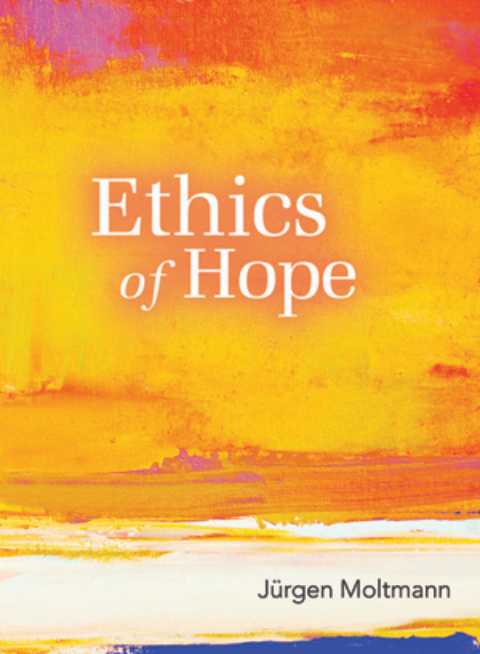
"Ethics of Hope" explores the intersection of theology and ethics, arguing that hope is at the heart of ethical living. Moltmann discusses the role of hope in overcoming suffering, injustice, and despair, and challenges readers to engage in a theology of liberation that prioritizes justice, compassion, and solidarity. He emphasizes the importance of looking forward to a better future and living in the present with hope and faith.

Sophie Scholl

Sophie Scholl Sophia Scholl was a German student, active in the White Rose – a non-violent resistance group to Hitler and the Nazi party. In 1943, she was caught delivering anti-war propaganda and, with her brother Hans Scholl, was executed for high treason. Sophie Scholl has become an important symbol of anti-Nazi resistance in Germany. Sophie Scholl was born in Forchtenberg, Germany on 9 May 1921. She was the fourth out of six children. Her father Robert was the Burgermeister (Mayor) of Forchtenberg am Kocher, in Baden-Württemberg. She was brought up as a Lutheran Christian, and her childhood was relatively happy and carefree. However, in 1933, Hitler came to power and began controlling all aspects of German society. Initially, Sophie was unaffected, but her father and brothers were critical of the Nazi regime and this political criticism filtered through to leave a strong impression on the young Sophie. At the age of twelve, she joined a pseudo-Nazi organisation, the League of German Girls. Initially, Sophie enjoyed the activities of the group, and she was promoted to Squad Leader. However, after her initial enthusiasm with the activities of the group, Sophie became uneasy about the conflict between her conscience and the creeping Nazi ideology of the organisation. In 1935, Nuremberg Laws were passed which increased the discrimination against Jews, banning them from many public places. Sophie complained when two of her young Jewish friends were barred from joining the League of German Girls. She was also reprimanded for reading from the ‘Book of Songs’ by the banned Jewish writer Heinrich Heine. Scholl indicated her rebelliousness by replying, that Heine was essential for understanding German literature. These incidents and the bans against Jews led to Sophie taking a much more critical attitude to the Nazi regime. She began choosing friends more carefully – people who were politically sympathetic to her viewpoint. In 1937, her brothers and some of her friends were arrested for participating in the German Youth Movement. This incident left a strong impression on Sophie and helped to crystallise her opposition to the Nazi regime. In 1942, her father was later sent to prison for making a critical remark about Hitler. He referred to Hitler as “God’s Scourge.” Sophie was an avid reader and developed an interest in philosophy and theology. She developed a strong Christian faith which emphasised the underlying dignity of every human being. This religious faith proved an important cornerstone of her opposition to the increasingly all-pervading Nazi ideology of German society. Sophie also developed a talent for art – drawing and painting, and she became acquainted with artistic circles which, in Nazi terms, were labelled degenerate. In 1940, after the start of the Second World War, she graduated from her Secondary School and became a kindergarten teacher at the Frobel Institute. However, in 1941, she was conscripted into the auxiliary war service working as a nursery teacher in Blumberg. Sophie disliked the military regime of war service and started to become involved in passive resistance to the war effort. After six months in the National Labour Service, in May 1942, she enrolled in the University of Munich as a student of biology and philosophy. With her brother Hans, she became associated with a group of friends who shared similar artistic and cultural interests but also developed shared political views, which increasingly opposed the Nazi regime they lived in. She came into contact with philosophers such as Theodor Haecker, who posed questions of how individuals should behave under a dictatorship. The White Rose Movement The White Rose was an informal group who sought to oppose the war and Nazi regime. It was founded in early 1942 by Hans Scholl, Willia Graf and Christoph Probst. They wrote six anti-Nazi resistance leaflets and distributed them across Munich. Initially, Sophie was not aware of the group, but when she found out her brother’s activities, she was keen to take part. Sophie participated in distributing leaflets and carrying messages. As a woman, she was less likely to be stopped by the SS. The leaflets of the White Rose contained messages, such as “Nothing is so unworthy of a nation as allowing itself to be governed without opposition by a clique that has yielded to base instinct…Western civilization must defend itself against fascism and offer passive resistance, before the nation’s last young man has given his blood on some battlefield.” However, there was a pervasive police state which kept a high degree of surveillance on any resistance activity. After leaflets had been found at the University of Munich, the local Gestapo stepped up its efforts to catch the resistors. Hans, Willi and Alex also began painting anti-Nazi slogans on buildings in Munich. On 18 February 1943, Sophie and other members of the White Rose were arrested for distributing anti-war leaflets. The leaflets were seen by Jakob Schmidt, a local Nazi party member. Sophie and Hans were interrogated by Nazi officials and, despite trying to protect each other, just four days later were sent to court. The trial was presided over by Roland Freisler, chief justice of the People’s Court of the Greater German Reich. Freisler was an ardent Nazi; with great vigour and a manic intensity, he frequently roared denunciations at the accused. Despite the hostility and appearing in court with a broken leg after her interrogation. Sophie replied to the court: “Somebody, after all, had to make a start. What we wrote and said is also believed by many others. They just don’t dare express themselves as we did.” She also said: “You know the war is lost. Why don’t you have the courage to face it?” No defence witnesses were called and, after a very short trial, the judge passed a guilty verdict, with a sentence of death. The sentence was to be carried out early the next morning by guillotine. Walter Roemer, the chief of the Munich district court, supervised the execution, he later described Sophie’s courage in facing her execution. He reports that Sophie’s last words were: “How can we expect righteousness to prevail when there is hardly anyone willing to give himself up individually to a righteous cause. Such a fine, sunny day, and I have to go, but what does my death matter, if through us, thousands of people are awakened and stirred to action?” The guards were impressed with the courage of the resistors and relaxed the rules to allow Hans, Christoph and Sophie to meet before their execution. After the execution of Sophie, Hans and Christoph, the Gestapo continued their relentless investigation. Other members of the White Rose were caught and executed. Many students from the University of Hamburg were either executed or sent to concentration camps. Legacy of Sophie Scholl In a poll to find the greatest German, Sophie and her brother were voted to be fourth. Amongst the young generation, under 40, they were the most popular. On February 22, 2003, a bust of Sophie Scholl was unveiled by the government of Bavaria in the Walhalla temple. In 2005, a movie about Sophie Scholl’s last days was made featuring Julia Jentsch (Sophie Scholl: The Final Days) Motivations of Sophie Scholl Several factors inspired Sophie Scholl to take part in this highly dangerous resistance. Firstly, her family shared a dislike of the Nazi regime. Both her brothers and father had been arrested for making critical comments. Her father said to the family: “What I want for you is to live in uprightness and freedom of spirit, no matter how difficult that proves to be,” (link) She lived in a family environment which encouraged opposition to Hitler. Sophie had a strong Christian faith and was motivated after hearing speeches by anti-Nazi pastors. She read two volumes of Cardinal John Henry Newman’s sermons which made a strong impression on Sophie, especially his sermon on the ‘theology of conscience.’ During her interrogation, she referred to this ideology as a defence. “I am, now as before, of the opinion that I did the best that I could do for my nation. I, therefore, do not regret my conduct and will bear the consequences that result from my conduct.” Official examination transcripts (February 1943); Bundesarchiv Berlin, ZC 13267, Bd. 3 Her boyfriend Fritz Hartnagel was on the Eastern Front; he reported to Sophie the dreadful conditions of war, the German failure at Stalingrad and also witnessing war crimes undertaken by German and SS forces. Reports of mass killings of Jews were also widely shared amongst members of the White Rose. This features in the second White Rose pamphlet. “Since the conquest of Poland 300,000 Jews have been murdered, a crime against human dignity…Germans encourage fascist criminals if no chord within them cries out at the sight of such deeds. An end in terror is preferable to terror without end.” Sophie Scholl and other members of the White Rose remain a potent symbol of how people can take a courageous action to resist, even the most brutal totalitarian regime. Citation: Pettinger, Tejvan. “Biography of Sophie Scholl”, Oxford, UK – www.biographyonline.net. Published 12th Aug 2014. Last updated 8th March 2017.

The Difficult Habit of Quiet

The habit of quiet may be harder today than ever before. Don’t get me wrong: it’s always been hard. The rise and spread of technology, however, tends to crowd out quiet even more. Now that we can carry the whole wide and wild world in our pockets, it’s that much harder to keep the world at bay. Our phones always promise another update to see, image to like, website to visit, game to play, text to read, stream to watch, forecast to monitor, podcast to download, headline to scan, article to skim, score to check, price to compare. That kind of access, and semblance of control, can begin to make quiet moments feel like wasted ones. Who could sit and be still while so much life rushes by? Even if we don’t immediately pick up our phones, we’re often still held captive by them, wondering what new they might hold — what we might be missing. As hard as quiet might be to come by, however, it’s still a life-saving, soul-strengthening habit for any human soul. The God who made this wide and wild world, and who molded our finite and fragile frames, says of us, “In quietness and in trust shall be your strength” (Isaiah 30:15). In days filled with noise, do you still find time to be this kind of strong? Or has stress and distraction slowly eroded your spiritual health? How often do you stop to be quiet? What God Does with Quiet What kind of quietness produces strength? Not all quietness does. We could sell our televisions, give away our phones, move to the countryside, and still be as weak as ever. No, “in quietness and in trust shall be your strength.” The quiet we need is a quiet filled with God. Quietness becomes strength only when our stillness says that we need him. Be still, and know that I am God. I will be exalted among the nations, I will be exalted in the earth! (Psalm 46:10) This still, trusting quietness defies self-reliance. Quietness can preach reality to our souls like few habits can. It says that he is God, and we are not; he knows all, and we know little; he is strong, and we are weak. Quietness widens our eyes to the bigness of God and the smallness of us. It brings us low enough to see how high and wise and worthy he is. You can begin to see why quietness can be so hard. It’s deeply (sometimes ruthlessly) humbling. For it to say something true and beautiful about God, it first says something true and devastating about us. Our quietness says, “Without him, you can do nothing.” Our refusal to be quiet, on the other hand, says, “I can do a whole lot on my own” — and that feels good to hear. It just robs us of the real strength and help we might have found. God strengthens the quiet with his strength, because quietness turns weakness and neediness into worship (2 Corinthians 12:9–10). We get the strength and help and joy; he gets the glory. But You Were Unwilling The context of Isaiah’s words, however, is not inspiring, but sobering. God says to his people, “In returning and rest you shall be saved; in quietness and in trust shall be your strength.” But you were unwilling . . . (Isaiah 30:15–16) Quietness would have made them strong, but they wouldn’t have it. Assyria was bearing down on Judah, threatening to crush them as it had crushed many before them. And how do God’s people respond? “Ah, stubborn children,” declares the Lord, “who carry out a plan, but not mine, and who make an alliance, but not of my Spirit, that they may add sin to sin; who set out to go down to Egypt, without asking for my direction.” (Isaiah 30:1–2) Even after watching him deliver them so many times before, they cast his plan aside and made their own. They sought help, but not from him. They went back to Egypt (of all places!) and asked those who had enslaved and oppressed them to protect them. And they didn’t even stop to ask what God thought. They did, and did, and did, at every turn refusing to stop, be quiet, and receive the strength and support of God. I would rush to help you, God says, but you were unwilling. You weren’t patient or humble enough to receive my help. “How often do we choose activity over quietness, distraction over meditation, ‘productivity’ over prayer?” Why would they refuse the sovereign help of God? Deep down, we know why. Because they felt safer doing what they could do on their own than they did waiting to see what God might do. How often do we do the same? How often do we choose activity over quietness, distraction over meditation, “productivity” over prayer? How often do we try to solve our problems without slowing down enough to first seek God? Consequences of Avoiding Quiet Self-reliance is, of course, not as productive as it promises to be — at least not in the ways we would want. The people’s refusal to be quiet and ask God for help not only cut them off from his strength, but also invited other painful consequences. First, the sin of self-reliance breeds more sin. Again, God says in verse 1, “‘Ah, stubborn children,’ declares the Lord, ‘who carry out a plan, but not mine, and who make an alliance, but not of my Spirit, that they may add sin to sin.” The more we refuse the strength of God, the more we invite temptations to sin. Quiet keeps us close to God and aware of him. A scarcity of quiet pushes him to the margins of our hearts, making room for Satan to plant and tend lies within us. Second, their refusal to be quiet before God made them vulnerable to irrational fear. Because they fought in their own strength, the Lord says, “A thousand shall flee at the threat of one; at the threat of five you shall flee” (Isaiah 30:17). A lone soldier will send a thousand into a panic. The whole nation will crumble and surrender to just five men. In other words, you will be controlled and oppressed by irrational fears. You’ll run away when no one’s chasing you. You’ll lose sleep when there’s nothing to worry about. And right when you’re about to experience a breakthrough, you’ll despair and give up. Fears swell and flourish as long as God remains small and peripheral. Quiet time with God, however, scatters those fears by enlarging and inflaming our thoughts of him. The weightiest warning, however, comes in verse 13: those who forsake God’s word, God’s help, God’s way invite sudden ruin. “This iniquity shall be to you like a breach in a high wall, bulging out and about to collapse, whose breaking comes suddenly, in an instant.” Confidence in self drove a crack in the strongholds around them — a crack that grew and spread until the walls collapsed on top of them. All because they refused to embrace quiet and trust God. “In quietness and trust would be our strength; in busyness and pride will be our downfall.” For Judah, ruin meant falling into the cruel hands of the Assyrians. The walls will fall differently for us, but fall they will, if we let busyness and noise keep us from dependence. In quietness and trust would be our strength; in busyness and pride will be our downfall. Mercy for the Self-Reliant In the rhythms of our lives, do we make time to be quiet before God? Do we expect God to do more for us while we sit and pray than we can do by pushing through without him? If verse 15 humbles us — “But you were unwilling . . .” — verse 18 should humble us all the more. As Judah hurries and worries and strategizes and plans and recruits help and works overtime, all the while avoiding God, how does God respond to them? What is he doing while they refuse to stop doing and be quiet? Therefore the Lord waits to be gracious to you, and therefore he exalts himself to show mercy to you. For the Lord is a God of justice; blessed are all those who wait for him. (Isaiah 30:18) While we refuse to wait for him, God waits to be gracious to us. He’s not watching to see if he’ll be forced to show us mercy; he wants to show us mercy. The God of heaven, the one before time, above time, and beyond time, waits for us to ask for help. He loves to hear the sound of quiet trust. Blessed — happy — are those who wait for him, who know their need for him, who ask him for help, who find their strength in his strength, who learn to be and stay quiet before him. Article by Marshall Segal

Feedback
Suggestionsuggestion box
x