

Others like dig deeper Features >>
-160.webp)
Unchurching (Christianity Without Churchianity)

Emotionally Healthy Spirituality

48 Laws Of Spiritual Power

Golden Glory - The New Wave Of Signs And Wonders
-160.webp)
Overcoming Familiar Spirits (Deliverance From Unseen Demonic Enemies And Spiritual Debt)

The Assignment Vol 2: The Anointing And The Adversity
The Emotionally Healthy Leader

Wisdom From Myles Munroe

Stomping Out Depression

Six Steps To Excellence In Ministry
About the Book
"Dig Deeper" by N. Baynon and A. Sack is a comprehensive guide to improving critical thinking and problem-solving skills through in-depth analysis and questioning. The book provides practical strategies and techniques for digging deeper into information, ideas, and situations to uncover new insights and solutions. It emphasizes the importance of curiosity, skepticism, and creativity in approaching challenges and making informed decisions.
William Carey
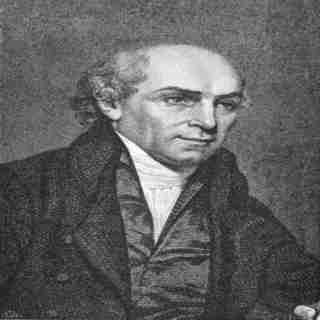 "Expect great things; attempt great things."
At a meeting of Baptist leaders in the late 1700s, a newly ordained minister stood to argue for the value of overseas missions. He was abruptly interrupted by an older minister who said, "Young man, sit down! You are an enthusiast. When God pleases to convert the heathen, he'll do it without consulting you or me."
That such an attitude is inconceivable today is largely due to the subsequent efforts of that young man, William Carey.
Plodder Carey was raised in the obscure, rural village of Paulerpury, in the middle of England. He apprenticed in a local cobbler's shop, where the nominal Anglican was converted. He enthusiastically took up the faith, and though little educated, the young convert borrowed a Greek grammar and proceeded to teach himself New Testament Greek.
When his master died, he took up shoemaking in nearby Hackleton, where he met and married Dorothy Plackett, who soon gave birth to a daughter. But the apprentice cobbler's life was hard—the child died at age 2—and his pay was insufficient. Carey's family sunk into poverty and stayed there even after he took over the business.
"I can plod," he wrote later, "I can persevere to any definite pursuit." All the while, he continued his language studies, adding Hebrew and Latin, and became a preacher with the Particular Baptists. He also continued pursuing his lifelong interest in international affairs, especially the religious life of other cultures.
Carey was impressed with early Moravian missionaries and was increasingly dismayed at his fellow Protestants' lack of missions interest. In response, he penned An Enquiry into the Obligations of Christians to Use Means for the Conversion of the Heathens. He argued that Jesus' Great Commission applied to all Christians of all times, and he castigated fellow believers of his day for ignoring it: "Multitudes sit at ease and give themselves no concern about the far greater part of their fellow sinners, who to this day, are lost in ignorance and idolatry."
Carey didn't stop there: in 1792 he organized a missionary society, and at its inaugural meeting preached a sermon with the call, "Expect great things from God; attempt great things for God!" Within a year, Carey, John Thomas (a former surgeon), and Carey's family (which now included three boys, and another child on the way) were on a ship headed for India.
Stranger in a strange land
Thomas and Carey had grossly underestimated what it would cost to live in India, and Carey's early years there were miserable. When Thomas deserted the enterprise, Carey was forced to move his family repeatedly as he sought employment that could sustain them. Illness racked the family, and loneliness and regret set it: "I am in a strange land," he wrote, "no Christian friend, a large family, and nothing to supply their wants." But he also retained hope: "Well, I have God, and his word is sure."
He learned Bengali with the help of a pundit, and in a few weeks began translating the Bible into Bengali and preaching to small gatherings.
When Carey himself contracted malaria, and then his 5-year-old Peter died of dysentery, it became too much for his wife, Dorothy, whose mental health deteriorated rapidly. She suffered delusions, accusing Carey of adultery and threatening him with a knife. She eventually had to be confined to a room and physically restrained.
"This is indeed the valley of the shadow of death to me," Carey wrote, though characteristically added, "But I rejoice that I am here notwithstanding; and God is here."
Gift of tongues
In October 1799, things finally turned. He was invited to locate in a Danish settlement in Serampore, near Calcutta. He was now under the protection of the Danes, who permitted him to preach legally (in the British-controlled areas of India, all of Carey's missionary work had been illegal).
Carey was joined by William Ward, a printer, and Joshua and Hanna Marshman, teachers. Mission finances increased considerably as Ward began securing government printing contracts, the Marshmans opened schools for children, and Carey began teaching at Fort William College in Calcutta.
In December 1800, after seven years of missionary labor, Carey baptized his first convert, Krishna Pal, and two months later, he published his first Bengali New Testament. With this and subsequent editions, Carey and his colleagues laid the foundation for the study of modern Bengali, which up to this time had been an "unsettled dialect."
Carey continued to expect great things; over the next 28 years, he and his pundits translated the entire Bible into India's major languages: Bengali, Oriya, Marathi, Hindi, Assamese, and Sanskrit and parts of 209 other languages and dialects.
He also sought social reform in India, including the abolition of infanticide, widow burning (sati), and assisted suicide. He and the Marshmans founded Serampore College in 1818, a divinity school for Indians, which today offers theological and liberal arts education for some 2,500 students.
By the time Carey died, he had spent 41 years in India without a furlough. His mission could count only some 700 converts in a nation of millions, but he had laid an impressive foundation of Bible translations, education, and social reform.
His greatest legacy was in the worldwide missionary movement of the nineteenth century that he inspired. Missionaries like Adoniram Judson, Hudson Taylor, and David Livingstone, among thousands of others, were impressed not only by Carey's example, but by his words "Expect great things; attempt great things." The history of nineteenth-century Protestant missions is in many ways an extended commentary on the phrase.
"Expect great things; attempt great things."
At a meeting of Baptist leaders in the late 1700s, a newly ordained minister stood to argue for the value of overseas missions. He was abruptly interrupted by an older minister who said, "Young man, sit down! You are an enthusiast. When God pleases to convert the heathen, he'll do it without consulting you or me."
That such an attitude is inconceivable today is largely due to the subsequent efforts of that young man, William Carey.
Plodder Carey was raised in the obscure, rural village of Paulerpury, in the middle of England. He apprenticed in a local cobbler's shop, where the nominal Anglican was converted. He enthusiastically took up the faith, and though little educated, the young convert borrowed a Greek grammar and proceeded to teach himself New Testament Greek.
When his master died, he took up shoemaking in nearby Hackleton, where he met and married Dorothy Plackett, who soon gave birth to a daughter. But the apprentice cobbler's life was hard—the child died at age 2—and his pay was insufficient. Carey's family sunk into poverty and stayed there even after he took over the business.
"I can plod," he wrote later, "I can persevere to any definite pursuit." All the while, he continued his language studies, adding Hebrew and Latin, and became a preacher with the Particular Baptists. He also continued pursuing his lifelong interest in international affairs, especially the religious life of other cultures.
Carey was impressed with early Moravian missionaries and was increasingly dismayed at his fellow Protestants' lack of missions interest. In response, he penned An Enquiry into the Obligations of Christians to Use Means for the Conversion of the Heathens. He argued that Jesus' Great Commission applied to all Christians of all times, and he castigated fellow believers of his day for ignoring it: "Multitudes sit at ease and give themselves no concern about the far greater part of their fellow sinners, who to this day, are lost in ignorance and idolatry."
Carey didn't stop there: in 1792 he organized a missionary society, and at its inaugural meeting preached a sermon with the call, "Expect great things from God; attempt great things for God!" Within a year, Carey, John Thomas (a former surgeon), and Carey's family (which now included three boys, and another child on the way) were on a ship headed for India.
Stranger in a strange land
Thomas and Carey had grossly underestimated what it would cost to live in India, and Carey's early years there were miserable. When Thomas deserted the enterprise, Carey was forced to move his family repeatedly as he sought employment that could sustain them. Illness racked the family, and loneliness and regret set it: "I am in a strange land," he wrote, "no Christian friend, a large family, and nothing to supply their wants." But he also retained hope: "Well, I have God, and his word is sure."
He learned Bengali with the help of a pundit, and in a few weeks began translating the Bible into Bengali and preaching to small gatherings.
When Carey himself contracted malaria, and then his 5-year-old Peter died of dysentery, it became too much for his wife, Dorothy, whose mental health deteriorated rapidly. She suffered delusions, accusing Carey of adultery and threatening him with a knife. She eventually had to be confined to a room and physically restrained.
"This is indeed the valley of the shadow of death to me," Carey wrote, though characteristically added, "But I rejoice that I am here notwithstanding; and God is here."
Gift of tongues
In October 1799, things finally turned. He was invited to locate in a Danish settlement in Serampore, near Calcutta. He was now under the protection of the Danes, who permitted him to preach legally (in the British-controlled areas of India, all of Carey's missionary work had been illegal).
Carey was joined by William Ward, a printer, and Joshua and Hanna Marshman, teachers. Mission finances increased considerably as Ward began securing government printing contracts, the Marshmans opened schools for children, and Carey began teaching at Fort William College in Calcutta.
In December 1800, after seven years of missionary labor, Carey baptized his first convert, Krishna Pal, and two months later, he published his first Bengali New Testament. With this and subsequent editions, Carey and his colleagues laid the foundation for the study of modern Bengali, which up to this time had been an "unsettled dialect."
Carey continued to expect great things; over the next 28 years, he and his pundits translated the entire Bible into India's major languages: Bengali, Oriya, Marathi, Hindi, Assamese, and Sanskrit and parts of 209 other languages and dialects.
He also sought social reform in India, including the abolition of infanticide, widow burning (sati), and assisted suicide. He and the Marshmans founded Serampore College in 1818, a divinity school for Indians, which today offers theological and liberal arts education for some 2,500 students.
By the time Carey died, he had spent 41 years in India without a furlough. His mission could count only some 700 converts in a nation of millions, but he had laid an impressive foundation of Bible translations, education, and social reform.
His greatest legacy was in the worldwide missionary movement of the nineteenth century that he inspired. Missionaries like Adoniram Judson, Hudson Taylor, and David Livingstone, among thousands of others, were impressed not only by Carey's example, but by his words "Expect great things; attempt great things." The history of nineteenth-century Protestant missions is in many ways an extended commentary on the phrase.
Laziness Ruins Happiness
Most people do not want to be thought of as lazy — as a person averse to hard work. We all know laziness is a vice — a corrupting and addicting use of a good gift: rest. Leisure in proper doses is a wonderful, refreshing gift of God. But habitual indulgence in leisure to the neglect of God-given responsibilities brings destruction, both to ourselves and to others. But it’s destructive for a deeper reason than the obvious detrimental impact of work done negligently, or not done at all. At the deeper levels, laziness robs us of happiness by decreasing our capacity to enjoy the deepest delights. And on top of this, it leaves us failing to love as we ought. “Laziness robs us of happiness by decreasing our capacity to enjoy the deepest delights.” Since all of us are tempted in different ways to the sin of laziness, it’s helpful to keep in mind all that’s at stake — and why, over and over throughout the Bible, God commands us to pursue the virtue of diligence. Virtues and Vices For Christians, a virtue is moral excellence that, if cultivated into a habit, becomes a morally excellent character trait. We become more conformed to the image of Christ (Romans 8:29) and experience an increased capacity to delight in what God has made good, true, and beautiful. We see scriptural examples in 2 Peter 1:5–8: Make every effort to supplement your faith with virtue [aretē in Greek, referring to all the virtues] and virtue with knowledge, and knowledge with self-control, and self-control with steadfastness, and steadfastness with godliness, and godliness with brotherly affection, and brotherly affection with love. For if these qualities are yours and are increasing, they keep you from being ineffective or unfruitful in the knowledge of our Lord Jesus Christ. Conversely, a vice is moral corruption that, if cultivated into a habit, becomes a morally corrupt character trait. We become more conformed to the pattern of this fallen world (Romans 12:2) and experience a decreased capacity to delight in what God has made good, true, and beautiful. We see scriptural examples in Galatians 5:19–21: Now the works of the flesh are evident: sexual immorality, impurity, sensuality, idolatry, sorcery, enmity, strife, jealousy, fits of anger, rivalries, dissensions, divisions, envy, drunkenness, orgies, and things like these. I warn you, as I warned you before, that those who do [prassontes in Greek, meaning “make a practice of doing”] such things will not inherit the kingdom of God. Why Diligence Is a ‘Heavenly Virtue’ In the fifth or sixth century, many in the church included diligence on the list of the seven heavenly virtues to counter sloth (the old English word for laziness), which it had on its list of seven deadly sins. But saints throughout redemptive history have always considered diligence a necessary virtue. Both the Old and New Testaments consistently command saints to be diligent, and warn against the dangers of being slothful. Here’s a sampling: Only take care, and keep your soul diligently, lest you forget the things that your eyes have seen, and lest they depart from your heart all the days of your life. (Deuteronomy 4:9) The soul of the sluggard craves and gets nothing, while the soul of the diligent is richly supplied. (Proverbs 13:4) You have commanded your precepts to be kept diligently. (Psalm 119:4) Do not be slothful in zeal, be fervent in spirit, serve the Lord. (Romans 12:11) If anyone is not willing to work, let him not eat. For we hear that some among you walk in idleness, not busy at work, but busybodies. (2 Thessalonians 3:10–11) Therefore, brothers, be all the more diligent to confirm your calling and election, for if you practice these qualities you will never fall. (2 Peter 1:10) As these passages show, diligence is a “heavenly virtue” because it is a means of cultivating godliness — increased capacities to deeply delight in God and his gifts. Cultivating the “deadly sin” (or vice) of sloth, on the other hand, is a means of cultivating ungodliness — decreased capacities to deeply delight in God and his gifts. Wearing Our Love on Our Sleeve But when we speak of pursuing diligence as a way of cultivating godliness, there’s an additional dimension besides developing a strong work ethic for the sake of experiencing greater joys. Since “God is love” (1 John 4:8), and since love fulfills his law (Romans 13:10; Galatians 5:14), growing in godliness means we grow in some aspect of what it means to love. What makes the virtue of diligence distinctly Christian is that it is one of the ways we love God supremely and love our neighbors as ourselves (Matthew 22:37–39). “How we behave reflects what we believe; what we do reflects what we desire; our labors reflect our loves.” God designed us such that our actions bring into view the real affections of our inner being. To put it very simply (and admittedly simplistically): how we behave, over time, reflects what we believe; what we do reflects what we desire; our labors reflect our loves. Now, I realize I’m touching on a complex issue. Our motivating beliefs, desires, and loves are not simple, nor are the contexts in which we behave, do, and labor. Nor are the neurological disorders and diseases that sometimes throw wrenches into these already complex gears. That said, it remains true that our consistent behaviors over time reveal what we really believe, desire, and love. This is what Jesus meant by saying we can distinguish between a healthy (virtuous) tree and a diseased (corrupt) tree by its fruit (Matthew 7:17–20). And of course, the “fruit” is seen not only in what we do, but in how we do it. And here is where our diligence or laziness often reveals what or whom we truly love. Since we seek to take care of what we value greatly, it’s usually apparent when others put their heart into what they’re doing and when they don’t. Or as Paul said of some who were “lazy gluttons” in Crete, “They profess to know God, but they deny him by their works” (Titus 1:12, 16). In what we do and how we do it, in our diligence or laziness, we come to wear our loves on our sleeves — whether we love God (John 14:15) and our neighbor (1 John 3:18), or selfishly love ourselves (2 Timothy 3:2). Be All the More Diligent So, there’s more at stake in our diligence or laziness than we might have previously thought. Yes, diligence is important for the sake of doing high-quality work, which is beneficial in many ways. But hard work, by itself, does not equal the virtue of diligence. As Tony Reinke points out, “Workaholism is slothful because it uses labor in a self-centered way to focus on personal advancement or accumulated accolades” (Killjoys, 50). When Scripture commands us to “be all the more diligent” (2 Peter 1:10), God is calling us to work hard toward the right ends (growing in godliness), in the right ways (what God commands), for the right reasons (love). The more this kind of diligence becomes characteristic of us, the more we become like Jesus: we increasingly delight in what gives him delight, and increasingly love as he loves — which is true virtue. Article by Jon Bloom