
Others like dark nights of the soul Features >>
-160.webp)
Fruits Of The Spirit
Gifts Of The Spirit

Breath Of The Holies
The Sins Of The Mouth
Basic Elements Of The Christian Life Vol II
Holding To The Word Of The Lord
The Root Of The Righteous
Putting On The Mind Of Christ
_by__A.B.%20Bruce_-160.webp)
Training Of The Twelve (Principles For Christian Leadership)
The Seven Longings Of The Human Heart
About the Book
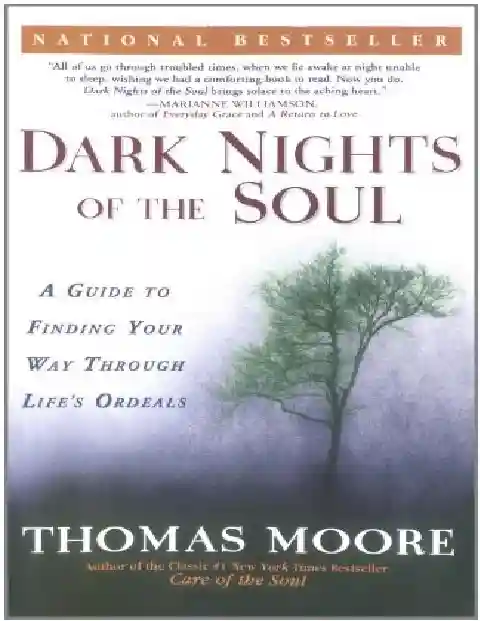
"DARK NIGHTS OF THE SOUL" by Thomas Moore explores the concept of spiritual and psychological darkness as a necessary part of personal growth and transformation. Moore delves into the depths of the soul's struggles and provides insight on how to navigate these dark periods with wisdom and grace. He emphasizes the importance of embracing and learning from these challenging experiences to ultimately find greater meaning and fulfillment in life.
Hannah More
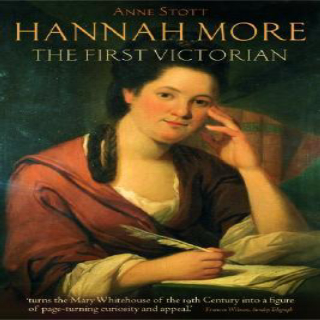 Beyond any doubt, Hannah More was the most influential female member of the Society for Effecting the Abolition of the African Slave Trade. She was educated at Bristol, an important slave-trading town, and began to publish her writing in the 1760s, while she was still a teenager. Her first play, The Inflexible Captive, was staged at Bath in 1775. Later in the 1770s, and for much of the 1780s, she spent time in London and made the acquaintance of many important political and society figures, including Samuel Johnson, Edmund Burke, and Elizabeth Montagu. Her play Percy was produced by David Garrick in 1777, and Fatal Falsehood was staged in 1779, but she came to regard the theatre as morally wrong, especially after the death of her mentors; Garrick and Johnson. She turned to religious writing, beginning with her Sacred Dramas in 1782. In 1784-5, she 'discovered' Ann Yearsley, the so-called 'poetical milkmaid of Bristol', whose poems More helped to publish, although the two later fell out.
In the 1780s, More widened her circle to include religious and philanthropic figures, including John Newton, Beilby Porteus and William Wilberforce. In the summer of 1786, she spent time with Sir Charles and Lady Margaret Middleton at the their home in Teston in Kent. Among their guests were the local vicar James Ramsay and a young Thomas Clarkson, both of whom were central to the early abolition campaign. More and Clarkson met again in Bristol in 1787, while he was on his fact-finding mission to the city, but they did not become close. However, in the same year More met Wilberforce, and their friendship was to become a deep and lasting one. More contributed much to the running of the newly-founded Abolition Society including, in February 1788, her publication of Slavery, a Poem which has been recognised as one of the more important slavery poems of the abolition period. Her relationship with members of the society, especially Wilberforce, was close. For example, she spent the summer of 1789 holidaying with Wilberforce in the Peak District - planning for the abolition campaign, at that time at its height, formed a great deal of their conversation.
By the mid-1790s, More had become closely involved with the 'Clapham Sect' of evangelical Christians, many of whom were involved in the abolition campaign. The group centred on Henry Thornton's home in Clapham and included Wilberforce, James Stephen, and Zachary Macaulay, among others. Throughout the 1790s, she wrote a number of religious tracts, known as the Cheap Repository Tracts, that eventually led to the formation of the Religious Tracts Society. Several of the Tracts oppose slavery and the slave trade, in particular, the poem The Sorrows of Yamba; or, The Negro Woman's Lamentation, which appeared in November 1795 and which was co-authored with Eaglesfield Smith. However, the tracts have also been noted for their encouragement of social quietism in an age of revolution. She continued to oppose slavery throughout her life, but at the time of the Abolition Bill of 1807, her health did not permit her to take as active a role in the movement as she had done in the late 1780s, although she maintained a correspondence with Wilberforce and others. In her later life, she dedicated much time to religious writing. Nevertheless, her most popular work was a novel, Coelebs in Search of a Wife, which appeared in two volumes in 1809 (and which ran to nine editions in 1809 alone). In the 1820s she grew gradually less well, and decreased - but did not entirely halt - the amount of writing she produced. On her death in 1833, she left more than £30,000 to charities and religious societies (equivalent to about £2,000,000 or $3,000,000 in 2004).
© Brycchan Carey 2004
Beyond any doubt, Hannah More was the most influential female member of the Society for Effecting the Abolition of the African Slave Trade. She was educated at Bristol, an important slave-trading town, and began to publish her writing in the 1760s, while she was still a teenager. Her first play, The Inflexible Captive, was staged at Bath in 1775. Later in the 1770s, and for much of the 1780s, she spent time in London and made the acquaintance of many important political and society figures, including Samuel Johnson, Edmund Burke, and Elizabeth Montagu. Her play Percy was produced by David Garrick in 1777, and Fatal Falsehood was staged in 1779, but she came to regard the theatre as morally wrong, especially after the death of her mentors; Garrick and Johnson. She turned to religious writing, beginning with her Sacred Dramas in 1782. In 1784-5, she 'discovered' Ann Yearsley, the so-called 'poetical milkmaid of Bristol', whose poems More helped to publish, although the two later fell out.
In the 1780s, More widened her circle to include religious and philanthropic figures, including John Newton, Beilby Porteus and William Wilberforce. In the summer of 1786, she spent time with Sir Charles and Lady Margaret Middleton at the their home in Teston in Kent. Among their guests were the local vicar James Ramsay and a young Thomas Clarkson, both of whom were central to the early abolition campaign. More and Clarkson met again in Bristol in 1787, while he was on his fact-finding mission to the city, but they did not become close. However, in the same year More met Wilberforce, and their friendship was to become a deep and lasting one. More contributed much to the running of the newly-founded Abolition Society including, in February 1788, her publication of Slavery, a Poem which has been recognised as one of the more important slavery poems of the abolition period. Her relationship with members of the society, especially Wilberforce, was close. For example, she spent the summer of 1789 holidaying with Wilberforce in the Peak District - planning for the abolition campaign, at that time at its height, formed a great deal of their conversation.
By the mid-1790s, More had become closely involved with the 'Clapham Sect' of evangelical Christians, many of whom were involved in the abolition campaign. The group centred on Henry Thornton's home in Clapham and included Wilberforce, James Stephen, and Zachary Macaulay, among others. Throughout the 1790s, she wrote a number of religious tracts, known as the Cheap Repository Tracts, that eventually led to the formation of the Religious Tracts Society. Several of the Tracts oppose slavery and the slave trade, in particular, the poem The Sorrows of Yamba; or, The Negro Woman's Lamentation, which appeared in November 1795 and which was co-authored with Eaglesfield Smith. However, the tracts have also been noted for their encouragement of social quietism in an age of revolution. She continued to oppose slavery throughout her life, but at the time of the Abolition Bill of 1807, her health did not permit her to take as active a role in the movement as she had done in the late 1780s, although she maintained a correspondence with Wilberforce and others. In her later life, she dedicated much time to religious writing. Nevertheless, her most popular work was a novel, Coelebs in Search of a Wife, which appeared in two volumes in 1809 (and which ran to nine editions in 1809 alone). In the 1820s she grew gradually less well, and decreased - but did not entirely halt - the amount of writing she produced. On her death in 1833, she left more than £30,000 to charities and religious societies (equivalent to about £2,000,000 or $3,000,000 in 2004).
© Brycchan Carey 2004
God Wrote a Book
We actually have the words of God. This is almost too good to be true. And yet how often are we so accustomed to this reality — one of the greatest wonders in all the universe — that it barely moves us to handle the Bible with care (and awe), or at least to access his words with the frequency they deserve? Familiarity can breed contempt, or at least neglect. While scarcity drives demand, abundance can lead to apathy. For many of us, we have multiple Bibles on our shelves, in multiple translations. We have copies on our computers and phones. We have access to the very words of God like never before — yet how often do we appreciate, and marvel at, the wonder of what we have? Wonder of Having One of the greatest facts in all of history is that God gave us a Book. He gave us a Book! He has spoken. He has revealed himself to us through prophets and apostles, and appointed that they write down his words and that they be preserved. We have his words! We can hear in our souls the very voice of God himself by his Spirit through his Book. “No word of God is a dead word.” Think of all God went to, and what patience, to make his self-revelation accessible to us here in the twenty-first century. Long ago, at many times, and in many ways, God spoke through the prophets (Hebrews 1:1). Then, in the fullness of time, he sent his own Son, his own self, in full humanity, as his revealed Word par excellence, in the person of Christ, represented to us by his authoritative, apostolic spokesmen in the new covenant. For centuries, God’s word was copied by hand, and preserved with the utmost diligence and care. Then, for the last 500 years of the printing press, God’s word has gone far and wide like never before. Men and women gave their lives, upsetting the apple carts of man-made religion, to translate the words of God into the heart language of their people. And now, in the digital revolution, access to God’s own words has exploded exponentially again, and yet — and yet — in such abundance, do we marvel at what we have? And do we, as individuals and as churches, make the most of what infinite riches we have in such access to the Scriptures? His Words, Our Great Reward The psalmists were in awe of what they had. In particular, Psalms 19 and 119 pay tribute to the wonder of having God’s words. For instance: The law of the Lord is perfect, reviving the soul; the testimony of the Lord is sure, making wise the simple; the precepts of the Lord are right, rejoicing the heart; the commandment of the Lord is pure, enlightening the eyes; the fear of the Lord is clean, enduring forever; the rules of the Lord are true, and righteous altogether. More to be desired are they than gold, even much fine gold; sweeter also than honey and drippings of the honeycomb. Moreover, by them is your servant warned; in keeping them there is great reward. (Psalm 19:7–11) “We come to his word, like holy hedonists, stalking joy.” God is honored when we approach his words as those that revive the soul and rejoice the heart, as those that are more to be desired than gold and sweeter than honey. The summary and culmination of Psalm 19’s unashamed tribute to God’s words is this: great reward. He means for us to experience his words as “my delight” (Psalm 1:2; 119:16, 24), as “the joy of my heart” (Psalm 119:111), as “the delight of my heart” (Jeremiah 15:16), as kindling for the fires of our joy. Not only has God spoken in this Book we call the Bible, but he is speaking. Writing about Psalm 95 in particular (and applicable to all the Scriptures), Hebrews says “the word of God is living and active, sharper than any two-edged sword, piercing to the division of soul and of spirit, of joints and of marrow, and discerning the thoughts and intentions of the heart” (Hebrews 4:12). No word of God is a dead word. Even Hebrews — the New Testament letter plainest on the old covenant being “obsolete” in its demands upon new-covenant Christians (Hebrews 8:13) — professes that old-covenant revelation, while no longer binding, is indeed “living and active.” “Is not my word like fire,” God declares through Jeremiah, “and like a hammer that breaks the rock in pieces?” (Jeremiah 23:29). From cover to cover, Genesis to Revelation, God has captured for his church his objective, “external word” (as Luther called it) which he speaks (present tense) to his people through the subjective, internal power of his Spirit dwelling in us. We hear God’s voice in his word by his Spirit. And so, Hebrews exhorts us, “See that you do not refuse him who is speaking” (Hebrews 12:25). Wonder of Handling So then, how will we who marvel at having God’s living and active words not also fall to the floor in amazement that he invites us — even more, he insists — that we handle his word. It is no private message to Timothy, but to the whole church reading over his shoulder, when Paul writes, Do your best to present yourself to God as one approved, a worker who has no need to be ashamed, rightly handling the word of truth. (2 Timothy 2:15) The charge lands first on Timothy, as Paul’s delegate in Ephesus, and then on pastors (both then and today) who formally and publicly “handle the word” for the feeding and forming of the church. But the summons to rightly handle the word of truth (both in the gospel word and in the written Scriptures) is a mantle for the whole church to gladly bear. In the midst of a world of destructive words, God calls his church to first receive (have) and then respond to (handle) his words. As human words of death fly around us from all sides — in the air, on the page, on our screens — he gives us his own life-giving words to steady our souls and the souls of others. As the world quarrels about words, “which does no good, but only ruins the hearers” (2 Timothy 2:14) and coughs up “irreverent babble” that leads “people into more and more ungodliness” and spreads like gangrene (2 Timothy 2:16–17), God gives us an oasis in the gift of his words (2 Timothy 2:15). We receive them for free, but that doesn’t mean we take them lightly or expend little energy to handle them well. Make Every Effort God, through Paul, says “do your best” — literally, be zealous, be eager, make every effort — “to present yourself to God as one approved.” We orient Godward first and foremost in our handling of his word, then only secondarily to others. Which will make us “a worker who has no need to be ashamed.” Being a worker requires work, labor, the exertion of effort, the expending of energy, the investment of time, the patience of lifelong learning. To do so without cutting corners (“unashamed”) or mishandling the task. And in particular, for building others up, not tearing others down. For showing others the feast, not showing ourselves to have been right. “God gives us his own life-giving words to steady our souls and the souls of others.” “Rightly handling” — guiding along a straight path — harkens to the vision Paul casts in 2 Corinthians of his own straightforwardness with God’s word. Paul was not coy about hard truths. He was not evasive. He was not a verbal gymnast, gyrating around humanly offensive divine oracles. Rather, he was frank, honest, candid, sincere. “We are not, like so many, peddlers of God’s word,” he declares, “but as men of sincerity, as commissioned by God, in the sight of God we speak in Christ” (2 Corinthians 2:17). He has more to say about such sincerity: We have renounced disgraceful, underhanded ways. We refuse to practice cunning or to tamper with God’s word, but by the open statement of the truth we would commend ourselves to everyone’s conscience in the sight of God. (2 Corinthians 4:2) Listening Like Hedonists But rightly handling God’s word doesn’t just mean we’re convinced of its truthfulness and handle it as such. Rightly handling doesn’t only include rigorous careful analysis and forthright unapologetic candor. Rightly handling includes the psalmists’ intense spiritual sensibilities. To see in and through God’s words his “great reward,” and knowing him to be a rewarder of those who seek him (Hebrews 11:6). In other words, we come to his word like holy hedonists, stalking joy. Worldly hedonists pursue the pleasures of sin; they don’t wait on them to arrive. And so do Christian Hedonists. We don’t wait around for holy pleasures. We don’t passively engage God himself through his own words. We stalk. We pursue. We read actively, and study, and meditate. When we are persuaded that God himself is indeed the greatest reward, is there any better avenue to pursue than his own words? At Desiring God, we don’t aim or pretend to be unique. However flippantly or earnestly others handle God’s words, we mean to receive them with the utter seriousness and joyful awe they deserve — he deserves. God wrote a Book. And gave it to us. Let’s give ourselves to this wonder, and marvel that we get to handle his words. Article by David Mathis