
Others like crimes of the cross Features >>
Jesus The Son Of Man
Movers Of Men And Mountains

Fire On The Earth - Eyewitness Reports From The Azusa Street Revival

Elisabeth Elliot: Joyful Surrender
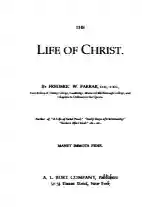
The Life Of Christ
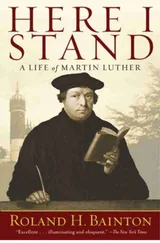
Here I Stand
Foxe’s Book Of Martyrs
Charlie Coulson: The Christian Drummer Boy
God's Generals: The Martyrs
-160.webp)
Abraham: One Nomad's Amazing Journey Of Faith
About the Book
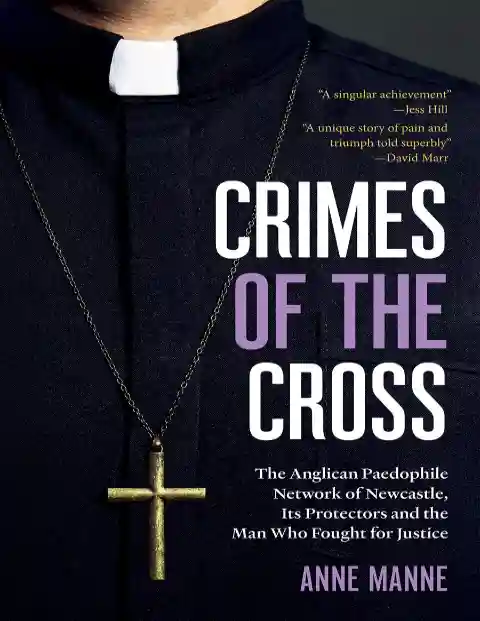
"Crimes Of The Cross" by Anne Manne explores the abuse and cover-up scandals within the Catholic Church, delving into the systematic failures that allowed these crimes to persist. The book examines the impact of these atrocities on the victims, as well as the broader implications for society and the Church itself. Manne calls for accountability, transparency, and justice in order to prevent future abuses and address the underlying issues at the heart of the institutional scandal.
Gregory Thaumaturgus
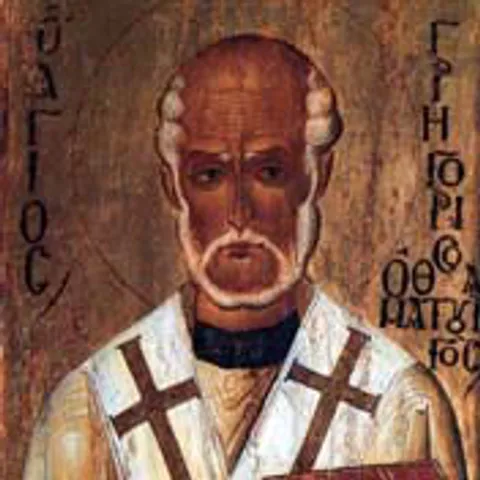 Gregory the Wonderworker’s Early life
Gregory was born in a Pontus, a region on the southern coast of the Black Sea, located in the modern-day eastern Black Sea Region of Turkey, around 212-13. His was a wealthy home and his parents named him Theodore (Gift of God) despite their pagan beliefs. When he was 14 years old his father died and soon after, he and his brother, Athenodorus, were anxious to study law at Beirut, Lebanon, then one of the four of five famous schools in the Hellenic world.
Influence of Origen
However, on the way, they first had to escort their sister to rejoin her husband, who was a government official assigned to Caesarea in Palestine (modern Haifa, Israel). When they arrived they learned that the celebrated scholar Origen, head of the catechetical school of Alexandria, lived there.
Inquisitiveness led them to hear and speak with the Origen and his irresistible charm quickly won their hearts. They soon dropped their desires for a life in Roman law, became Christian believers and pupils of Origen, learning philosophy and theology, for somewhere between five and eight years. Origen also baptised Gregory.
Pastor (then Bishop) of Neoceasarea
Gregory returned to his native Pontus with the intention of practicing oratory, but also to write a book proving the truth of Christianity, revealing his evangelistic heart. But his plans were disrupted when locals noticed his passion for Christ and his spiritual maturity. There were just seventeen Christians in Neoceasarea when Gregory arrived and this small group persuaded him to lead them as their bishop. (‘bishop’ simply meant a local overseer). At the time, Neocaesarea was a wicked, idolatrous province.
Signs of the Spirit
By his saintly life, his direct and lively preaching, helping the needy and settling quarrels and complaints, Gregory began to see many converts to Christ. But it was the signs and wonders that particularly attracted people to Christ.
En route to Neocaesarea from Amasea, Gregory expelled demons from a pagan temple, its priest converted to Christ immediately.
Once, when he was conversing with philosophers and teachers in the city square, a notorious harlot came up to him and demanded payment for the sin he had supposedly committed with her. At first Gregory gently remonstrated with her, saying that she perhaps mistook him for someone else.
But the loose woman would not be silenced. He then asked a friend to give her the money. Just as the woman took the unjust payment, she immediately fell to the ground in a demonic fit, and the fraud became evident. Gregory prayed over her, and the devil left her. This was the beginning of Gregory’s miracles. It was at this time he became known as ‘Gregory Thaumaturgus,’ ‘Gregory the Miracle Worker’ (or Wonderworker).
At one point Gregory wanted to flee from the worldly affairs into which influential townsmen persistently sought to push him. He went into the desert, where by fasting and prayer he developed an intimacy with God and received gifts of knowledge, wisdom and prophecy. He loved life in the wilderness and wanted to remain in solitude with God until the end of his days, but the Lord willed otherwise.
His theological contribution
Though he was primarily an evangelist and pastor, Gregory also had a deep theological understanding.
His principal work ‘The Exposition of Faith’, was a theological apology for Trinitarian belief. It incorporated his doctrinal instructions to new believers, expressed his arguments against heretical groups and was widely influential amongst leaders in the Patristic period: Basil the Great, Gregory the Theologian, and Gregory of Nyssa (The Cappadocian Fathers). It was the forerunner of the Nicene Creed that was to appear in the early 4th century.
In summary
He gave himself to the task of the complete conversion of the population of his diocese. The transformation in Neocaesarea was astonishing. Persuasive preaching, numerous healings and miraculous signs had a powerful effect. Such was his success that it was said that when Gregory became bishop (c 240) he found only seventeen Christians in his diocese; when he died only seventeen remained pagan (Latourette 1953:76).
Basil the Great’s Testimony
Basil the Great (330-379, Bishop of Caesarea, in his work ‘On the Spirit’ wrote the following account of Gregory the wonder-worker.
“But where shall I rank the great Gregory, and the words uttered by him? Shall we not place among Apostles and Prophets a man who walked by the same Spirit as they; who never through all his days diverged from the footprints of the saints; who maintained, as long as he lived, the exact principles of evangelical citizenship?
I am sure that we shall do the truth a wrong if we refuse to number that soul with the people of God, shining as it did like a beacon in the Church of God: for by the fellow-working of the Spirit the power which he had over demons was tremendous, and so gifted was he with the grace of the word ‘for obedience to the faith among. . .the nations.’ that, although only seventeen Christians were handed over to him, he brought the whole people alike in town and country through knowledge to God.
He too by Christ’s mighty name commanded even rivers to change their course, and caused a lake, which afforded a ground of quarrel to some covetous brethren, to dry up. Moreover, his predictions of things to come were such as in no wise to fall short of those of the great prophets. To recount all his wonderful works in detail would be too long a task. By the superabundance of gifts, wrought in him by the Spirit, in all power and in signs and in marvels, he was styled a second Moses by the very enemies of the Church.
Thus, in all that he through grace accomplished, alike by word and deed, a light seemed ever to be shining, token of the heavenly power from the unseen which followed him. To this day he is a great object of admiration to the people of his own neighborhood, and his memory, established in the churches ever fresh and green, is not dulled by length of time. (Schaff and Wace nd., Series 2. 8:46-47).
“Gregory was a great and conspicuous lamp, illuminating the church of God.” —Basil the Great.
Gregory the Wonderworker’s Early life
Gregory was born in a Pontus, a region on the southern coast of the Black Sea, located in the modern-day eastern Black Sea Region of Turkey, around 212-13. His was a wealthy home and his parents named him Theodore (Gift of God) despite their pagan beliefs. When he was 14 years old his father died and soon after, he and his brother, Athenodorus, were anxious to study law at Beirut, Lebanon, then one of the four of five famous schools in the Hellenic world.
Influence of Origen
However, on the way, they first had to escort their sister to rejoin her husband, who was a government official assigned to Caesarea in Palestine (modern Haifa, Israel). When they arrived they learned that the celebrated scholar Origen, head of the catechetical school of Alexandria, lived there.
Inquisitiveness led them to hear and speak with the Origen and his irresistible charm quickly won their hearts. They soon dropped their desires for a life in Roman law, became Christian believers and pupils of Origen, learning philosophy and theology, for somewhere between five and eight years. Origen also baptised Gregory.
Pastor (then Bishop) of Neoceasarea
Gregory returned to his native Pontus with the intention of practicing oratory, but also to write a book proving the truth of Christianity, revealing his evangelistic heart. But his plans were disrupted when locals noticed his passion for Christ and his spiritual maturity. There were just seventeen Christians in Neoceasarea when Gregory arrived and this small group persuaded him to lead them as their bishop. (‘bishop’ simply meant a local overseer). At the time, Neocaesarea was a wicked, idolatrous province.
Signs of the Spirit
By his saintly life, his direct and lively preaching, helping the needy and settling quarrels and complaints, Gregory began to see many converts to Christ. But it was the signs and wonders that particularly attracted people to Christ.
En route to Neocaesarea from Amasea, Gregory expelled demons from a pagan temple, its priest converted to Christ immediately.
Once, when he was conversing with philosophers and teachers in the city square, a notorious harlot came up to him and demanded payment for the sin he had supposedly committed with her. At first Gregory gently remonstrated with her, saying that she perhaps mistook him for someone else.
But the loose woman would not be silenced. He then asked a friend to give her the money. Just as the woman took the unjust payment, she immediately fell to the ground in a demonic fit, and the fraud became evident. Gregory prayed over her, and the devil left her. This was the beginning of Gregory’s miracles. It was at this time he became known as ‘Gregory Thaumaturgus,’ ‘Gregory the Miracle Worker’ (or Wonderworker).
At one point Gregory wanted to flee from the worldly affairs into which influential townsmen persistently sought to push him. He went into the desert, where by fasting and prayer he developed an intimacy with God and received gifts of knowledge, wisdom and prophecy. He loved life in the wilderness and wanted to remain in solitude with God until the end of his days, but the Lord willed otherwise.
His theological contribution
Though he was primarily an evangelist and pastor, Gregory also had a deep theological understanding.
His principal work ‘The Exposition of Faith’, was a theological apology for Trinitarian belief. It incorporated his doctrinal instructions to new believers, expressed his arguments against heretical groups and was widely influential amongst leaders in the Patristic period: Basil the Great, Gregory the Theologian, and Gregory of Nyssa (The Cappadocian Fathers). It was the forerunner of the Nicene Creed that was to appear in the early 4th century.
In summary
He gave himself to the task of the complete conversion of the population of his diocese. The transformation in Neocaesarea was astonishing. Persuasive preaching, numerous healings and miraculous signs had a powerful effect. Such was his success that it was said that when Gregory became bishop (c 240) he found only seventeen Christians in his diocese; when he died only seventeen remained pagan (Latourette 1953:76).
Basil the Great’s Testimony
Basil the Great (330-379, Bishop of Caesarea, in his work ‘On the Spirit’ wrote the following account of Gregory the wonder-worker.
“But where shall I rank the great Gregory, and the words uttered by him? Shall we not place among Apostles and Prophets a man who walked by the same Spirit as they; who never through all his days diverged from the footprints of the saints; who maintained, as long as he lived, the exact principles of evangelical citizenship?
I am sure that we shall do the truth a wrong if we refuse to number that soul with the people of God, shining as it did like a beacon in the Church of God: for by the fellow-working of the Spirit the power which he had over demons was tremendous, and so gifted was he with the grace of the word ‘for obedience to the faith among. . .the nations.’ that, although only seventeen Christians were handed over to him, he brought the whole people alike in town and country through knowledge to God.
He too by Christ’s mighty name commanded even rivers to change their course, and caused a lake, which afforded a ground of quarrel to some covetous brethren, to dry up. Moreover, his predictions of things to come were such as in no wise to fall short of those of the great prophets. To recount all his wonderful works in detail would be too long a task. By the superabundance of gifts, wrought in him by the Spirit, in all power and in signs and in marvels, he was styled a second Moses by the very enemies of the Church.
Thus, in all that he through grace accomplished, alike by word and deed, a light seemed ever to be shining, token of the heavenly power from the unseen which followed him. To this day he is a great object of admiration to the people of his own neighborhood, and his memory, established in the churches ever fresh and green, is not dulled by length of time. (Schaff and Wace nd., Series 2. 8:46-47).
“Gregory was a great and conspicuous lamp, illuminating the church of God.” —Basil the Great.
Uncommon Evangelical
It is often difficult to know how to navigate between religious factions on the right and the left. To the right may be those who emphasize good doctrine but seem to stand at arm’s length from the world. To the left may be those who emphasize social engagement and activism but seem to have compromised theological fidelity. Yet we are not the first generation of evangelicals to grapple with this tension. The evangelicals of the early twentieth century also found themselves uncomfortably sandwiched between two increasing extremes. But, by God’s providence, several evangelical theologians in the mid-twentieth century began championing a different way. The most influential of them was Carl F.H. Henry. Henry was a brilliant theologian, journalist, seminary professor, and evangelical luminary, best known as the intellectual giant who served as the first editor-in-chief of Christianity Today, the magazine founded by Billy Graham. One of the magazine’s later editors, David Neff, said, “If we see Billy Graham as the great public face and generous spirit of the evangelical movement, Carl Henry was the brains.” More than anyone else, Henry set forth compelling intellectual arguments in favor of a new strand of evangelicalism — an evangelicalism that combined passion for right doctrine with passion for cultural engagement. Henry emphasized both evangelism and social activism. He insisted that evangelicals prioritize both theological scholarship and practical ministry training. And he modeled how to properly challenge those with whom you disagree, calling evangelicals to do so with kindness and humility. Henry gives us a blueprint for how we can be committed to both orthodoxy and orthopraxy. Fiery Bolt of Lightning Carl Ferdinand Howard Henry was born on January 2, 1913, to German immigrants and grew up in Long Island, New York. He was baptized in the Episcopal church and attended Sunday school, but religion was not important in the Henry household. After graduating high school in 1929, Henry began work as a freelance reporter. Within three years, he was the editor of a major newspaper in Long Island. He had become a “hard-nosed journalist given to pagan pleasures,” as Timothy George writes in Essential Evangelicalism (9). One day in 1933, however, Henry was sitting alone in his car during a violent storm, when a lightning strike frightened him. He described the experience like this: A fiery bolt of lightning, like a giant flaming arrow, seemed to pin me to the driver’s seat, and a mighty roll of thunder unnerved me. When the fire fell, I knew instinctively the Great Archer had nailed me to my own footsteps. Looking back, it was as if the transcendent Tetragrammaton wished me to know that I could not save myself and that heaven’s intervention was my only hope. (Confessions of a Theologian, 45–46) Soon after, Henry had a long conversation with a young evangelist named Gene Bedford. After that conversation, Henry embraced Jesus as Savior. Henry enrolled at Wheaton College in 1935, where he met Helga Bender, the daughter of Baptist missionaries. Carl and Helga married in 1940, beginning a 63-year marriage. He also developed a friendship with fellow classmate Billy Graham during his Wheaton years. Their friendship would last a lifetime and yield much fruit. After earning a BA and an MA from Wheaton as well as a BDiv and a ThD from Northern Baptist Theological Seminary, Henry pursued a PhD at Boston University. It was during his time in Boston that he strengthened his friendship with Harold John Ockenga, pastor of the historic Park Street Church. Together, Henry, Ockenga, and Graham became the three primary leaders of the resurgence of evangelicalism in the mid-twentieth century. New Kind of Evangelical Henry and Ockenga wanted to propagate a new brand of evangelicalism that avoided the social pull to both left and right extremes. The proponents of this new strand — often called neo-evangelicals — wanted to be more socially conscious than the fundamentalism of the previous decades, even as they stood for the same basic doctrines. They also were willing to work across denominational lines, hoping for a broader coalition of Christian leaders. Henry and Ockenga believed that Christianity had faltered culturally due to a lack of intellectual rigor among Christian leaders. The neo-evangelicals were convinced that if they were going to influence society, they needed to regain respect in academia. Evangelicalism would need to produce world-class scholars who could engage the elite intellectual centers, and thus “meet theological liberals on their own ground and beat them at their own game,” as Albert Mohler puts it. With these goals in mind, Henry helped pioneer several key evangelical initiatives, including the National Association of Evangelicals (1942) and the Evangelical Theological Society (1949). In 1947, Ockenga and radio evangelist Charles Fuller launched Fuller Theological Seminary to be the flagship neo-evangelical institution, and they immediately recruited Henry to be the school’s founding dean. Henry remained on the faculty of Fuller until he became the first editor-in-chief of Christianity Today magazine in 1956. The magazine quickly became tremendously influential, largely due to Henry’s leadership. These initiatives led to an explosion in evangelical scholarship. Before the neo-evangelical movement, evangelicals heavily relied on nineteenth-century conservative scholarship. Evangelicals were mocked for “relying on book reprints,” as Roger Nicole says (quoted in Awakening the Evangelical Mind, 168). However, in the second half of the twentieth century, evangelical scholars “produced works on history, psychology, pastoral theology, homiletics, family relations, the devotional life, denominational distinctive, and scores of other subjects,” Nicole says. “The problem in 1945 was that we had relatively few new conservative books; the problem now is that there are so many that few people can afford to purchase all those they would like to own.” As evangelical scholarship exploded, Henry led the way, earning his nickname “the dean of the evangelicals.” Henry wrote more than forty books and countless articles, essays, and reviews throughout his career. His magnum opus was the three-thousand page, six-volume work God, Revelation, and Authority. This remarkable work thoroughly explores epistemology, divine self-revelation, hermeneutics, authority, and the nature of truth. Gregory Alan Thornbury sums up the project by saying that Henry wanted to present a theology that was “epistemologically viable, methodologically coherent, biblically accurate, socially responsible, evangelistically oriented, and universally applied.” What Can We Learn from Henry? If Henry were alive today, what might he say to modern evangelicals? An examination of Henry’s life and writings gives us insight into how he might address us. EVANGELISM Henry’s first exhortation might be toward evangelism. He writes, It would be a supreme act of lovelessness on the part of the Christian community to withhold from the body of humanity, lost in sin, the evangel that Christ died for sinners and that the new birth is available on the condition of personal repentance and faith. (Evangelicals at the Brink of Crisis, 36) Henry observed that far too many Christians had relegated evangelism to the professional evangelists — absolving themselves from any responsibility in the Great Commission by claiming that they weren’t gifted for the task. During the early years of Fuller Seminary, Henry’s fervor for evangelism permeated the school’s culture. He fostered an “evangelistically alive missionary minded and warm collegial side of early Fuller community life,” as John Woodbridge puts it. Historian George Marsden has shared one student’s memory of Dr. Henry often arriving to lecture at early Saturday morning seminars looking “bedraggled in an old baggy overcoat [because] he would periodically spend half the night out in Los Angeles witnessing to derelicts and helping them find shelter” (Reforming Fundamentalism, 91). Henry was just as much an evangelist as he was a theologian or journalist. “Henry was just as much an evangelist as he was a theologian or journalist.” Henry balked at the idea that evangelism and theological studies were at odds. In his 1966 opening address to the World Congress on Evangelism in Berlin, he proclaimed the urgent need for biblically faithful theologian-evangelists. He knew that evangelistic efforts uninformed by good theology would lead to doctrinal confusion and weak discipleship. But he also knew that when theologians lack evangelistic fervor, they become too insular and persnickety. Henry challenged the delegates to “become theologian evangelists, rather than to remain content as just theologians or just evangelists,” John Woodbridge writes (Essential Evangelicalism, 82). JUSTICE In 1947, Henry published his most famous book, The Uneasy Conscience of Modern Fundamentalism, in response to the idea that there were only two options for Protestants: theological liberalism or a culturally detached fundamentalism. This book was a clarion call for evangelicals to reject this false dichotomy. Henry wanted evangelicals to lead the way in both theological integrity and social activism. He often said, “God is both the God of justice and justification.” Henry believed that the most important task was “the preaching of the gospel, in the interest of individual regeneration,” but he also believed that Christians ought to present the gospel “as the best solution of our problems, individual and social” (The Uneasy Conscience of Modern Fundamentalism, 89). God, in his self-revelation, gives us the best definition of justice. Therefore, Christians should be the greatest advocates for justice, on God’s terms, in any society — presenting God’s ways as the perfect picture of justice and righteousness. Henry writes, “Evangelicals know that injustice is reprehensible not simply because it is anti-human but because it is anti-God” (A Plea for Evangelical Demonstration, 14). Uneasy Conscience challenged evangelical leaders to address justice-related issues and to condemn social evils such as racism, exploitation of labor, and aggressive warfare. According to Henry, we should not be able to “look with indifference upon miscarriages of justice in the law courts, usury, plundering the needy, failure to feed and clothe the poor, and over-charging for merchandise” (33). In true Kuyperian-fashion, he writes, “The evangelical missionary message cannot be measured for success by the number of converts only. The Christian message has a salting effect upon the earth. It aims at a re-created society” (84). POLITICS Henry called upon more evangelicals to call out injustice in their writings, believing this would change hearts and minds. He also knew, however, that merely changing minds was not enough. To inspire societal change, he knew Christians needed to help change policies too. In his editorials, he often made arguments for specific pieces of legislation and policy changes. In Henry’s mind, it was not enough to simply get people to agree if such agreement did not lead to any practical effect. So, he was willing, as an editor, to publicly endorse specific ideas and frameworks in which the proper solutions to social ills could be found. “Henry would challenge us to cut against the harmful ideologies of both the left and the right.” The key for Henry, however, was to focus on ideas and frameworks rather than political parties. Henry would challenge us to cut against the harmful ideologies of both the left and the right. He would tell us to endorse good policies, regardless of which side of the aisle they come from, and he would warn evangelicals against becoming too loyal to one political party. Henry mostly agreed with conservative politics, but he insisted that evangelical leaders ought to avoid becoming mouthpieces for the conservative political movement in America. This put him at odds with the more conservative board members and financiers of Christianity Today, who wanted an outspoken politically conservative voice for the magazine’s editorials. This eventually cost Henry his job as editor-in-chief. Henry understood the power of politics, but he also understood the limitations too. He knew that policy changes could go only so far in the effort to reshape society. If Henry were alive today, he would exhort us to be careful to not put too much stock in political efforts. He knew that evangelicals needed to pour their greatest energies into gospel preaching and evangelism. RHETORIC Along with greater social engagement, the neo-evangelicals wanted to strike a more positive tone than the fundamentalists of the previous generation. Henry did not shy away from giving scathing warnings whenever necessary, but he often voiced striking notes of optimism and hope. In Uneasy Conscience, Henry asserts that evangelicals need to present their doctrine and ideas with a “dynamic to give it hope” (55). He wanted to engage with society, not just win an argument. After hearing the evangelical message, Henry wanted people to feel a sense of hope that there is indeed a better way. He also understood that our rhetoric matters. He knew that irenic and hopeful rhetoric would allow him to build rapport with people who otherwise might discredit or ignore him. For Henry, however, being irenic and hopeful was not merely a tactic in some quest to win more people to his side. Rather, such rhetoric was theologically informed. The ministry of Christ was personal and incarnational; therefore, Henry believed that the theologian must also be personal and incarnational. He wanted people to see the Savior through his life, so he sought to interact with others in the same manner as Christ. Timothy George, who spent significant time with Carl Henry, says, “The thing that stands out was his extraordinary humility and kindness toward others. . . . I never heard him speak in a bitter or disparaging way about anybody, not even those with whom he disagreed” (Essential Evangelicalism, 14). Modern evangelicals would be wise to follow Henry’s model. Humble Giant Marvin Olasky, former editor-in-chief of World magazine, shares an anecdote (recounted by Thornbury) from the life of Henry that gives us great insight into his humility. For several years toward the end of his life, Henry wrote op-ed columns for World. Olasky said that every few weeks he would get a letter in the mail from Henry — typically a three-page article. And in each letter, Henry always included a self-addressed stamped postcard with the handwritten words: Accept or Reject. He never presumed that what he had to say was worthy of being published. Henry was a remarkable leader and scholar. He was an impressive theologian. His evangelistic fervor was contagious. His kindness was sincere. His body of work is second to none in his generation. And his humility ran deep. Soon after Henry’s death on December 7, 2003, David S. Dockery wrote this tribute: “Those who met him for the first time often stood in awe of his giant intellect. But soon, almost without exception, they became more impressed with his humility and gracious spirit.” Article by Kenneth E. Ortiz