
Others like beyond tuesday morning Features >>






About the Book
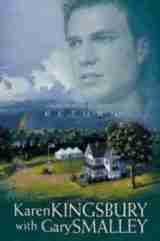
"Beyond Tuesday Morning" by Karen Kingsbury follows the story of two survivors of the 9/11 attacks, attempting to rebuild their lives while facing challenges of grief, guilt, and forgiveness. As they navigate through their pain, they find hope and healing in unexpected places, rediscovering the power of love and faith to overcome tragedy.
Warren Wiersbe
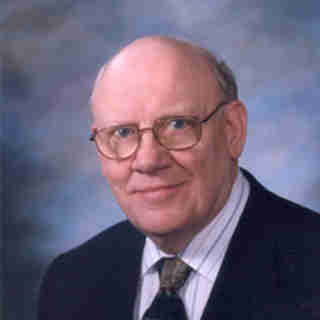 Dr. Warren Wiersbe once described Heaven as “not only a destination, but also a motivation. When you and I are truly motivated by the promise of eternity with God in heaven, it makes a difference in our lives.”
For Wiersbe, the promise of eternity became the motivation for his long ministry as a pastor, author, and radio speaker. Beloved for his biblical insight and practical teaching, he was called “one of the greatest Bible expositors of our generation” by the late Billy Graham.
Warren W. Wiersbe died on May 2, 2019, in Lincoln, Nebraska, just a few weeks shy of his 90th birthday.
“He was a longtime, cherished friend of Moody Bible Institute, a faithful servant of the Word, and a pastor to younger pastors like me,” said Dr. Mark Jobe, president of Moody Bible Institute. “We are lifting up pastor Wiersbe’s family in prayer at this time and rejoicing in the blessed hope that believers share together.”
Wiersbe grew up in East Chicago, Indiana, a town known for its steel mills and hard-working blue-collar families. In his autobiography, he connected some of his earliest childhood memories to Moody Bible Institute; his home church pastor was a 1937 graduate, Dr. William H. Taylor. After volunteering to usher at a 1945 Youth for Christ rally, Wiersbe found himself listening with rapt attention to Billy Graham’s sermon, and responded with a personal prayer of dedication.
In a precocious turn of events, the young Wiersbe was already a published author, having written a book of card tricks for the L. L. Ireland Magic Co. of Chicago. He quickly learned to liven up Sunday school lessons with magic tricks as object lessons (“not the cards!” he would say). After his high school graduation in 1947 (he was valedictorian), he spent a year at Indiana University before transferring to Northern Baptist Seminary in Chicago, where he earned a bachelor of theology degree. His future wife, Betty, worked in the school library, and Wiersbe was a frequent visitor.
While in seminary he became pastor of Central Baptist Church in East Chicago, serving until 1957. During those years he became a popular YFC speaker, which led to a full-time position with Youth for Christ International in Wheaton. He published his first article for Moody Monthly magazine in 1956, about Bible study methods, and seemed to outline his ongoing writing philosophy. “This is more of a personal testimony,” he said, “because I want to share these blessings with you, rather than write some scholarly essay, which I am sure I could not do anyway.”
At a 1957 YFC convention in Winona Lake, Indiana, Wiersbe preached a sermon that was broadcast live over WMBI, his first connection to Moody Radio. “I wish every preacher could have at least six months’ experience as a radio preacher,” he said later (because they would preach shorter).
While working with Youth for Christ, Wiersbe got a call from Pete Gunther at Moody Publishers, asking about possible book projects. First came Byways of Blessing (1961), an adult devotional; then two more books in 1962, A Guidebook for Teens and Teens Triumphant. He would eventually publish 14 titles with Moody, including William Culbertson: A Man of God (1974), Live Like a King (1976), The Annotated Pilgrim’s Progress (1980), and Ministering to the Mourning (2006), written with his son, David Wiersbe.
In 1961, D. B. Eastep invited Wiersbe to join the staff of Calvary Baptist Church in Covington, Kentucky. forming a succession plan that was hastened by Eastep’s sudden death in 1962. Warren and Betty Wiersbe remained at the church for 10 years, until they were surprised by a phone call from The Moody Church. The pastor, Dr. George Sweeting, had just resigned to become president of Moody Bible Institute. Would Wiersbe fill the pulpit, and pray about becoming a candidate?
He was already well known to the Chicago church—and to the MBI community. He continued to write for Moody Monthly and had just started a new column, “Insights for the Pastor.” The monthly feature continued to run during the years Wiersbe served at The Moody Church. Wiersbe would become one of the magazine’s most prolific writers—200 articles during a 40-year span. Meanwhile he also started work on the BE series of exegetical commentaries, books that soon found a place on the shelf of every evangelical pastor.
His ministry to pastors continued as he spoke at Moody Founder’s Week, Pastors’ Conference, and numerous campus events. He also inherited George Sweeting’s role as host of the popular Songs in the Night radio broadcast, produced by Moody Radio’s Bob Neff and distributed on Moody’s growing network of radio stations.
Later in life he would move to Lincoln, Nebraska, where he served as host of the Back to the Bible radio broadcast. He also taught courses on preaching at Trinity Evangelical Divinity School and Grand Rapids Baptist Seminary. He kept writing, eventually publishing more than 150 books and losing track of how many (“I can’t remember them all, and I didn’t save copies of everything,” he said.)
Throughout his ministry, Warren Wiersbe described himself as a bridge builder, a reference to his homiletical method of moving “from the world of the Bible to the world of today so that we could get to the other side of glory in Jesus.” As explained by his grandson, Dan Jacobson, “His preferred tools were words, his blueprints were the Scriptures, and his workspace was a self-assembled library.”
Several of Wiersbe’s extended family are Moody alums, including a son, David Wiersbe ’76; grandson Dan Jacobsen ’09 and his wife, Kristin (Shirk) Jacobsen ’09; and great-nephew Ryan Smith, a current student.
During his long ministry and writing career, Warren Wiersbe covered pretty much every topic, including the inevitability of death. These words from Ministering to the Mourning offer a fitting tribute to his own ministry:
We who are in Christ know that if He returns before our time comes to die, we shall be privileged to follow Him home. God’s people are always encouraged by that blessed hope. Yet we must still live each day soberly, realizing that we are mortal and that death may come to us at any time. We pray, “Teach us to number our days aright, that we may gain a heart of wisdom” (Psalm 90:12).
Dr. Warren Wiersbe once described Heaven as “not only a destination, but also a motivation. When you and I are truly motivated by the promise of eternity with God in heaven, it makes a difference in our lives.”
For Wiersbe, the promise of eternity became the motivation for his long ministry as a pastor, author, and radio speaker. Beloved for his biblical insight and practical teaching, he was called “one of the greatest Bible expositors of our generation” by the late Billy Graham.
Warren W. Wiersbe died on May 2, 2019, in Lincoln, Nebraska, just a few weeks shy of his 90th birthday.
“He was a longtime, cherished friend of Moody Bible Institute, a faithful servant of the Word, and a pastor to younger pastors like me,” said Dr. Mark Jobe, president of Moody Bible Institute. “We are lifting up pastor Wiersbe’s family in prayer at this time and rejoicing in the blessed hope that believers share together.”
Wiersbe grew up in East Chicago, Indiana, a town known for its steel mills and hard-working blue-collar families. In his autobiography, he connected some of his earliest childhood memories to Moody Bible Institute; his home church pastor was a 1937 graduate, Dr. William H. Taylor. After volunteering to usher at a 1945 Youth for Christ rally, Wiersbe found himself listening with rapt attention to Billy Graham’s sermon, and responded with a personal prayer of dedication.
In a precocious turn of events, the young Wiersbe was already a published author, having written a book of card tricks for the L. L. Ireland Magic Co. of Chicago. He quickly learned to liven up Sunday school lessons with magic tricks as object lessons (“not the cards!” he would say). After his high school graduation in 1947 (he was valedictorian), he spent a year at Indiana University before transferring to Northern Baptist Seminary in Chicago, where he earned a bachelor of theology degree. His future wife, Betty, worked in the school library, and Wiersbe was a frequent visitor.
While in seminary he became pastor of Central Baptist Church in East Chicago, serving until 1957. During those years he became a popular YFC speaker, which led to a full-time position with Youth for Christ International in Wheaton. He published his first article for Moody Monthly magazine in 1956, about Bible study methods, and seemed to outline his ongoing writing philosophy. “This is more of a personal testimony,” he said, “because I want to share these blessings with you, rather than write some scholarly essay, which I am sure I could not do anyway.”
At a 1957 YFC convention in Winona Lake, Indiana, Wiersbe preached a sermon that was broadcast live over WMBI, his first connection to Moody Radio. “I wish every preacher could have at least six months’ experience as a radio preacher,” he said later (because they would preach shorter).
While working with Youth for Christ, Wiersbe got a call from Pete Gunther at Moody Publishers, asking about possible book projects. First came Byways of Blessing (1961), an adult devotional; then two more books in 1962, A Guidebook for Teens and Teens Triumphant. He would eventually publish 14 titles with Moody, including William Culbertson: A Man of God (1974), Live Like a King (1976), The Annotated Pilgrim’s Progress (1980), and Ministering to the Mourning (2006), written with his son, David Wiersbe.
In 1961, D. B. Eastep invited Wiersbe to join the staff of Calvary Baptist Church in Covington, Kentucky. forming a succession plan that was hastened by Eastep’s sudden death in 1962. Warren and Betty Wiersbe remained at the church for 10 years, until they were surprised by a phone call from The Moody Church. The pastor, Dr. George Sweeting, had just resigned to become president of Moody Bible Institute. Would Wiersbe fill the pulpit, and pray about becoming a candidate?
He was already well known to the Chicago church—and to the MBI community. He continued to write for Moody Monthly and had just started a new column, “Insights for the Pastor.” The monthly feature continued to run during the years Wiersbe served at The Moody Church. Wiersbe would become one of the magazine’s most prolific writers—200 articles during a 40-year span. Meanwhile he also started work on the BE series of exegetical commentaries, books that soon found a place on the shelf of every evangelical pastor.
His ministry to pastors continued as he spoke at Moody Founder’s Week, Pastors’ Conference, and numerous campus events. He also inherited George Sweeting’s role as host of the popular Songs in the Night radio broadcast, produced by Moody Radio’s Bob Neff and distributed on Moody’s growing network of radio stations.
Later in life he would move to Lincoln, Nebraska, where he served as host of the Back to the Bible radio broadcast. He also taught courses on preaching at Trinity Evangelical Divinity School and Grand Rapids Baptist Seminary. He kept writing, eventually publishing more than 150 books and losing track of how many (“I can’t remember them all, and I didn’t save copies of everything,” he said.)
Throughout his ministry, Warren Wiersbe described himself as a bridge builder, a reference to his homiletical method of moving “from the world of the Bible to the world of today so that we could get to the other side of glory in Jesus.” As explained by his grandson, Dan Jacobson, “His preferred tools were words, his blueprints were the Scriptures, and his workspace was a self-assembled library.”
Several of Wiersbe’s extended family are Moody alums, including a son, David Wiersbe ’76; grandson Dan Jacobsen ’09 and his wife, Kristin (Shirk) Jacobsen ’09; and great-nephew Ryan Smith, a current student.
During his long ministry and writing career, Warren Wiersbe covered pretty much every topic, including the inevitability of death. These words from Ministering to the Mourning offer a fitting tribute to his own ministry:
We who are in Christ know that if He returns before our time comes to die, we shall be privileged to follow Him home. God’s people are always encouraged by that blessed hope. Yet we must still live each day soberly, realizing that we are mortal and that death may come to us at any time. We pray, “Teach us to number our days aright, that we may gain a heart of wisdom” (Psalm 90:12).
the spiritual gift of a closed door
Sometimes God makes us wait for doors to open in ministry because unwanted waiting is some of the best preparation for ministry. By the fall of 2008, I already knew I wanted to be a pastor. It was my senior year at Wake Forest University. I had wondered whether I might be a high school teacher, so I had tried a couple of education classes. Thinking I might go into ministry, though, I also signed up for one memorable course in the divinity school, on the apostle Paul and his letters. The course was taught by a universalist lesbian. On the last day of class, she handed back our final papers and told me she thought I should consider Christian ministry. It was almost enough to convince me not to. No, very much despite my experience in the divinity school, I still wanted to be pastor, largely because I had watched teenagers’ eyes light up, again and again, while we read about Jesus in the Gospel of John together. I came to faith through the ministry of Young Life, and then volunteered with the ministry throughout college. I spent much of my free time at East Forsyth High School, watching JV soccer games, playing ping pong, and telling 14- and 15-year-olds what God had done for me. I never felt more alive than when I was watching God use something in his word to set the filaments of their minds on fire. After that one class, I stayed plenty clear of the divinity school, and decided to major in business with a minor in ancient Greek (probably the only one in my class to do that). When I graduated in 2008, I knew I needed more training to learn how to handle the Bible faithfully, so I went straight to Bethlehem College & Seminary, where I graduated in 2012. Now ten years later, I’m still not a pastor. Humility in Ministry Now, to say I’m not yet a pastor is not to say that God hasn’t opened real doors for ministry. He clearly has. This article itself is but one sweet and unexpected evidence. But I’m not yet leading in the ways I thought I would be by now, which has given me a chance to reflect on why that might be. Why might God give me an ambition to lead, and bring solid confirmation of character and ability, and yet withhold certain opportunities to lead? Because sometimes unwanted waiting is some of the best preparation for ministry. “How many men have been given too much authority, too soon, and fallen headlong into the hands of hell?” When the apostle Paul laid out what kind of man a pastor must be, he wrote, “An overseer, as God’s steward, must be above reproach. He must not be arrogant . . .” (Titus 1:7). Does arrogance feel spiritually dangerous, even ruinous, to you? Paul said the same to young Timothy: “He must not be a recent convert, or he may become puffed up with conceit and fall into the condemnation of the devil” (1 Timothy 3:6). Is anything more dangerous to a ministry — or to a soul — than unchecked pride? How many men have been given too much authority, too soon, and fallen headlong into the hands of hell? The priceless gift of unwanted waiting in ministry is humility. A ministry without humility may seem to flourish for a time, but (as we’ve witnessed again and again) it ultimately harms those it claims to serve. Pride slowly erodes a ministry until it suddenly collapses on all involved. How kind of God, then, to save churches, families, and souls, by making some men wait until they can kneel low enough to lead well? Cheerful in the Shadows One of the best ways we can steward a season of waiting to shepherd is to learn to be a model sheep. Pastors worth following, after all, are always examples worth imitating. “Shepherd the flock of God that is among you,” the apostle Peter writes, “exercising oversight, not under compulsion, but willingly, as God would have you; not for shameful gain, but eagerly; not domineering over those in your charge, but being examples to the flock ” (1 Peter 5:2–3). So what kind of example are you becoming? Bobby Jamieson offers this counsel to aspiring leaders like me along these lines: What good deeds do you do that are seen by few or none? When did you last volunteer for a menial task? Which title means more to you, “brother,” which you are, or “pastor,” which you hope to be? Is being a servant your idea of greatness? One of the best things an aspiring pastor can do is serve outside the spotlight. Give elderly members rides to church. Serve in the nursery. Teach children Sunday school. Volunteer to serve food at, and clean up after, the wedding reception of a couple of church members you barely know. Everybody wants to be a servant until they get treated like one. Pastors not only are servants; they get treated like servants. Prepare yourself now for both the work and its reception by serving others. The best preparation for the spiritual trials of the spotlight is serving cheerfully in the shadows. ( The Path to Being a Pastor , 134) “One of the best ways we can steward a season of waiting to shepherd is to learn to be a model sheep.” How are you stewarding the shadows? If we could see how well these days were preparing us for the darker days of ministry ahead, we’d treasure the quiet, hidden work God is doing in and through us while we wait. Keep the Room Clean As I traveled with John Piper during the years I was his ministry assistant, I heard him tell some version of one particular story many times. Each time, the scene captivated and humbled me. A significant reason I chose to come to Bethlehem College & Seminary was to sit under and learn from him. His preaching class was all I hoped for, and more. As you might imagine, he came each day brimming with some fresh insight from his devotions, eager to wrestle with us over something God had said. He had (and has) a relentless appetite for uncovering reality in Scripture and pressing it into human hearts, especially his own. Those hours were intense and refreshing, serious and exciting. I came away wanting to see all he could see in God’s word. So, having had him as a teacher, and having admired him as a teacher, and having wanted to be a teacher like him, I leaned in all the more when he would tell this particular story. When I was in seminary, I said to John McClure, the head of the youth department at Lake Avenue Congregational Church, “I’m available, and I’ll do whatever you want me to do.” And he said, “Well, we need a seventh-grade boys Sunday school teacher this year.” I said, “Count me in.” I poured my life into those boys. There were about nine of them. . . . Four hours every Saturday afternoon I worked on my lesson. And at the end of that year, I said, “Now what do you want me to do, the same thing?” He said, “No, now we need a ninth-grade teacher.” So I said, “Okay,” and I jumped over a class and taught ninth grade. Midway through that year, the Galilean Sunday School Class of young married couples said, “We would like you to teach our class if they can do without you teaching the youth.” This is the way it’s gone my whole life. My dad said, “Keep the room clean where you are, son, and he’ll open the door when the next one’s ready.” I would pay to watch those nine 12-year-old boys under the waterfall of a young Piper’s love for Jesus. The story sticks with and sobers me because of how much someone as gifted as he is poured into just a few kids week after week. Hours of thinking, praying, and preparing for a tiny crowd of preteens (who could probably care less how much time he spent). I can picture what those lessons were like — John, with all he had, trying hard to creatively capture their wandering attention with the beauty and worth of God. Am I that faithful in the quiet, secret ministries God has given me? The story inspires me, though, because it reminds me that greater fruitfulness and responsibility in ministry often grow out of faithfulness in secret places. Are You Faithful in Little? While I traced the threads of humility, leadership, and waiting in Scripture, it dawned on me that, in one sense, our entire lives are one brief season of training for an eternity of ministry. Listen to how Jesus explains the parable of the talents: It will be like a man going on a journey, who called his servants and entrusted to them his property. To one he gave five talents, to another two, to another one, to each according to his ability. . . . Now after a long time the master of those servants came and settled accounts with them. And he who had received the five talents came forward, bringing five talents more, saying, “Master, you delivered to me five talents; here, I have made five talents more.” His master said to him, “Well done, good and faithful servant. You have been faithful over a little; I will set you over much. Enter into the joy of your master.” (Matthew 25:14–21) At the end of the age, he’ll say, “You have been faithful over a little; I will set you over much.” Not , “You have been faithful over a little, and I have nothing else for you to do,” but, “You have been faithful over a little in this life, and I have so much more for you to do in the next.” Even the largest, most well-known ministries are small and brief next to all Jesus will one day entrust to us — if we’re faithful with the talents we have. So, while you wait for some door to open, be as faithful as you can be with whatever work, however seemingly small, God has entrusted to you for now.