

Others like shake off the dust Features >>

Eye Of The Seer
School Of The Spirit

What Is The Fear Of The Lord
-160.webp)
School Of The Presence: Walking In Power, Intimacy, And Authority On Earth As It Is In Heaven

Loyalty And Disloyalty

Lessons From David: How To Be A Giant Killer
Rediscovering The Kingdom

There Were Two Trees In The Garden
48 Laws Of Spiritual Power
-160.webp)
Spiritual Direction (Wisdom For The Long Walk Of Faith)
About the Book
"Shake Off the Dust" by Jerry Finch is a memoir that tells the story of the author's journey from his troubled childhood to ultimately finding purpose in rescuing and advocating for neglected and abused horses. The book highlights the power of forgiveness, redemption, and the healing bonds between humans and animals.
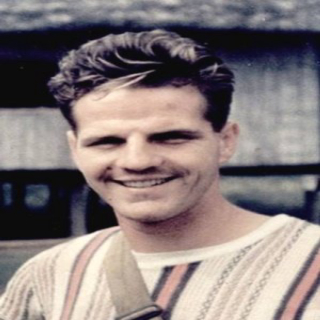
Jim Elliot
 EARLY LIFE
Jim Elliot began his life in Portland, Oregon in the USA. His mother, Clara, was a chiropractor and his father, Fred, was a minister. They married and settled in Seattle, WA where they welcomed their first son, Robert in 1921.
Later they relocated the family to Portland where Herbert arrived in 1924, Jim in 1927, and Jane in 1932.
Jim knew Christ from an early age and was never afraid to speak about Him to his friends. At age six Jim told his mother, “Now, mama, the Lord Jesus can come whenever He wants. He could take our whole family because I’m saved now, and Jane is too young to know Him yet.”
THE YEARS THAT CEMENTED HIS DESIRE TO SERVE THE LORD IN MISSIONS
Jim entered Benson Polytechnic High School in 1941. He carried a small Bible with him and, an excellent speaker; he was often found speaking out for Christ. He and his friends were not afraid to step out and find adventure. One thing Jim didn’t have time for in those early years were girls. He was once quoted as telling a friend, “Domesticated males aren’t much use for adventure.”
In 1945 Jim traveled to Wheaton, IL to attend Wheaton College. His main goal while there was to devote himself to God. He recognized the importance of discipline in pursuing this goal. He would start each morning with prayer and Bible study. In his journal he wrote, “None of it gets to be ‘old stuff’ for it is Christ in print, the Living Word. We wouldn’t think of rising in the morning without a face-wash, but we often neglect the purgative cleansing of the Word of the Lord. It wakes us up to our responsibility.”
Jim’s desire to serve God by taking His gospel to unreached people of the world began to grow while at Wheaton. The summer of 1947 found him in Mexico and that time influenced his decision to minister in Central America after he finished college.
Jim met Elisabeth Howard during his third year at Wheaton. He did ask her for a date which she accepted and then later cancelled. They spent the next years as friends and after she finished at Wheaton they continued to correspond. As they came to know each other there was an attraction, but Jim felt he needed to unencumbered by worldly concerns in order to devote himself completely to God.
In addition to his hope to one day travel to a foreign country to share Christ with the unchurched of the world, he also felt the need to share with people in the United States. On Sundays while at Wheaton he would often ride the train into Chicago and talk to people in the train station about Christ. He often felt ineffective in his work as the times of knowingly leading people to Christ were few. He once wrote, “No fruit yet. Why is that I’m so unproductive? I cannot recall leading more than one or two into the kingdom. Surely this is not the manifestation of the power of the Resurrection. I feel as Rachel, ‘Give me children, or else I die.’”
After college with no clear answer as to working for the Lord in a foreign country, Jim returned home to Portland. He continued his disciplined Bible study as well as correspondence with Elisabeth Howard whom he called Betty.
They both felt a strong attraction to each other during this time, but also felt that the Lord may have been calling them to be unmarried as they served Him.
In June of 1950 he travelled to Oklahoma to attend the Summer Institute of Linguistics. There he learned how to study unwritten languages. He was able to work with a missionary to the Quichuas of the Ecuadorian jungle. Because of these lessons he began to pray for guidance about going to Ecuador and later felt compelled to answer the call there.
Elisabeth Elliot wrote in Shadow of the Almighty:
“The breadth of Jim’s vision is suggested in this entry from the journal:
August 9. “God just now gave me faith to ask for another young man to go, perhaps not this fall, but soon, to join the ranks in the lowlands of eastern Ecuador. There we must learn: 1) Spanish and Quichua, 2) each other, 3) the jungle and independence, and 4) God and God’s way of approach to the highland Quichua. From thence, by His great hand, we must move to the Ecuadorian highlands with several young Indians each, and begin work among the 800,000 highlanders. If God tarries, the natives must be taught to spread southward with the message of the reigning Christ, establishing New Testament groups as they go. Thence the Word must go south into Peru and Bolivia. The Quichuas must be reached for God! Enough for policy. Now for prayer and practice.
THE ECUADOR YEARS
In February 1952 Jim finally left America to travel to Ecuador with Pete Fleming. In May Elisabeth moved to Quito and though they didn’t feel the need to get engaged she and Jim did begin a courtship.
In August Jim left Elisabeth in Quito and travelled with Pete to Shell Mera. At the Mission Aviation Fellowship headquarters in Shell Mera, Jim and Pete learned more about the Acua Indians, a people group that was largely unreached and very savage.
Leaving Shell Mera, Pete and Jim moved on to Shandia where Jim was captivated by the Quichua. He felt very strongly that this was exactly where God intended for him to work to spread the Gospel.
While Jim was in Shandia, Elisabeth was working to learn more about the Colorado Indians near Santa Domingo. In January of 1953 he went to Quito and she met him there and they were finally engaged. They married in October of that year and their only child Valerie was born in 1955.
They settled in Shandia and continued their work with the Quichua Indians. It was Jim’s desire to be able to reach the Waodoni tribe that lived deep in the jungles and had little contact with the outside world. A Waodoni woman who had left the tribe was taken in by the missionaries and helped them to learn the language.
Jim, along with Pete, Ed McCully, Roger Youderian, and their pilot Nate Saint began to search by plane in hopes of finding a way to contact the Waodoni. The found a sandbar in the middle of the Curaray River that worked as a landing strip for the plane and it was there that they first made contact with the Waodoni. They were elated to be able to finally be able to attempt to share the love of Christ with this people group.
After their first meeting, one of the tribe, a man they called George lied to the tribe about the men’s intentions. This lie led the Waodoni warriors to plan an attack for when the missionaries returned. The men did return on January 8, 1956 and were surprised by ten members of the tribe who massacred the missionaries.
Jim’s short life that was filled with the desire to share God’s love can be summed up by a quote that is attributed to him. “He is no fool who gives that which he cannot keep, to gain what he cannot lose.”
EARLY LIFE
Jim Elliot began his life in Portland, Oregon in the USA. His mother, Clara, was a chiropractor and his father, Fred, was a minister. They married and settled in Seattle, WA where they welcomed their first son, Robert in 1921.
Later they relocated the family to Portland where Herbert arrived in 1924, Jim in 1927, and Jane in 1932.
Jim knew Christ from an early age and was never afraid to speak about Him to his friends. At age six Jim told his mother, “Now, mama, the Lord Jesus can come whenever He wants. He could take our whole family because I’m saved now, and Jane is too young to know Him yet.”
THE YEARS THAT CEMENTED HIS DESIRE TO SERVE THE LORD IN MISSIONS
Jim entered Benson Polytechnic High School in 1941. He carried a small Bible with him and, an excellent speaker; he was often found speaking out for Christ. He and his friends were not afraid to step out and find adventure. One thing Jim didn’t have time for in those early years were girls. He was once quoted as telling a friend, “Domesticated males aren’t much use for adventure.”
In 1945 Jim traveled to Wheaton, IL to attend Wheaton College. His main goal while there was to devote himself to God. He recognized the importance of discipline in pursuing this goal. He would start each morning with prayer and Bible study. In his journal he wrote, “None of it gets to be ‘old stuff’ for it is Christ in print, the Living Word. We wouldn’t think of rising in the morning without a face-wash, but we often neglect the purgative cleansing of the Word of the Lord. It wakes us up to our responsibility.”
Jim’s desire to serve God by taking His gospel to unreached people of the world began to grow while at Wheaton. The summer of 1947 found him in Mexico and that time influenced his decision to minister in Central America after he finished college.
Jim met Elisabeth Howard during his third year at Wheaton. He did ask her for a date which she accepted and then later cancelled. They spent the next years as friends and after she finished at Wheaton they continued to correspond. As they came to know each other there was an attraction, but Jim felt he needed to unencumbered by worldly concerns in order to devote himself completely to God.
In addition to his hope to one day travel to a foreign country to share Christ with the unchurched of the world, he also felt the need to share with people in the United States. On Sundays while at Wheaton he would often ride the train into Chicago and talk to people in the train station about Christ. He often felt ineffective in his work as the times of knowingly leading people to Christ were few. He once wrote, “No fruit yet. Why is that I’m so unproductive? I cannot recall leading more than one or two into the kingdom. Surely this is not the manifestation of the power of the Resurrection. I feel as Rachel, ‘Give me children, or else I die.’”
After college with no clear answer as to working for the Lord in a foreign country, Jim returned home to Portland. He continued his disciplined Bible study as well as correspondence with Elisabeth Howard whom he called Betty.
They both felt a strong attraction to each other during this time, but also felt that the Lord may have been calling them to be unmarried as they served Him.
In June of 1950 he travelled to Oklahoma to attend the Summer Institute of Linguistics. There he learned how to study unwritten languages. He was able to work with a missionary to the Quichuas of the Ecuadorian jungle. Because of these lessons he began to pray for guidance about going to Ecuador and later felt compelled to answer the call there.
Elisabeth Elliot wrote in Shadow of the Almighty:
“The breadth of Jim’s vision is suggested in this entry from the journal:
August 9. “God just now gave me faith to ask for another young man to go, perhaps not this fall, but soon, to join the ranks in the lowlands of eastern Ecuador. There we must learn: 1) Spanish and Quichua, 2) each other, 3) the jungle and independence, and 4) God and God’s way of approach to the highland Quichua. From thence, by His great hand, we must move to the Ecuadorian highlands with several young Indians each, and begin work among the 800,000 highlanders. If God tarries, the natives must be taught to spread southward with the message of the reigning Christ, establishing New Testament groups as they go. Thence the Word must go south into Peru and Bolivia. The Quichuas must be reached for God! Enough for policy. Now for prayer and practice.
THE ECUADOR YEARS
In February 1952 Jim finally left America to travel to Ecuador with Pete Fleming. In May Elisabeth moved to Quito and though they didn’t feel the need to get engaged she and Jim did begin a courtship.
In August Jim left Elisabeth in Quito and travelled with Pete to Shell Mera. At the Mission Aviation Fellowship headquarters in Shell Mera, Jim and Pete learned more about the Acua Indians, a people group that was largely unreached and very savage.
Leaving Shell Mera, Pete and Jim moved on to Shandia where Jim was captivated by the Quichua. He felt very strongly that this was exactly where God intended for him to work to spread the Gospel.
While Jim was in Shandia, Elisabeth was working to learn more about the Colorado Indians near Santa Domingo. In January of 1953 he went to Quito and she met him there and they were finally engaged. They married in October of that year and their only child Valerie was born in 1955.
They settled in Shandia and continued their work with the Quichua Indians. It was Jim’s desire to be able to reach the Waodoni tribe that lived deep in the jungles and had little contact with the outside world. A Waodoni woman who had left the tribe was taken in by the missionaries and helped them to learn the language.
Jim, along with Pete, Ed McCully, Roger Youderian, and their pilot Nate Saint began to search by plane in hopes of finding a way to contact the Waodoni. The found a sandbar in the middle of the Curaray River that worked as a landing strip for the plane and it was there that they first made contact with the Waodoni. They were elated to be able to finally be able to attempt to share the love of Christ with this people group.
After their first meeting, one of the tribe, a man they called George lied to the tribe about the men’s intentions. This lie led the Waodoni warriors to plan an attack for when the missionaries returned. The men did return on January 8, 1956 and were surprised by ten members of the tribe who massacred the missionaries.
Jim’s short life that was filled with the desire to share God’s love can be summed up by a quote that is attributed to him. “He is no fool who gives that which he cannot keep, to gain what he cannot lose.”
Lord, Teach Us to Work
One human life in all the Scriptures towers above the others. All who came before anticipated him, and all who follow after orient to him. And thanks to the biographical sketches found in the four Gospels of the New Testament, we know more details about Jesus’s everyday life than any other biblical figure. Moses and David, and Peter and Paul, who all both wrote much and had much written about them, are not unveiled with the same richness, depth, and detail as Christ. And for good reason. None compares to God himself dwelling among us in fully human soul and body. And no one accomplished the work that he accomplished. “The Gospels not only show us a man who worked, but also one who didn’t only work.” All four accounts are Gospels, driving toward his final week, his arrest, his trial, his death, the long pause of Holy Saturday, and then, at last, his resurrection. And so, as careful readers of the Gospels, we beware gathering up details about Jesus’s life and unhitching them from where his whole life was going. Still, we do have more to learn from the life of Christ than the events of his final week (which comprise less than half the Gospels). One theme, especially pronounced in the Gospel of John, is what we might see as the “work ethic” of Christ. Jesus Worked Observe, first, that Jesus did work — and consider what he meant by work rather than what we might assume. The night before he died, he prayed to his Father, as his men listened, “I glorified you on earth, having accomplished the work that you gave me to do” (John 17:4). In a sense, his whole life had been a single work — a “life’s work” we might say. He had a calling and commission. His Father gave him work to do. And this was good — a blessing, not a curse. Jesus did not begrudge this work. Instead, he experienced a kind of satisfaction in doing the work his Father had assigned him. In fact, his soul fed on accomplishing his Father’s work, as he testified standing by the well in Samaria. “My food is to do the will of him who sent me and to accomplish his work” (John 4:34). Jesus also speaks in John 9 about stewarding time in such a life. Here he sounds like Moses’s prayer to “teach us to number our days” (Psalm 90:12) and Paul’s exhortation to “[make] the best use of the time” (Ephesians 5:15–16). “Night is coming, when no one can work,” he says, and knowing that, “we must work the works of him who sent me while it is day” (John 9:4). He had an appointed season of earthly life. Eternity would come, but for now, he was on the clock. He had work to accomplish. “As long as I am in the world, I am the light of the world” (John 9:5). He even “worked” on the Sabbath, or at least was accused of it. And he answered the charge not by saying he wasn’t working, but that “My Father is working until now, and I am working” (John 5:17). He Didn’t Only Work The Gospels not only show us a man who worked, but also one who didn’t only work. His life was more than his work. He rested and retreated, and called his weary disciples away to rest with him. When they had returned from their commission, and “told him all that they had done and taught” (and teaching, done well, can be really hard work), he said to them, “Come away by yourselves to a desolate place and rest a while.” For many were coming and going, and they had no leisure even to eat. And they went away in the boat to a desolate place by themselves. (Mark 6:30–32) Jesus also slept. He may have stayed up all night to pray before choosing his twelve, and eschewed sleep to pray in the garden, but those were unusual circumstances. He slept in peace on a storm-tossed ship until his disciples frantically woke him, and as the great personal fulfillment of the Psalms, he did not despise Solomon’s wisdom in Psalm 127:2, It is in vain that you rise up early and go late to rest, eating the bread of anxious toil; for he gives to his beloved sleep. What His Work Accomplished That Jesus worked (and didn’t only work) is plain enough, but what did his work mean? Much of what we have from the Gospels about his work is from his own mouth. First, he was conscious that his work bore witness to his Father. Indeed, his life-work was to glorify his Father, to make him known truly and admired duly (John 17:4, 6, 26). “Every indication we have of Jesus’s life and ministry is that he was (and was known as) a worker, not an idler.” And Jesus’s works demonstrated that the Father had sent him. “The works that the Father has given me to accomplish, the very works that I am doing, bear witness about me that the Father has sent me” (John 5:36; also John 10:25, 32). Not just that he was sent as a mere man. The way he taught (with authority, Matthew 7:29; Mark 1:22, 27; Luke 4:32; John 7:17), and the miracles he performed, pointed to his being more than a prophet — to the almost unspeakable truth that this is God himself. Even though you do not believe me, believe the works, that you may know and understand that the Father is in me and I am in the Father. (John 10:38) Do you not believe that I am in the Father and the Father is in me? The words that I say to you I do not speak on my own authority, but the Father who dwells in me does his works. Believe me that I am in the Father and the Father is in me, or else believe on account of the works themselves. (John 14:10–11) His works, performed in the world with human words and hands, showed who he was, and whose he was — just as those who rejected him showed through their works who was their father (John 8:38–41). Industry Without Frenzy Every indication we have of Jesus’s life and ministry is that he was (and was known as) a worker, not an idler. Not only did he labor in obscurity as a tradesman for thirty years, supporting his family as the man of the house after the death of Joseph, but the tenor of his ministry was one of energy and industry, not laziness or lethargy. His life was not without weariness (John 4:6); nor was it without physical rest and spiritual retreat (Mark 6:31). He did not think of his work as his own but as his Father’s. And for the sake of the faith of the people his Father had given him, he expended the energy God gave him, day in and day out, to carry out his calling. We get the clear impression from the Gospels that he was busy. He was in great demand. His days were long. Yet we never get the sense that he was anxious or frenzied (even when a desperate father tries to whisk him away to save a dying daughter, Mark 5:22–36). His life was busy but not hurried. He knew his calling and gave himself to it. Not without sleep or leisure, but he didn’t live to rest. We Work for Good For those of us who claim him as Lord, it is sobering to realize that on multiple occasions Jesus calls us “laborers” (Matthew 20:1, 2, 8, 14). Not only did he say the gospel “laborer deserves his wages” (Luke 10:7; Matthew 10:10), but he instructed us, as his workmen, to pray for more: The harvest is plentiful, but the laborers are few; therefore pray earnestly to the Lord of the harvest to send out laborers into his harvest. (Matthew 9:37–38; Luke 10:2) Jesus calls us to work, to expend energy and effort, for the good of others. This is what makes our acts good works: that our work is good for others, not just self. “Let your light shine before others, so that they may see your good works and give glory to your Father who is in heaven” (Matthew 5:16). We Learn Humble Limits In Christ, we work, but we quickly learn, and happily acknowledge, the limits of our labors. We learn, with Peter, that Christ’s word is effective in a way that our work is not. “Master, we toiled all night and took nothing! But at your word I will let down the nets” (Luke 5:5). Our work in this world depends on his to be genuinely fruitful and of lasting value. In fact, in particular times and ways, our not working (as in justification by faith alone) is a way to accentuate Christ’s provision and work for us (Romans 4:5). There is a time to flee, in his grace, with our own feet for freedom from Egypt, and a time to stand back “and see the salvation of the Lord, which he will work for you today. . . . The Lord will fight for you, and you have only to be silent” (Exodus 14:13–14). Our work is fruit. His work is root. At bottom, we are like lilies of the field that “neither toil nor spin,” says Jesus, “yet I tell you, even Solomon in all his glory was not arrayed like one of these” (Matthew 6:28–29; Luke 12:27). “Jesus had a call and gave himself to it. Not without sleep or leisure, but he didn’t live to rest.” The foundation of Jesus’s work ethic as an example to us is the uniqueness of his work for us. The culmination of his work was his death and resurrection for sinners in a way we cannot imitate. There is a completed course (Luke 13:32), a unique finished work (John 19:30), an inimitable work we dare not seek to replace with our own. Christ does indeed call us to be laborers but not first and foremost. And when he does summon us into the fields, he invites us into a kind of rest: Come to me, all who labor and are heavy laden, and I will give you rest. Take my yoke upon you, and learn from me, for I am gentle and lowly in heart, and you will find rest for your souls. For my yoke is easy, and my burden is light. (Matthew 11:28–30) Don’t misunderstand. He doesn’t call us merely into rest. But into a kind of labor, in him, that is true rest — into a kind of rest in which we receive his yoke and burden, and yet they are easy and light. While he himself works so diligently, he is gentle toward us, and lowly in heart. So, the labor into which we enter, in his service, is humble work. We acknowledge and admit, however pioneering and enterprising our work may seem, that where it counts most, we are building on the work, and reaping the harvest, of others — first Christ himself, and also our fellows in him. “I sent you to reap that for which you did not labor,” he says to his disciples. “Others have labored, and you have entered into their labor” (John 4:38). In humility, we do not pretend to start kingdom work from scratch, claim it as our own, and make ourselves out to be the hero. Rather, God calls us to build upon the faithful labors of others. Our work is not a tribute to our greatness. In humility, we embrace the context into which God calls us, and do our level best to build, to take the next modest steps. How We Work Finally, what might the life and work of Christ teach us for how we are to work? First, we own that our working and Jesus’s giving (grace) are not at odds. We work because he is at work. “Whoever does what is true comes to the light, so that it may be clearly seen that his works have been carried out in God” (John 3:21), that is, in “the strength that God supplies” (1 Peter 4:11). Our works, yet carried out in the work of God. And we can hardly say enough about what it means for us, in Christ, to have his Holy Spirit. In fact, Jesus empowers us to do “greater works,” in some sense, than he did because he goes to his Father to send us his Spirit. “Truly, truly, I say to you, whoever believes in me will also do the works that I do; and greater works than these will he do, because I am going to the Father” (John 14:12). Then, he teaches us to look to the reward, as he himself did (Hebrews 12:1–2). As the apostle Paul reminds us, in the context of “working hard,” Jesus himself said, “It is more blessed to give than to receive” (Acts 20:35). He not only said it, but lived it, and commends it. We learn to embrace the costs of hard work, looking past the friction and barriers in the moment, to the blessing to come. In His Work In Christ, we work — and we do so in his own energy. No one modeled this quite like Paul. Or spoke about it as often as Paul. There is a strength in Christ in which he calls us to work. Christ himself was the source of Paul’s own strength: “I thank him who has given me strength, Christ Jesus our Lord” (1 Timothy 1:12). So, Paul writes to his protégé, “My child, be strengthened by the grace that is in Christ Jesus” (2 Timothy 2:1). And to the Ephesians, “Be strong in the Lord and in the strength of his might” (Ephesians 6:10). And to the Philippians he testifies, “I can do all things through him who strengthens me” (Philippians 4:13). Not just a strength in Christ but a strength of Christ. Jesus, the God-man, gives his own divine-human energy by his Spirit to empower our work. When Paul toils, as he says in Colossians 1:29, he is “struggling with all [Christ’s] energy that he powerfully works within me.” So, in Christ, and for him, and by him, we work, and do so in a strength that Christ himself provides. For justification before God, we lay down our efforts, and in the everyday Christian life, we take up the energy of the God-man himself and we walk. Because “we are his workmanship, created in Christ Jesus for good works, which God prepared beforehand, that we should walk in them” (Ephesians 2:10). Article by David Mathis
.webp)