
Others like take three Features >>




About the Book
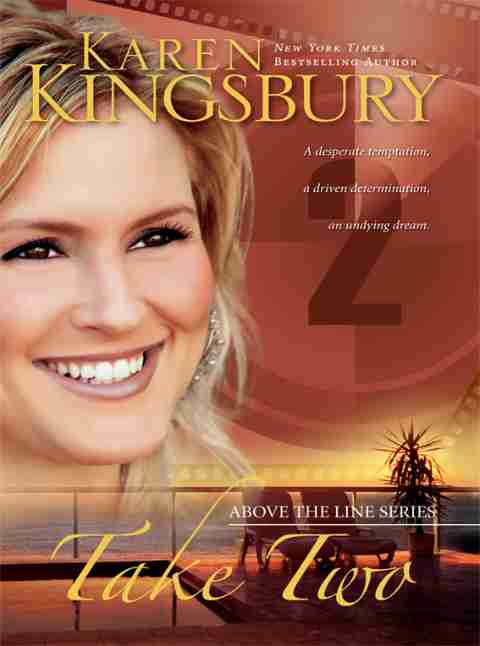
"Take Three" by Karen Kingsbury follows the story of Chase Ryan, a Hollywood producer, and Keith Ellison, a former weatherman turned producer. As they work together on a new film, they face challenges in their personal lives and careers, testing their faith and relationships. The novel explores themes of redemption, forgiveness, and the power of second chances.
Hannah More
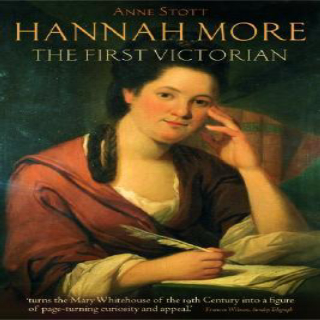 Beyond any doubt, Hannah More was the most influential female member of the Society for Effecting the Abolition of the African Slave Trade. She was educated at Bristol, an important slave-trading town, and began to publish her writing in the 1760s, while she was still a teenager. Her first play, The Inflexible Captive, was staged at Bath in 1775. Later in the 1770s, and for much of the 1780s, she spent time in London and made the acquaintance of many important political and society figures, including Samuel Johnson, Edmund Burke, and Elizabeth Montagu. Her play Percy was produced by David Garrick in 1777, and Fatal Falsehood was staged in 1779, but she came to regard the theatre as morally wrong, especially after the death of her mentors; Garrick and Johnson. She turned to religious writing, beginning with her Sacred Dramas in 1782. In 1784-5, she 'discovered' Ann Yearsley, the so-called 'poetical milkmaid of Bristol', whose poems More helped to publish, although the two later fell out.
In the 1780s, More widened her circle to include religious and philanthropic figures, including John Newton, Beilby Porteus and William Wilberforce. In the summer of 1786, she spent time with Sir Charles and Lady Margaret Middleton at the their home in Teston in Kent. Among their guests were the local vicar James Ramsay and a young Thomas Clarkson, both of whom were central to the early abolition campaign. More and Clarkson met again in Bristol in 1787, while he was on his fact-finding mission to the city, but they did not become close. However, in the same year More met Wilberforce, and their friendship was to become a deep and lasting one. More contributed much to the running of the newly-founded Abolition Society including, in February 1788, her publication of Slavery, a Poem which has been recognised as one of the more important slavery poems of the abolition period. Her relationship with members of the society, especially Wilberforce, was close. For example, she spent the summer of 1789 holidaying with Wilberforce in the Peak District - planning for the abolition campaign, at that time at its height, formed a great deal of their conversation.
By the mid-1790s, More had become closely involved with the 'Clapham Sect' of evangelical Christians, many of whom were involved in the abolition campaign. The group centred on Henry Thornton's home in Clapham and included Wilberforce, James Stephen, and Zachary Macaulay, among others. Throughout the 1790s, she wrote a number of religious tracts, known as the Cheap Repository Tracts, that eventually led to the formation of the Religious Tracts Society. Several of the Tracts oppose slavery and the slave trade, in particular, the poem The Sorrows of Yamba; or, The Negro Woman's Lamentation, which appeared in November 1795 and which was co-authored with Eaglesfield Smith. However, the tracts have also been noted for their encouragement of social quietism in an age of revolution. She continued to oppose slavery throughout her life, but at the time of the Abolition Bill of 1807, her health did not permit her to take as active a role in the movement as she had done in the late 1780s, although she maintained a correspondence with Wilberforce and others. In her later life, she dedicated much time to religious writing. Nevertheless, her most popular work was a novel, Coelebs in Search of a Wife, which appeared in two volumes in 1809 (and which ran to nine editions in 1809 alone). In the 1820s she grew gradually less well, and decreased - but did not entirely halt - the amount of writing she produced. On her death in 1833, she left more than £30,000 to charities and religious societies (equivalent to about £2,000,000 or $3,000,000 in 2004).
© Brycchan Carey 2004
Beyond any doubt, Hannah More was the most influential female member of the Society for Effecting the Abolition of the African Slave Trade. She was educated at Bristol, an important slave-trading town, and began to publish her writing in the 1760s, while she was still a teenager. Her first play, The Inflexible Captive, was staged at Bath in 1775. Later in the 1770s, and for much of the 1780s, she spent time in London and made the acquaintance of many important political and society figures, including Samuel Johnson, Edmund Burke, and Elizabeth Montagu. Her play Percy was produced by David Garrick in 1777, and Fatal Falsehood was staged in 1779, but she came to regard the theatre as morally wrong, especially after the death of her mentors; Garrick and Johnson. She turned to religious writing, beginning with her Sacred Dramas in 1782. In 1784-5, she 'discovered' Ann Yearsley, the so-called 'poetical milkmaid of Bristol', whose poems More helped to publish, although the two later fell out.
In the 1780s, More widened her circle to include religious and philanthropic figures, including John Newton, Beilby Porteus and William Wilberforce. In the summer of 1786, she spent time with Sir Charles and Lady Margaret Middleton at the their home in Teston in Kent. Among their guests were the local vicar James Ramsay and a young Thomas Clarkson, both of whom were central to the early abolition campaign. More and Clarkson met again in Bristol in 1787, while he was on his fact-finding mission to the city, but they did not become close. However, in the same year More met Wilberforce, and their friendship was to become a deep and lasting one. More contributed much to the running of the newly-founded Abolition Society including, in February 1788, her publication of Slavery, a Poem which has been recognised as one of the more important slavery poems of the abolition period. Her relationship with members of the society, especially Wilberforce, was close. For example, she spent the summer of 1789 holidaying with Wilberforce in the Peak District - planning for the abolition campaign, at that time at its height, formed a great deal of their conversation.
By the mid-1790s, More had become closely involved with the 'Clapham Sect' of evangelical Christians, many of whom were involved in the abolition campaign. The group centred on Henry Thornton's home in Clapham and included Wilberforce, James Stephen, and Zachary Macaulay, among others. Throughout the 1790s, she wrote a number of religious tracts, known as the Cheap Repository Tracts, that eventually led to the formation of the Religious Tracts Society. Several of the Tracts oppose slavery and the slave trade, in particular, the poem The Sorrows of Yamba; or, The Negro Woman's Lamentation, which appeared in November 1795 and which was co-authored with Eaglesfield Smith. However, the tracts have also been noted for their encouragement of social quietism in an age of revolution. She continued to oppose slavery throughout her life, but at the time of the Abolition Bill of 1807, her health did not permit her to take as active a role in the movement as she had done in the late 1780s, although she maintained a correspondence with Wilberforce and others. In her later life, she dedicated much time to religious writing. Nevertheless, her most popular work was a novel, Coelebs in Search of a Wife, which appeared in two volumes in 1809 (and which ran to nine editions in 1809 alone). In the 1820s she grew gradually less well, and decreased - but did not entirely halt - the amount of writing she produced. On her death in 1833, she left more than £30,000 to charities and religious societies (equivalent to about £2,000,000 or $3,000,000 in 2004).
© Brycchan Carey 2004
do not fear to leave this world
Perhaps you will feel the same discomfort I felt overhearing saints of old speak of death. “He who does not prepare for death is more than an ordinary fool. He is a madman,” began Charles Spurgeon. “Agreed,” said the good Doctor Martyn Lloyd-Jones. Men seem to ignore the plain fact that “the moment you come into this world you are beginning to go out of it.” But this fact need not spell doom and gloom for the Christian, Spurgeon responded. “The best moment of a Christian’s life is his last one, because it is the one that is nearest heaven.” “I concur fully,” Richard Sibbes chimed in. “Death is not now the death of me, but death will be the death of my misery, the death of my sins; it will be the death of my corruptions. But death will be my birthday in regard of happiness.” “When Christ calls me home,” Adoniram Judson added, “I shall go with the gladness of a boy bounding away from school.” “May I also interject?” asked Calvin. “We may positively state that nobody has made any progress in the school of Christ, unless he cheerfully looks forward towards the day of his death, and towards the day of the final resurrection.” “This strikes me as true,” said Thomas Brooks. “It is no credit to your heavenly Father for you to be loath to go home.” “And why should we hesitate?” Samuel Bolton questioned. It is the “privilege of saints, that they shall not die until the best time, not until when, if they were but rightly informed, they would desire to die.” “Exactly.” For the child of God, “death is the funeral of all our sorrows,” reasoned Thomas Watson. “Death will set a true saint out of the gunshot and free him from sin and trouble.” “Indeed,” John Bunyan added, “death is but a passage out of a prison into a palace.” As I listened, I overheard the most disquieting questions. “Has this world been so kind to you that you would leave it with regret?” C.S. Lewis posed. “If we really believe that home is elsewhere and that this life is a ‘wandering to find home,’ why should we not look forward to the arrival?” “Hear! Hear!” exclaimed William Gurnall. “Let thy hope of heaven master thy fear of death. Why shouldest thou be afraid to die, who hopest to live by dying?” “I am packed, sealed, and waiting for the post,” cried John Newton. “Who would live always in such a world as this?” Even snippets of their prayers issued a subtle rebuke. I could not help but hear one George Whitefield plead, “Lord, keep me from a sinful and too eager desire after death. I desire not to be impatient. I wish quietly to wait till my blessed change comes.” This proved the final blow. These men anticipated death, viewed an early departure as a “promotion.” I lowered my gaze. I rarely think this way, rarely feel this way. Do I really believe in heaven? Do I really love my Lord? Snuggled in This Life My squeamishness, flipping through an anthology of Christian quotes, helped me realize that my discipleship has slanted too American, too shortsighted, too this-worldly. “Are you packed and ready to go?” Well, I was hoping to set sail several decades from now, so — “Has this world been so kind to you that you would leave it with regret?” Well, I wouldn’t give it a ten-star rating, but it certainly hasn’t been half that bad (yet). So yeah, maybe — “Nobody has made any progress in the school of Christ, unless he cheerfully looks forward towards the day of his death, and towards the day of the final resurrection.” Well, that’s intense. “It is no credit to your heavenly Father for you to be loath to go home.” I see — worthy point. No credit to Jesus either, I imagine. “These men daily lived awake to the truths I daily profess to believe.” These men daily lived awake to the truths I daily profess to believe; they inhabited them, longing to fly away and be with Christ. Although they loved families, enjoyed things of earth, and did good in this world, they nevertheless were unafraid to dive headfirst into those cold waters of death at the first moment their Master allowed. They believed, with Paul, that “to depart and be with Christ . . . is far better” (Philippians 1:23). I discovered then just how snuggled by the fireside I had become in this world. A place I too readily felt to be home . Epitaphs of Exiles My heart can live too much here , too little there . “My life is hidden with Christ,” I must remind myself (Colossians 3:3). As this world seeks to entice my affections to linger in its marketplace, I desire to be more of a heavenly disciple. And if you love Jesus but think too little of the life to come, I know you will agree. Oh, that this might be a true inscription over our graves, and all the more since we live after the coming of Christ, and the down payment of the Spirit: These all died in faith, not having received the things promised, but having seen them and greeted them from afar, and having acknowledged that they were strangers and exiles on the earth. For people who speak thus make it clear that they are seeking a homeland. If they had been thinking of that land from which they had gone out, they would have had opportunity to return. But as it is, they desire a better country, that is, a heavenly one. Therefore God is not ashamed to be called their God, for he has prepared for them a city. (Hebrews 11:13–16) Abraham, by faith, left his home in Mesopotamia, not even knowing where God was leading him (Hebrews 11:8). He lived in the promised land before he could call it home, dwelling there as a foreigner. Isaac and Jacob, heirs with Abraham of God’s promise, lived in tents of temporality; their home was not yet (Hebrews 11:9). “Once God saved them, they refused to unpack their hopes again in this world.” Abraham’s eyes were elsewhere. “He was looking forward to the city that has foundations, whose designer and builder is God” (Hebrews 11:10). And he and his sons bore the heavenly insignia in their speech: they acknowledged, to anyone who cared to know, that they would live and die on this earth as exiles and sojourners (Genesis 23:4; 47:9). Once God saved them, they refused to unpack their hopes again in this world. The land far-off — big as God’s promise, sure as God’s word — held their allegiance. They made it clear that they sought a homeland not built by human hands. As the world tried to tempt them back, the bait remained on the hook. Better to live in a tent in this world with a heavenly city before them than to dwell in the tottering kingdoms of men. They desired a better country, a heavenly one. And God is not ashamed to be called “the God of Abraham, the God of Isaac, the God of Jacob” (Exodus 3:6). He is not ashamed in the least to be the one they so hoped in, for he has prepared for them a city . Still at Sea So, is your mind mainly set on this world or the next? This world is not our home, precious saint. We are not yet in our element. We fling open the window and send our dove about this earth, finding that it returns to us having found no homeland within this watery grave. But this world will be drained soon enough. The swells of judgment shall intensify and then subside. The new heavens and new earth shall arrive, and our Mighty Dove shall descend with a sword in his mouth for his enemies and an olive branch for us. Until then, keep waiting, keep hoping, keep acknowledging, keep living in tents, longing for that moment when we can bound away from this world as the Father calls us home.