
Others like coming home Features >>





%20Karen%20Kingsbury-160.webp)



About the Book
"Coming Home" by Karen Kingsbury follows the story of Luke, a soldier returning home from war with amnesia, and his family's journey to rebuild their lives and relationships. Through faith, forgiveness, and love, the Baxter family learns to navigate challenges and heal from past wounds as they come together to support Luke in his recovery.
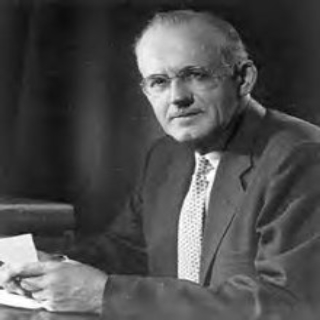
A.W. Tozer (Aiden Wilson Tozer)
 Early life
Tozer hailed from a tiny farming community in western La Jose, Pennsylvania. He was converted to Christianity as a teenager in Akron, Ohio: While on his way home from work at a tire company, he overheard a street preacher say, "If you don't know how to be saved ... just call on God, saying, 'Lord, be merciful to me a sinner.'" Upon returning home, he climbed into the attic and heeded the preacher's advice.
Pastor
In 1919, five years after his conversion and without formal education in Christian theology, Tozer accepted an offer to serve as pastor of his first church. That began 44 years of ministry associated with the Christian and Missionary Alliance (C&MA), a Protestant Evangelical denomination, 33 of them serving as a pastor in several different congregations (his first, a small storefront church in Nutter Fort, West Virginia). Later, he served thirty years (1928 to 1959) as the pastor of Southside Alliance Church in Chicago; the final years of his life he spent as pastor of Avenue Road Church in Toronto, Ontario, Canada. Observing contemporary Christian living, Tozer felt that the church was on a dangerous course toward compromising with "worldly" concerns.
Born into poverty, Tozer was self-educated and taught himself what he missed in high school and university.
Author
Tozer began writing in 1931 for the denominational magazine of the Christian and Missionary Alliance, Alliance Weekly (now Alliance Life), which became the platform from which his writing career emerged. He later wrote the monthly column “There’s Truth in It” (1936–37) and “A Word in Season” (1944–46). In May 1950, he became the editor of the Alliance Weekly, a position he filled until his death in 1963.
At the urging of David W. Fant, publications secretary of the C&MA, Tozer wrote biographies of A. B. Simpson (1943) and Robert A. Jaffray (1947). It was the publication of his third book, The Pursuit of God (1948), that made Tozer a household name among evangelicals. In addition to the 12 books he published in his lifetime, more than 40 other books have been compiled from his magazine features, editorials, and transcribed sermons.
During his lifetime, Tozer’s works were published by Christian Publications, Inc., the denominational press operated by the C&MA. The publishing house declared bankruptcy in 2006 and was purchased by WingSpread Publishers of Camp Hill, Pennsylvania.[8] In November 2013, Moody Publishers acquired Wingspread from parent company Zur Ltd., a transaction that included more than 60 Tozer books and pamphlets. Some of Tozer’s works are now in the public domain and have been issued by multiple publishers.
Personal life
Tozer had seven children, six sons and a daughter. Living a simple and non-materialistic lifestyle, he and his wife, Ada Cecelia Pfautz, never owned a car, preferring bus and train travel. Even after becoming a well-known Christian author, Tozer signed away much of his royalties to those who were in need.
Prayer was of vital personal importance for Tozer. "His preaching as well as his writings were but extensions of his prayer life," comments his biographer, James L. Snyder, in the book In Pursuit of God: The Life Of A.W. Tozer. "He had the ability to make his listeners face themselves in the light of what God was saying to them," writes Snyder.
Death and legacy
Tozer died on May 13, 1963, after suffering a heart attack. He was buried in Chicago, and later the family had his remains reinterred at Ellet Cemetery, Akron, Ohio. A simple marker reads: A. W. Tozer—A Man of God. The Alliance Weekly ran a memorial issue with numerous tributes and excerpts. The same issue also featured “God’s Greatest Gift to Man," a transcription of his final sermon. A few months prior to his death, Tozer had submitted the manuscript to The Christian Book of Mystical Verse, which was released in 1964 as his final book. His official publisher, Christian Publications, released many titles after his death, based on his magazine articles and sermon transcriptions. These continue in print with Moody Publishers. Several other publishers have released his public domain works.
In 2000, The Pursuit of God was named to Christianity Today’s list of 100 “Books of the Century.” In 2006, Knowledge of the Holy was named in “The Top 50 Books That Have Shaped Evangelicals.” Contemporary Christian music artist Lauren Barlow of BarlowGirl later published a compilation of stories told by 59 artists, writers, and leaders about A.W. Tozer’s personal inspiration.
Early life
Tozer hailed from a tiny farming community in western La Jose, Pennsylvania. He was converted to Christianity as a teenager in Akron, Ohio: While on his way home from work at a tire company, he overheard a street preacher say, "If you don't know how to be saved ... just call on God, saying, 'Lord, be merciful to me a sinner.'" Upon returning home, he climbed into the attic and heeded the preacher's advice.
Pastor
In 1919, five years after his conversion and without formal education in Christian theology, Tozer accepted an offer to serve as pastor of his first church. That began 44 years of ministry associated with the Christian and Missionary Alliance (C&MA), a Protestant Evangelical denomination, 33 of them serving as a pastor in several different congregations (his first, a small storefront church in Nutter Fort, West Virginia). Later, he served thirty years (1928 to 1959) as the pastor of Southside Alliance Church in Chicago; the final years of his life he spent as pastor of Avenue Road Church in Toronto, Ontario, Canada. Observing contemporary Christian living, Tozer felt that the church was on a dangerous course toward compromising with "worldly" concerns.
Born into poverty, Tozer was self-educated and taught himself what he missed in high school and university.
Author
Tozer began writing in 1931 for the denominational magazine of the Christian and Missionary Alliance, Alliance Weekly (now Alliance Life), which became the platform from which his writing career emerged. He later wrote the monthly column “There’s Truth in It” (1936–37) and “A Word in Season” (1944–46). In May 1950, he became the editor of the Alliance Weekly, a position he filled until his death in 1963.
At the urging of David W. Fant, publications secretary of the C&MA, Tozer wrote biographies of A. B. Simpson (1943) and Robert A. Jaffray (1947). It was the publication of his third book, The Pursuit of God (1948), that made Tozer a household name among evangelicals. In addition to the 12 books he published in his lifetime, more than 40 other books have been compiled from his magazine features, editorials, and transcribed sermons.
During his lifetime, Tozer’s works were published by Christian Publications, Inc., the denominational press operated by the C&MA. The publishing house declared bankruptcy in 2006 and was purchased by WingSpread Publishers of Camp Hill, Pennsylvania.[8] In November 2013, Moody Publishers acquired Wingspread from parent company Zur Ltd., a transaction that included more than 60 Tozer books and pamphlets. Some of Tozer’s works are now in the public domain and have been issued by multiple publishers.
Personal life
Tozer had seven children, six sons and a daughter. Living a simple and non-materialistic lifestyle, he and his wife, Ada Cecelia Pfautz, never owned a car, preferring bus and train travel. Even after becoming a well-known Christian author, Tozer signed away much of his royalties to those who were in need.
Prayer was of vital personal importance for Tozer. "His preaching as well as his writings were but extensions of his prayer life," comments his biographer, James L. Snyder, in the book In Pursuit of God: The Life Of A.W. Tozer. "He had the ability to make his listeners face themselves in the light of what God was saying to them," writes Snyder.
Death and legacy
Tozer died on May 13, 1963, after suffering a heart attack. He was buried in Chicago, and later the family had his remains reinterred at Ellet Cemetery, Akron, Ohio. A simple marker reads: A. W. Tozer—A Man of God. The Alliance Weekly ran a memorial issue with numerous tributes and excerpts. The same issue also featured “God’s Greatest Gift to Man," a transcription of his final sermon. A few months prior to his death, Tozer had submitted the manuscript to The Christian Book of Mystical Verse, which was released in 1964 as his final book. His official publisher, Christian Publications, released many titles after his death, based on his magazine articles and sermon transcriptions. These continue in print with Moody Publishers. Several other publishers have released his public domain works.
In 2000, The Pursuit of God was named to Christianity Today’s list of 100 “Books of the Century.” In 2006, Knowledge of the Holy was named in “The Top 50 Books That Have Shaped Evangelicals.” Contemporary Christian music artist Lauren Barlow of BarlowGirl later published a compilation of stories told by 59 artists, writers, and leaders about A.W. Tozer’s personal inspiration.
The Fruitful Empty Nest - Lessons for When the Kids Leave Home
We hugged, said our goodbyes and “I love you.” He walked with us to the car, turned, and walked away. And as we sat there looking at his back, I cried my heart out. Our firstborn child was launched, and I felt like my insides were being ripped out. Two years later, we had a repeat. Once again, after goodbyes, “We love you,” and hugs, another son walked us to the car. Watching him as he turned and walked away, those same deep heart cries rose up in me. One last time, a few years later, goodbyes and “I love you” were said, and hugs were given. We went to the car and watched as our youngest son turned and walked away into his new life. And yes, we sat there looking at his back and I cried my heart out. Not that I would never see our sons again, of course. But when our kids left home, I was keenly aware that my life would dramatically change. For years I had anticipated this day and often thought I couldn’t survive the emotion of it all, but I did. It’s been many years now since those goodbyes. And today I am so grateful to God for his sustaining grace, and for the surprisingly sweet joys he’s given in each season of life since. New Strength After Kids I had been a “full-time” mom, and so obviously when our sons left home, the whole structure of my life altered. No more hurried breakfasts to get out the door in the mornings. No games to go to late in the day. No large meals to prepare that would satisfy teenage boys. No kids hanging out at the house or event-planning with other parents. Oh, yes, life was going to be different, and I wasn’t at all sure I was going to like that! Early on after the kids left, I found myself on my knees before God with a kind of blank, empty feeling, when I found these words: For this reason I bow my knees before the Father, from whom every family in heaven and on earth is named, that according to the riches of his glory he may grant you to be strengthened with power through his Spirit in your inner being. (Ephesians 3:14–16) That good word assured me that God would fill me with his strength for the new season ahead. Six Lessons for Empty Nests We moms want to be good mothers, and we give everything we have to our children. As Christian moms, we feel a special calling to raise our children to love Jesus and follow him, which can seem especially weighty. And on top of it all, our identity can get so wrapped up in our children that we forget who we are. So when it comes time for the kids to leave home, it’s hard! And it’s sad. But we need not stay stuck in sadness. We can move forward into adult relationships with our children which have a sweetness all their own. “Our identity can get so wrapped up in our children that we forget who we are.” If you are in the transition years, anticipating the day when your kids leave home, or are already adjusting to an empty nest, here are some practical steps that have been a great help to me. 1. Pray fervently. No doubt you have prayed for your children since before they were born. Keep praying! As you pray for your child who is no longer under your daily care, you will discover your prayers will become deeper and your relationship with both God and your child will be enriched. Remember, you can cast your anxieties on God, because he cares about you — and your child (1 Peter 5:7). 2. Place your child in the arms of God. I never understood what it meant to “let go” of my children. Then someone suggested, rather than letting go of my children to float out into some kind of never-never land, I can deliberately place them into the strong and loving arms of God where they are protected and cared for. “The eternal God is your dwelling place, and underneath are the everlasting arms” (Deuteronomy 33:27). This has been a great comfort. 3. Perspective helps. The aim of parenting is to raise little humans to become productive adults. Throughout the child-raising years, we want to create a nurturing environment so our children will develop and mature. We want our children to be adults. In a sense, we raise them to leave. 4. Prioritize your husband. While our kids are home, they often require the biggest chunk of our time and energy, but the priority still should be our husband. Make time for him when the kids are home, so you’ll know each other when they leave. Have fun together now, so that you will enjoy each other later. 5. Personal development is essential. Take care of yourself — physically, emotionally, intellectually, and spiritually. Develop an interest or involvement while your kids are home that will carry over into the empty-nest years. One way to do this is to cultivate friendships and fellowship with other women in your church. 6. Plant yourself by streams of water. “A tree planted by streams of water yields its fruit in its season, and its leaf does not wither” (Psalm 1:3). Get rooted, and stay rooted, in God’s word, take delight in God’s Son, maintain fellowship with God’s people. When you do this over the years, you will be fruitful in every season of your life. Enjoy Being a Child Again Most Christian moms, like me, focus on God’s love for our children. We remind ourselves that God loves our kids more than we do — and he does. We help our children understand and accept God’s love for them. But I discovered, when my boys left home, I’d nearly forgotten that God loves me, too. He cares about me. He knows my needs. He wants to bless me because I am his child. “I discovered, when my boys left home, I’d nearly forgotten that God loves me, too.” Mom, if your kids have just left home — or are soon to leave — you are about to enter a new season with great potential for fruitfulness. As young women we bore the fruit of the womb. Then the childrearing years were full of great blessing, energy, and vitality. These years were times of hope, of spring and the warm summer sunshine. But, surprisingly, the empty-nest years can be a very productive and fruit-filled season, too. When kids leave home, parenting takes on new and rewarding dimensions. Daily life is different, for sure, but you are still, and always will be, your kids’ mom. In fact, you no doubt will discover as I have, that as the years move on and you and your kids grow older, your relationships will deepen and enrich on many levels. At the same time, fruit that you bear in this new season of life can have an even wider impact now as you stay connected to your local church. Look for ways to be involved with the younger women in your church. You are a seasoned woman who can nourish the upcoming generation of women. Be encouraged, dear mom. God is with you and loves you through every season of life. He will not forsake you. He wants to bless you and make you a blessing! O God, from my youth you have taught me, and I still proclaim your wondrous deeds. So even to old age and gray hairs, O God, do not forsake me, until I proclaim your might to another generation, your power to all those to come. (Psalm 71:17–18) Article by Linda Linder