
Others like beyond the ancient door Features >>
Unveiling The End Times In Our Time
End Of Days
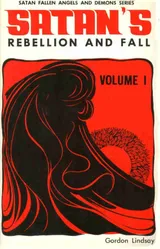
Satan's Rebellion And Fall

The Prophesied End-Time
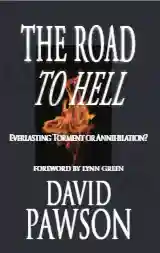
The Road To Hell
-160.webp)
Heaven Is For Real: A Little Boy's Astounding Story Of His Trip To Heaven And Back
-160.webp)
The Genesis 6 Conspiracy (How Secret Societies And The Descendants Of Giants Plan To Enslave Humankind)
I Walked In Heaven With Jesus
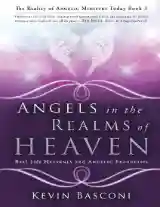
Angels In The Realms Of Heaven - The Reality Of Angelic Ministry Today
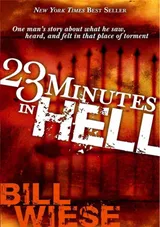
23 Minutes In Hell
About the Book
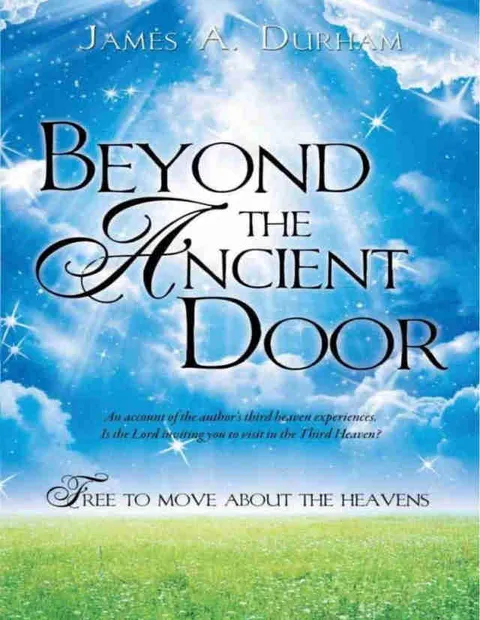
"Beyond the Ancient Door" by James A. Durham follows the story of a young boy named Samuel who discovers a mysterious portal in his grandmother's attic that leads him to a hidden world filled with magic and danger. As Samuel navigates this new realm, he learns about his true origins and must confront dark forces threatening both his world and the one beyond the ancient door. The novel is a captivating blend of fantasy, adventure, and self-discovery.
Calvin Miller
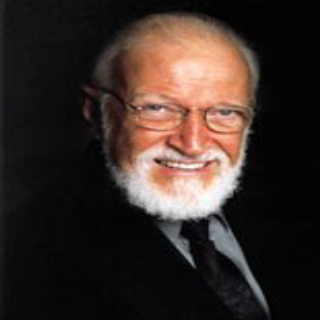 Calvin Miller was a pastor, professor and storyteller, best known for The Singer Trilogy, a mythic retelling of the New Testament story in the spirit of C. S. Lewis and J. R. R. Tolkien. Miller passed away on the afternoon of August 19, 2012, due to complications after heart surgery. He was 75.
A prolific artist and a writer's writer, Miller garnered respect and praise throughout his career from peers like Luci Shaw, Max Lucado and Philip Yancey. He was the author of more than forty books of popular theology and Christian inspiration including such recent books as Letters to Heaven, The Path of Celtic Prayer, Letters to a Young Pastor and his memoir Life Is Mostly Edges.
In addition to his twenty years of pastoral service at Westside Church in Omaha, Nebraska, Miller was also a great mentor to many students and leaders through his preaching and pastoral ministry classes at Beeson Divinity School. Calvin Miller, never one to multiply words, used just four to describe his rule of life: "Time is a gift."
RESCUE FROM THE SLUSH PILE
In October 1973 one important book was rescued from the slush pile (the stack of unsolicited manuscripts every publisher receives) by assistant editor Don Smith. He read a manuscript by a little-known Baptist pastor in Nebraska that was a poetic retelling of the life of Jesus—portraying him as a Troubadour. Both he and Linda Doll excitedly encouraged Jim Sire to take this imaginative manuscript seriously. In February 1974 Sire wrote the author, Calvin Miller, that IVP wanted to publish his book The Singer.
Months before, Miller had been waking up nights, stirred to write this tale, perhaps unconsciously inspired by the recent Broadway hits Jesus Christ Superstar and Godspell. Later Miller wrote:
When the manuscript was done, I sent it to Jim Sire at InterVarsity Press. “It’s good,” he said, “but we want to think about it a couple of weeks before we give you an answer.” So I waited until finally the letter came. They were going to do it. Jim Sire had done his Ph.D. on John Milton, and the fact that he liked it was joy immeasurable to me. “But,” he cautioned, “we’re going to print five thousand of these. They may not do well—in fact we may end up with four thousand of them on skids in our basement for the next ten years. Still, it’s a good book and deserves to be in print.”
Far more than a thousand copies sold. Actually, over three hundred times that amount sold in its first decade. It became “the most successful evangelical publication in this genre.” The Singer was followed in two years by The Song (paralleling the story of the early church in Acts) and two years after that by The Finale (inspired by the book of Revelation). Publication of The Singer changed Miller’s life. Even though he stayed in the pastorate for many years, it set him on a course of writing and speaking that he could not have imagined.
Calvin Miller was a pastor, professor and storyteller, best known for The Singer Trilogy, a mythic retelling of the New Testament story in the spirit of C. S. Lewis and J. R. R. Tolkien. Miller passed away on the afternoon of August 19, 2012, due to complications after heart surgery. He was 75.
A prolific artist and a writer's writer, Miller garnered respect and praise throughout his career from peers like Luci Shaw, Max Lucado and Philip Yancey. He was the author of more than forty books of popular theology and Christian inspiration including such recent books as Letters to Heaven, The Path of Celtic Prayer, Letters to a Young Pastor and his memoir Life Is Mostly Edges.
In addition to his twenty years of pastoral service at Westside Church in Omaha, Nebraska, Miller was also a great mentor to many students and leaders through his preaching and pastoral ministry classes at Beeson Divinity School. Calvin Miller, never one to multiply words, used just four to describe his rule of life: "Time is a gift."
RESCUE FROM THE SLUSH PILE
In October 1973 one important book was rescued from the slush pile (the stack of unsolicited manuscripts every publisher receives) by assistant editor Don Smith. He read a manuscript by a little-known Baptist pastor in Nebraska that was a poetic retelling of the life of Jesus—portraying him as a Troubadour. Both he and Linda Doll excitedly encouraged Jim Sire to take this imaginative manuscript seriously. In February 1974 Sire wrote the author, Calvin Miller, that IVP wanted to publish his book The Singer.
Months before, Miller had been waking up nights, stirred to write this tale, perhaps unconsciously inspired by the recent Broadway hits Jesus Christ Superstar and Godspell. Later Miller wrote:
When the manuscript was done, I sent it to Jim Sire at InterVarsity Press. “It’s good,” he said, “but we want to think about it a couple of weeks before we give you an answer.” So I waited until finally the letter came. They were going to do it. Jim Sire had done his Ph.D. on John Milton, and the fact that he liked it was joy immeasurable to me. “But,” he cautioned, “we’re going to print five thousand of these. They may not do well—in fact we may end up with four thousand of them on skids in our basement for the next ten years. Still, it’s a good book and deserves to be in print.”
Far more than a thousand copies sold. Actually, over three hundred times that amount sold in its first decade. It became “the most successful evangelical publication in this genre.” The Singer was followed in two years by The Song (paralleling the story of the early church in Acts) and two years after that by The Finale (inspired by the book of Revelation). Publication of The Singer changed Miller’s life. Even though he stayed in the pastorate for many years, it set him on a course of writing and speaking that he could not have imagined.
But Have You Prayed
What hasn’t yet changed in your life because you haven’t started praying for it? Prayerlessness, of course, comes in varieties. Some almost never pray, proving that prayer is nothing more than a formality, a greeting card to God when they have time. Others only pray when they have some desperate and immediate need, treating prayer like a crisis-response line (and largely neglecting prayer otherwise). Others may pray regularly, but their prayers slowly devolve into repeated phrases that taste stale, impersonal, removed from real life. Even the best among us can sometimes swing between treasuring prayer when we think we really need it and skipping prayer when life seems to be going well. Prayer, however, is not a last resort, but a first line of defense, because God is not a last resort, but the one to whom we look first. Prayer is powerful because God is the most powerful agent of change in any of our lives. Oh, what peace we often forfeit Oh, what needless pain we bear All because we do not carry Everything to God in prayer. Jesus confronted the threat of prayerlessness in his disciples, and in a way that should land with gravity and hope in the midst of our own trials and burdens. Desperate Situation In Mark 9, a man had come, bearing his self-destructive, demon-oppressed son, searching desperately for Jesus — for healing. “Teacher, I brought my son to you,” the father says, “for he has a spirit that makes him mute. And whenever it seizes him, it throws him down, and he foams and grinds his teeth and becomes rigid” (Mark 9:17–18). Parents of young children can at least begin to imagine how excruciating and debilitating this suffering was. Is there anything this father would not do to see his son whole again? “What hasn’t yet changed in your life because you haven’t yet prayed for it?” By the time Jesus arrives on the scene, his disciples have been attempting to drive out the demon. But they were not able (Mark 9:18), even though they had been given authority over unclean spirits (Mark 6:7). And as they struggled over the helpless boy, the religious leaders emerge with crowds to argue with them (Mark 9:14), surely making the situation all the more stressful and tragic. Nothing but Prayer Jesus asks his father, “How long has this been happening to him?” “From childhood” (Mark 9:21). Not just for several weeks or months, but over years, potentially decades. “And it has often cast him into fire and into water, to destroy him. But if you can do anything, have compassion on us and help us” (Mark 9:22). Jesus, of course, can do anything, literally anything. “‘If you can’! All things are possible for one who believes,” he replies (Mark 9:23). “I believe,” the father famously responds, “help my unbelief!” (Mark 9:24). So, Jesus heals the boy: “You mute and deaf spirit, I command you, come out of him and never enter him again” (Mark 9:25). The same spirit that evaded and overpowered the disciples surrenders immediately (and violently) (Mark 9:26), and at just the sound of his voice. When he is alone with his disciples, who are feeling confused and defeated by their failures, they ask him, “Why could we not cast it out?” (Mark 9:28). A penetrating and ageless question. “This kind,” Jesus says, “cannot be driven out by anything but prayer” (Mark 9:29). Maybe they didn’t pray at all, or maybe they prayed very little, or maybe they prayed formal, empty, heartless prayers, but either way Jesus says prayer — actually asking God — is what was missing. He could have said, This kind cannot be driven out by anyone but me, but instead he said, “This kind cannot be driven out by anything but prayer.” And as surprised as we might be that the disciples didn’t think to pray (or pray more), how often might Jesus say the same to us? What Kept Them from Praying? So, why didn’t the disciples pray? Why didn’t they ask God to help, to intervene, to do what was beyond the disciples’ own ability? We don’t know for sure, but the scene gives us a surprising number of potential reasons, many which might feel surprisingly relevant (and sobering) for own our prayer lives. DISTRACTED BY NOISE “How often have we given up praying because too many days or months or years have passed?” First, a great crowd had gathered to watch (and interfere with) their ministry (Mark 9:14). They weren’t doing spiritual warfare in the privacy of a home. The painful scene had become a stage, and the more the disciples failed and the longer the boy suffered, the more people came to watch. How many of us, with so many curious and suspicious eyes trained on us, would be courageous enough to stop and look toward heaven and pray? Or, how often does the sound of the crowds around us (constantly clawing at our attention through our devices), keep us from hearing Jesus say, “Ask, and it will be given to you; seek, and you will find; knock, and it will be opened to you” (Matthew 7:7)? Distractions, which come in many kinds and ways, often keep us from praying. DOUBTED BY MAN Not all had come simply to watch, though. Religious experts joined the crowd, arguing with the disciples and saying it couldn’t be done (Mark 9:14, 16). The spiritual enemy was obvious, but they had human enemies, as well — doubters, detractors, scoffers. They’re not waiting, like the rest of the crowd, for the disciples to heal the boy; they want nothing more than for followers of Jesus to fail (Mark 11:18). We may not face the same immediate opposition (though many Christians do), but wherever we are in the world, many want our prayers to fail — to prove that Jesus was just a man, the Bible just a book, and our prayers just wishful thinking. We know that faithfulness to Christ will cost us favor and approval from the world, and so the fear of man often keeps us from praying. DEFIED BY SATAN But the scribes were nothing compared with their unseen enemies. The disciples were dealing with an actual demon oppression — a real, destructive, spiritual enemy. A spiritual enemy strong enough to hurl the boy into fire and water, “to destroy him” (Mark 9:22). Maybe worst of all, he made the boy mute (Mark 9:17), unable to cry for help or even explain what was happening to him. What would you do while you watched him being torn apart? Even if we are not experiencing this kind of manifest demonic opposition, we do wrestle, every day, “against the spiritual forces of evil” (Ephesians 6:12). We pray into a downpour of fiery hostility. How often does Satan keep us from praying, doing all he can to keep us from our knees? DISCOURAGED BY INEFFECTIVENESS Though the disciples tried, really tried, to heal the boy, nothing changed. We don’t know what they tried, but we know that they tried (Mark 9:18) and that they had tried everything they knew to do (Mark 9:28). When Jesus says, “This kind cannot be driven out by anything but prayer,” he hints at all their failed attempts. And the boy still writhed and foamed and groaned on the ground — like he had for so long. A sense of futility surely began to set in. They had healed many before, but this spirit wouldn’t surrender. Maybe no one can heal this boy. How often have we given up praying because the outcome seems decided, because too many days or months or years have passed? Discouragement over unanswered prayer often keeps us from praying. Jesus Really Prayed Many barriers keep us from praying, but nothing kept Jesus from asking his Father, because Jesus knew that nothing was more vital and powerful than prayer. And he knew nothing was more vital and powerful than prayer because no one was more vital and powerful than his Father. “Some things will not change unless we humble ourselves, kneel, and plead with our Father in heaven.” When Jesus says, “This kind cannot be driven out by anything but prayer,” he knew so from personal and persistent experience. He was tempted in every way as we are, but without ever indulging in prayerlessness. We know how dependent he was on God — rising early in the morning (Mark 1:35), getting alone with his Father (Mark 6:46), and pouring out his heart (Mark 14:35). And we know he did this regularly (Luke 5:16). He was not distracted by the crowds or undone by the fear of man. He was not intimidated by demonic warfare or discouraged by God’s timing. He knew the soul-sustaining, demon-defeating, mountain-moving power of prayer — and he wanted us to know it too. Some oppression will not lift without prayer. Some wounds will not heal without prayer. Some trials will not end without prayer. Some sins will not die without prayer. Some relationships will not mend without prayer. Some things will not change, things we desperately want to change, unless we consistently and persistently humble ourselves, kneel, and plead with our Father in heaven. The all-wise, all-loving, all-powerful God has chosen to do much in the world through our prayers, because prayer is part of his precious relationship with his children and exalts him as the listening and answering God. So, what hasn’t yet changed in your life because you haven’t yet prayed?