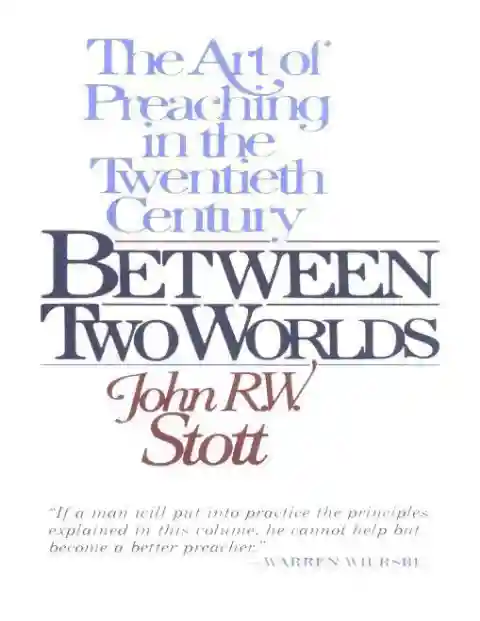

Others like between two worlds Features >>
Reading The Word Of God In The Presence Of God: A Handbook For Biblical Interpretation
Five Views On Law And Gospel
The Seven Feasts Of Israel
Understanding The Fivefold Ministry

Basic Christian Doctrines
A Testimony Of Jesus Christ: A Commentary On The Book Of Revelation, Vol. 1
Christ In His Sanctuary
Romans Commentary

Mere Christianity
Knowing God
About the Book
"Between Two Worlds" by John Stott explores the role of preaching in the modern world. Stott emphasizes the importance of clear, biblically grounded preaching that engages both the message of the Bible and the cultural context of the audience. The book offers practical insights and guidance for preachers seeking to effectively communicate the timeless truths of Scripture in a relevant and impactful way.
Aimee Semple McPherson
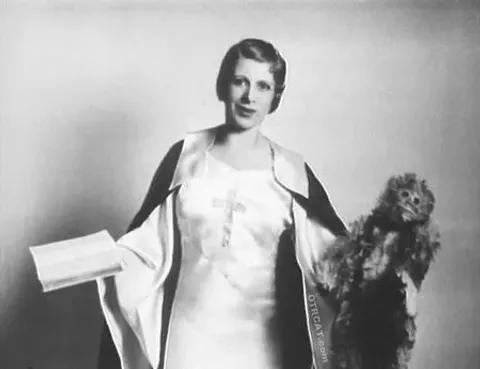 Aimee Semple McPherson was born on Oct. 9, 1890, on a farm in Salford Ontario, Canada. Her father, James Kennedy, was a farmer and came from a Methodist background. Her mother, Mildred, known as “Millie,” came from a Salvation Army background.
Although she was raised in a Christian home, she began to question the Bible during her teen years.
When she was 17, she attended a revival Pentecostal meeting presented by evangelist Robert Semple, where she heard the message of repentance. He also spoke of baptism in the Holy Spirit, an experience for which she hungered. After receiving the infilling of the Holy Spirit, she also was filled with a great love and compassion for souls and a fervent passion to serve the Lord throughout her whole life.
The meeting Aimee attended changed her life not only spiritually but also romantically. The evangelist Robert Semple later become Aimee’s husband. They were married when she was 18. Their ministry desires were compatible. After their ministry trips in Chicago and the Ingersoll area, they headed to China as missionaries.
In 1910 while in China, Robert and Aimee contracted Malaria within months of arriving in Hong Kong. Robert didn’t survive, leaving Aimee pregnant and a widow at 19. When her daughter, Roberta Star, was a month old, Aimee returned to United States to raise her. Aimee and Roberta lived in New York with Aimee’s mother.
She assisted her mother raising money for the Salvation Army. It was there she met and married a Christian businessman named Harold McPherson. They had a son, Rolf Kennedy McPherson. After a decline in health, two major surgeries and a near-death experience, God asked her one last time, “Now, will you go?” She answered yes to God’s call and almost immediately was healed. She never again questioned the call to preach the gospel.
Aimee is known for founding the Foursquare Gospel Church in 1918. She also was a woman ahead of her time, possessing boldness in her speaking ability and creative ways to communicate the gospel.
The name Foursquare Gospel originated from the Book of Ezekiel. It represents the four phases of the gospel of Jesus Christ. In the face of the Man, she saw Jesus our Saviour. In the face of the lion, she saw Jesus the mighty Baptiser with the Holy Spirit and fire. In the face of the ox, she saw Jesus the Great Burden Bearer. In the face of an eagle, she saw Jesus the coming King, who will return in power and glory. It was, in Aimee’s opinion, “a perfect gospel. A complete gospel for body, for spirit and for eternity.”
Her ministry was dynamic. She witnessed thousands saved and healed during her evangelistic meetings. Being creative and theatrical, Aimee used drama, music and opera to appeal to the audience. Bands, choirs and other crowd-pleasing touches enhanced her dynamic preaching. Though she was well-versed in the Bible, Aimee’s success wasn’t based on her knowledge, but rather the delivery of her messages.
She also was known as a faith healer, with claims of physical healing occurring during her meetings. Her faith healing demonstrations were written about extensively in the media, as they were a large focus of her early ministry. Aimee was an evangelistic pioneer, determined to spread the message of the Pentecostal faith, and used her fervour and flamboyance to win a huge following.
She had achieved what no one had yet done in ministry, which was to build a 5,000-seat auditorium in an influential area of Los Angeles. This paved the way for other female evangelists during a time when women were not accepted in the pulpit. She also launched the first Christian radio station and established a Bible college. By 1917, she had started her own magazine The Bridal Call, for which she wrote many articles about women’s roles in religion; she portrayed the link between Christians and Jesus as a marriage bond.
Jan. 1, 1923, the new Angelus Temple was opened in a flamboyant style. Aimee was seated on a red velvet throne dressed in a nurse’s uniform and cape. Accompanying her were 200 singers, three bands, two orchestras and six quartets. The Angelus Temple was featured on a float in Pasadena’s Tournament of Roses parade, while the extravagant dedication service was given full coverage in The New York Times. What became the home of The Church of the Foursquare Gospel filled four times each Sunday and twice weekly. Aimee also ministered at highly sought-after healing services during the week.
Reporters marveled at her oral skills, saying, “Never did I hear such language from a human being. Without one moment’s intermission, she would talk from an hour to an hour and a half, holding her audience spellbound.” Rather than using fire-and-brimstone preaching, Aimee resorted to a style of joyous celebration, representing the loving face of God.
She also brought old-time religion into the modern age, using illustrated sermons to help people understand the gospel better. Also, stage productions were incorporated, drawing people who usual didn’t attend church. In an era prior to television, these services proved entertaining, and she used this method to present the message of salvation through faith in Jesus.
Aimee welcomed all walks of life. She preached to the high class of society, as well as the poor and disadvantaged. She treated everyone equally regardless of race, gender or status.
In the 1920s, Aimee became a well-known voice among civic leaders, politicians, actors and actresses, and pastors from various denominations. Her sermons were reprinted in hundreds of newspapers in Canada, the United States and Mexico and were read by millions. In 1927, she opened a commissary to feed the marginalized and supply them with clothing and other necessities. Aimee set up a 24/7 soup kitchen at her temple in 1936 to help families through the Great Depression .She also became involved with war bond rallies and linked religion to patriotism in her sermons when America joined the Second World War in 1941.
Aimee’s legacy is threefold. Using the dramatic arts to reach the lost (an innovative tool) and the latest technology to spread the gospel. She reached out to the poor, helping thousands in the Los Angeles area who were starving. She taught a full-gospel message and regularly saw thousands of healings and miracles in her meetings.
Aimee passed away due to an accidental overdose in 1944 and was buried in Forest Lawn Memorial Park Cemetery in California. Her son, Rolf, has kept her memory and ministry alive by carrying the ministry for 40 four years. The Foursquare church is still standing strong with 8 million members worldwide.
Aimee Semple McPherson was born on Oct. 9, 1890, on a farm in Salford Ontario, Canada. Her father, James Kennedy, was a farmer and came from a Methodist background. Her mother, Mildred, known as “Millie,” came from a Salvation Army background.
Although she was raised in a Christian home, she began to question the Bible during her teen years.
When she was 17, she attended a revival Pentecostal meeting presented by evangelist Robert Semple, where she heard the message of repentance. He also spoke of baptism in the Holy Spirit, an experience for which she hungered. After receiving the infilling of the Holy Spirit, she also was filled with a great love and compassion for souls and a fervent passion to serve the Lord throughout her whole life.
The meeting Aimee attended changed her life not only spiritually but also romantically. The evangelist Robert Semple later become Aimee’s husband. They were married when she was 18. Their ministry desires were compatible. After their ministry trips in Chicago and the Ingersoll area, they headed to China as missionaries.
In 1910 while in China, Robert and Aimee contracted Malaria within months of arriving in Hong Kong. Robert didn’t survive, leaving Aimee pregnant and a widow at 19. When her daughter, Roberta Star, was a month old, Aimee returned to United States to raise her. Aimee and Roberta lived in New York with Aimee’s mother.
She assisted her mother raising money for the Salvation Army. It was there she met and married a Christian businessman named Harold McPherson. They had a son, Rolf Kennedy McPherson. After a decline in health, two major surgeries and a near-death experience, God asked her one last time, “Now, will you go?” She answered yes to God’s call and almost immediately was healed. She never again questioned the call to preach the gospel.
Aimee is known for founding the Foursquare Gospel Church in 1918. She also was a woman ahead of her time, possessing boldness in her speaking ability and creative ways to communicate the gospel.
The name Foursquare Gospel originated from the Book of Ezekiel. It represents the four phases of the gospel of Jesus Christ. In the face of the Man, she saw Jesus our Saviour. In the face of the lion, she saw Jesus the mighty Baptiser with the Holy Spirit and fire. In the face of the ox, she saw Jesus the Great Burden Bearer. In the face of an eagle, she saw Jesus the coming King, who will return in power and glory. It was, in Aimee’s opinion, “a perfect gospel. A complete gospel for body, for spirit and for eternity.”
Her ministry was dynamic. She witnessed thousands saved and healed during her evangelistic meetings. Being creative and theatrical, Aimee used drama, music and opera to appeal to the audience. Bands, choirs and other crowd-pleasing touches enhanced her dynamic preaching. Though she was well-versed in the Bible, Aimee’s success wasn’t based on her knowledge, but rather the delivery of her messages.
She also was known as a faith healer, with claims of physical healing occurring during her meetings. Her faith healing demonstrations were written about extensively in the media, as they were a large focus of her early ministry. Aimee was an evangelistic pioneer, determined to spread the message of the Pentecostal faith, and used her fervour and flamboyance to win a huge following.
She had achieved what no one had yet done in ministry, which was to build a 5,000-seat auditorium in an influential area of Los Angeles. This paved the way for other female evangelists during a time when women were not accepted in the pulpit. She also launched the first Christian radio station and established a Bible college. By 1917, she had started her own magazine The Bridal Call, for which she wrote many articles about women’s roles in religion; she portrayed the link between Christians and Jesus as a marriage bond.
Jan. 1, 1923, the new Angelus Temple was opened in a flamboyant style. Aimee was seated on a red velvet throne dressed in a nurse’s uniform and cape. Accompanying her were 200 singers, three bands, two orchestras and six quartets. The Angelus Temple was featured on a float in Pasadena’s Tournament of Roses parade, while the extravagant dedication service was given full coverage in The New York Times. What became the home of The Church of the Foursquare Gospel filled four times each Sunday and twice weekly. Aimee also ministered at highly sought-after healing services during the week.
Reporters marveled at her oral skills, saying, “Never did I hear such language from a human being. Without one moment’s intermission, she would talk from an hour to an hour and a half, holding her audience spellbound.” Rather than using fire-and-brimstone preaching, Aimee resorted to a style of joyous celebration, representing the loving face of God.
She also brought old-time religion into the modern age, using illustrated sermons to help people understand the gospel better. Also, stage productions were incorporated, drawing people who usual didn’t attend church. In an era prior to television, these services proved entertaining, and she used this method to present the message of salvation through faith in Jesus.
Aimee welcomed all walks of life. She preached to the high class of society, as well as the poor and disadvantaged. She treated everyone equally regardless of race, gender or status.
In the 1920s, Aimee became a well-known voice among civic leaders, politicians, actors and actresses, and pastors from various denominations. Her sermons were reprinted in hundreds of newspapers in Canada, the United States and Mexico and were read by millions. In 1927, she opened a commissary to feed the marginalized and supply them with clothing and other necessities. Aimee set up a 24/7 soup kitchen at her temple in 1936 to help families through the Great Depression .She also became involved with war bond rallies and linked religion to patriotism in her sermons when America joined the Second World War in 1941.
Aimee’s legacy is threefold. Using the dramatic arts to reach the lost (an innovative tool) and the latest technology to spread the gospel. She reached out to the poor, helping thousands in the Los Angeles area who were starving. She taught a full-gospel message and regularly saw thousands of healings and miracles in her meetings.
Aimee passed away due to an accidental overdose in 1944 and was buried in Forest Lawn Memorial Park Cemetery in California. Her son, Rolf, has kept her memory and ministry alive by carrying the ministry for 40 four years. The Foursquare church is still standing strong with 8 million members worldwide.
When Our Waiting Will Be Over
My favorite songs are ones that make my heart burn with longing. They’re songs that have unusual power to, as C.S. Lewis put it, rip open my “inconsolable secret” — the secret “which pierces with such sweetness,” yet is so hard to capture in words, since “it is a desire for something that has never actually appeared in our experience” (The Weight of Glory, 29–30). Which is why among my favorites is a song written by Bob and Jordan Kauflin, “When We See Your Face.” The song taps into subterranean longings and triggers profound emotions in me. I am not one to cry easily, but I rarely can listen to it without tears. So, I usually listen to it alone, sparing others the awkwardness of a weeping middle-aged man. Lest it appear suspicious to anyone, let me say up front that I was not asked to promote this song. I asked permission to write about it, receiving no benefit beyond what the song itself delivers — which is a benefit more precious than gold. For my soul very much needs this song’s reminder, especially as another year passes and I am another year older, still fighting against the relentless darkness, still waiting, still desiring something that has never actually appeared in my experience. Not yet. It remains a desire for a promised appearing — an appearing I’m growing to increasingly love (2 Timothy 4:8). I share this song because I assume you also need its precious reminder. And perhaps it will tap into your piercing, sweet, inconsolable secret too. Though the Dark Is Overwhelming Though the dark is overwhelming And the brightest lights grow dim Though the Word of God Is trampled on by foolish men Though the wicked never stumble And abound in every place We will all be humbled when we see Your face It doesn’t take reaching our middle or elder years to know just how dark the world can be. But I can attest now to a cumulative effect it has upon the soul the longer one lives here. And I do not claim to have suffered greatly — yet. Prolonged exposure to confounding darkness is a wearisome experience (Psalm 73:16). It is not merely the physical effects of aging that tempt many of us to retreat from action as we enter the older demographic columns. It’s also the spiritual and psychological effects of prolonged dealing with evil that infects and harms our families, friendships, churches, vocations, societies, and nations. We probably thought ourselves more a match for it in the optimistic bloom of youth, but experience put us in our place. The evil is beyond our strength and our comprehension. Hope can take a beating in the relentless battle against darkness. Until we remember. Until we remember that one day all oppressive darkness will be banished from the experience of the saints (Revelation 22:5), and that even now, even as the darkness rages (Revelation 12:12), it is passing away as the true light shines (1 John 2:8). We remember that we were never supposed to know and understand the evil we face (Genesis 3:7) — of course it’s a wearisome task! Only the Omniscient and Omnipotent can comprehend it and not grow weary (Isaiah 40:28). We remember that he promised us, “In the world you will have tribulation. But take heart; I have overcome the world” (John 16:33). We remember that our great task, the one way we truly conquer darkness, is to trust him (Proverbs 3:5–6) and obey him (John 14:15). And the great day that will end all night — the day of the joyful humbling of the redeemed righteous and the horrible humbling of the condemned wicked (Philippians 2:10–11) — will be inaugurated when we see the face of Jesus (1 Corinthians 13:12). All Our Sins Will Be Behind Us And the demons we’ve been fighting Those without and those within Will be underneath our feet To never rise again All our sins will be behind us Through the blood of Christ erased And we’ll taste Your kindness when we see Your face I’m so sick of Satan and his wretched wraiths that I don’t even want to give them the attention of a mention — except to say that one day (hear this, you horrid hoard!), the almighty foot of the Son of Man will come down once for all upon the heads of the great dragon and all his infernal snakes, and we will wrestle them no more (Ephesians 6:12; Revelation 20:10). But we also remember something far, far sweeter — and growing sweeter every year we grow older and come more to terms with just how intractable and entwined our demon-like indwelling sin is in the very members of our bodies (Romans 7:23). We remember that our sin will someday be behind us. Oh, we know that Jesus has paid our ransom in full (1 Timothy 2:6) and that by God’s grace through faith (Ephesians 2:8) we have been clothed in Christ’s righteousness (Philippians 3:9), so that God even now sees us justified, as if we had never sinned and always obeyed (Romans 3:26). It is, for now, an almost incomprehensibly glorious thing. But one day, our blood-bought innocence, our holy purity, will cease to be primarily a forensic reality we embrace by faith. On that day we will fully experience what it’s like to be righteous in every atom of our resurrected bodies and every dimension of our eternal, immaterial souls. We will have no more sin. No more tainted motives, no more illicit desires, no more damned selfish ambition. We will know in every part of our being what it’s like to fully obey the Great Commandment as if it’s the most natural thing in the world — for it will be! And we will worship the Lamb who was slain for us with unclouded minds and hearts bursting with joy. We will taste this unfathomably gracious kindness of Jesus when we see his face. All the Waiting Will Be Over All the waiting will be over Every sorrow will be healed All the dreams it seemed Could never be will all be real And You’ll gather us together In Your arms of endless grace As Your Bride forever when we see Your face The waiting will be over. I can’t write that sentence with dry eyes. Most of our Christian experience in this dark valley is hopeful waiting for what we so long to see (Romans 8:25). And much of that waiting is accompanied by hopeful groaning (Romans 8:20): groaning in illness, groaning in grief, groaning in disappointment and perplexity over the terrible, violent brokenness of the world and the inscrutable purposes of our only wise God (Romans 16:27), whose ways are not our ways (Isaiah 55:8). And we hopefully groan, like a bride, with longing for the consummate intimacy of knowing the Lover of our souls, even as we have been fully known (1 Corinthians 13:12). But one day — our Groom has promised it will be “soon” (Revelation 22:20) — the waiting will be over. And he will come, our Hero, of which all legendary heroes are but copies and shadows, and he will save us to the uttermost (Isaiah 35:4; Hebrews 7:25). And all that is dark and diseased and damaged and destroyed will pass away like a bad dream and become the shadows of the great yesterday (Psalm 90:4–5), serving only to heighten our savoring of the bright, eternal today (Revelation 22:5). And of all the light in which we delight, the fairest will be his face. We’ll Be Yours Forevermore We will see, we will know Like we’ve never known before We’ll be found, we’ll be home We’ll be Yours forevermore Having once been lost, we will fully know just how found we are (Luke 19:10). Having once known our Savior in such a small part, we will fully know him — as much as the finite can fully know the Infinite (1 Corinthians 13:12). We will be fully his and fully home — forever. Home. That is our inconsolable secret, isn’t it? That piercing sweetness, that desire for what has never actually appeared in our experience, yet somehow we know it is where we truly belong. I think that’s what this song taps into: our homesickness for a place we’ve not been, and a sense of alienation in the very places we were born. We don’t belong here, where it’s dark, depraved, and demonic, and where our sweetest experience is the blessed hope we taste in the future promises we trust. We long for home. For home is where we will meet the One we have loved, though we have not seen him (1 Peter 1:8). Home is where we will see his face. Article by Jon Bloom