





About the Book
"And Jesus Healed Them All" by Gloria Copeland explores the healing power of Jesus as described in the Bible. The book delves into the stories of various individuals who were healed by Jesus, emphasizing the importance of faith and belief in receiving healing miracles. Copeland also offers practical guidance on how readers can experience healing in their own lives through prayer and faith in God.
David Brainerd
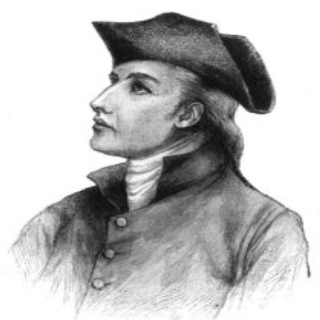 Born to a farming family in Haddam, Connecticut, Brainerd soon turned his aspirations to the clergy and a life of study. The early death of his parents, combined with a naturally melancholy personality, caused him to be morose and to fixate on the brevity of life, so that his religious life was characterized by prolonged depressions punctuated by ecstatic experiences of God. He began to study for the ministry at Yale College in 1739. During his first year he showed signs of the tuberculosis that was to end his life prematurely. During the following year, the New Light preaching of George Whitefield and other itinerants such as Gilbert Tennent and James Davenport gained many adherents at the college, including Brainerd, and he became involved in a separate church founded by students. In November 1741 he was reported as saying that one of the local ministers who was a college tutor had “no more grace than a chair.” Determined to snuff out the New Light among the students, the Yale Corporation, led by its rector, Thomas Clap, expelled Brainerd for refusing to make a public confession.
Officially barred from the ministry, Brainerd nonetheless became an itinerant preacher, filling pulpits of New Light sympathizers throughout New England and New York. In the process he gained the admiration of many clergymen, including Jonathan Dickinson, a Presbyterian minister of New Jersey and commissioner of the Society in Scotland for Propagating Christian Knowledge. Dickinson in 1742 first proposed that Brainerd become a missionary. To prepare himself, in 1743 Brainerd went to work with John Sargeant, missionary to the Stockbridge Indians. He was ordained by the Presbytery of New York in 1744. From 1743 to 1747 he ministered to the Indians in western Massachusetts, eastern New York, the Lehigh region of Pennsylvania, and central New Jersey. At the New Jersey Bethel mission (near Cranbury), he achieved his most notable successes. Out of his experiences here came the publication of two installments of his journals that described both the revivals among the Delaware Indians and his own spiritual turmoil and exultation.
Brainerd preaching to the Indians for all of his zeal, however, Brainerd’s constitution could not stand up to the hardships of wilderness living. In April 1747, seriously weakened by tuberculosis, he left New Jersey for the home of his friend Jonathan Edwards in Northampton, Massachusetts, where he died in October.
In 1749 Edwards published An Account of the Life of the Late Reverend Mr. David Brainerd, drawn from Brainerd’s extensive diaries and supplemented by Edwards’s own commentary. Edwards sought to portray Brainerd as a model of Christian saintliness who manifested his faith in good works and self-sacrifice, expurgating many passages that recorded Brainerd’s depressions and enthusiasms. Over the centuries, this work has achieved international fame, has gone through countless printings, and has inspired many missionaries in pursuing their call.
Minkema, Kenneth P., “Brainerd, David,” in Biographical Dictionary of Christian Missions, ed. Gerald H. Anderson (New York: Macmillan Reference USA, 1998), 84-5.
This article is reprinted from Biographical Dictionary of Christian Missions, Macmillan Reference USA, copyright © 1998 Gerald H. Anderson, by permission of Macmillan Reference USA, New York, NY. All rights reserved.
Born to a farming family in Haddam, Connecticut, Brainerd soon turned his aspirations to the clergy and a life of study. The early death of his parents, combined with a naturally melancholy personality, caused him to be morose and to fixate on the brevity of life, so that his religious life was characterized by prolonged depressions punctuated by ecstatic experiences of God. He began to study for the ministry at Yale College in 1739. During his first year he showed signs of the tuberculosis that was to end his life prematurely. During the following year, the New Light preaching of George Whitefield and other itinerants such as Gilbert Tennent and James Davenport gained many adherents at the college, including Brainerd, and he became involved in a separate church founded by students. In November 1741 he was reported as saying that one of the local ministers who was a college tutor had “no more grace than a chair.” Determined to snuff out the New Light among the students, the Yale Corporation, led by its rector, Thomas Clap, expelled Brainerd for refusing to make a public confession.
Officially barred from the ministry, Brainerd nonetheless became an itinerant preacher, filling pulpits of New Light sympathizers throughout New England and New York. In the process he gained the admiration of many clergymen, including Jonathan Dickinson, a Presbyterian minister of New Jersey and commissioner of the Society in Scotland for Propagating Christian Knowledge. Dickinson in 1742 first proposed that Brainerd become a missionary. To prepare himself, in 1743 Brainerd went to work with John Sargeant, missionary to the Stockbridge Indians. He was ordained by the Presbytery of New York in 1744. From 1743 to 1747 he ministered to the Indians in western Massachusetts, eastern New York, the Lehigh region of Pennsylvania, and central New Jersey. At the New Jersey Bethel mission (near Cranbury), he achieved his most notable successes. Out of his experiences here came the publication of two installments of his journals that described both the revivals among the Delaware Indians and his own spiritual turmoil and exultation.
Brainerd preaching to the Indians for all of his zeal, however, Brainerd’s constitution could not stand up to the hardships of wilderness living. In April 1747, seriously weakened by tuberculosis, he left New Jersey for the home of his friend Jonathan Edwards in Northampton, Massachusetts, where he died in October.
In 1749 Edwards published An Account of the Life of the Late Reverend Mr. David Brainerd, drawn from Brainerd’s extensive diaries and supplemented by Edwards’s own commentary. Edwards sought to portray Brainerd as a model of Christian saintliness who manifested his faith in good works and self-sacrifice, expurgating many passages that recorded Brainerd’s depressions and enthusiasms. Over the centuries, this work has achieved international fame, has gone through countless printings, and has inspired many missionaries in pursuing their call.
Minkema, Kenneth P., “Brainerd, David,” in Biographical Dictionary of Christian Missions, ed. Gerald H. Anderson (New York: Macmillan Reference USA, 1998), 84-5.
This article is reprinted from Biographical Dictionary of Christian Missions, Macmillan Reference USA, copyright © 1998 Gerald H. Anderson, by permission of Macmillan Reference USA, New York, NY. All rights reserved.
the majesty of god mastered him: john calvin
In 1538, the Italian Cardinal Sadolet wrote to the leaders of Geneva trying to win them back to the Roman Catholic Church after they had turned to the Reformed teachings. John Calvin’s response to Sadolet uncovers the root of Calvin’s quarrel with Rome that would determine his whole life. Here’s what Calvin wrote to the cardinal: “[Your] zeal for heavenly life [is] a zeal which keeps a man entirely devoted to himself, and does not, even by one expression, arouse him to sanctify the name of God ” ( John Calvin: Selections from His Writings , 89). The issue for Calvin was not, first, the well-known sticking points of the Reformation: justification, priestly abuses, transubstantiation, prayers to saints, and papal authority. All those would come in for discussion. But beneath all of them, the fundamental issue for Calvin, from the beginning to the end of his life, was the issue of the centrality and supremacy and majesty of the glory of God. Calvin goes on and says to Sadolet that what he should do — and what Calvin aims to do with all his life — is “set before [man], as the prime motive of his existence, zeal to illustrate the glory of God ” ( Selections , 89). This would be a fitting banner over all of John Calvin’s life and work — zeal to illustrate the glory of God . The essential meaning of Calvin’s life and preaching is that he recovered and embodied a passion for the absolute reality and majesty of God. Captive to Glory What happened to John Calvin to make him a man so mastered by the majesty of God? And what kind of ministry did this produce in his life? He was born July 10, 1509, in Noyon, France, when Martin Luther was 25 years old and had just begun to teach the Bible in Wittenberg. When he was 14, his father sent him to study theology at the University of Paris, which at that time was untouched by the Reformation and steeped in Medieval theology. But five years later (when Calvin was 19), his father ran afoul of the church and told his son to leave theology and study law, which he did for the next three years at Orleans and Bourges. His father died in May of 1531, when Calvin was 21. Calvin felt free then to turn from law to his first love, which had become the classics. He published his first book, a commentary on Seneca, in 1532, at the age of 23. But sometime during these years he was coming into contact with the message and the spirit of the Reformation, and by 1533 something dramatic had happened in his life. Calvin recounts, seven years later, how his conversion came about. He describes how he had been struggling to live out the Catholic faith with zeal when I at length perceived, as if light had broken in upon me, in what a sty of error I had wallowed, and how much pollution and impurity I had thereby contracted. Being exceedingly alarmed at the misery into which I had fallen . . . as in duty bound, [I] made it my first business to betake myself to thy way [O God], condemning my past life, not without groans and tears. God, by a sudden conversion, subdued and brought my mind to a teachable frame. . . . Having thus received some taste and knowledge of true godliness, I was immediately inflamed with [an] intense desire to make progress. ( Selections , 26) What was the foundation of Calvin’s faith that yielded a life devoted utterly to displaying the glory and majesty of God? The answer seems to be that Calvin suddenly, as he says, saw and tasted in Scripture the majesty of God. And in that moment, both God and the word of God were so powerfully and unquestionably authenticated to his soul that he became the loving servant of God and his word the rest of his life. Henceforth he would be a man utterly devoted to displaying the majesty of God by the exposition of the word of God. Compelled to Geneva What form would that ministry take? Calvin knew what he wanted. He wanted the enjoyment of literary ease so he could promote the Reformed faith as a literary scholar. That is what he thought he was cut out for by nature. But God had radically different plans. In 1536, Calvin left France, taking his brother Antoine and sister Marie with him. He intended to go to Strasbourg and devote himself to a life of peaceful literary production. But one night, as Calvin stayed in Geneva, William Farel, the fiery leader of the Reformation in that city, found out he was there and sought him out. It was a meeting that changed the course of history, not just for Geneva, but for the world. Calvin tells us what happened in his preface to his commentary on Psalms: Farel, who burned with an extraordinary zeal to advance the gospel, immediately learned that my heart was set upon devoting myself to private studies, for which I wished to keep myself free from other pursuits, and finding that he gained nothing by entreaties, he proceeded to utter an imprecation that God would curse my retirement, and the tranquillity of the studies which I sought, if I should withdraw and refuse to give assistance, when the necessity was so urgent. By this imprecation I was so stricken with terror, that I desisted from the journey which I had undertaken. ( Selections , 28) The course of his life was irrevocably changed. Not just geographically, but vocationally. Never again would Calvin work in what he called the “tranquillity of . . . studies.” From now on, every page of the 48 volumes of books and tracts and sermons and commentaries and letters that he wrote would be hammered out on the anvil of pastoral responsibility. Unrelenting Exposition Once in Geneva, what kind of ministry did his commitment to the majesty of God produce? Part of the answer is that it produced a ministry of incredible steadfastness — a ministry, to use Calvin’s own description of faithful ministers of the word, of “invincible constancy” ( Sermons from Job , 245). But that is only half the answer. The constancy had a focus: the unrelenting exposition of the word of God. Calvin had seen the majesty of God in the Scriptures. This persuaded him that the Scriptures were the very word of God. He said, “We owe to the Scripture the same reverence which we owe to God, because it has proceeded from Him alone, and has nothing of man mixed with it” ( John Calvin: A Collection of Distinguished Essays , 162). His own experience had taught him that “the highest proof of Scripture derives in general from the fact that God in person speaks in it” ( Institutes of the Christian Religion , 1.7.4). These truths led to an inevitable conclusion for Calvin. Since the Scriptures are the very voice of God, and since they are therefore self-authenticating in revealing the majesty of God, and since the majesty and glory of God are the reason for all existence, it follows that Calvin’s life would be marked by “invincible constancy” in the exposition of Scripture. He wrote tracts, he wrote the great Institutes , he wrote commentaries (on all the New Testament books except Revelation, plus the Pentateuch, Psalms, Isaiah, Jeremiah, and Joshua), he gave biblical lectures (many of which were published as virtual commentaries), and he preached ten sermons every two weeks. But all of it was exposition of Scripture. In his last will and testament, he said, “I have endeavored, both in my sermons and also in my writings and commentaries, to preach the Word purely and chastely, and faithfully to interpret His sacred Scriptures” ( Selections , 35). This was the ministry unleashed by seeing the majesty of God in Scripture. The Scriptures were absolutely central because they were absolutely the word of God and had as their self-authenticating theme the majesty and glory of God. But out of all these labors of exposition, preaching was supreme. God’s Voice in Every Verse Calvin’s preaching was of one kind from beginning to end: he preached steadily through book after book of the Bible. He never wavered from this approach to preaching for almost 25 years of ministry in St. Peter’s church of Geneva — with the exception of a few high festivals and special occasions. “On Sunday he took always the New Testament, except for a few Psalms on Sunday afternoons. During the week . . . it was always the Old Testament.” To give you some idea of the scope of Calvin’s pulpit, he began his series on the book of Acts on August 25, 1549, and ended it in March 1554. After Acts he went on to the Epistles to the Thessalonians (46 sermons), Corinthians (186 sermons), the Pastoral Epistles (86 sermons), Galatians (43 sermons), Ephesians (48 sermons) — until May 1558. Then there is a gap when he was ill. In the spring of 1559, he began the Harmony of the Gospels and was not finished when he died in May 1564. On the weekdays during that season he preached 159 sermons on Job, 200 on Deuteronomy, 353 on Isaiah, 123 on Genesis, and so on. One of the clearest illustrations that this was a self-conscious choice on Calvin’s part was the fact that on Easter Day, 1538, after preaching, he left the pulpit of St. Peter’s, banished by the City Council. He returned in September 1541, over three years later, and picked up the exposition in the next verse. Divine Majesty of the Word Why this remarkable commitment to the centrality of sequential expository preaching? Three reasons are just as valid today as they were in the sixteenth century. First, Calvin believed that the word of God was a lamp that had been taken away from the churches. He said in his own personal testimony, “Thy word, which ought to have shone on all thy people like a lamp, was taken away, or at least suppressed as to us.” Calvin reckoned that the continuous exposition of books of the Bible was the best way to overcome the “fearful abandonment of [God’s] Word” ( Selections , 115). Second, biographer T.H.L. Parker says that Calvin had a horror of those who preached their own ideas in the pulpit. He said, “When we enter the pulpit, it is not so that we may bring our own dreams and fancies with us” ( Portrait of Calvin , 83). He believed that by expounding the Scriptures as a whole, he would be forced to deal with all that God wanted to say, not just what he might want to say. Third, he believed with all his heart that the word of God was indeed the word of God , and that all of it was inspired and profitable and radiant with the light of the glory of God. In Sermon number 61 on Deuteronomy, he challenged pastors of his day and ours: Let the pastors boldly dare all things by the word of God . . . . Let them constrain all the power, glory, and excellence of the world to give place to and to obey the divine majesty of this word . Let them enjoin everyone by it, from the highest to the lowest. Let them edify the body of Christ. Let them devastate Satan’s reign. Let them pasture the sheep, kill the wolves, instruct and exhort the rebellious. Let them bind and loose thunder and lightning, if necessary, but let them do all according to the word of God . ( Sermons on the Epistle to the Ephesians , xii) The key phrase here is “the divine majesty of this word.” This was always the root issue for Calvin. How might he best show forth for all of Geneva and all of Europe and all of history the majesty of God? He answered with a life of continuous expository preaching. This is why preaching remains a central event in the life of the church five hundred years after Calvin. If God is the great, absolute, sovereign, mysterious, all-glorious God of majesty whom Calvin saw in Scripture, there will always be preaching, because the more this God is known and the more this God is central, the more we will feel that he must not just be analyzed and explained — he must be acclaimed and heralded and magnified with expository exultation.