
GIP Library icon

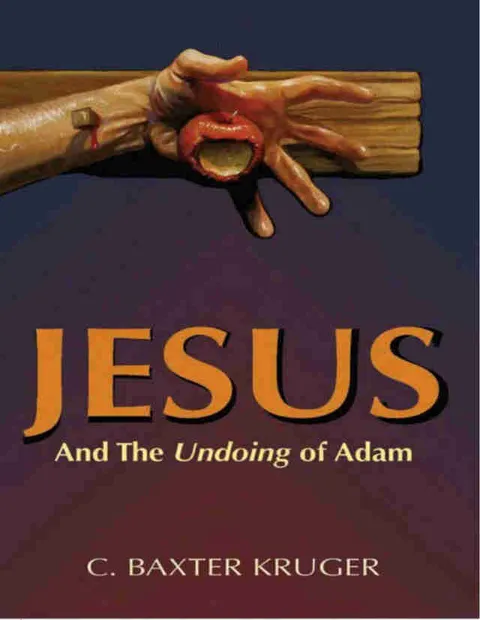
Jesus And The Undoing Of Adam Jesus And The Undoing Of Adam

Jesus And The Undoing Of Adam Order Printed Copy

  • Author: C. Baxter
  • Size: 517KB | 38 pages
  • |
Continue with
Google Twitter
LOG IN TO REVIEW
About the Book


"Jesus and the Undoing of Adam" by C. Baxter Kruger explores the relationship between Jesus and Adam, arguing that Jesus came to undo the effects of Adam's fall and restore humanity to its original design. Kruger delves into the theological implications of this belief and offers a fresh perspective on the significance of Jesus' life, death, and resurrection. The book is a thought-provoking look at the redemptive work of Jesus and its impact on humanity.

C.T. Studd

C.T. Studd “If Jesus Christ be God and died for me, then no sacrifice can be too great for me to make for Him.” - C.T. Studd Charles Thomas Studd ("C.T. Studd") was born in England in 1860, the son of wealthy Edward Studd, who had made a fortune in India. Charles Studd liked sports just like most young men. He had a passion for cricket because it was the most popular sport in England at the time. His older brother Kynaston Studd, was a member of the Cambridge cricket team and well known. C.T., however, wasn't a great athlete but determined to master the sport. He would practice for hours, using a mirror to help him adjust his swing. He kept away from any harmful habits that may diminish his cricket ability. Soon he began to master the sport and became the captain of his high school cricket team. In 1879, when Studd entered Trinity College of Cambridge University, his popularity as a cricket star took off. He became what others have referred to as "the Michael Jordan of cricket," a household name throughout Great Britain. He soon became the captain of the Cambridge cricket team, an idol to students and legend in his time. and he had a particular passion for cricket, the most popular sport in England at the time. Studd was claimed then, and today as the greatest player to have ever played the game. But that is just a footnote compared to what has really marked C.T. Studd's life in history. C.T. was saved in 1878 at the age of 18 by the confrontation of a pastor, who really questioned him as to his personal relationship with Christ. Both his brothers gave their lives to Christ the same day that he did. His passion for Christ diminished as his cricket career grew in college and soon he was hardened to spiritual things. However, in November 1883, his younger brother George got very sick and was dying. As C.T. watched in horror and grief at the suffering of his brother, he reflected, "Now what is all the popularity of the world to George? What is all the fame and flattering? What is it worth to possess the riches of the world, when a man comes to face Eternity?" With a surprising turn, God miraculously healed George and C.T. was so dramatically changed through the event that he consecrated himself to the Lord's work. The things of this world were not worthy of his life, Studd would begin to invest himself in the eternal. C.T. was part of a small group of Christian men at Cambridge, mostly athletes, who were beginning to devote themselves to prayer and the evangelization of the world. Starting at their campus they began sharing their faith openly and telling all of the salvation found in Jesus Christ. Many were being won because of Studd's influence among other collegians. During this time, an influential missionary Hudson Taylor began to challenge the students of England to join him in reaching the millions of lost in China. His high calling and deep passion for China, captured the hearts of these young men at Cambridge, and there was discussion of joining Hudson's mission agency and pioneering to the unreached parts of China with the gospel. Despite a promising career in cricket and the life of comfort he had grown up in C.T. determined to follow God's heart for the world and join Him in reaching China. Studd's decision to go to China influenced the other seven men at Cambridge to live for God's glory and devote themselves to China also. From the rowing team at Trinity, Stanley Smith, Montague Beauchamp, and William Cassels joined. Two students, Dixon Hoste and Arthur Polhill-Turner, were officers who also left a promising career in the military to join Studd. And from C.T. Studd's own cricket team came Cecil Polhill-Turner. Studd faces opposition as well. His father, Edward passed away, causing the family to pressure C.T. not to leave his widowed mother at such a time. His older brother tried to talk him out of going and C.T. simply quoted Micah 7:6, "a man's enemies are the men of his own house." Before going to China, Hudson organized a tour of the college campuses in England, allowing the "Cambridge Seven," as they came to be known, to share their testimonies, and challenge students to consecrate their lives to the glory of God. Through these months traveling and speaking, God drew people to faith in Christ and awakened the church to His global cause. In the last meeting of the tour, C.T. Studd urged students saying, "Are you living for the day or are you living for life eternal? Are you going to care for the opinion of men here, or for the opinion of God? The opinion of men won't avail us much when we get before the judgment throne. But the opinion of God will. Had we not, then, better take His word and implicitly obey it?" Authenticity marked the power of the message of these seven that were on their way to the unreached. C.T. Studd admitted, "Had I cared for the comments of people, I should never have been a missionary." After calling students to obey the Great Commission, the Cambridge Seven, left for China, arriving in Shanghai on March 18, 1885. C.T. Studd had inherited a fortune from the death of his father Edward but gave most of it away, keeping only £3400 pounds. Keeping that only until his wife, Priscilla Livingstone Stewart said, "Charlie, what did the Lord tell the rich young man to do?" "Sell all." "Well then, we will start clear with the Lord at our wedding." And they gave the rest away to missions work. Studd would return to England and America occasionally because of ill health and challenge students to give their lives to the Great Commission. During the beginnings of the Student Volunteer Movement, in 1896 -1897, his brother J.E.K. Studd spoke at Cornell University, having a deep impact on the future point man for the SVM, John R. Mott. Mott walked in late for the meeting and heard J.K. Studd quote, "Young man, are you seeking great things for yourself? Seek them not! Seek first the Kingdom of God!" Mott gathered the courage to meet with him the next day and later said that the meeting with Studd was the "decisive hour of his life". Mott went on to become one of the greatest missions mobilizers in world history. C.T. Studd's work impacted China, India and Africa. Upon the last days of his life he reflected in his life's work saying, "As I believe I am now nearing my departure from this world, I have but a few things to rejoice in; they are these: That God called me to China and I went in spite of utmost opposition from all my loved ones. That I joyfully acted as Christ told that rich young man to act. That I deliberately at the call of God, when alone on the Bibby liner in 1910, gave up my life for this work, which was to be henceforth not for the Sudan only, but for the whole unevangelized World. My only joys therefore are that when God has given me a work to do, I have not refused it." One night in July,1931, C.T. Studd went to be with His Lord. The last word he spoke was "Hallelujah"! By Claude Hickman

Will I Trust God

Had you been there that very moment, watching from a distance, you wouldn’t have observed anything dramatic. I’m talking about the moment Abraham (still called Abram at the time) stepped out of his tent and gazed into the heavens, looking at the stars. You may have heard him muttering something or other, perhaps at some point raising his hands or bowing to the ground. These gestures wouldn’t have seemed out of character to you because everyone knew Abram was a deeply pious man. And being tired, since it was the middle of the night and all, you probably would have left Abram to whatever he was doing and headed to bed. You would not have known that this was a defining moment in Abram’s life. You certainly wouldn’t have guessed this was a defining moment in world history that would impact billions of people. Because it would have seemed so undramatic. But that’s the way moments like these — moments that powerfully direct and shape the arc of history — often appear at first. And in this case, what made the world-changing minutes of stargazing so quietly monumental was that this old man, in the deep recesses of his heart, believed God. Pushed Nearly Beyond Belief To understand the profundity of this defining moment, however, we need to see how this old man’s belief had been pushed to the very brink. It all began in Genesis 12, where God delivered to Abram a promise that would have been incredible on its own, quite apart from the fact that Abram, at age 75, and Sarai, at age 66, as yet had no children: Now the Lord said to Abram, “Go from your country and your kindred and your father’s house to the land that I will show you. And I will make of you a great nation, and I will bless you and make your name great, so that you will be a blessing. I will bless those who bless you, and him who dishonors you I will curse, and in you all the families of the earth shall be blessed.” (Genesis 12:1–3) So, “by faith Abraham obeyed,” packing up his household and setting out, though “not knowing where he was going” (Hebrews 11:8). And when he and his small tribe arrived at Shechem, God spoke to him again and said, “To your offspring I will give this land” (Genesis 12:7). Time passed. God’s blessing rested on Abram and his tribe, which included his nephew Lot’s household, and their combined possessions and herds grew larger — so large, in fact, that Abram and Lot had to separate into two tribes. Still, Abram had no offspring — the key to the fulfillment of the Lord’s greatest promise to him. Nonetheless, the Lord once again affirmed his promise (Genesis 13:14–16). More time passed. God continued to prosper whatever Abram did. And once again, the Lord appeared to him and said, Fear not, Abram, I am your shield; your reward shall be very great. (Genesis 15:1) But for Abram, now in his eighties, and Sarai in her seventies, there was still the same glaring problem. Amid all the abundant blessing of prosperity God had showered on him, there was one conspicuous, crucial place of poverty: Abram still had no offspring. Desperate Prayer of a Man of Faith It was at this point that Abram could not contain his anguished perplexity over the ongoing void at the core of God’s promises, and it poured out in a desperate prayer: “O Lord God, what will you give me, for I continue childless, and the heir of my house is Eliezer of Damascus?” And Abram said, “Behold, you have given me no offspring, and a member of my household will be my heir.” (Genesis 15:2–3) The apostle Paul later wrote, “No unbelief made [Abram] waver concerning the promise of God, but he grew strong in his faith as he gave glory to God, fully convinced that God was able to do what he had promised” (Romans 4:20–21). But in this prayer, do we overhear Abram’s faith wavering? No. What we’re hearing is not unbelief, but sincere perplexity. And there’s a difference. Abram’s perplexity is similar to the young virgin Mary’s perplexity when Gabriel tells her that she will “conceive in [her] womb and bear a son.” She responds, “How will this be, since I am a virgin?” (Luke 1:30, 34). It’s a reasonable question; virgins don’t get pregnant. Abram’s question is also reasonable with regard to nature; barren women past childbearing years do not get pregnant. God was not offended or dishonored by Mary’s or Abraham’s sincere perplexity, which is why he responds to both with gracious kindness. And God’s answers are also reasonable, even if his reasonableness often extends far beyond the limits of human reason (“Is anything too hard for the Lord?” Genesis 18:14). So, in answer to Abram’s sincerely desperate prayer, God graciously invites him to step outside. Starry, Starry Night God says to Abram, “Look toward heaven, and number the stars, if you are able to number them.” Then he said to him, “So shall your offspring be.” (Genesis 15:5) Here, suddenly, is a defining moment for Abram. God’s answer doesn’t include how Abram is going to obtain descendants. All God does is reaffirm, and even expand the scope of, what he has already promised. In other words, “I’m going to give you more offspring than you can count or even imagine. Do you believe me?” And old Abram, with an old wife and a childless tent, looking up into the night sky so full of stars that in some places they looked like clouds of light, with the word of the Lord ringing in his mind, realizes that whatever God is doing is about something much bigger than he has yet grasped, and so he resolves to trust “that God [is] able to do what he [has] promised” (Romans 4:21). [Abram] believed the Lord, and he counted it to him as righteousness. (Genesis 15:6) “The world would never be the same because of that moment on that starry, starry night.” No one, not even Abram, could have seen just how history-shaping, how destiny-determining, this moment was, when a man was justified — counted righteous — in the eyes of God simply because he believed God. Because a man believed God’s promises over his own perceptions. Because a man trusted God and did not lean on his own understanding (Proverbs 3:5). The world would never be the same after that moment on that starry, starry night. Joy Beyond Belief I’m not saying it was smooth faith-sailing from then on for the man God renamed Abraham, “the father of a multitude of nations” (Genesis 17:5). It wasn’t. The Hagar and Ishmael event, as well as others, were still in the future. Isaac, the first of the promised offspring, wouldn’t be born for another fifteen years or so. And God had another defining moment in store for Abraham on the slopes of Mount Moriah. The path of faith is a rugged one, and almost always more demanding than we expect. But after that night, Abraham did not waver in his belief that God would, somehow, do what he had promised. And God did. He made both Abraham and Sarah, and all who knew them, laugh for joy — “joy inexpressible and full of glory” (1 Peter 1:8) — when Isaac was finally born. For that’s where the rugged path of faith, the hard way that leads to life (Matthew 7:14), ultimately leads: to “fullness of joy and . . . pleasures forevermore” (Psalm 16:11). “The path of faith is a rugged one, and almost always more demanding than we expect.” God leads most of his children, who are Abraham’s children because they share Abraham’s faith (Romans 4:16), to defining moments of faith, moments when our faith is pushed nearly to a point beyond belief, or so it seems to us. These moments may not appear dramatic to others. But to us, in the deep recesses of our hearts, everything is on the line. And at these moments, everything comes down to a simple but profound, and perhaps anguishing, question: Will I trust God? What usually isn’t apparent to us is how significant the moment is for an untold number of others. For it is often true that in “obtaining [as] the outcome of [our] faith, the salvation of [our] souls” (1 Peter 1:9), what also results in the years and centuries that follow is the salvation of others — so many, perhaps, that they would boggle our minds if we could see them. When you believe God, he counts it to you as righteousness, as full acceptance from God himself. And when you believe God, it leads to the Isaac-laughter of inexpressible joy as you at last see God do for you what he has promised. And when you believe God, you will share inexpressible joy with a host of others who, because you believed, will be laughing in joy with you. Article by Jon Bloom

Feedback
Suggestionsuggestion box
x