
Others like am i ready to become a wife Features >>
About the Book
"Am I Ready To Become A Wife" by Adelaja Sunday is a practical guide that helps women assess their readiness for marriage and offers advice on developing the skills and qualities necessary to be a successful wife. The book covers topics such as communication, emotional intelligence, handling conflicts, and building a strong foundation for a successful marriage. It encourages readers to reflect on their own personal growth and readiness for such a significant life commitment.
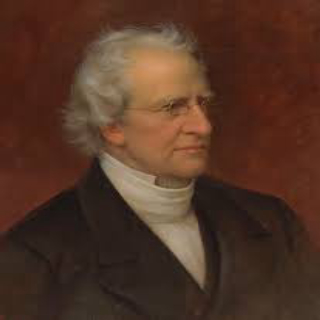
Robert Murray McCheyne
Robert Murray M‘Cheyne (1813-43) was widely regarded as one of the most saintly and able young ministers of his day. Entering Edinburgh University in 1827, he gained prizes in all the classes he attended. In 1831 he commenced his divinity studies under Thomas Chalmers at the Edinburgh Divinity Hall. M‘Cheyne’s early interests were modern languages, poetry, and gymnastics. The death of his older brother David in July 1831 made a deep impression on him spiritually. His reading soon after of Dickson’s Sum of Saving Knowledge brought him into a new relationship of peace and acceptance with God.
In July 1835 M‘Cheyne was licensed by the Presbytery of Annan, and in November became assistant to John Bonar at Larbert and Dunipace. In November 1836 he was ordained to the new charge of St Peter’s, Dundee, a largely industrial parish which did not help his delicate health.
M‘Cheyne’s gifts as a preacher and as a godly man brought him increasing popularity. The Communion seasons at St Peter’s were especially noted for the sense of God’s presence and power.
M‘Cheyne took an active interest in the wider concerns of the Church. In 1837 he became Secretary to the Association for Church Extension in the county of Forfar. This work was dear to M‘Cheyne’s heart. First and foremost he saw himself as an evangelist. He was grieved by the spiritual deadness in many of the parishes in Scotland and considered giving up his charge if the Church would set him apart as an evangelist. Writing to a friend in Ireland he revealed where his loyalties lay in the controversy that was then overtaking the Church: ‘You don’t know what Moderatism is. It is a plant that our Heavenly Father never planted, and I trust it is now to be rooted out.’
Towards the close of 1838 M‘Cheyne was advised to take a lengthy break from his parish work in Dundee because of ill-health. During this time it was suggested to him by Robert S. Candlish that he consider going to Israel to make a personal enquiry on behalf of the Church’s Mission to Israel. Along with Alexander Keith and Andrew Bonar, M‘Cheyne set out for Israel (Palestine). The details of their visit were recorded and subsequently published in the Narrative of a Mission of Enquiry to the Jews from the Church of Scotland, in 1819. This did much to stimulate interest in Jewish Mission, and led to pioneer work among Jews in parts of Europe, most notably Hungary.
M‘Cheyne returned to St Peter’s to find that the work had flourished in his absence under the ministry of William Chalmers Burns. M‘Cheyne exercised a remarkably fruitful ministry in Dundee while in constant demand to minister in other places. Just prior to his death (in a typhus epidemic) he had been preparing his congregation for the coming disruption in the Church of Scotland, which he thought inevitable after the Claim of Right had been refused.
[Ian Hamilton in Dictionary of Scottish Church History and Theology. See also Andrew Bonar’s Robert Murray M’Cheyne, and the same author’s influential Memoir and Remains of Robert Murray M’Cheyne, both published by the Trust. There is a short biography of M’Cheyne in Marcus L. Loane’s They Were Pilgrims (Banner of Truth, 2006).]
If God Approves, Let Men Condemn
It may appear, at first glance, to be an odd text to hang in your bedroom: Blessed are ye, when men shall revile you, and persecute you, and shall say all manner of evil against you falsely, for my sake. Rejoice, and be exceeding glad: for great is your reward in heaven: for so persecuted they the prophets which were before you. (Matthew 5:11–12 KJV) Whereas others might draw from a thousand wells before this one, Susannah Spurgeon framed Jesus’s words to remind her husband, Charles, of Jesus’s upside-down perspective. When his disciples face bitter opposition for his name’s sake, the proper response should be joy. “Spurgeon was slandered in the newspapers, ridiculed by his opponents, and censured by many evangelical ministers.” When we consider this Baptist giant, when we read his stirring sermons, when we remember that his life’s work rivaled that of one hundred men, when we read of the revival and the winning of countless souls to Christ, we can imagine the Prince of Preachers encountering little but unbroken success. Compared with so many of our ministries, his seemed to soar high in the clouds. We rarely consider, as Iain Murray contends, The Forgotten Spurgeon — the Spurgeon who needed Matthew 5:11–12 hanging on his wall. Forgotten Prince The forgotten Spurgeon stood among the tornadoes of several great controversies in his day. His protestation against Arminianism, his disgust at baptismal regeneration, and his resistance to an evangelical unity founded upon fragments of Christian doctrine (known as the Downgrade Controversy) made him the target for many arrows. This Spurgeon, especially at the beginning and end of his ministry, had reason to reckon himself as “the scum of the earth” (24–25). The name Spurgeon, which we regard fondly, was, by estimation of its owner, “kicked about the street like a football” (28). He had occasion to remark in a sermon, “Scarce a day rolls over my head in which the most villainous abuse, the most fearful slander is not uttered against me both privately and by the public press; every engine is employed to put down God’s minister — every lie that man can invent is hurled at me” (63). This Spurgeon was slandered in the newspapers, ridiculed by his opponents, and censured by many evangelical ministers who he anticipated would be his allies. This Spurgeon was a living example of the happy — but often hated — man of God to whom Jesus spoke in the Sermon on the Mount. Fleeing Compromise What can we learn from this forgotten Spurgeon? This Spurgeon can teach us to handle controversy manfully and without compromising. His convictions, which he held to his dying day, cost him dearly. He did not practice that vice he so clearly preached against: “I think there is scarcely a Christian man or woman that has been able to go all the way to heaven and yet quietly hide himself and run from bush to bush, skulking into glory. Christianity and cowardice? What a contradiction in terms!” (“Speak for Yourself — a Challenge”). If we would cast away the temptation to tiptoe into glory, and be of real benefit for Christ’s name in this world, Spurgeon teaches us that we would do well to resist loving our own names, be comfortable in the minority, and recognize (and reject) false unity. 1. Don’t fall in love with your own name. “Let my name perish, but let Christ’s name last forever! Jesus! Jesus! Jesus! Crown him Lord of all!” (43) Spurgeon warns us of falling in love with our own reputations and influence. This self-love, he identified, is a main ingredient in the undoing of the best of us. He exposes the steps to compromise of the person initially used by God: The temptation comes to be careful of the position he has gained, and to do nothing to endanger it. The man, so lately a faithful man of God, compromises with worldlings, and to quiet his own conscience invents a theory by which such compromises are justified and even commended. He receives the praises of “the judicious”; he has, in truth, gone over to the enemy. The whole force of his former life now tells upon the wrong side. (170) How many times have we seen or experienced this drift? First, we are somehow exalted for special use. Then we quietly begin to notice it and relish the attention. Falling in love with recognition, we tighten our grip around our platforms in fear of losing them. We then calculate what we say, filtering out anything that may weaken our influence — including the unfavorable truths of Scripture. And finally, faced with the thing we used to call compromise, we invent reasons to support what we’ve become — why we’ve beaten the sword into a plowshare. “When we begin sharing truth based on how well that truth will be received, we are halfway to compromise.” Fierce loves fixed on unworthy objects mold Christians into cowards. If we have begun to love the music of our own name, manage our brand, or consider our popularity as necessary to the advancement of Christ’s kingdom, we have begun building our own kingdoms. May we say with Spurgeon, “I count my own character, popularity, and usefulness to be as the small dust of the balance compared with fidelity to the Lord Jesus” (219). It is Christ we proclaim, not ourselves (2 Corinthians 4:5). 2. Be comfortable in the minority. “Long ago I ceased to count heads. Truth is usually in the minority in this evil world. I have faith in the Lord Jesus for myself, a faith burned into me as with a hot iron. I thank God, what I believe I shall believe, even if I believe it alone.” (146) Have you ever felt the temptation to count heads — or followers, likes, and shares — to see what you should or should not say? I have. When we begin sharing truth based on how well that truth will be received, we are halfway to compromise. Spurgeon counsels us to consider the cost beforehand: truth is often in the minority; to stand with it means you may stand alone. Yet those who stand for Christ’s truth never truly stand alone. You may go as Esther before the king without kin beside you, resolved that if you perish, you perish; you may preach like Stephen, as crowds press in around you, shutting their ears and hurling stones; you may rebuke King Herod’s adultery alone or say with Paul, “At my first defense no one came to stand by me” (2 Timothy 4:16) — but Christ shall be with you, even until the end of the age (Matthew 28:20). And if your cause is true, you will find, like Elijah, you are not the only one not to bow the knee to Baal (1 Kings 19:14, 18). 3. Recognize false unity. “It is, of course, the most easy to flesh and blood to deal in generalities, to denounce sectarianism, and claim to be of an ultra-catholic spirit; but though rough and rugged, it is required of the loyal servant of King Jesus to maintain all his crown rights and stand up for every word of his laws. Friends chide us and foes abhor us when we are very jealous for the Lord God of Israel, but what do these things matter if the Master approves?” (18) Error loves vagueness. As in Spurgeon’s day, the temptation to tolerate all positions and accept all perspectives on truth is strong in ours. We are told it is prejudiced, narrow, and even unchristian to draw lines. But to Spurgeon, promoting a type of “Christian unity” whose common denominator sinks lower than genuine Christianity in the first place is unacceptable. Unity of Jew and Gentile into one new man is bought with the blood of Christ; unity of gospel truth and gospel untruth is unity brought about by Satan. Orthodox Christianity, he argued, is distinct. Not all views can be true. When the only standard left is for all in the flock to have four legs, wolves and goats stand at ease among us. The trend toward an undoctrinal, atheological, shapeless evangelicalism, beginning in Spurgeon’s day and seemingly ripening in ours, is one of the quickest ways to compromise our fidelity to Christ and witness in the world. “Truth is often in the minority; to stand with it means you may stand alone.” In saying this, Spurgeon did not intend to divide over every possible theological difference — lest every man be an island unto himself. But Spurgeon chafed at minimizing Christian zeal and truth in order to bring together contrasting theologies and to mix liberalism with historic Christianity. We may be called particular or dogmatic, but what do we care if what we promote is the Master’s truth? Though the Heavens Fall “It is yours and mine to do the right though the heavens fall, and follow the command of Christ whatever the consequence may be. “That is strong meat,” do you say? Be strong men, then, and feed thereon.” (171) His beloved wife, who hung Matthew 5:11–12 in their bedroom, said after his death at the age of 57, “His fight for the faith . . . cost him his life.” He fought the good fight of faith, he kept the faith, he finished the race (2 Timothy 4:7), claiming before his death, “My work is done” (173). He lived for his Lord, and now he basks in his presence. To those of us who lag behind him, traversing our own times with all of their challenges and opportunities, temptations and labors, take up his oft-quoted hymn as we continue on in our race of faith: Must I be carried to the skies On flowery beds of ease, While others fought to win the prize And sailed through bloody seas? Since I must fight if I would reign, Increase my courage, Lord! I’ll bear the toil, endure the pain, Supported by thy word. Though the heavens fall, though the earth gives way, though controversy and temptations of spiritual compromise stand before us, may we heed this forgotten Spurgeon, hang Matthew 5:11–12 in our hearts, and live before men and devils with the courage and hope that only Christ supplies. Article by Greg Morse