

Others like all of the women of the bible Features >>

Women Of The Bible
-160.webp)
Women Of The Word

Power Of Passion: The Principles Of Mary Magdalene

The Amazing Discernment Of Women

Your Heart's Desire

Women Of Influence And Distinction

Ladies Of Gold, Volume 3

A Woman After God's Own Heart

31 Secrets Of An Unforgettable Woman
Captivating: Unveiling The Mysteries Of A Woman's Soul
About the Book
"All of the Women of the Bible" by Edith Deen provides a comprehensive look at over 400 women mentioned in the Bible, exploring their stories, roles, and significance in biblical history. The book offers insights into their lives, relationships, and contributions to the biblical narrative, shedding light on the often overlooked female figures in the Bible.
Kathryn Kuhlman
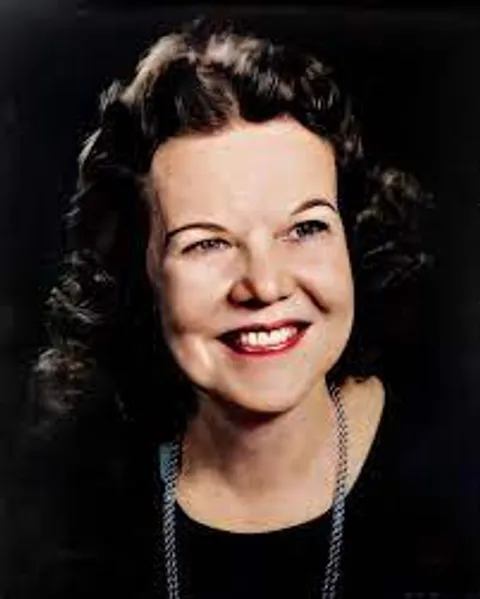 Kathryn Johanna Kuhlman was born on May 9, 1907, in Concordia, Missouri. Her parents were German and she was one of four children. Her mother was a harsh disciplinarian, who showed little love or affection. On the other hand, she had an extremely close and loving relationship with her father. She would describe, as a small child how, her father would come home from work and she would hang on his leg and cling to him. She often said that her relationship with God the Father was extremely real because of her relationship with her own father.
Kuhlman was converted, when she was 14, at an evangelistic meeting held in a small Methodist church. When she was 16 she graduated from high school, which only went to tenth grade in their town. He older sister Myrtle had married an itinerant evangelist, Everett B. Parrott. They spent their time traveling and asked that Kathryn could join them for the summer. Her parents agreed and she went to Oregon to help out. She worked with them, and often gave her testimony. When the summer was over she wanted to stay, and the couple agreed. She ended up working with them for five years.
The evangelistic team was made up of four people, Everette, Myrtle, Kathryn, and pianists named Helen Gulliford. In 1928 Everette missed a meeting in Boise, Idaho. Myrtle and Kathryn preached to cover for Everette. The pastor of the church encouraged Kathryn to step out on her own. Helen agreed to join her. Her first sermon was in a run-down pool hall in Boise, Idaho. The team covered Idaho, Utah, and Colorado for the following five years. In 1933 they moved into Pueblo, Colorado. They set up in an abandoned Montgomery Ward warehouse. They stayed there for six months.
Denver, being a much bigger city, was the next stop. They moved several times but ended up in a paper company's warehouse, which they named the Kuhlman Revival Tabernacle. Then in 1935 they moved once more to an abandoned truck garage they named the Denver Revival Tabernacle. Kathryn was seeing a lot of success in Denver. The church grew to about 2000 members. She began a radio show called "Smiling Through" and invited speakers from all over the country. One of them was Phil Kerr who taught on divine healing. In 1935 another invited evangelist was Burroughs Waltrip.
Waltrip was bad news for Kuhlman. He was a charismatic, handsome man several years older than she was. There was an immediate attraction, and one family claims to have seen the couple embracing in 1935, but he was married and had two children. Waltrip left Denver and went home to Austin, Texas, but the relationship simmered between Kuhlman and Waltrip. In 1937 he was invited back to Denver to take the pulpit for two months. Shortly after he divorced his wife and abandoned his two sons. He then spread the story that his wife had left him. He moved to Mason City, Iowa, where he told everyone he was single, and started a new ministry. Waltrip raised pledges of $70,000 to build a ministry building called Radio Chapel. It was state of the art with a disappearing pulpit and an art deco style. He appeared to be a successful and dynamic preacher.
There was an ongoing relationship between Kuhlman and Waltrip, and they married in September 1938. Kuhlman was naive about the consequences of her choices and the marriage was a disaster. She announced to her church that she and Waltrip were married and they would go between Denver and Mason City preaching at their two churches. Most of the people in her congregation left due to her relationship with Waltrip. She gave up her church in Denver, lost some of her closest associates, and moved to Mason City. Waltrip's success turned out to be a pipe dream as well. The Radio Chapel was completed in June of 1938. By October 1938 Waltrip could not meet his debts. In December Waltrip was demanding a higher salary, even with the shortfall in income. His Board of Directors quit and left him to deal with the finances. His solution was not to pay the mortgage or debts on the Chapel. Radio Chapel went into bankruptcy. Waltrip's last sermon was in May 1939. The Waltrips were on their own. Kathryn's happy vision of she and her husband flying back and forth between Denver and Mason City with a successful preaching careers was utterly demolished.
The next few years were very hard for the couple. They embarked on the road as traveling evangelists, primarily staying in the Midwest. They were not accepted in many places due to their marriage history. Initial advertisements listed Waltrip as the primary evangelist. Then occasionally Mrs. Waltrip was also mentioned. By the early 1940s Kathryn Kuhlman Waltrip was given equal billing. Finally by the mid-1940s Kathryn was using only Kathryn Kuhlman in meetings where she was the primary speaker. In 1944 Kuhlman went on an evangelistic tour on the east coast without Waltrip. It may have been a conscious decision to leave him, or she may also have taken the opportunity to reassess her life. It appears to have been more gradual as Waltrip wrote about them as a couple as late as 1946. Kuhlman never returned to Waltrip and they eventually divorced in 1947. She left her marriage behind and from then on acted as if it never existed in the first place.
In 1946 Kuhlman was asked to speak in Franklin, Pennsylvania. She was well received and decided to stay in the area. Kuhlman began preaching on radio broadcasts in Oil City, Pennsylvania. These became so popular they were picked up in Pittsburgh, and she was preaching throughout the area. She began to preach about the healing power of God. In 1947 a woman was healed of a tumor while listening to Kuhlman preach. Several Sundays later a man was also healed while she was teaching on the Holy Spirit. She was now convinced of God's healing work. One important thing to note is the context and timing of this breakout period in Kuhlman's life. 1947 was the beginning of the Healing Revival (sometimes referred to as the Latter Rain Revival) that would last for the next 10 years. What was happening in Kuhlman's meetings was breaking out across the United States. It was in this time frame that the Voice of Healing Ministry was established and men like William Branham, Oral Roberts, A.A. Allen and many others were propelled onto the public stage. Kuhlman was not associated with those groups, but stepped into the flow of what God's Spirit was doing across the nation and the world.
In 1948 Kuhlman held a series of meetings at Carnegie Hall in Pittsburgh. She eventually moved to Pittsburgh in 1950, and continued to hold meetings at Carnegie Hall until 1971. She was used by God to bring the charismatic message to many denominational churches, including the Catholic Church. (She received a lot of criticism over this and was accused of being a closet Catholic.) These were her best known years. Her style was flamboyant. She would hold her famous miracle services and the auditorium was filled to capacity every time. She was on radio and television shows. She was ordained in 1968 by the Evangelical Church Alliance. Hundreds of people were healed in her meetings, and even while listening to her on the radio or television. People she prayed for would often be hit with the power of God and be "slain in the Spirit." Kuhlman never claimed that she was the healer. She always pointed people to Jesus as their healer.
Kuhlman had been diagnosed with a heart problem in 1955. She kept a very busy schedule and overworked herself, especially in the 1970's. She traveled back and forth from Pittsburgh to Los Angeles frequently, as well as taking trips around the world. Her heart was enlarged and Kuhlman died on February 20, 1976, in Tulsa, following open-heart surgery. Videos of some of her services are still available and continue to be popular today.
Kathryn Johanna Kuhlman was born on May 9, 1907, in Concordia, Missouri. Her parents were German and she was one of four children. Her mother was a harsh disciplinarian, who showed little love or affection. On the other hand, she had an extremely close and loving relationship with her father. She would describe, as a small child how, her father would come home from work and she would hang on his leg and cling to him. She often said that her relationship with God the Father was extremely real because of her relationship with her own father.
Kuhlman was converted, when she was 14, at an evangelistic meeting held in a small Methodist church. When she was 16 she graduated from high school, which only went to tenth grade in their town. He older sister Myrtle had married an itinerant evangelist, Everett B. Parrott. They spent their time traveling and asked that Kathryn could join them for the summer. Her parents agreed and she went to Oregon to help out. She worked with them, and often gave her testimony. When the summer was over she wanted to stay, and the couple agreed. She ended up working with them for five years.
The evangelistic team was made up of four people, Everette, Myrtle, Kathryn, and pianists named Helen Gulliford. In 1928 Everette missed a meeting in Boise, Idaho. Myrtle and Kathryn preached to cover for Everette. The pastor of the church encouraged Kathryn to step out on her own. Helen agreed to join her. Her first sermon was in a run-down pool hall in Boise, Idaho. The team covered Idaho, Utah, and Colorado for the following five years. In 1933 they moved into Pueblo, Colorado. They set up in an abandoned Montgomery Ward warehouse. They stayed there for six months.
Denver, being a much bigger city, was the next stop. They moved several times but ended up in a paper company's warehouse, which they named the Kuhlman Revival Tabernacle. Then in 1935 they moved once more to an abandoned truck garage they named the Denver Revival Tabernacle. Kathryn was seeing a lot of success in Denver. The church grew to about 2000 members. She began a radio show called "Smiling Through" and invited speakers from all over the country. One of them was Phil Kerr who taught on divine healing. In 1935 another invited evangelist was Burroughs Waltrip.
Waltrip was bad news for Kuhlman. He was a charismatic, handsome man several years older than she was. There was an immediate attraction, and one family claims to have seen the couple embracing in 1935, but he was married and had two children. Waltrip left Denver and went home to Austin, Texas, but the relationship simmered between Kuhlman and Waltrip. In 1937 he was invited back to Denver to take the pulpit for two months. Shortly after he divorced his wife and abandoned his two sons. He then spread the story that his wife had left him. He moved to Mason City, Iowa, where he told everyone he was single, and started a new ministry. Waltrip raised pledges of $70,000 to build a ministry building called Radio Chapel. It was state of the art with a disappearing pulpit and an art deco style. He appeared to be a successful and dynamic preacher.
There was an ongoing relationship between Kuhlman and Waltrip, and they married in September 1938. Kuhlman was naive about the consequences of her choices and the marriage was a disaster. She announced to her church that she and Waltrip were married and they would go between Denver and Mason City preaching at their two churches. Most of the people in her congregation left due to her relationship with Waltrip. She gave up her church in Denver, lost some of her closest associates, and moved to Mason City. Waltrip's success turned out to be a pipe dream as well. The Radio Chapel was completed in June of 1938. By October 1938 Waltrip could not meet his debts. In December Waltrip was demanding a higher salary, even with the shortfall in income. His Board of Directors quit and left him to deal with the finances. His solution was not to pay the mortgage or debts on the Chapel. Radio Chapel went into bankruptcy. Waltrip's last sermon was in May 1939. The Waltrips were on their own. Kathryn's happy vision of she and her husband flying back and forth between Denver and Mason City with a successful preaching careers was utterly demolished.
The next few years were very hard for the couple. They embarked on the road as traveling evangelists, primarily staying in the Midwest. They were not accepted in many places due to their marriage history. Initial advertisements listed Waltrip as the primary evangelist. Then occasionally Mrs. Waltrip was also mentioned. By the early 1940s Kathryn Kuhlman Waltrip was given equal billing. Finally by the mid-1940s Kathryn was using only Kathryn Kuhlman in meetings where she was the primary speaker. In 1944 Kuhlman went on an evangelistic tour on the east coast without Waltrip. It may have been a conscious decision to leave him, or she may also have taken the opportunity to reassess her life. It appears to have been more gradual as Waltrip wrote about them as a couple as late as 1946. Kuhlman never returned to Waltrip and they eventually divorced in 1947. She left her marriage behind and from then on acted as if it never existed in the first place.
In 1946 Kuhlman was asked to speak in Franklin, Pennsylvania. She was well received and decided to stay in the area. Kuhlman began preaching on radio broadcasts in Oil City, Pennsylvania. These became so popular they were picked up in Pittsburgh, and she was preaching throughout the area. She began to preach about the healing power of God. In 1947 a woman was healed of a tumor while listening to Kuhlman preach. Several Sundays later a man was also healed while she was teaching on the Holy Spirit. She was now convinced of God's healing work. One important thing to note is the context and timing of this breakout period in Kuhlman's life. 1947 was the beginning of the Healing Revival (sometimes referred to as the Latter Rain Revival) that would last for the next 10 years. What was happening in Kuhlman's meetings was breaking out across the United States. It was in this time frame that the Voice of Healing Ministry was established and men like William Branham, Oral Roberts, A.A. Allen and many others were propelled onto the public stage. Kuhlman was not associated with those groups, but stepped into the flow of what God's Spirit was doing across the nation and the world.
In 1948 Kuhlman held a series of meetings at Carnegie Hall in Pittsburgh. She eventually moved to Pittsburgh in 1950, and continued to hold meetings at Carnegie Hall until 1971. She was used by God to bring the charismatic message to many denominational churches, including the Catholic Church. (She received a lot of criticism over this and was accused of being a closet Catholic.) These were her best known years. Her style was flamboyant. She would hold her famous miracle services and the auditorium was filled to capacity every time. She was on radio and television shows. She was ordained in 1968 by the Evangelical Church Alliance. Hundreds of people were healed in her meetings, and even while listening to her on the radio or television. People she prayed for would often be hit with the power of God and be "slain in the Spirit." Kuhlman never claimed that she was the healer. She always pointed people to Jesus as their healer.
Kuhlman had been diagnosed with a heart problem in 1955. She kept a very busy schedule and overworked herself, especially in the 1970's. She traveled back and forth from Pittsburgh to Los Angeles frequently, as well as taking trips around the world. Her heart was enlarged and Kuhlman died on February 20, 1976, in Tulsa, following open-heart surgery. Videos of some of her services are still available and continue to be popular today.
date differently this year - four resolutions for better relationships
It takes extraordinary courage to change how you date. It’s not easy to reset boundaries, communicate better, flee sexual immorality, confess failures, and end the relationship that needs to end. But you will never regret making the right changes. There were moments through high school and college when I knew with crystal clarity that things needed to change, but the costs kept me from changing sooner. What will others think about me when I confess how I’ve failed? What if I fail again, and things never get better? What if the change I need means I’m single and alone again? Like a merciless lawyer, Satan piled up every conceivable reason not to do what I knew I had to do — to make excuses, to put off decisions, to be almost honest with friends and family, to stay in unhealthy relationships, to avoid Christ and indulge in sin. I have prayed that the four resolutions that follow might give some the courage to do what you’ve been afraid to do for weeks, for months, maybe even for years. To lay down your excuses. To take up your cross. To welcome what it will cost you today to pursue love in light of eternity. To date differently this year, in a way that says something stunning about your God. 1. Above all else, I will look for Jesus. “Welcome what it will cost you today to pursue love in light of eternity.” If you resolve to change nothing else about your patterns in relationships, resolve to make Jesus the most important thing in your dating. Raise Philippians 1:21 over your next relationship: “To me to live is Christ, and to die is gain.” If to live is Christ, then to date is Christ. To marry is Christ. To remain single is Christ. He is our reason for living and working, growing and learning, dating and marrying. Above every other priority in dating, look for Jesus. It may sound simple and easy, but Satan wages an all-out war on our hearts and minds to keep us from single-minded devotion. Nothing could be harder. It is emotionally impossible to put Christ before our desires for intimacy and marriage — unless we have the Spirit of Christ. Unless it is no longer we who live and date, but Christ who lives in and through us (Galatians 2:20). Before you entrust your heart to someone else, resolve to love Jesus with all your heart. Before you let yourself daydream about potential futures with him or her, resolve to love Jesus with all your mind. Before you think about knitting your soul with another, resolve to love Jesus with all of your soul first. Before you risk, sacrifice, and work for love, resolve to love Jesus with all your strength. Resolve to love him more than love. And as you give your heart first and foremost to Christ, make sure your boyfriend (or girlfriend) has too — in the deepest places of who he is and what he wants. His faith is not a box to check along with lots of others; it should be the ink that shapes every other box. Whether you are currently in a relationship or might begin one this year, decide right now to date from a deeper, wider, higher love for the Lord. 2. I will grow where I have failed before. One reason we fail in the same ways year after year is that we fail to admit and address our failures. If you have a sexual past or a trail of mistakes behind you, you need to know there is nowhere safer to deal with your failures than in Christ. Someone may have led you to suspect that how you’ve dated has disqualified you from his love, but Christ came and died precisely for the things you’re most ashamed of. The apostle Paul says, The saying is trustworthy and deserving of full acceptance, that Christ Jesus came into the world to save sinners, of whom I am the foremost. But I received mercy for this reason, that in me, as the foremost, Jesus Christ might display his perfect patience as an example to those who were to believe in him for eternal life. (1 Timothy 1:15–16) “If you resolve to change nothing else, resolve to make Jesus the most important thing in your dating.” Guilt and shame qualify us for his love. He wants to put his patience and mercy on display for the world by showering you with mercy and being patient with you . He wants you to step forward, like Paul, to experience what he died to give you. The process begins by boldly bringing our failures before his feet (1 John 1:9), knowing he loves to forgive our wrongs, heal our wounds, and restore our brokenness. If we draw our darkness into his light, he will not only cover our darkness, but dispel it. He will make us someone new, someone different from the stains of our dating history (2 Corinthians 5:17). The process begins at the feet of Jesus, but it does not end there. Those who truly want to change where we have fallen before resolve to seek flesh-and-blood accountability in the specific areas where we have failed (Hebrews 3:12–13). A resolve to grow is a resolve to share with others — to consistently confess our failures, seek out counsel, embrace hard questions, and fold others into our dating relationships. Everyone expects this to happen naturally, and in a few rare instances, it might. In the vast majority of cases, though, this will require extraordinary effort and sacrifice. You will have to care about what other believers think about your relationships more than even they care about what they think. Resolve to grow where you have failed in relationships — to bring your specific failures to your perfectly patient Savior, to confess your specific failures to another believer, and to pursue specific steps, with God’s help, to overcome temptation and cultivate godliness. 3. I will pursue clarity, and postpone intimacy. Likely you have asked yourself (over and over again) what you’re looking for in a significant other. Most people, no matter who they are or what they believe, ask that question. The more important question that fewer of us ask is this: What am I looking for from dating? “Christ came and died precisely for the things you’re most ashamed of. Guilt and shame qualify you for his love.” For many, the answer is simply intimacy. In the fantasies of our imagination, intimacy may look like a thousand different experiences and sensations, but intimacy is often the grail of great price. Unfortunately, when intimacy becomes the great prize, it also becomes the great price we pay. When intimacy fails to materialize, or fails to satisfy us, or fails to last for long, we have only bartered precious pieces of our hearts for painful regret and deeper longings. Beware of letting your dating be driven by the pursuit of intimacy this year. Date to find precious clarity from God about whether to marry. The great prize in marriage is Christ-centered intimacy. The great prize in dating is Christ-centered clarity. This does not mean marry the next person you date, or only date someone you’re certain you would marry; it means make Christ-centered clarity toward marriage the measure of your romance. Am I increasingly confident over time that this is someone I can marry in the Lord? A new resolve to pursue clarity in dating cuts against our impulses toward flirtation, ambiguity, and enticement, and flows into clear and loving communication. Any relationship that cuts against flirtation, ambiguity, and enticement, that intentionally postpones physical intimacy for the covenant of marriage, swims against the current, at least in America today. It will seem strange and awkward to others your age — and beautiful to God. Date for something far more satisfying than physical and emotional intimacy. Date for a deeper purpose. Not because everyone else is doing it. Not because it’s fun. Not because he’s cute. Date because of God. Date for God. Let your love life stem from seeing and enjoying and sharing more of him. 4. I will ask God for help. The most important change in your love life may not be between you and your significant other, but between you and God. Before we try to establish healthy boundaries in our relationship, we need direction from God. Before we go looking for love, we need to seek the Lord. Before we address our communication in dating, we need to address our communication with our Father. Better relationships will begin with God in prayer. “Date for a deeper purpose. Not because everyone else is doing it. Not because it’s fun. Date because of God.” Unless the Lord builds (or rebuilds) our relationships, we date in vain (Psalm 127:1). Unless the Lord watches over you and your girlfriend (or boyfriend), you risk, worry, and date in vain. He knows exactly what you need (Matthew 6:32), where you are weak, and how you will glorify him. Refuse to date anyone unless, like Moses, God goes up with you (Exodus 33:15). And then talk to him about your relationships as much as you talk with anyone else. When passion rises within you, or anxiety creeps in, or confusion clouds your mind and heart, run first to God. No one will help you, keep you, or hear you like him. The best way to discern what God is doing, and how he is directing you, in a relationship this year is to stay close to him. The greater the intimacy you have with him, the greater clarity you will have about who to pursue, what to change, and when to marry.