



%20Karen%20Kingsbury-160.webp)
-%20Karen%20Kingsbury-160.webp)





-160.webp)
About the Book
"A Time To Dance" by Karen Kingsbury is a heartwarming novel that tells the story of a couple, John and Abby, who are facing challenges in their marriage. As they navigate through difficult times and unexpected circumstances, they must renew their faith and commitment to each other in order to save their relationship. The book explores themes of forgiveness, love, and the power of redemption. Ultimately, it is a story of hope and healing in the face of adversity.
Maria Woodworth-Etter
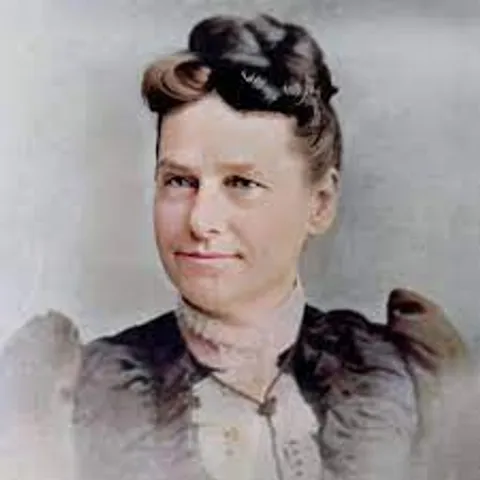 Maria Woodworth-Etter’s Early life
Maria’s early life was plagued with tragedies. Her father died of sunstroke when she was 11 years old leaving her mother with eight children to provide for. She married at 16 but fought a continual battle with ill-health, losing five of her six children. During her sickness she had visions of children in heaven and the lost suffering in hell.
She promised God, that if He would heal her, she would serve Him completely. She asked God for same apostolic power He gave the disciples and was gloriously baptized in the Holy Spirit. “It felt like liquid fire, and there were angels all around.”
The call to preach
Despite her personal struggles with ‘women in ministry’ and the prevailent hostile attitudes to female preachers, she felt compelled by God to accept the invitation to preach in the United Brethren in Christ (Friends) in 1876 and later associated with the Methodist Holiness church.
Evangelism with signs and wonders
Though simply evangelistic in the early days she was unusually successful and in 1885 supernatural signs began to accompany her ministry. Her ministry resurrected dead churches, brought salvation to thousands of unconverted and encouraged believers to seek a deeper walk with God.
She descibes one of her meetings
She described an 1883 meeting in Fairview, Ohio: “I felt impressed God was going to restore love and harmony in the church..… All present came to the altar, made a full consecration, and prayed for a baptism of the Holy Ghost and fire. That night it came. Fifteen same to the altar screaming for mercy.
Men and women fell and lay like dead. I felt it was the work of God, but did not know how to explain it or what to say. I was a little frightened . . . after lying for two hours all, one after another, sprang to their feet as quick as a flash with shining faces and shouted all over the house. I had never seen such bright conversions or such shouting….
The ministers and old saints wept and praised the Lord …..they said it was the Pentecost power, that the Lord was visiting them in great mercy and power …..(they) experienced visions of heaven and hell, collapsed on the floor as if they’d been shot or had died.” Subsequently, thousands were healed of a wide variety of sicknesses and diseases and many believers, even ministers, received mighty baptisms of the Holy Spirit. She soon became a national phenomenon.
1,000 seater tent
In 1889, she purchased a tent that could seat eight thousand people and set it up in Oakland, California. “The power of God was over all the congregation; and around in the city of Oakland. The Holy Ghost would fall on the people while we were preaching. The multitude would be held still, like as though death was in their midst.
Many of the most intelligent and best dressed men would fall back in their seats, with their hands held up to God. being held under the mighty power of God. Men and women fell, all over the tent, like trees in a storm; some would have visions of God. Most all of them came out shouting the praises of God.”
She declared that if 19th-century believers would meet God’s conditions, as the 120 did on the Day of Pentecost, they would have the same results. “A mighty revival would break out that would shake the world, and thousands of souls would be saved. The displays of God’s power on the Day of Pentecost were only a sample of what God designed should follow through the ages. Instead of looking back to Pentecost, let us always be expecting it to come, especially in these days.”
Her views of Pentecostalism
Initially she had grave concerns about the burgeoning Pentecostal movement, mainly because of some unbalanced teaching and reported extremism. Soon she came to believe it was an authentic move of the Holy Spirit and was enthusiastically welcomed within its ranks. She became both a model and a mentor for the fledgling movement. This association elicited another wave of revival between 1912 and her death in 1924 as she ministered throughout the country and her books were read across the world.
Etter Tabenacle
In 1918, she built Etter Tabernacle as her home church base and affiliated with the Assemblies of God. In her closing years she still ministered with a powerful anointing despite struggling with gastritis and dropsy. On occasion she would be carried to the podium, preach with extraordinary power, then be carried home again!
Her demise
Her health continued to decline and she died on September 16, 1924. She is buried in a grave in Indianapolis next to her daughter and son-in-law. Her inscription reads “Thou showest unto thousands lovingkindness.”
In conclusion
Without doubt Maria Woodworth-Etter was an amazing woman blessed with an astonishing ministry. Rev. Stanley Smith – one of the famous “Cambridge Seven” and for many years a worker with “The China Inland Mission” wrote this about her autobiography:
“I cannot let this opportunity go by without again bringing to the notice of my readers, ‘Acts of the Holy Ghost,’ or ‘Life and Experiences of Mrs. M. B. Woodworth-Etter.’ It is a book I value next to the Bible. In special seasons of waiting on God I have found it helpful to have the New Testament on one side of me and Mrs. Etter’s book on the other; this latter is a present-day record of ‘the Acts’ multiplied.
Mrs. Etter is a woman who has had a ministry of healing since 1885, her call as an evangelist being some years previous to this. I venture to think that this ministry is unparalleled in the history of the Church, for which I give all the glory to the Lord Jesus Christ, as Mrs. Etter would, I know, wish me to do. This ministry should be made known, for the glory of the Triune God and the good of believers.”
We agree and pray that such an anointing will rest upon God’s end-time people so that ‘this Gospel of the Kingdom will be preached in all the world before the end comes!’ Matthew 24:14
Tony Cauchi
Maria Woodworth-Etter’s Early life
Maria’s early life was plagued with tragedies. Her father died of sunstroke when she was 11 years old leaving her mother with eight children to provide for. She married at 16 but fought a continual battle with ill-health, losing five of her six children. During her sickness she had visions of children in heaven and the lost suffering in hell.
She promised God, that if He would heal her, she would serve Him completely. She asked God for same apostolic power He gave the disciples and was gloriously baptized in the Holy Spirit. “It felt like liquid fire, and there were angels all around.”
The call to preach
Despite her personal struggles with ‘women in ministry’ and the prevailent hostile attitudes to female preachers, she felt compelled by God to accept the invitation to preach in the United Brethren in Christ (Friends) in 1876 and later associated with the Methodist Holiness church.
Evangelism with signs and wonders
Though simply evangelistic in the early days she was unusually successful and in 1885 supernatural signs began to accompany her ministry. Her ministry resurrected dead churches, brought salvation to thousands of unconverted and encouraged believers to seek a deeper walk with God.
She descibes one of her meetings
She described an 1883 meeting in Fairview, Ohio: “I felt impressed God was going to restore love and harmony in the church..… All present came to the altar, made a full consecration, and prayed for a baptism of the Holy Ghost and fire. That night it came. Fifteen same to the altar screaming for mercy.
Men and women fell and lay like dead. I felt it was the work of God, but did not know how to explain it or what to say. I was a little frightened . . . after lying for two hours all, one after another, sprang to their feet as quick as a flash with shining faces and shouted all over the house. I had never seen such bright conversions or such shouting….
The ministers and old saints wept and praised the Lord …..they said it was the Pentecost power, that the Lord was visiting them in great mercy and power …..(they) experienced visions of heaven and hell, collapsed on the floor as if they’d been shot or had died.” Subsequently, thousands were healed of a wide variety of sicknesses and diseases and many believers, even ministers, received mighty baptisms of the Holy Spirit. She soon became a national phenomenon.
1,000 seater tent
In 1889, she purchased a tent that could seat eight thousand people and set it up in Oakland, California. “The power of God was over all the congregation; and around in the city of Oakland. The Holy Ghost would fall on the people while we were preaching. The multitude would be held still, like as though death was in their midst.
Many of the most intelligent and best dressed men would fall back in their seats, with their hands held up to God. being held under the mighty power of God. Men and women fell, all over the tent, like trees in a storm; some would have visions of God. Most all of them came out shouting the praises of God.”
She declared that if 19th-century believers would meet God’s conditions, as the 120 did on the Day of Pentecost, they would have the same results. “A mighty revival would break out that would shake the world, and thousands of souls would be saved. The displays of God’s power on the Day of Pentecost were only a sample of what God designed should follow through the ages. Instead of looking back to Pentecost, let us always be expecting it to come, especially in these days.”
Her views of Pentecostalism
Initially she had grave concerns about the burgeoning Pentecostal movement, mainly because of some unbalanced teaching and reported extremism. Soon she came to believe it was an authentic move of the Holy Spirit and was enthusiastically welcomed within its ranks. She became both a model and a mentor for the fledgling movement. This association elicited another wave of revival between 1912 and her death in 1924 as she ministered throughout the country and her books were read across the world.
Etter Tabenacle
In 1918, she built Etter Tabernacle as her home church base and affiliated with the Assemblies of God. In her closing years she still ministered with a powerful anointing despite struggling with gastritis and dropsy. On occasion she would be carried to the podium, preach with extraordinary power, then be carried home again!
Her demise
Her health continued to decline and she died on September 16, 1924. She is buried in a grave in Indianapolis next to her daughter and son-in-law. Her inscription reads “Thou showest unto thousands lovingkindness.”
In conclusion
Without doubt Maria Woodworth-Etter was an amazing woman blessed with an astonishing ministry. Rev. Stanley Smith – one of the famous “Cambridge Seven” and for many years a worker with “The China Inland Mission” wrote this about her autobiography:
“I cannot let this opportunity go by without again bringing to the notice of my readers, ‘Acts of the Holy Ghost,’ or ‘Life and Experiences of Mrs. M. B. Woodworth-Etter.’ It is a book I value next to the Bible. In special seasons of waiting on God I have found it helpful to have the New Testament on one side of me and Mrs. Etter’s book on the other; this latter is a present-day record of ‘the Acts’ multiplied.
Mrs. Etter is a woman who has had a ministry of healing since 1885, her call as an evangelist being some years previous to this. I venture to think that this ministry is unparalleled in the history of the Church, for which I give all the glory to the Lord Jesus Christ, as Mrs. Etter would, I know, wish me to do. This ministry should be made known, for the glory of the Triune God and the good of believers.”
We agree and pray that such an anointing will rest upon God’s end-time people so that ‘this Gospel of the Kingdom will be preached in all the world before the end comes!’ Matthew 24:14
Tony Cauchi
Talking Back to God - How His Promises Provoke Our Prayers
It is one of the most audacious, and awe-inspiring, moments in all of Scripture. In the wake of Israel’s shocking rebellion against God — blatantly violating the covenant God just made with them — Moses humbly dares to mediate between God and his people. At the climax of his intercession, and his careful yet determined dialogue with the living God, Moses makes what is perhaps the greatest, and most perceptive, petition a creature can of his Creator. And it is, after all, a prayer — a modest yet bold request, made by man, to God Almighty: “Please show me your glory.” That this is, in some sense, a special moment is plain. We do not stand in Moses’s sandals. We are not prophets called to mediate a covenant, nor do we live under that Sinai pact. Yet Moses’s prayer still functions as a model for the godly after him. It will not be the last prayer in Scripture for a sight of God’s glory, and rightly do the faithful echo it today. What might we who are in Christ learn about our own prayers from the amazing sequence of Moses’s pressing into God in Exodus 32–33? Can and Will God Forgive? Before wrestling with the prayer itself, we need to first acknowledge Moses’s haunting question: Could and would God forgive the people such a horrific breach of the covenant? Moses was not yet sure. He heard stories of his forefathers, encountered God at the bush, and witnessed the plagues in Egypt and the rescue in the Red Sea. Moses knew a powerful God who had delivered his people, but would he also forgive them? At first, it looked like he wouldn’t. When God first informed Moses, on the mountain, that the people had “corrupted themselves,” by making and worshiping a golden calf (32:7–8), God had said, “Let me alone, that my wrath may burn hot against them and I may consume them. . .” (32:10). As Moses began to plead that God withhold destruction, it was far from clear that any relationship of peace could be fully restored. God did relent of immediately consuming the people (32:14), yet the covenant remained broken. Although Moses went down the mountain, confronted the people in their rebellion, burnt the calf, disciplined the people (32:15–20), and oversaw the purging of the three thousand who led in the rebellion (32:21–29), Moses knew this did not restore what lay shattered. The next day, he returned to meet God on the mountain. What drives Moses’s sequence of prayer in Exodus 33 is the question he begins to ask in 32:32: Can and will Yahweh forgive? Will God restore the relationship, and dwell among them, after they had worshiped the golden calf? And as we will see, God draws prayer out of Moses, and then moves to answer Moses’s question, in a way far more powerful, and memorable, than if there had not been an unfolding, developing, deepening relationship with God. Moses, Teach Us to Pray Exodus 33 begins with God declaring to the people that even though he will give them the land promised to their forefathers, God himself will not go up among them (33:3). They mourn this “disastrous word.” They want him, not just the promised land. They humble themselves before God, taking off their ornaments “from Mount Horeb onward” (33:6). Even though the people heard this disastrous word, however, Moses continues to enjoy remarkable favor with God. In a tent pitched far off from the camp, God speaks with Moses (33:9), and verse 11 comments: “Thus the Lord used to speak to Moses face to face, as a man speaks to his friend.” This sets the scene for Moses’s remarkable intercessory prayer in 33:12–18. “In prayer, we respond to God. . . . First, we hear his voice in Scripture; then we access his ear in prayer.” Observe, then, at least three lessons Christians today might take from Moses’s otherwise inimitable prayer. 1. Prayer responds to God. The living God takes the initiative. He first announced to Moses the people’s breach of the covenant (32:7–10). And he revealed his enduring favor on Moses, prompting the prophet to reply. So too for us. We don’t just “dial up” God in prayer when we so wish. First, he speaks, as he has revealed himself in his world, and in his word, and in his Son, the Word. In prayer, we respond to him in light of his revelation to us. First, we hear his voice in Scripture; then we access his ear in prayer. We pray in light of what he has promised. 2. Prayer pleads God’s reputation and glory. When God announces to Moses the peoples’ sin, and the intention to destroy them and start over with him, Moses’s reflex is to lean into God’s own reputation. This is a good reflex. “Why should the Egyptians say, ‘With evil intent did he bring them out, to kill them in the mountains and to consume them from the face of the earth’?” (Exodus 21:12). Moses prays for God to turn from righteous anger and relent “from this disaster against your people,” for God’s own name’s sake. Moses does not plea the people’s worth — or their humanity, made in God’s image — but God’s choice and word. He chose them as his people. “At the bottom of prayer to a God like ours is our longing for his face, not merely the provisions of his hand.” Today we are in good company to pray for God’s own reputation in the world, and to take notice of, and pray, God’s own promises back to him. God loves for his people to pray in light of what he’s said to us, to make our pleas in response to his promises. And praying for his glory not only concerns God’s reputation in the world, but also, and most significantly, our own knowing and enjoying him. At the bottom of prayer to such a God is our longing for his face, not merely the provisions of his hand. 3. Prayer can be incremental and sequential. We might even call Moses’s prayer “dialogical.” It is striking how relational his process and sequence of prayer is in these chapters. At the heart of the “dialogue,” reverent as it is, is whose people the Israelites are, a topic God introduces and draws Moses into. First, to Moses, God calls them, after their sin, “your people, whom you brought up out of the land of Egypt” (32:7). Then God introduces the surprising tension of his ongoing favor on Moses. God will consume the people and “make a great nation” of Moses (32:9–10). This favor, combined with calling the nation “your people,” presents Moses an invitation to reply in prayer. Moses asks to know more about this God — “please show me now your ways” (33:13) — to discern whether God will forgive his stiff-necked nation. And Moses meekly, but importantly, appends this to this first plea: “Consider too that this nation is your people.” God answers positively, though briefly: “My presence will go with you, and I will give you rest” (33:14). The short reply invites Moses to press in further, for the sake of the people. His “me” moves to “us.” He pleads for “I and your people”; then again “we . . . I and your people.” Moses identifies himself with the people, asking that God’s favor on him extend to them. Prayer, by human persons to the living and personal God, is far more than transactional. It is relational, and often incremental, with measured, humble boldness. God leads us, like Moses, into prayer. We make our requests. He answers in time. We learn more of him, which leads us to ask to see more of him. ‘Show Me Your Glory’ Moses’s prayerful dialogue with God has become more and more daring — slowly, one incremental plea at a time: Don’t consume your people (32:11–13). Please forgive your people (32:31–32). Show me your ways (33:13). Count the people with me in my favor with you (33:15–16). And now, most boldly, “Please show me your glory” (33:18). This short but daring plea will be Moses’s last. He will not speak again until 34:9, when he finally completes the plea for forgiveness he left unfinished in 32:32. In Exodus 33:19, God begins to respond: I will make all my goodness pass before you and will proclaim before you my name ‘The Lord.’ And I will be gracious to whom I will be gracious, and will show mercy on whom I will show mercy. (Exodus 33:19) Moses receives his full answer, however, a chapter later in Exodus 34:7 with another revelation: The Lord passed before him and proclaimed, “The Lord, the Lord, a God merciful and gracious, slow to anger, and abounding in steadfast love and faithfulness, keeping steadfast love for thousands, forgiving iniquity and transgression and sin. (Exodus 34:6–7). The driving question has been answered, and so Moses bows in worship and prays with confidence, “O Lord, please let the Lord go in the midst of us . . . and pardon our iniquity and our sin . . .” (34:9). Having prayed, and seen the glory in God’s declarations about his character, his goodness, his mercy, his grace, Moses is confident that God will grant forgiveness and renew the covenant. Christ, Our Moses For Christians today, any Moses-like leveraging of God’s favor we know to be firmly grounded in his favor on Christ. More significant than our echoes and imitations of Moses is the fulfillment of his intercession, and final mediation for God’s people, in Jesus. We may indeed glean some categories and concepts from Moses’s prayers. Yet, as we come in Christ to Exodus 32–33, we identify not only with the prophet, but with the people. They are “stiff-necked.” Rebellious. Deserving of divine justice. Desperate for mercy and grace. But in Christ, we have one far greater than Moses who intercedes for us, leveraging his own perfect favor with God on our behalf. Jesus, our great high priest, “has passed through the heavens,” and calls us to “draw near with confidence to the throne of grace, [to] receive mercy and find grace to help in time of need” (Hebrews 4:14, 16). And he does so not only as new-covenant mediator and intercessor, but also as the very one in whose face we see the glory of God. What was unique in ancient Israel — speaking to God “as a man speaks to his friend” — is offered to all who are in Christ. God now invites us to come to him as Father, and to come to Christ as husband — the deepest and nearest of human relationships — not to make requests, get what we want, pivot, and go back to life apart from him, but to come closer, and nearer, through prayer, and discover again and again that he himself, in Christ, is the great reward.