

-%20Karen%20Kingsbury-160.webp)
%20Karen%20Kingsbury-160.webp)








About the Book
"Ever After" by Karen Kingsbury follows the story of Emily Anderson, a young woman facing a life-altering decision that challenges her faith and relationships. As she navigates through heartbreak and unexpected twists, Emily must find the strength to trust in God's plan for her future. With themes of love, loss, and redemption, this emotional novel is a compelling exploration of the power of faith and forgiveness.
Jim Elliot
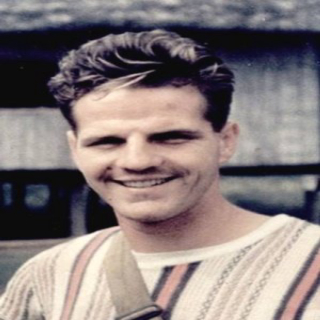 EARLY LIFE
Jim Elliot began his life in Portland, Oregon in the USA. His mother, Clara, was a chiropractor and his father, Fred, was a minister. They married and settled in Seattle, WA where they welcomed their first son, Robert in 1921.
Later they relocated the family to Portland where Herbert arrived in 1924, Jim in 1927, and Jane in 1932.
Jim knew Christ from an early age and was never afraid to speak about Him to his friends. At age six Jim told his mother, “Now, mama, the Lord Jesus can come whenever He wants. He could take our whole family because I’m saved now, and Jane is too young to know Him yet.”
THE YEARS THAT CEMENTED HIS DESIRE TO SERVE THE LORD IN MISSIONS
Jim entered Benson Polytechnic High School in 1941. He carried a small Bible with him and, an excellent speaker; he was often found speaking out for Christ. He and his friends were not afraid to step out and find adventure. One thing Jim didn’t have time for in those early years were girls. He was once quoted as telling a friend, “Domesticated males aren’t much use for adventure.”
In 1945 Jim traveled to Wheaton, IL to attend Wheaton College. His main goal while there was to devote himself to God. He recognized the importance of discipline in pursuing this goal. He would start each morning with prayer and Bible study. In his journal he wrote, “None of it gets to be ‘old stuff’ for it is Christ in print, the Living Word. We wouldn’t think of rising in the morning without a face-wash, but we often neglect the purgative cleansing of the Word of the Lord. It wakes us up to our responsibility.”
Jim’s desire to serve God by taking His gospel to unreached people of the world began to grow while at Wheaton. The summer of 1947 found him in Mexico and that time influenced his decision to minister in Central America after he finished college.
Jim met Elisabeth Howard during his third year at Wheaton. He did ask her for a date which she accepted and then later cancelled. They spent the next years as friends and after she finished at Wheaton they continued to correspond. As they came to know each other there was an attraction, but Jim felt he needed to unencumbered by worldly concerns in order to devote himself completely to God.
In addition to his hope to one day travel to a foreign country to share Christ with the unchurched of the world, he also felt the need to share with people in the United States. On Sundays while at Wheaton he would often ride the train into Chicago and talk to people in the train station about Christ. He often felt ineffective in his work as the times of knowingly leading people to Christ were few. He once wrote, “No fruit yet. Why is that I’m so unproductive? I cannot recall leading more than one or two into the kingdom. Surely this is not the manifestation of the power of the Resurrection. I feel as Rachel, ‘Give me children, or else I die.’”
After college with no clear answer as to working for the Lord in a foreign country, Jim returned home to Portland. He continued his disciplined Bible study as well as correspondence with Elisabeth Howard whom he called Betty.
They both felt a strong attraction to each other during this time, but also felt that the Lord may have been calling them to be unmarried as they served Him.
In June of 1950 he travelled to Oklahoma to attend the Summer Institute of Linguistics. There he learned how to study unwritten languages. He was able to work with a missionary to the Quichuas of the Ecuadorian jungle. Because of these lessons he began to pray for guidance about going to Ecuador and later felt compelled to answer the call there.
Elisabeth Elliot wrote in Shadow of the Almighty:
“The breadth of Jim’s vision is suggested in this entry from the journal:
August 9. “God just now gave me faith to ask for another young man to go, perhaps not this fall, but soon, to join the ranks in the lowlands of eastern Ecuador. There we must learn: 1) Spanish and Quichua, 2) each other, 3) the jungle and independence, and 4) God and God’s way of approach to the highland Quichua. From thence, by His great hand, we must move to the Ecuadorian highlands with several young Indians each, and begin work among the 800,000 highlanders. If God tarries, the natives must be taught to spread southward with the message of the reigning Christ, establishing New Testament groups as they go. Thence the Word must go south into Peru and Bolivia. The Quichuas must be reached for God! Enough for policy. Now for prayer and practice.
THE ECUADOR YEARS
In February 1952 Jim finally left America to travel to Ecuador with Pete Fleming. In May Elisabeth moved to Quito and though they didn’t feel the need to get engaged she and Jim did begin a courtship.
In August Jim left Elisabeth in Quito and travelled with Pete to Shell Mera. At the Mission Aviation Fellowship headquarters in Shell Mera, Jim and Pete learned more about the Acua Indians, a people group that was largely unreached and very savage.
Leaving Shell Mera, Pete and Jim moved on to Shandia where Jim was captivated by the Quichua. He felt very strongly that this was exactly where God intended for him to work to spread the Gospel.
While Jim was in Shandia, Elisabeth was working to learn more about the Colorado Indians near Santa Domingo. In January of 1953 he went to Quito and she met him there and they were finally engaged. They married in October of that year and their only child Valerie was born in 1955.
They settled in Shandia and continued their work with the Quichua Indians. It was Jim’s desire to be able to reach the Waodoni tribe that lived deep in the jungles and had little contact with the outside world. A Waodoni woman who had left the tribe was taken in by the missionaries and helped them to learn the language.
Jim, along with Pete, Ed McCully, Roger Youderian, and their pilot Nate Saint began to search by plane in hopes of finding a way to contact the Waodoni. The found a sandbar in the middle of the Curaray River that worked as a landing strip for the plane and it was there that they first made contact with the Waodoni. They were elated to be able to finally be able to attempt to share the love of Christ with this people group.
After their first meeting, one of the tribe, a man they called George lied to the tribe about the men’s intentions. This lie led the Waodoni warriors to plan an attack for when the missionaries returned. The men did return on January 8, 1956 and were surprised by ten members of the tribe who massacred the missionaries.
Jim’s short life that was filled with the desire to share God’s love can be summed up by a quote that is attributed to him. “He is no fool who gives that which he cannot keep, to gain what he cannot lose.”
EARLY LIFE
Jim Elliot began his life in Portland, Oregon in the USA. His mother, Clara, was a chiropractor and his father, Fred, was a minister. They married and settled in Seattle, WA where they welcomed their first son, Robert in 1921.
Later they relocated the family to Portland where Herbert arrived in 1924, Jim in 1927, and Jane in 1932.
Jim knew Christ from an early age and was never afraid to speak about Him to his friends. At age six Jim told his mother, “Now, mama, the Lord Jesus can come whenever He wants. He could take our whole family because I’m saved now, and Jane is too young to know Him yet.”
THE YEARS THAT CEMENTED HIS DESIRE TO SERVE THE LORD IN MISSIONS
Jim entered Benson Polytechnic High School in 1941. He carried a small Bible with him and, an excellent speaker; he was often found speaking out for Christ. He and his friends were not afraid to step out and find adventure. One thing Jim didn’t have time for in those early years were girls. He was once quoted as telling a friend, “Domesticated males aren’t much use for adventure.”
In 1945 Jim traveled to Wheaton, IL to attend Wheaton College. His main goal while there was to devote himself to God. He recognized the importance of discipline in pursuing this goal. He would start each morning with prayer and Bible study. In his journal he wrote, “None of it gets to be ‘old stuff’ for it is Christ in print, the Living Word. We wouldn’t think of rising in the morning without a face-wash, but we often neglect the purgative cleansing of the Word of the Lord. It wakes us up to our responsibility.”
Jim’s desire to serve God by taking His gospel to unreached people of the world began to grow while at Wheaton. The summer of 1947 found him in Mexico and that time influenced his decision to minister in Central America after he finished college.
Jim met Elisabeth Howard during his third year at Wheaton. He did ask her for a date which she accepted and then later cancelled. They spent the next years as friends and after she finished at Wheaton they continued to correspond. As they came to know each other there was an attraction, but Jim felt he needed to unencumbered by worldly concerns in order to devote himself completely to God.
In addition to his hope to one day travel to a foreign country to share Christ with the unchurched of the world, he also felt the need to share with people in the United States. On Sundays while at Wheaton he would often ride the train into Chicago and talk to people in the train station about Christ. He often felt ineffective in his work as the times of knowingly leading people to Christ were few. He once wrote, “No fruit yet. Why is that I’m so unproductive? I cannot recall leading more than one or two into the kingdom. Surely this is not the manifestation of the power of the Resurrection. I feel as Rachel, ‘Give me children, or else I die.’”
After college with no clear answer as to working for the Lord in a foreign country, Jim returned home to Portland. He continued his disciplined Bible study as well as correspondence with Elisabeth Howard whom he called Betty.
They both felt a strong attraction to each other during this time, but also felt that the Lord may have been calling them to be unmarried as they served Him.
In June of 1950 he travelled to Oklahoma to attend the Summer Institute of Linguistics. There he learned how to study unwritten languages. He was able to work with a missionary to the Quichuas of the Ecuadorian jungle. Because of these lessons he began to pray for guidance about going to Ecuador and later felt compelled to answer the call there.
Elisabeth Elliot wrote in Shadow of the Almighty:
“The breadth of Jim’s vision is suggested in this entry from the journal:
August 9. “God just now gave me faith to ask for another young man to go, perhaps not this fall, but soon, to join the ranks in the lowlands of eastern Ecuador. There we must learn: 1) Spanish and Quichua, 2) each other, 3) the jungle and independence, and 4) God and God’s way of approach to the highland Quichua. From thence, by His great hand, we must move to the Ecuadorian highlands with several young Indians each, and begin work among the 800,000 highlanders. If God tarries, the natives must be taught to spread southward with the message of the reigning Christ, establishing New Testament groups as they go. Thence the Word must go south into Peru and Bolivia. The Quichuas must be reached for God! Enough for policy. Now for prayer and practice.
THE ECUADOR YEARS
In February 1952 Jim finally left America to travel to Ecuador with Pete Fleming. In May Elisabeth moved to Quito and though they didn’t feel the need to get engaged she and Jim did begin a courtship.
In August Jim left Elisabeth in Quito and travelled with Pete to Shell Mera. At the Mission Aviation Fellowship headquarters in Shell Mera, Jim and Pete learned more about the Acua Indians, a people group that was largely unreached and very savage.
Leaving Shell Mera, Pete and Jim moved on to Shandia where Jim was captivated by the Quichua. He felt very strongly that this was exactly where God intended for him to work to spread the Gospel.
While Jim was in Shandia, Elisabeth was working to learn more about the Colorado Indians near Santa Domingo. In January of 1953 he went to Quito and she met him there and they were finally engaged. They married in October of that year and their only child Valerie was born in 1955.
They settled in Shandia and continued their work with the Quichua Indians. It was Jim’s desire to be able to reach the Waodoni tribe that lived deep in the jungles and had little contact with the outside world. A Waodoni woman who had left the tribe was taken in by the missionaries and helped them to learn the language.
Jim, along with Pete, Ed McCully, Roger Youderian, and their pilot Nate Saint began to search by plane in hopes of finding a way to contact the Waodoni. The found a sandbar in the middle of the Curaray River that worked as a landing strip for the plane and it was there that they first made contact with the Waodoni. They were elated to be able to finally be able to attempt to share the love of Christ with this people group.
After their first meeting, one of the tribe, a man they called George lied to the tribe about the men’s intentions. This lie led the Waodoni warriors to plan an attack for when the missionaries returned. The men did return on January 8, 1956 and were surprised by ten members of the tribe who massacred the missionaries.
Jim’s short life that was filled with the desire to share God’s love can be summed up by a quote that is attributed to him. “He is no fool who gives that which he cannot keep, to gain what he cannot lose.”
Will Hell Really Last Forever
I am almost ashamed to admit that such a tiny bird should have been used to frighten a grown man. But in this case, I was right to tremble. The image in my mind’s eye of that little bird descending from above, flitting back and forth, hopping up and down upon the immensity of sand. What a horror to see it flap away with so little a grain only to expect its return so many lifetimes later. All to remember that it would be all irrelevant anyways. Thomas Watson gave the illustration, preaching on the fate of those who worshiped the beast in Revelation 14:11, which says, “The smoke of their torment goes up forever and ever, and they have no rest, day or night. . .” It cannot be forgotten: Oh eternity! If all the body of earth and sea were turned to sand, and all the air up to the starry heaven were nothing but sand, and a little bird should come every thousand years, and fetch away in her bill but the tenth part of a grain of all that heap of sand, what numberless years would be spent before that vast heap of sand would be fetched away! Yet, if at the end of all that time, the sinner might come out of hell, there would be some hope; but that word “Ever” breaks the heart. “The smoke of their torment ascendeth up for ever and ever.” After coming and going every thousand years, carrying away one of the smallest grains of the innumerable amount of sand, this hour glass would finally drain and the banished would be no closer to the end than when they first began. That word which should make the most apathetic among the unforgiven weep, the strongest sweat blood, the youngest curl into the fetal position, the oldest break into madness to hear its footsteps so near, shook me. Who can rightly fathom it? Forever. Ghosts Reading over Shoulders But is it true? Do those in hell suffer eternal conscious punishment? The church throughout its two-thousand-year history has thought so, but many today do not. And we shouldn’t wonder why: this is personal to us. I write keenly aware that the memories of deceased loved ones who departed in apparent unbelief hover over shoulders reading along. What of him? What of her? we wonder. Although he was one of the first notable evangelicals of the previous generation to contradict the historic conception of hell, we must all adopt the final question John Stott considers, I find the concept [of eternal conscious punishment in hell] intolerable and do not understand how people can live with it without either cauterizing their feelings or cracking under the strain. But our emotions are a fluctuating, unreliable guide to truth and must not be exalted to the place of supreme authority in determining it. As a committed Evangelical, my question must be — and is — not what does my heart tell me, but what does God’s word say? So what does God’s word say? Nothing different from what the church has overwhelmingly held over its two millennia. Three Objections Of all topics that feel crude to abridge, this must be atop the list. Much has been written on this topic that fly past the scope of this article. Resources I found helpful include Hell Under Fire, Grudem’s Systematic Theology, and chapters in Gagging of God (13) and Let the Nations Be Glad (4). That said, I would like to give brief answers to common challenges to those who believe those in hell will ultimately be annihilated. 1. Does ‘Eternal’ Mean Forever? Conditionalists (those who believe the wicked will eventually cease to be, based on the fact that the soul is not inherently immortal but becomes so as they meet certain conditions, and in particular through union with Christ) and annihilationists (those who believe the wicked will cease to be because, although the soul would have otherwise prolonged, God finally annihilates them in judgement) both believe that hell is not endless punishment for the wicked. In proving this, they both point out that “eternal” does not always mean everlasting. They argue that both in the Hebrew and Greek, the corresponding words we often translate “eternal” have elasticity to mean “forever” as well as other things, such as “age to come,” which they argue could last forever or not. One of the strongest reasons this is unpersuasive (without going text by text) is that some of the biblical passages in question speak in the same breath of both the eternality of the righteous (which we don’t question) and the eternality of the unrighteous (which some do). In other words, the life that the righteous enjoy is parallel to the punishment the wicked suffer. Hell lasts as long as heaven. For example, Daniel speaks of those who will awake from death: “Many of those who sleep in the dust of the earth shall awake, some to everlasting life, and some to shame and everlasting contempt” (Daniel 12:2). This idea is carried through into the New Testament by Jesus in Matthew 25 (which many think is, by itself, decisive on the matter) when he teaches the parallel fates of the righteous and the unrighteous: “These will go away into eternal punishment, but the righteous into eternal life” (Matthew 25:46). Furthermore, the book of Revelation displays the same thing, utilizing the most emphatic language afforded in Greek to mean forever: “for ever and ever” (eis aiōnas aiōnōn), as in the text already cited with the little bird: If anyone worships the beast and its image and receives a mark on his forehead or on his hand, he also will drink the wine of God’s wrath, poured full strength into the cup of his anger, and he will be tormented with fire and sulfur in the presence of the holy angels and in the presence of the Lamb. And the smoke of their torment goes up forever and ever, and they have no rest, day or night, these worshipers of the beast and its image, and whoever receives the mark of its name. (Revelation 14:9–11) The same description is employed to describe the everlasting suffering of Satan and his demons: “The devil who had deceived them was thrown into the lake of fire and sulfur where the beast and the false prophet were, and they will be tormented day and night forever and ever” (Revelation 20:10). And this, again, is parallel to the righteous’ fate later in the book: “They will need no light of lamp or sun, for the Lord God will be their light, and they will reign forever and ever” (Revelation 22:5). Heaven and hell will cease together. 2. Will the Wicked Cease to Exist? Scripture often employs terms such as “destruction” (Matthew 10:18), “perishing” (John 3:16), and “death” (Revelation 20:14) to describe the judgment of God on those in hell. These terms, some argue, entail complete annihilation, not continuing anguish. As Stott memorably put it, “It would seem strange . . . if people who are said to suffer destruction are in fact not destroyed; and as you put it, it is difficult to imagine a perpetually inconclusive process of perishing.” In response, D.A. Carson replies, “Stott’s conclusion (‘It would seem strange . . . if people who are said to suffer destruction are in fact not destroyed’) is memorable, but useless as an argument, because it is merely tautologous: of course those who suffer destruction are destroyed. But it does not follow that those who suffer destruction cease to exist. Stott has assumed his definition of “destruction” in his epigraph.” So what does it mean then? I have a family member whose car recently started on fire and was completely destroyed. It was totaled and rendered useless. They sent me a picture of it — its frame, and doors, still were intact though completely black. The mirror hung limp. The front mirror was incinerated. The hood melted and the wires and engine exposed. It was ruined, but did not cease to be. But aren’t the wicked described as being thrown into fire — something that utterly consumes? No, for “they will have no rest day or night” (Revelation 14:11). The devil, his demons, and the “children of wrath” who followed him, will, like the burning bush and hell’s worm that does not die, burn yet not be consumed. They will beg any who will listen to give but a drop of water on their tongue to relieve their anguish from the flames (Luke 16:24), their “place of torment” (Luke 16:28). “In that place there will be weeping and gnashing of teeth” (Matthew 13:50), not silence or the mere roaring of a fire. 3. Does the Punishment Fit the Crime? Another critique, more philosophically argued, is that it is unjust to earn an infinite duration of punishment for finite sins. The punishment doesn’t match such a crime, it is alleged. To this, we may respond as follows. Crimes Against the Infinite God A man can commit such gross crimes against his fellow humans that he could earn ten life sentences for ten minutes of mayhem. And these are but sins against men. Can the idea of sinning against God — and not only in a moment but for one’s whole lifetime — not merit eternal damnation when one sin justly plunged the world into death and darkness? Edwards is often cited as arguing this. John Piper summarizes, “The essential thing is that degrees of blameworthiness come not from how long you offend dignity, but from how high the dignity is that you offend” (Let the Nations Be Glad, 127). We sin against a God infinitely worthy of obedience, infinite in glory, infinite in purity. No dignity is higher and no transgression viler. It reveals much that we see more problems with the punishment than the crime. Eternal Sins? Another reason this is righteous is that there is good reason to understand sins as being eternal, in at least two senses. First, Jesus spoke of an eternal (not finite) sin (Mark 3:29), a sin that “will not be forgiven, either in this age or in the age to come” (Matthew 12:32). And sins not explicitly named as this eternal sin, result in eternal destruction (2 Thessalonians 1:9), eternal judgment (Hebrews 6:2), eternal punishment (Matthew 25:46), and eternal fire (Matthew 25:41) which undermines our finite categories. Second, sins of the damned can be eternal in that sinners continue to sin throughout eternity. John Stott admitted that eternal conscious punishment would be much more sensible to him if “perhaps (as has been argued) the impenitence of the lost also continues throughout eternity.” Two texts seem to indicate this. The first, Revelation 22:10–11: “Let him who does wrong continue to do wrong; let him who is vile continue to be vile; let him who does right continue to do right; and let him who is holy continue to be holy.” If the holy practice holiness in anticipation of continuing in perfect holiness, will not the ungodly continue to spiral in evil throughout eternity? Will they suddenly love God with all their souls in hell? The answer is clear enough in Revelation 16:8–11, where people under God’s judgment “gnawed their tongues in anguish and cursed the God of heaven for their pain and sores. They did not repent of their deeds.” Should They Not Go Free? More on the offensive, Carson asks the necessary question, “One might reasonably wonder why, if people pay for their sins in hell before they are annihilated, they cannot be released into heaven, turning hell into purgatory. Alternatively, if the sins have not yet been paid for, why should they be annihilated?” King Who Emptied the Desert A bird could not, by the painstaking removal of a world full of sand, move us one step closer to eternity with God. Time will not amend all wounds, nor stop God’s righteous punishment. Nor will death hide the wicked, though they seek annihilation, calling on the mountains to crush them to hide them from Christ’s wrath (Revelation 6:15–17). But what a little bird could not accomplish, a Lamb has. At the pinnacle of his anguish, he cried, “My God, my God why have you forsaken me” so that those who repent and believe in him might not “suffer the punishment of eternal destruction, away from the presence of the Lord and from the glory of his might” (2 Thessalonians 1:9). Here alone can the cup of eternal judgment be drained on behalf of sinners. There is an escape from eternal punishment. Although we rightfully feel unceasing anguish and great sorrow for those who never hide beneath the cross on this side of eternity (Romans 9:1–3), even this anguish will not last. We shall celebrate God’s eternal triumph over evil forever: “Once more they cried out, ‘Hallelujah! The smoke from her goes up forever and ever’” (Revelation 19:3). Christ Jesus our Savior is worthy of eternal praise because he endured, for us, the righteous judgment that would have been ours for eternity. Article by Greg Morse