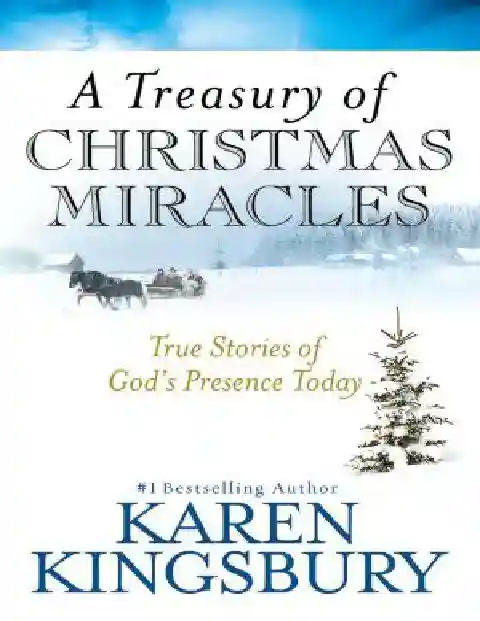

A Treasury Of Christmas Miracle Order Printed Copy
- Author: Karen Kingsbury
- Size: 601KB | 154 pages
- |
Others like a treasury of christmas miracle Features >>
-160.webp)



About the Book
"A Treasury of Christmas Miracles" is a collection of heartwarming holiday stories by best-selling author Karen Kingsbury. Each story revolves around the theme of miracles and showcases the power of love, faith, and hope during the Christmas season. Readers will be inspired by tales of redemption, forgiveness, and the magic of Christmas.
Henry Alline
 Henry Alline’s early years
He was born and received his early education in Newport, Rhode Island and his family moved to Nova Scotia in 1760, when he was 12 years old. When he was nine he began to read theological works and became somewhat mystical, but after years of soul-searching and spiritual conflict he was powerfully converted in 1775, simultaneously receiving a call to the ministry.
Alone and desperate he prayed until…’redeeming love broke into my soul… with such power that my whole soul seemed to be melted down with love…and my will turned of choice after the infinite God. A year later he began to preach.
His preaching career
His preaching career lasted until his death eight years later. He was an itinerant preacher in Nova Scotia and Prince Edward Island in an ever-widening circuit, beginning what became known as the ‘New Light’ movement and which is still the greatest revival that Canada has ever seen. He preached the new birth powerfully and effectively and his admirers compared him to George Whitefield and John the Baptist.
Considered an emotional and dangerous fanatic by some and a ‘ravager of congregations,’ the Congregationalists withdrew his right to preach in their churches, so he spoke in barns, houses and the open air. In all he began eight ‘New Light’ Congregational churches based on his non-Arminian but anti-Calvinist views of free-will and predestination, and his strong rejection of outward religious form.
Ironically, despite his indifference regarding baptism, his major 19th century influence was amongst the Baptists of eastern Canada, many of whom were his converts.
Despite possibly unorthodox views and methods, his ministry was without doubt that of an extraordinary revivalist.
Alline’s sermon style was always simple and extemporary, using a few simple, understandable points to help the unchurched to grasp the simple truths of the gospel. As with other itinerant revivalists, his objective was to lead the hearers to a point of decision – to accept or reject Christ as Saviour and Lord, which opened the door to the “new birth.”
Doubtless, his sermons were repeated over time, but he was never in one place long enough for his listeners to notice.
Alline also employed the ministry of prayer and of singing, writing many hymns which were helpful in communicating the gospel. A collection was gathered after his death and was reprinted at least four times in the United States, and several were included in the standard hymnals of the 19th century.
Henry Alline’s early years
He was born and received his early education in Newport, Rhode Island and his family moved to Nova Scotia in 1760, when he was 12 years old. When he was nine he began to read theological works and became somewhat mystical, but after years of soul-searching and spiritual conflict he was powerfully converted in 1775, simultaneously receiving a call to the ministry.
Alone and desperate he prayed until…’redeeming love broke into my soul… with such power that my whole soul seemed to be melted down with love…and my will turned of choice after the infinite God. A year later he began to preach.
His preaching career
His preaching career lasted until his death eight years later. He was an itinerant preacher in Nova Scotia and Prince Edward Island in an ever-widening circuit, beginning what became known as the ‘New Light’ movement and which is still the greatest revival that Canada has ever seen. He preached the new birth powerfully and effectively and his admirers compared him to George Whitefield and John the Baptist.
Considered an emotional and dangerous fanatic by some and a ‘ravager of congregations,’ the Congregationalists withdrew his right to preach in their churches, so he spoke in barns, houses and the open air. In all he began eight ‘New Light’ Congregational churches based on his non-Arminian but anti-Calvinist views of free-will and predestination, and his strong rejection of outward religious form.
Ironically, despite his indifference regarding baptism, his major 19th century influence was amongst the Baptists of eastern Canada, many of whom were his converts.
Despite possibly unorthodox views and methods, his ministry was without doubt that of an extraordinary revivalist.
Alline’s sermon style was always simple and extemporary, using a few simple, understandable points to help the unchurched to grasp the simple truths of the gospel. As with other itinerant revivalists, his objective was to lead the hearers to a point of decision – to accept or reject Christ as Saviour and Lord, which opened the door to the “new birth.”
Doubtless, his sermons were repeated over time, but he was never in one place long enough for his listeners to notice.
Alline also employed the ministry of prayer and of singing, writing many hymns which were helpful in communicating the gospel. A collection was gathered after his death and was reprinted at least four times in the United States, and several were included in the standard hymnals of the 19th century.
books don’t change people, paragraphs do
I have often said, “Books don’t change people, paragraphs do — sometimes sentences.” This may not be fair to books, since paragraphs find their way to us through books, and they often gain their peculiar power because of the context they have in the book. But the point remains: One sentence or paragraph may lodge itself so powerfully in our mind that its effect is enormous when all else is forgotten. It might be useful to illustrate this with two books by Jonathan Edwards that have influenced me most. Here are the key paragraphs and lessons from these books. Most of the rest of their content I have long forgotten (but who knows what remains in the subconscious and has profound impact?). 1. The End for Which God Created the World Outside the Bible this may be the most influential book I have ever read. Its influence was inseparable from its transposition into the syllabus on Unity of the Bible in a course by that name with Daniel Fuller in seminary. There are two massive truths that were settled for me. First: All that is ever spoken of in the Scripture as an ultimate end of God’s works is included in that one phrase, the glory of God. (Yale, Vol. 8, p. 526) The book was an avalanche of Scripture demonstrating one of the most influential convictions in my life: God does everything for his glory. Then came its life-changing corollary: In the creature’s knowing, esteeming, loving, rejoicing in, and praising God, the glory of God is both exhibited and acknowledged; his fullness is received and returned. Here is both an emanation and remanation . The refulgence shines upon and into the creature, and is reflected back to the luminary. The beams of glory come from God, and are something of God, and are refunded back again to their original. So that the whole is of God , and in God, and to God; and God is the beginning, middle and end in this affair. (Yale, Vol. 8, p. 531) To me this was simply beautiful. It was overwhelming as a picture of the greatness of God. The impact was heighted by the fact that the last line is a manifest echo of Romans 11:36: “From him and through him and to him are all things. To him be glory forever. Amen.” But the central, life-shaping impact was the sentence: “In the creature’s knowing, esteeming, loving, rejoicing in, and praising God, the glory of God is both exhibited and acknowledged.” And even more specifically: “In the creature’s rejoicing in God, the glory of God is exhibited.” God’s glory is exhibited in my being happy in him. Or as Edwards says earlier: “The happiness of the creature consists in rejoicing in God, by which also God is magnified and exalted” (Yale, Vol. 8, p. 442.) If not being supremely happy in God means robbing him of his glory, everything changes. That has been the unifying message of my life: God is most glorified in us when we are most satisfied in him. 2. The Freedom of the Will This was a breathtaking book. The scope and rigor of its argument made it one of the most demanding books I have ever read. David Wells calls it a watershed book: How you judge this argument decides where all waters of your life will flow. My judgment was: irresistibly compelling . Here’s the unforgettable summary sentence: God’s moral government over mankind, his treating them as moral agents, making them the objects of his commands, counsels, calls, warnings, expostulations, promises, threatenings, rewards and punishments, is not inconsistent with a determining disposal of all events, of every kind, throughout the universe, in his providence; either by positive efficiency, or permission. (Yale, Vol. 1, p. 431) God governs all events of every kind, including my acts of will, yet in such a way that I am still liable to rewards and punishments. His sovereignty and my accountability are compatible. The implications of this are vast. One of the most important insights for me in working this out was Edwards’s distinction between natural inability to do something and moral inability to do something. Here’s the key paragraph: We are said to be naturally unable to do a thing, when we can’t do it if we will, because what is most commonly called nature don’t allow of it, or because of some impeding defect or obstacle that is extrinsic to the will; either in the faculty of understanding, constitution of body, or external objects. Moral inability consists not in any of these things; but either in the want of inclination; or the strength of a contrary inclination; or the want of sufficient motives in view, to induce and excite the act of the will, or the strength of apparent motives to the contrary. (Yale, Vol. 1, p. 159) If we are naturally unable to do something, we are not accountable to do it (like trying to get out of a chair if we truly want to but are chained in it), but if we are morally unable to do something, we are still accountable to do it (like trying to keep the law of God, though we can’t because we hate it). This insight was crucial in understanding Romans 8:7 (“the mind of the flesh cannot submit to God”), and 1 Corinthians 2:14 (“the natural man cannot understand the things of the Spirit”). As I look back over my life and what I have been able to see and savor in God’s word, I give thanks for momentous sentences and paragraphs, and for the God-besotted people who wrote them. In this case, I thank God for Jonathan Edwards.