




About the Book
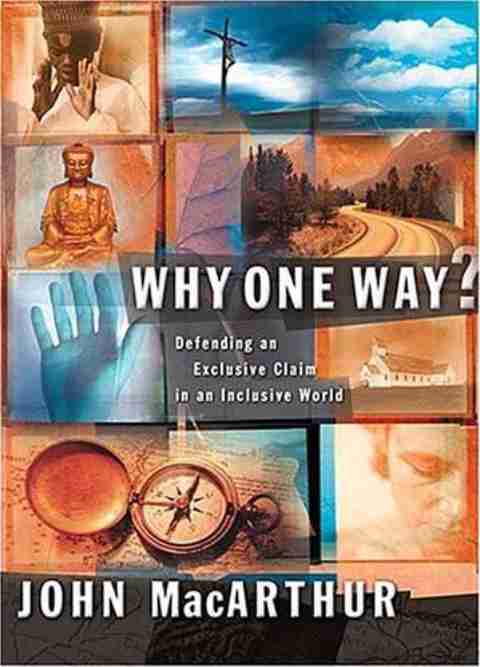
"Why One Way" by John MacArthur explores the exclusive claims of Christianity in a pluralistic world. MacArthur argues that Jesus is the only way to salvation and presents evidence from the Bible to support this belief. He also addresses common objections to Christian exclusivity and provides a defense for why Christianity is the only true path to God. Overall, the book advocates for the uniqueness and universality of the Christian faith.
Jerry Bridges
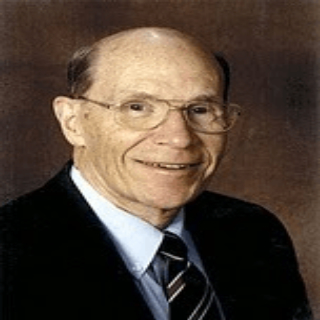 Jerry Bridges entered into the joy of his Master on Sunday evening, March 6, 2016, at Penrose Hospital in Colorado Springs, the day after he suffered cardiac arrest. He was 86 years old.
Childhood
Gerald Dean Bridges was born on December 4, 1929, in a cotton-farming home in Tyler, Texas, to fundamentalist parents, six weeks after the Black Tuesday stock market crash that led to the Great Depression.
Jerry was born with several disabilities: he was cross-eyed, he was deaf in his right ear (which was not fully developed), and he had spine and breastbone deformities. But given his family’s poverty, they were unable to afford medical care for these challenges.
The separatist church in East Texas where the Bridges were members had an altar call after every service. Jerry walked the aisle three times, at the ages of 9, 11, and 13. But he later realized that he had not been born again.
His mother Lillian passed away in 1944 when he was 14.
Conversion
In August of 1948, as an 18-year-old college student right before his sophomore year began, Jerry was home alone one night in bed. He acknowledged to the Lord that he was not truly a Christian, despite growing up in a Christian home and professing faith. He prayed, ”God whatever it takes, I want Christ to be my Savior.”
The next week in his dorm room at the University of Oklahoma he was working on a school assignment and reached for a textbook, when he noticed the little Bible his parents had given him in high school. He figured that since he was now a Christian, he ought to start reading it daily, which he did (and never stopped doing for the rest of his days).
The Navy
After graduating with an engineering degree on a Navy ROTC scholarship, he went on active duty with the Navy, serving as an officer during the Korean conflict (1951-1953). A fellow officer invited him to go to a Navigator Bible study. Jerry went and he was hooked. He had never experienced anything like this before.
When stationed on ship in Japan, he got to know several staff members of the Navigators quite well. One day, after Jerry had been in Japan for six months, a Navy worker asked him why he didn’t just throw in his lot with the Navigators and come to work for them. The very next day, December 26, 1952, Jerry failed a physical exam due to the hearing loss in his right ear, and he was given a medical discharge in July 1953, after being in the Navy for only two years. Jerry was not overly disappointed, surmising that perhaps this was the Lord’s way of steering him to the Navigators.
When he returned to the U.S., he began working for Convair, an airplane manufacturing company in southern California, writing technical papers for shop and flight line personnel. It was there that he learned to write simply and clearly—skills the Lord would later use to instruct and edify thousands of people from his pen.
The Navigators
Jerry was single at the time, living in the home of Navigator Glen Solum, a common practice in the early days of The Navigators. In 1955 Jim invited Jerry to go with him to a staff conference at the headquarters of The Navigators in Glen Eyrie at Colorado Springs. It was there that Jerry sensed a call from the Lord to be involved with vocational ministry. He was resistant to the idea of going on staff, but felt conviction and prayed to the Lord, “Whatever you want.” The following day he met Dawson Trotman, the 49-year-old founder of The Navigators, who wanted to interview Jerry for a position, which he received and accepted. Jerry was put in charge of the correspondence department—answering letters, handling receipts, and mainly the NavLog newsletter to supporters.
When Trotman died in June of 1956 (saving a girl who was drowning), Jim Downing took a position equivalent to a chief operations operator. A Navy man, Jim Downing knew that Jerry had also served in the Navy and tapped him to be his assistant.
Jerry struggled at times in his role, unsure if this was his calling since his position was so different from the typical campus reps. After ten years on staff he told the Lord, “I’m going to do this for the rest of my life. If you want me out of The Navigators you’ll have to let me know.”
Beginning in 1960, Jerry served for three years in Europe as administrative assistant to the Navigators’ Europe Director. In January of 1960, he read a booklet entitled The Doctrine of Election, which he first considered heresy but then embraced the following day.
In October of 1963, at the age of 34, he married his first wife, Eleanor Miller of The Navigators following a long-distance relationship. Two children followed: Kathy in 1966, and Dan in 1967. From 1965 to 1969 Jerry served as office manager for The Navigators’ headquarters office at Glen Eyrie.
From 1969 to 1979 Jerry served as the Secretary-Treasurer for The Navigators. It was during this time that NavPress was founded in 1975. Their first publications began by transcribing and editing audio material from their tape archives and turning them into booklets. They produced one by Jerry on Willpower. Leroy Eims—who started the Collegiate ministry—encouraged Jerry to try his hand at writing new material. Jerry had been teaching at conferences on holiness, so he suggested a book along those lines.
In 1978, NavPress published The Pursuit of Holiness, which has now sold over 1.5 million copies. Jerry assumed it would be his only book. A couple of years later, after reading about putting off the old self and putting on the new self from Ephesians 4, he decided to write The Practice of Godliness—on developing a Christlike character. That book went on to sell over half a million copies, and his 1988 book on Trusting God has sold nearly a million copies.
Jerry served as The Navigators’ Vice President for Corporate Affairs from 1979 to 1994. It was in this season of ministry that Eleanor developed non-Hodgkin’s lymphoma. She went to be with the Lord on November 9, 1988, just three weeks after their 25th wedding anniversary. On November 24, 1989, Jerry married Jane Mallot, who had known the Bridges family since the early ’70s.
Jerry’s final position with The Navigator’s was in the area of staff development with the Collegiate Mission. He saw this ministry as developing people, rather than teaching people how to do ministry. In addition to his work with The Navigators, he also maintained an active writing and teaching ministry, traveling the world to instruct and equip pastors and missionaries and other workers through conferences, seminars, and retreats.
Lessons
In 2014, Jerry published a memoir of his life, tracing the providential hand of God through his own story: God Took Me by the Hand: A Story of God’s Unusual Providence (NavPress, 2014). He closes the work with seven spiritual lessons he learned in his six decades of the Christian life:
The Bible is meant to be applied to specific life situations.
All who trust in Christ as Savior are united to Him in a loving way just as the branches are united to the vine.
The pursuit of holiness and godly character is neither by self-effort nor simply letting Christ “live His life through you.”
The sudden understanding of the doctrine of election was a watershed event for me that significantly affected my entire Christian life.
The representative union of Christ and the believer means that all that Christ did in both His perfect obedience and His death for our sins is credited to us.
The gospel is not just for unbelievers in their coming to Christ.
We are dependent on the Holy Spirit to apply the life of Christ to our lives.
His last book, The Blessing of Humility: Walk within Your Calling, will be published this summer by NavPress.
Legacy
One of the great legacies of Jerry Bridges is that he combined—to borrow some titles from his books—the pursuit of holiness and godliness with an emphasis on transforming grace. He believed that trusting God not only involved believing what he had done for us in the past, but that the gospel empowers daily faith and is transformative for all of life.
In 2009 he explained to interviewer Becky Grosenbach the need for this emphasis within the culture of the ministry he had given his life to:
When I came on staff almost all the leaders had come out of the military and we had pretty much a military culture. We were pretty hard core. We were duty driven. The WWII generation. We believed in hard work. We were motivated by saying “this is what you ought to do.” That’s okay, but it doesn’t serve you over the long haul. And so 30 years ago there was the beginning of a change to emphasize transforming grace, a grace-motivated discipleship.
In the days ahead, many will write tributes of this dear saint (see, e.g., this one from his friend, prayer partner, and sometimes co-author Bob Bevington). I would not be able to improve upon the reflections and remembrances of those who knew him better than I did. But I do know that he received from the Lord the ultimate acclamation as he entered into the joy of his Master and received the words we all long to hear, “Well done, my good and faithful servant.” There was nothing flashy about Jerry Bridges. He was a humble and unassuming man—strong in spirit, if not in voice or frame. And now we can rejoice with him in his full and final healing as he beholds his beloved Savior face to face. Thank you, God, for this man who helped us see and know you more.
Jerry Bridges wrote more than 20 books over the course of nearly 40 years:
The Pursuit of Holiness (NavPress, 1978)
The Practice of Godliness (NavPress, 1983)
True Fellowship (NavPress, 1985) [later published as The Crisis of Caring (P&R, 1992); finally republished with a major revision as True Community (NavPress, 2012)]
Trusting God (NavPress, 1988)
Transforming Grace (NavPress, 1991)
The Discipline of Grace (NavPress, 1994)
The Joy of Fearing God (Waterbrook, 1997)
I Exalt You, O God (Waterbrook, 2000)
I Give You Glory, O God (Waterbrook, 2002)
The Gospel for Real Life (NavPress, 2002)
The Chase (NavPress, 2003) [taken from Pursuit of Holiness]
Growing Your Faith (NavPress, 2004)
Is God Really in Control? (NavPress, 2006)
The Fruitful Life (NavPress, 2006)
Respectable Sins (NavPress, 2007) [student edition, 2013]
The Great Exchange [co-authored with Bob Bevington] (Crossway, 2007)
Holiness Day by Day (NavPress, 2008) [a devotional drawing from his earlier writing on holiness]
The Bookends of the Christian Life [co-authored with Bob Bevington] (Crossway, 2009)
Who Am I? (Cruciform, 2012)
The Transforming Power of the Gospel (NavPress, 2012)
31 Days Toward Trusting God (NavPress, 2013) [abridged from Trusting God]
God Took Me by the Hand (NavPress, 2014)
The Blessing of Humility: Walk within Your Calling (NavPress, 2016)
For an audio library of Jerry Bridges’ talks, go here.
Funeral
Visitation for Jerry Bridges was held on Thursday, March 10, 2016, from 5 to 8 pm, at Shrine of Remembrance (1730 East Fountain Blvd, Colorado Springs, CO 80910).
The memorial service was held on Friday, March 11, 2016, at 2 pm at Village Seven Presbyterian Church (4055 Nonchalant Circle South, Colorado Springs, CO 80917).
Jerry Bridges entered into the joy of his Master on Sunday evening, March 6, 2016, at Penrose Hospital in Colorado Springs, the day after he suffered cardiac arrest. He was 86 years old.
Childhood
Gerald Dean Bridges was born on December 4, 1929, in a cotton-farming home in Tyler, Texas, to fundamentalist parents, six weeks after the Black Tuesday stock market crash that led to the Great Depression.
Jerry was born with several disabilities: he was cross-eyed, he was deaf in his right ear (which was not fully developed), and he had spine and breastbone deformities. But given his family’s poverty, they were unable to afford medical care for these challenges.
The separatist church in East Texas where the Bridges were members had an altar call after every service. Jerry walked the aisle three times, at the ages of 9, 11, and 13. But he later realized that he had not been born again.
His mother Lillian passed away in 1944 when he was 14.
Conversion
In August of 1948, as an 18-year-old college student right before his sophomore year began, Jerry was home alone one night in bed. He acknowledged to the Lord that he was not truly a Christian, despite growing up in a Christian home and professing faith. He prayed, ”God whatever it takes, I want Christ to be my Savior.”
The next week in his dorm room at the University of Oklahoma he was working on a school assignment and reached for a textbook, when he noticed the little Bible his parents had given him in high school. He figured that since he was now a Christian, he ought to start reading it daily, which he did (and never stopped doing for the rest of his days).
The Navy
After graduating with an engineering degree on a Navy ROTC scholarship, he went on active duty with the Navy, serving as an officer during the Korean conflict (1951-1953). A fellow officer invited him to go to a Navigator Bible study. Jerry went and he was hooked. He had never experienced anything like this before.
When stationed on ship in Japan, he got to know several staff members of the Navigators quite well. One day, after Jerry had been in Japan for six months, a Navy worker asked him why he didn’t just throw in his lot with the Navigators and come to work for them. The very next day, December 26, 1952, Jerry failed a physical exam due to the hearing loss in his right ear, and he was given a medical discharge in July 1953, after being in the Navy for only two years. Jerry was not overly disappointed, surmising that perhaps this was the Lord’s way of steering him to the Navigators.
When he returned to the U.S., he began working for Convair, an airplane manufacturing company in southern California, writing technical papers for shop and flight line personnel. It was there that he learned to write simply and clearly—skills the Lord would later use to instruct and edify thousands of people from his pen.
The Navigators
Jerry was single at the time, living in the home of Navigator Glen Solum, a common practice in the early days of The Navigators. In 1955 Jim invited Jerry to go with him to a staff conference at the headquarters of The Navigators in Glen Eyrie at Colorado Springs. It was there that Jerry sensed a call from the Lord to be involved with vocational ministry. He was resistant to the idea of going on staff, but felt conviction and prayed to the Lord, “Whatever you want.” The following day he met Dawson Trotman, the 49-year-old founder of The Navigators, who wanted to interview Jerry for a position, which he received and accepted. Jerry was put in charge of the correspondence department—answering letters, handling receipts, and mainly the NavLog newsletter to supporters.
When Trotman died in June of 1956 (saving a girl who was drowning), Jim Downing took a position equivalent to a chief operations operator. A Navy man, Jim Downing knew that Jerry had also served in the Navy and tapped him to be his assistant.
Jerry struggled at times in his role, unsure if this was his calling since his position was so different from the typical campus reps. After ten years on staff he told the Lord, “I’m going to do this for the rest of my life. If you want me out of The Navigators you’ll have to let me know.”
Beginning in 1960, Jerry served for three years in Europe as administrative assistant to the Navigators’ Europe Director. In January of 1960, he read a booklet entitled The Doctrine of Election, which he first considered heresy but then embraced the following day.
In October of 1963, at the age of 34, he married his first wife, Eleanor Miller of The Navigators following a long-distance relationship. Two children followed: Kathy in 1966, and Dan in 1967. From 1965 to 1969 Jerry served as office manager for The Navigators’ headquarters office at Glen Eyrie.
From 1969 to 1979 Jerry served as the Secretary-Treasurer for The Navigators. It was during this time that NavPress was founded in 1975. Their first publications began by transcribing and editing audio material from their tape archives and turning them into booklets. They produced one by Jerry on Willpower. Leroy Eims—who started the Collegiate ministry—encouraged Jerry to try his hand at writing new material. Jerry had been teaching at conferences on holiness, so he suggested a book along those lines.
In 1978, NavPress published The Pursuit of Holiness, which has now sold over 1.5 million copies. Jerry assumed it would be his only book. A couple of years later, after reading about putting off the old self and putting on the new self from Ephesians 4, he decided to write The Practice of Godliness—on developing a Christlike character. That book went on to sell over half a million copies, and his 1988 book on Trusting God has sold nearly a million copies.
Jerry served as The Navigators’ Vice President for Corporate Affairs from 1979 to 1994. It was in this season of ministry that Eleanor developed non-Hodgkin’s lymphoma. She went to be with the Lord on November 9, 1988, just three weeks after their 25th wedding anniversary. On November 24, 1989, Jerry married Jane Mallot, who had known the Bridges family since the early ’70s.
Jerry’s final position with The Navigator’s was in the area of staff development with the Collegiate Mission. He saw this ministry as developing people, rather than teaching people how to do ministry. In addition to his work with The Navigators, he also maintained an active writing and teaching ministry, traveling the world to instruct and equip pastors and missionaries and other workers through conferences, seminars, and retreats.
Lessons
In 2014, Jerry published a memoir of his life, tracing the providential hand of God through his own story: God Took Me by the Hand: A Story of God’s Unusual Providence (NavPress, 2014). He closes the work with seven spiritual lessons he learned in his six decades of the Christian life:
The Bible is meant to be applied to specific life situations.
All who trust in Christ as Savior are united to Him in a loving way just as the branches are united to the vine.
The pursuit of holiness and godly character is neither by self-effort nor simply letting Christ “live His life through you.”
The sudden understanding of the doctrine of election was a watershed event for me that significantly affected my entire Christian life.
The representative union of Christ and the believer means that all that Christ did in both His perfect obedience and His death for our sins is credited to us.
The gospel is not just for unbelievers in their coming to Christ.
We are dependent on the Holy Spirit to apply the life of Christ to our lives.
His last book, The Blessing of Humility: Walk within Your Calling, will be published this summer by NavPress.
Legacy
One of the great legacies of Jerry Bridges is that he combined—to borrow some titles from his books—the pursuit of holiness and godliness with an emphasis on transforming grace. He believed that trusting God not only involved believing what he had done for us in the past, but that the gospel empowers daily faith and is transformative for all of life.
In 2009 he explained to interviewer Becky Grosenbach the need for this emphasis within the culture of the ministry he had given his life to:
When I came on staff almost all the leaders had come out of the military and we had pretty much a military culture. We were pretty hard core. We were duty driven. The WWII generation. We believed in hard work. We were motivated by saying “this is what you ought to do.” That’s okay, but it doesn’t serve you over the long haul. And so 30 years ago there was the beginning of a change to emphasize transforming grace, a grace-motivated discipleship.
In the days ahead, many will write tributes of this dear saint (see, e.g., this one from his friend, prayer partner, and sometimes co-author Bob Bevington). I would not be able to improve upon the reflections and remembrances of those who knew him better than I did. But I do know that he received from the Lord the ultimate acclamation as he entered into the joy of his Master and received the words we all long to hear, “Well done, my good and faithful servant.” There was nothing flashy about Jerry Bridges. He was a humble and unassuming man—strong in spirit, if not in voice or frame. And now we can rejoice with him in his full and final healing as he beholds his beloved Savior face to face. Thank you, God, for this man who helped us see and know you more.
Jerry Bridges wrote more than 20 books over the course of nearly 40 years:
The Pursuit of Holiness (NavPress, 1978)
The Practice of Godliness (NavPress, 1983)
True Fellowship (NavPress, 1985) [later published as The Crisis of Caring (P&R, 1992); finally republished with a major revision as True Community (NavPress, 2012)]
Trusting God (NavPress, 1988)
Transforming Grace (NavPress, 1991)
The Discipline of Grace (NavPress, 1994)
The Joy of Fearing God (Waterbrook, 1997)
I Exalt You, O God (Waterbrook, 2000)
I Give You Glory, O God (Waterbrook, 2002)
The Gospel for Real Life (NavPress, 2002)
The Chase (NavPress, 2003) [taken from Pursuit of Holiness]
Growing Your Faith (NavPress, 2004)
Is God Really in Control? (NavPress, 2006)
The Fruitful Life (NavPress, 2006)
Respectable Sins (NavPress, 2007) [student edition, 2013]
The Great Exchange [co-authored with Bob Bevington] (Crossway, 2007)
Holiness Day by Day (NavPress, 2008) [a devotional drawing from his earlier writing on holiness]
The Bookends of the Christian Life [co-authored with Bob Bevington] (Crossway, 2009)
Who Am I? (Cruciform, 2012)
The Transforming Power of the Gospel (NavPress, 2012)
31 Days Toward Trusting God (NavPress, 2013) [abridged from Trusting God]
God Took Me by the Hand (NavPress, 2014)
The Blessing of Humility: Walk within Your Calling (NavPress, 2016)
For an audio library of Jerry Bridges’ talks, go here.
Funeral
Visitation for Jerry Bridges was held on Thursday, March 10, 2016, from 5 to 8 pm, at Shrine of Remembrance (1730 East Fountain Blvd, Colorado Springs, CO 80910).
The memorial service was held on Friday, March 11, 2016, at 2 pm at Village Seven Presbyterian Church (4055 Nonchalant Circle South, Colorado Springs, CO 80917).
But Have You Prayed
What hasn’t yet changed in your life because you haven’t started praying for it? Prayerlessness, of course, comes in varieties. Some almost never pray, proving that prayer is nothing more than a formality, a greeting card to God when they have time. Others only pray when they have some desperate and immediate need, treating prayer like a crisis-response line (and largely neglecting prayer otherwise). Others may pray regularly, but their prayers slowly devolve into repeated phrases that taste stale, impersonal, removed from real life. Even the best among us can sometimes swing between treasuring prayer when we think we really need it and skipping prayer when life seems to be going well. Prayer, however, is not a last resort, but a first line of defense, because God is not a last resort, but the one to whom we look first. Prayer is powerful because God is the most powerful agent of change in any of our lives. Oh, what peace we often forfeit Oh, what needless pain we bear All because we do not carry Everything to God in prayer. Jesus confronted the threat of prayerlessness in his disciples, and in a way that should land with gravity and hope in the midst of our own trials and burdens. Desperate Situation In Mark 9, a man had come, bearing his self-destructive, demon-oppressed son, searching desperately for Jesus — for healing. “Teacher, I brought my son to you,” the father says, “for he has a spirit that makes him mute. And whenever it seizes him, it throws him down, and he foams and grinds his teeth and becomes rigid” (Mark 9:17–18). Parents of young children can at least begin to imagine how excruciating and debilitating this suffering was. Is there anything this father would not do to see his son whole again? “What hasn’t yet changed in your life because you haven’t yet prayed for it?” By the time Jesus arrives on the scene, his disciples have been attempting to drive out the demon. But they were not able (Mark 9:18), even though they had been given authority over unclean spirits (Mark 6:7). And as they struggled over the helpless boy, the religious leaders emerge with crowds to argue with them (Mark 9:14), surely making the situation all the more stressful and tragic. Nothing but Prayer Jesus asks his father, “How long has this been happening to him?” “From childhood” (Mark 9:21). Not just for several weeks or months, but over years, potentially decades. “And it has often cast him into fire and into water, to destroy him. But if you can do anything, have compassion on us and help us” (Mark 9:22). Jesus, of course, can do anything, literally anything. “‘If you can’! All things are possible for one who believes,” he replies (Mark 9:23). “I believe,” the father famously responds, “help my unbelief!” (Mark 9:24). So, Jesus heals the boy: “You mute and deaf spirit, I command you, come out of him and never enter him again” (Mark 9:25). The same spirit that evaded and overpowered the disciples surrenders immediately (and violently) (Mark 9:26), and at just the sound of his voice. When he is alone with his disciples, who are feeling confused and defeated by their failures, they ask him, “Why could we not cast it out?” (Mark 9:28). A penetrating and ageless question. “This kind,” Jesus says, “cannot be driven out by anything but prayer” (Mark 9:29). Maybe they didn’t pray at all, or maybe they prayed very little, or maybe they prayed formal, empty, heartless prayers, but either way Jesus says prayer — actually asking God — is what was missing. He could have said, This kind cannot be driven out by anyone but me, but instead he said, “This kind cannot be driven out by anything but prayer.” And as surprised as we might be that the disciples didn’t think to pray (or pray more), how often might Jesus say the same to us? What Kept Them from Praying? So, why didn’t the disciples pray? Why didn’t they ask God to help, to intervene, to do what was beyond the disciples’ own ability? We don’t know for sure, but the scene gives us a surprising number of potential reasons, many which might feel surprisingly relevant (and sobering) for own our prayer lives. DISTRACTED BY NOISE “How often have we given up praying because too many days or months or years have passed?” First, a great crowd had gathered to watch (and interfere with) their ministry (Mark 9:14). They weren’t doing spiritual warfare in the privacy of a home. The painful scene had become a stage, and the more the disciples failed and the longer the boy suffered, the more people came to watch. How many of us, with so many curious and suspicious eyes trained on us, would be courageous enough to stop and look toward heaven and pray? Or, how often does the sound of the crowds around us (constantly clawing at our attention through our devices), keep us from hearing Jesus say, “Ask, and it will be given to you; seek, and you will find; knock, and it will be opened to you” (Matthew 7:7)? Distractions, which come in many kinds and ways, often keep us from praying. DOUBTED BY MAN Not all had come simply to watch, though. Religious experts joined the crowd, arguing with the disciples and saying it couldn’t be done (Mark 9:14, 16). The spiritual enemy was obvious, but they had human enemies, as well — doubters, detractors, scoffers. They’re not waiting, like the rest of the crowd, for the disciples to heal the boy; they want nothing more than for followers of Jesus to fail (Mark 11:18). We may not face the same immediate opposition (though many Christians do), but wherever we are in the world, many want our prayers to fail — to prove that Jesus was just a man, the Bible just a book, and our prayers just wishful thinking. We know that faithfulness to Christ will cost us favor and approval from the world, and so the fear of man often keeps us from praying. DEFIED BY SATAN But the scribes were nothing compared with their unseen enemies. The disciples were dealing with an actual demon oppression — a real, destructive, spiritual enemy. A spiritual enemy strong enough to hurl the boy into fire and water, “to destroy him” (Mark 9:22). Maybe worst of all, he made the boy mute (Mark 9:17), unable to cry for help or even explain what was happening to him. What would you do while you watched him being torn apart? Even if we are not experiencing this kind of manifest demonic opposition, we do wrestle, every day, “against the spiritual forces of evil” (Ephesians 6:12). We pray into a downpour of fiery hostility. How often does Satan keep us from praying, doing all he can to keep us from our knees? DISCOURAGED BY INEFFECTIVENESS Though the disciples tried, really tried, to heal the boy, nothing changed. We don’t know what they tried, but we know that they tried (Mark 9:18) and that they had tried everything they knew to do (Mark 9:28). When Jesus says, “This kind cannot be driven out by anything but prayer,” he hints at all their failed attempts. And the boy still writhed and foamed and groaned on the ground — like he had for so long. A sense of futility surely began to set in. They had healed many before, but this spirit wouldn’t surrender. Maybe no one can heal this boy. How often have we given up praying because the outcome seems decided, because too many days or months or years have passed? Discouragement over unanswered prayer often keeps us from praying. Jesus Really Prayed Many barriers keep us from praying, but nothing kept Jesus from asking his Father, because Jesus knew that nothing was more vital and powerful than prayer. And he knew nothing was more vital and powerful than prayer because no one was more vital and powerful than his Father. “Some things will not change unless we humble ourselves, kneel, and plead with our Father in heaven.” When Jesus says, “This kind cannot be driven out by anything but prayer,” he knew so from personal and persistent experience. He was tempted in every way as we are, but without ever indulging in prayerlessness. We know how dependent he was on God — rising early in the morning (Mark 1:35), getting alone with his Father (Mark 6:46), and pouring out his heart (Mark 14:35). And we know he did this regularly (Luke 5:16). He was not distracted by the crowds or undone by the fear of man. He was not intimidated by demonic warfare or discouraged by God’s timing. He knew the soul-sustaining, demon-defeating, mountain-moving power of prayer — and he wanted us to know it too. Some oppression will not lift without prayer. Some wounds will not heal without prayer. Some trials will not end without prayer. Some sins will not die without prayer. Some relationships will not mend without prayer. Some things will not change, things we desperately want to change, unless we consistently and persistently humble ourselves, kneel, and plead with our Father in heaven. The all-wise, all-loving, all-powerful God has chosen to do much in the world through our prayers, because prayer is part of his precious relationship with his children and exalts him as the listening and answering God. So, what hasn’t yet changed in your life because you haven’t yet prayed?