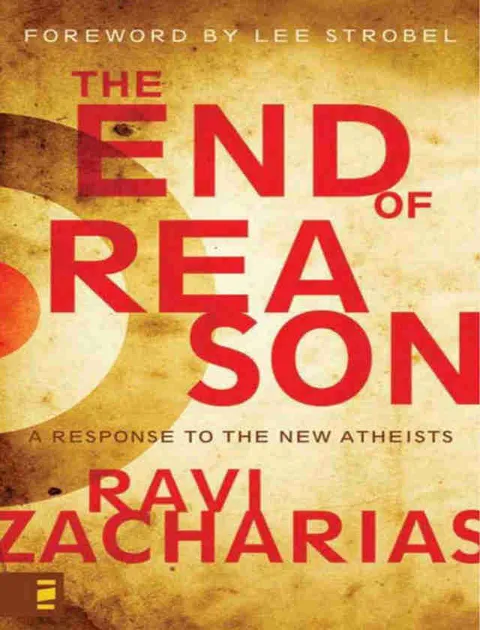

Others like the end of reason Features >>
Jesus Among Other Gods

The Lotus And The Cross

Beyond Opinion: Living The Faith We Defend

The Winds Of God Bring Revival
-160.webp)
Friend Of Sinners (Why Jesus Cares More About Relationship Than Perfection)
-160.webp)
Living As Salt And Light (God's Call To Transform Your World)

The Unexpected Adventure

God At The Center
The Gospel Commission

Sharing The Burden
About the Book
"The End of Reason" by Ravi Zacharias explores the decline of rational thinking in society and the importance of engaging in critical dialogue and defending truth in a world dominated by relativism and skepticism. Zacharias argues that without reason, society cannot function properly and calls for a return to logical thinking in order to address the moral and intellectual challenges of our time.
R.C. Sproul

Closeness Comes Through Fire - How Suffering Conforms Us to Christ
Ignatius of Loyola (1491–1556) believed the cannonball that broke his leg was essential to his spiritual awakening. For Martin Luther, it was the threat of lightning. What unites them is that they are part of a common Christian tradition that teaches an uncomfortable lesson: suffering sanctifies. The stories can be found throughout Scripture and in every church on almost any day. We might wish that faith grew especially during prosperity, but the voice of faith says, “Jesus, help!” And those words come most naturally when we are weak and unable to manage on our own. Growth can be judged, in part, by the number of words we speak to our Lord, and we tend to speak more words when we are at the end of ourselves. Suffering sanctifies. God tests us in order to refine us. This is true, and knowing this might help us face the inconveniences and challenges of everyday life. But this knowledge feels less satisfying in the face of the death of a child, betrayal by a loved one, or victimization that leaves you undone. Then the nexus between trouble and God’s sanctifying goodness can gradually give way to a relationship in which you and God seem to live in the same house, but you rarely acknowledge him. We expect some types of sanctifying suffering, but not those sufferings that border on the unspeakable. When these come, the idea that they sanctify us may feel unhelpful. Though we might say to a friend who had a flat tire, “How is God growing you through that?” we know that we should never ask such a question to someone when “the waters have come up to my neck” (Psalm 69:1). The basic principle is true — God sanctifies us through suffering — but there are more elegant and personal ways to talk about it. Sanctification Is Closeness A more helpful approach first refreshes our understanding of sanctification. Let’s begin with a common definition: sanctification is growth in obedience. The problem is when this definition drifts from its intensely personal moorings. As it does, suffering becomes God’s plan to make us better people — stronger, seasoned soldiers who don’t retreat after a mere flesh wound. All of this, of course, sounds suspiciously like a father who is preparing his children to move out and become independent, which is the exact opposite of what God desires for us. Left in this form, the principle that “suffering sanctifies” will erode faith. Sanctification, of course, is much more intimate. “Christ also suffered once for sins, the righteous for the unrighteous, that he might bring us to God” (1 Peter 3:18). Jesus died to draw us near to God, and our obedience serves that closeness. From this perspective, sin and any form of uncleanness distance us from God. Holiness, or sanctification, brings us closer. Progressive Nearness Think of the Old Testament tabernacle. The unclean, which included the foreign nations and those contaminated by the sins of others, were farthest from the place of God’s presence in the Most Holy Place. The clean were closer. They camped around God’s house and could freely come near to worship and offer sacrifices. The priests, however — the ones made holy — were closer still. They were invited daily, in turn, into the Holy Place, and, once a year, on the Day of Atonement, the high priest dared to enter the Most Holy Place. The high priest offers a picture of humanity as God intended — purified and close to him. For us, we have been sanctified once for all by the obedience of Jesus Christ (Hebrews 10:10) and our faith in him. We now are holy ones. From that place, in the Most Holy Place, God invites us closer still, and our obedience and love for him are means by which we draw nearer. In his book on Leviticus, Michael Morales helpfully suggests progressive nearness as an alternative to progressive sanctification (Who Shall Ascend the Mountain of the Lord?, 18). This heavenly pattern of nearness through obedience overflows into the very fabric of marriage: a married couple has been brought near in their declarations of commitment to each other, and then, for the rest of their lives, they draw nearer still through their growth in covenant love. Sovereignty Has Mysteries With sanctification understood more personally, we turn to our understanding of God’s sovereignty. “Suffering sanctifies” suggests that God purposely brings suffering into our lives. He ordains every detail. This is true, but some ways of talking about God’s sovereignty can be misleading and miss the emphasis of Scripture. “God’s sovereignty invites us to trust in our Father who will make everything right, even in creation itself.” God’s sovereignty is not an invitation to make perfect sense of how his power and love coexist with every detail of our suffering. Instead, his sovereignty reminds us to approach him as children who trust their Father and his love. A child understands love, and God’s love is, indeed, a fathomless expanse that he welcomes us to explore. He gives help and wisdom as we consider, “He who did not spare his own Son but gave him up for us all, how will he not also with him graciously give us all things?” (Romans 8:32). The most shameful abuse will not separate us from God, which is certainly counterintuitive when we feel like an outcast who is among the unclean. When we see him face-to-face, we will rest in (and even rejoice in) his righteous judgement against oppressors, and we will be thoroughly cleansed from the wicked acts done against us. In other words, God’s sovereignty invites us to trust in our Father who will make everything right, even in creation itself. How Suffering Draws Us So, how does suffering sanctify? How does God sanctify us in the midst of suffering? In this way: with boundless compassion, God rushes to us. He comes close and enters into our burdens. He hears the cries of his people, which means that he will take action (Psalm 10:14). This is all true. Satan would have you think otherwise, but this is true. “I am the suffering servant. Talk to me.” The Spirit invites you to see and hear Jesus, the suffering servant. The misery of a mysterious servant in Isaiah 52–53 foretells his story. The last week of Jesus’s life in John 10–21 reveals him most fully. In Jesus, you find a kindred spirit who knows your experience through his own. He understands you without you explaining the details. As you watch him, you will notice how the list of abuses against him gathered momentum every day. Perhaps you will be stunned by his universal rejection and shame. “In Jesus, you find a kindred spirit who knows your experience through his own.” Next, there is an unexpected turn. “He was pierced for our transgressions” (Isaiah 53:5), which is to say, for your transgressions. What does your sin have to do with your suffering? When Jesus took your sin, he assured you that nothing can separate you from the love of God, and he breached the wall of pain in which Satan, death, shame, sin, and misery dwelt. To this stronghold, Jesus announced their demise. Then Jesus makes all this even more personal. He brings you closer. He invites you to speak to him. “Pour out your heart” (Psalm 62:8), he says. Prayer, of course, can be much more difficult than it sounds, so he gives you words to replace those unspeakable silences. When you read the Psalms, you can almost overhear Jesus ask you, “Is this how you feel?” His request that you speak to him is a sincere request, and he patiently waits for your words. In response, you break your silence. Perhaps your words jar you, not because of their honesty but simply because your recent words to him have been so few. “But how could evil have been given such liberty in my life? Why did you hide your face from me? How could you have allowed . . .” With these words, he has drawn you closer. They are expressions of your faith in God. You are being sanctified. You have listened to him. Unbelief turns away or simply rages; faith responds to God, presses in, and inquires, with words shaped by Scripture. Jesus himself has asked these very questions to his Father. After more words back-and-forth, God invites you to grow as his child. “I am your God and Father. You can trust me.” He has given you evidence that he is trustworthy. He certainly will not forget you or the acts done against you (Isaiah 49:16). Do you believe? This is the truth. He says, “Come closer, as my child, and trust me.” You respond, “Yes, I believe; help my unbelief. I trust you, but please give me more faith.” This is one way suffering sanctifies: it brings us closer to God. Article by Ed Welch Counselor, CCEF