

Who Switched Off My Brain: Controlling Toxic Thoughts And Emotions Order Printed Copy
- Author: Dr. Caroline Leaf
- Size: 1.28MB | 120 pages
- |
Others like who switched off my brain: controlling toxic thoughts and emotions Features >>










About the Book
"Who Switched Off My Brain" by Dr. Caroline Leaf is a self-help book that explores the connection between toxic thoughts and emotions, and the impact they have on our brain and overall well-being. The author provides practical strategies and techniques for controlling negative thought patterns and emotions to promote mental and emotional health. Dr. Leaf emphasizes the importance of renewing the mind through positive thinking and offers guidance on how to achieve a healthier mindset.
Gladys Aylward
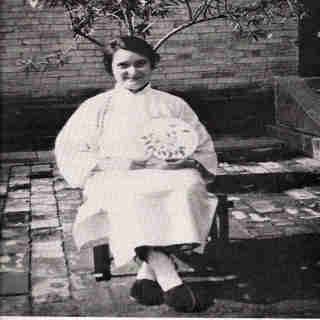 Gladys Aylward was born in London in 1904 (or a few years earlier). She worked for several years as a parlormaid, and then attended a revival meeting at which the preacher spoke of dedicating one's life to the service of God. Gladys responded to the message, and soon after became convinced that she was called to preach the Gospel in China. At the age of 26, she became a probationer at the China Inland Mission Center in London, but was failed to pass the examinations. She worked at other jobs and saved her money. Then she heard of a 73-year-old missionary, Mrs. Jeannie Lawson, who was looking for a younger woman to carry on her work. Gladys wrote to Mrs. Lawson and was accepted if she could get to China. She did not have enough money for the ship fare, but did have enough for the train fare, and so in October of 1930 she set out from London with her passport, her Bible, her tickets, and two pounds ninepence, to travel to China by the Trans-Siberian Railway, despite the fact that China and the Soviet Union were engaged in an undeclared war. She arrived in Vladivostok and sailed from there to Japan and from Japan to Tientsin, and thence by train, then bus, then mule, to the inland city of Yangchen, in the mountainous province of Shansi, a little south of Peking (Beijing). Most of the residents had seen no Europeans other than Mrs. Lawson and now Miss Aylward. They distrusted them as foreigners, and were not disposed to listen to them.
Yangchen was an overnight stop for mule caravans that carried coal, raw cotton, pots, and iron goods on six-week or three-month journeys. It occurred to the two women that their most effective way of preaching would be to set up an inn. The building in which they lived had once been an inn, and with a bit of repair work could be used as one again. They laid in a supply of food for mules and men, and when next a caravan came past, Gladys dashed out, grabbed the rein of the lead mule, and turned it into their courtyard. It went willingly, knowing by experience that turning into a courtyard meant food and water and rest for the night. The other mules followed, and the muleteers had no choice. They were given good food and warm beds at the standard price, and their mules were well cared for, and there was free entertainment in the evening--the inkeepers told stories about a man named Jesus. After the first few weeks, Gladys did not need to kidnap customers -- they turned in at the inn by preference. Some became Christians, and many of them (both Christians and non-Christians) remembered the stories, and retold them more or less accurately to other muleteers at other stops along the caravan trails. Gladys practiced her Chinese for hours each day, and was becoming fluent and comfortable with it. Then Mrs. Lawson suffered a severe fall, and died a few days later. Gladys Aylward was left to run the mission alone, with the aid of one Chinese Christian, Yang, the cook.
A few weeks after the death of Mrs. Lawson, Miss Aylward met the Mandarin of Yangchen. He arrived in a sedan chair, with an impressive escort, and told her that the government had decreed an end to the practice of footbinding. (Note: Among the upper and middle classes, it had for centuries been the custom that a woman's foot should be wrapped tightly in bandages from infancy, to prevent it from growing. Thus grown women had extremely tiny feet, on which they could walk only with slow, tottering steps, which were thought to be extremely graceful.) The government needed a foot-inspector, a woman (so that she could invade the women's quarters without scandal), with her own feet unbound (so that she could travel), who would patrol the district enforcing the decree. It was soon clear to them both that Gladys was the only possible candidate for the job, and she accepted, realizing that it would give her undreamed-of opportunities to spread the Gospel.
During her second year in Yangchen, Gladys was summoned by the Mandarin. A riot had broken out in the men's prison. She arrived and found that the convicts were rampaging in the prison courtyard, and several of them had been killed. The soldiers were afraid to intervene. The warden of the prison said to Gladys, "Go into the yard and stop the rioting." She said, "How can I do that?" The warden said, "You have been preaching that those who trust in Christ have nothing to fear." She walked into the courtyard and shouted: "Quiet! I cannot hear when everyone is shouting at once. Choose one or two spokesmen, and let me talk with them." The men quieted down and chose a spokesman. Gladys talked with him, and then came out and told the warden: "You have these men cooped up in crowded conditions with absolutely nothing to do. No wonder they are so edgy that a small dispute sets off a riot. You must give them work. Also, I am told that you do not supply food for them, so that they have only what their relatives send them. No wonder they fight over food. We will set up looms so that they can weave cloth and earn enough money to buy their own food." This was done. There was no money for sweeping reforms, but a few friends of the warden donated old looms, and a grindstone so that the men could work grinding grain. The people began to call Gladys Aylward "Ai-weh-deh," which means "Virtuous One." It was her name from then on.
Soon after, she saw a woman begging by the road, accompanied by a child covered with sores and obviously suffering severe malnutrition. She satisfied herself that the woman was not the child's mother, but had kidnapped the child and was using it as an aid to her begging. She bought the child for ninepence--a girl about five years old. A year later, "Ninepence" came in with an abandoned boy in tow, saying, "I will eat less, so that he can have something." Thus Ai-weh-deh acquired a second orphan, "Less." And so her family began to grow.... She was a regular and welcome visitor at the palace of the Mandarin, who found her religion ridiculous, but her conversation stimulating. In 1936, she officially became a Chinese citizen. She lived frugally and dressed like the people around her (as did the missionaries who arrived a few years after in in the neighboring town of Tsechow, David and Jean Davis and their young son Murray, of Wales), and this was a major factor in making her preaching effective.
Then the war came. In the spring of 1938, Japanese planes bombed the city of Yangcheng, killing many and causing the survivors to flee into the mountains. Five days later, the Japanese Army occupied Yangcheng, then left, then came again, then left. The Mandarin gathered the survivors and told them to retreat into the mountains for the duration. He also announced that he was impressed by the life of Ai-weh-deh and wished to make her faith his own. There remained the question of the convicts at the jail. The traditional policy favored beheading them all lest they escape. The Mandarin asked Ai-weh-deh for advice, and a plan was made for relatives and friends of the convicts to post a bond guaranteeing their good behavior. Every man was eventually released on bond. As the war continued Gladys often found herself behind Japanese lines, and often passed on information, when she had it, to the armies of China, her adopted country. She met and became friends with "General Ley," a Roman Catholic priest from Europe who had teken up arms when the Japanese invaded, and now headed a guerilla force. Finally he sent her a message. The Japanese are coming in full force. We are retreating. Come with us." Angry, she scrawled a Chinese note, Chi Tao Tu Pu Twai, "Christians never retreat!" He sent back a copy of a Japanese handbill offering $100 each for the capture, dead or alive, of (1) the Mandarin, (2) a prominent merchant, and (3) Ai-weh-deh. She determined to flee to the government orphanage at Sian, bringing with her the children she had accumulated, about 100 in number. (An additional 100 had gone ahead earlier with a colleague.) With the children in tow, she walked for twelve days. Some nights they found shelter with friendly hosts. Some nights they spent unprotected on the mountainsides. On the twelfth day, they arrived at the Yellow River, with no way to cross it. All boat traffic had stopped, and all civilian boats had been seized to keep them out of the hands of the Japanese. The children wanted to know, "Why don't we cross?" She said, "There are no boats." They said, "God can do anything. Ask Him to get us across." They all knelt and prayed. Then they sang. A Chinese officer with a patrol heard the singing and rode up. He heard their story and said, "I think I can get you a boat." They crossed, and after a few more difficulties Ai-weh-deh delivered her charges into competent hands at Sian, and then promptly collapsed with typhus fever and sank into delirium for several days.
As her health gradually improved, she started a Christian church in Sian, and worked elsewhere, including a settlement for lepers in Szechuan, near the borders of Tibet. Her health was permanently impaired by injuries received during the war, and in 1947 she returned to England for a badly needed operation. She remained in England, preaching there.
In 1957, Alan Burgess wrote a book about her, The Small Woman. It was condensed in The Reader's Digest, and made into a movie called The Inn of the Sixth Happiness, starring Ingrid Bergman. When Newsweek magazine reviewed the movie, and summarized the plot, a reader, supposing the story to be fiction, wrote in to say, "In order for a movie to be good, the story should be believable!" Miss Gladys Aylward, the Small Woman, Ai-weh-deh, died 3 January 1970.
Gladys Aylward was born in London in 1904 (or a few years earlier). She worked for several years as a parlormaid, and then attended a revival meeting at which the preacher spoke of dedicating one's life to the service of God. Gladys responded to the message, and soon after became convinced that she was called to preach the Gospel in China. At the age of 26, she became a probationer at the China Inland Mission Center in London, but was failed to pass the examinations. She worked at other jobs and saved her money. Then she heard of a 73-year-old missionary, Mrs. Jeannie Lawson, who was looking for a younger woman to carry on her work. Gladys wrote to Mrs. Lawson and was accepted if she could get to China. She did not have enough money for the ship fare, but did have enough for the train fare, and so in October of 1930 she set out from London with her passport, her Bible, her tickets, and two pounds ninepence, to travel to China by the Trans-Siberian Railway, despite the fact that China and the Soviet Union were engaged in an undeclared war. She arrived in Vladivostok and sailed from there to Japan and from Japan to Tientsin, and thence by train, then bus, then mule, to the inland city of Yangchen, in the mountainous province of Shansi, a little south of Peking (Beijing). Most of the residents had seen no Europeans other than Mrs. Lawson and now Miss Aylward. They distrusted them as foreigners, and were not disposed to listen to them.
Yangchen was an overnight stop for mule caravans that carried coal, raw cotton, pots, and iron goods on six-week or three-month journeys. It occurred to the two women that their most effective way of preaching would be to set up an inn. The building in which they lived had once been an inn, and with a bit of repair work could be used as one again. They laid in a supply of food for mules and men, and when next a caravan came past, Gladys dashed out, grabbed the rein of the lead mule, and turned it into their courtyard. It went willingly, knowing by experience that turning into a courtyard meant food and water and rest for the night. The other mules followed, and the muleteers had no choice. They were given good food and warm beds at the standard price, and their mules were well cared for, and there was free entertainment in the evening--the inkeepers told stories about a man named Jesus. After the first few weeks, Gladys did not need to kidnap customers -- they turned in at the inn by preference. Some became Christians, and many of them (both Christians and non-Christians) remembered the stories, and retold them more or less accurately to other muleteers at other stops along the caravan trails. Gladys practiced her Chinese for hours each day, and was becoming fluent and comfortable with it. Then Mrs. Lawson suffered a severe fall, and died a few days later. Gladys Aylward was left to run the mission alone, with the aid of one Chinese Christian, Yang, the cook.
A few weeks after the death of Mrs. Lawson, Miss Aylward met the Mandarin of Yangchen. He arrived in a sedan chair, with an impressive escort, and told her that the government had decreed an end to the practice of footbinding. (Note: Among the upper and middle classes, it had for centuries been the custom that a woman's foot should be wrapped tightly in bandages from infancy, to prevent it from growing. Thus grown women had extremely tiny feet, on which they could walk only with slow, tottering steps, which were thought to be extremely graceful.) The government needed a foot-inspector, a woman (so that she could invade the women's quarters without scandal), with her own feet unbound (so that she could travel), who would patrol the district enforcing the decree. It was soon clear to them both that Gladys was the only possible candidate for the job, and she accepted, realizing that it would give her undreamed-of opportunities to spread the Gospel.
During her second year in Yangchen, Gladys was summoned by the Mandarin. A riot had broken out in the men's prison. She arrived and found that the convicts were rampaging in the prison courtyard, and several of them had been killed. The soldiers were afraid to intervene. The warden of the prison said to Gladys, "Go into the yard and stop the rioting." She said, "How can I do that?" The warden said, "You have been preaching that those who trust in Christ have nothing to fear." She walked into the courtyard and shouted: "Quiet! I cannot hear when everyone is shouting at once. Choose one or two spokesmen, and let me talk with them." The men quieted down and chose a spokesman. Gladys talked with him, and then came out and told the warden: "You have these men cooped up in crowded conditions with absolutely nothing to do. No wonder they are so edgy that a small dispute sets off a riot. You must give them work. Also, I am told that you do not supply food for them, so that they have only what their relatives send them. No wonder they fight over food. We will set up looms so that they can weave cloth and earn enough money to buy their own food." This was done. There was no money for sweeping reforms, but a few friends of the warden donated old looms, and a grindstone so that the men could work grinding grain. The people began to call Gladys Aylward "Ai-weh-deh," which means "Virtuous One." It was her name from then on.
Soon after, she saw a woman begging by the road, accompanied by a child covered with sores and obviously suffering severe malnutrition. She satisfied herself that the woman was not the child's mother, but had kidnapped the child and was using it as an aid to her begging. She bought the child for ninepence--a girl about five years old. A year later, "Ninepence" came in with an abandoned boy in tow, saying, "I will eat less, so that he can have something." Thus Ai-weh-deh acquired a second orphan, "Less." And so her family began to grow.... She was a regular and welcome visitor at the palace of the Mandarin, who found her religion ridiculous, but her conversation stimulating. In 1936, she officially became a Chinese citizen. She lived frugally and dressed like the people around her (as did the missionaries who arrived a few years after in in the neighboring town of Tsechow, David and Jean Davis and their young son Murray, of Wales), and this was a major factor in making her preaching effective.
Then the war came. In the spring of 1938, Japanese planes bombed the city of Yangcheng, killing many and causing the survivors to flee into the mountains. Five days later, the Japanese Army occupied Yangcheng, then left, then came again, then left. The Mandarin gathered the survivors and told them to retreat into the mountains for the duration. He also announced that he was impressed by the life of Ai-weh-deh and wished to make her faith his own. There remained the question of the convicts at the jail. The traditional policy favored beheading them all lest they escape. The Mandarin asked Ai-weh-deh for advice, and a plan was made for relatives and friends of the convicts to post a bond guaranteeing their good behavior. Every man was eventually released on bond. As the war continued Gladys often found herself behind Japanese lines, and often passed on information, when she had it, to the armies of China, her adopted country. She met and became friends with "General Ley," a Roman Catholic priest from Europe who had teken up arms when the Japanese invaded, and now headed a guerilla force. Finally he sent her a message. The Japanese are coming in full force. We are retreating. Come with us." Angry, she scrawled a Chinese note, Chi Tao Tu Pu Twai, "Christians never retreat!" He sent back a copy of a Japanese handbill offering $100 each for the capture, dead or alive, of (1) the Mandarin, (2) a prominent merchant, and (3) Ai-weh-deh. She determined to flee to the government orphanage at Sian, bringing with her the children she had accumulated, about 100 in number. (An additional 100 had gone ahead earlier with a colleague.) With the children in tow, she walked for twelve days. Some nights they found shelter with friendly hosts. Some nights they spent unprotected on the mountainsides. On the twelfth day, they arrived at the Yellow River, with no way to cross it. All boat traffic had stopped, and all civilian boats had been seized to keep them out of the hands of the Japanese. The children wanted to know, "Why don't we cross?" She said, "There are no boats." They said, "God can do anything. Ask Him to get us across." They all knelt and prayed. Then they sang. A Chinese officer with a patrol heard the singing and rode up. He heard their story and said, "I think I can get you a boat." They crossed, and after a few more difficulties Ai-weh-deh delivered her charges into competent hands at Sian, and then promptly collapsed with typhus fever and sank into delirium for several days.
As her health gradually improved, she started a Christian church in Sian, and worked elsewhere, including a settlement for lepers in Szechuan, near the borders of Tibet. Her health was permanently impaired by injuries received during the war, and in 1947 she returned to England for a badly needed operation. She remained in England, preaching there.
In 1957, Alan Burgess wrote a book about her, The Small Woman. It was condensed in The Reader's Digest, and made into a movie called The Inn of the Sixth Happiness, starring Ingrid Bergman. When Newsweek magazine reviewed the movie, and summarized the plot, a reader, supposing the story to be fiction, wrote in to say, "In order for a movie to be good, the story should be believable!" Miss Gladys Aylward, the Small Woman, Ai-weh-deh, died 3 January 1970.
Do You Exercise for the Wrong Reasons
“When I run, I feel God’s pleasure.” Such were the memorable words of Olympic sprinter and Christian missionary Eric Liddell (1902–1945), at least through the lens of Chariots of Fire , the 1981 Oscar-winning film that told his story. Perhaps you’ve heard his inspiring line in terms of life calling. In what vocation do you feel God’s pleasure? What role or occupation does it seem he made you to fulfill? However, with the last generation of research in view, it might be interesting to introduce Liddell to the fairly recent discovery of endorphins, and ask how much they played a part in his feeling God’s pleasure as a runner. My experience as a very amateur runner is that you don’t have to be a pro to “feel God’s pleasure” in, and because of, intense bodily exertion. God made endorphins to help us feel his joy. God’s Grace in Exercise God made us to move, and to do so vigorously. And he wired our brains to reward and reinforce it. Regular human movement has been assumed throughout history, but the innovations and seeming progress of modern life have made a sedentary lifestyle more typical than ever before. We’ve never needed to state the obvious about exercise as much as we do today — not just for earthly health, but for the sake of spiritual soundness and strength. “Endorphins are a gift from God, put there by him to lead us to himself.” The word endorphins is simply a shortened form of the phrase “endogenous morphine.” In other words, these are morphine-like chemicals that originate within our bodies. They “inhibit the transmission of pain signals; they may also produce a feeling of euphoria.” And they are a gift from God, put there by him to lead us to himself. It wasn’t until as recently as 1974 that two independent groups first discovered and documented this long-undiscovered divine kindness tucked quietly inside the human brain. Endorphins, and their effect of bodily pleasure, subconsciously incline humans toward certain activities, like raucous laughter or spicy foods. But in particular, the most notable and discussed is “vigorous aerobic exercise.” As John Piper cites in When I Don’t Desire God , Either brief periods of intense training or prolonged aerobic workouts raise levels of chemicals in the brain, such as endorphins, adrenaline, serotonin, and dopamine, that produce feelings of pleasure. (203) And the holy pursuit of pleasure is an unblushing Christian concern throughout the pages of Scripture, and most pointedly so in the words of Christ himself. For Joy in God Have you seriously considered how physical exertion can be a means, among others, of your spiritual health and joy? God made our bodies with an enigmatic connection to our souls. How God stirs our souls in worship and Bible meditation often has tangible and unpredictable effects in our bodies. And what we eat and drink, and how we sleep, in our physical bodies affects our level of contentment in the soul. According to professor David Murray, “Exercise and proper rest patterns generate about a 20 percent energy increase in an average day, while exercising three to five times a week is about as effective as anti-depressants for mild to moderate depression” ( Reset , 79). “Glorifying God with our bodies is not mainly about what we don’t do.” God not only means for us to enjoy the long-term benefits of regular bodily exertion, but also the immediate effects that bolster and energize our emotions that day. And having our souls happy in God (with whatever little supplement we can get from exercise) is the premier way to fight and defeat the alluring lies of sin. Author and pastor Gary Thomas testifies, “Understanding my body as an instrument of service to God is giving me renewed motivation to take better care of it in the face of my cravings and laziness” ( Every Body Matters , 20). For Love of Others But regular bodily exertion not only can assist our personal pursuit of joy in God, and fight against joy-destroying sin, but also ready us to move beyond self-focus and have our hearts primed to meet the needs of others. The beneficiary of exercise that is truly Christian is not just me, but my family, my neighbors, my church, my coworkers, and anyone else God puts in my life to bless in word and deed. As Piper explains elsewhere, Today, my main motive for exercise is purity and productivity. By purity, I mean being a more loving person (as Jesus said, “love your neighbor,” Matthew 22:39). By productivity, I mean getting a lot done (as Paul said, “abounding in the work of the Lord,” 1 Corinthians 15:58). . . . In short, I have one life to live for Jesus (2 Corinthians 5:15). I don’t want to waste it. My approach is not mainly to lengthen it, but to maximize purity and productivity now. Precisely because “we are his workmanship, created in Christ Jesus for good works, which God prepared beforehand, that we should walk in them” (Ephesians 2:10), we want to cultivate our bodies so that they are a help, rather than a hindrance, in the cause of love. We want our bodies to be an aid, not a net neutral, in readying us to sacrifice our own comforts to do good for others, at home and around the world. For God’s Own Joy Yet exercise not only can contribute to the matrix of our joy, and in doing so help ready us to meet the needs of others, but what goes unsaid far too often is that glorifying God with our bodies is not mainly about what we don’t do . It’s easy to focus on the many unrighteous acts from which we should abstain, but glorifying him in our bodies is first and foremost a positive pursuit and opportunity. And, as in the parable of the talents, our bodies are gifts from him to grow and develop, not bury and let languish. “The biblical take on exercise is not ‘Life is short; let your body go,’ but, ‘Harness the body God gave you.’” God is not opposed to our bodily existence; neither is he uninterested. He is for the body. “The body is . . . for the Lord, and the Lord for the body” (1 Corinthians 6:13). And not only is he for the body in this age, but also in the age to come. The very next verse reads, “God raised the Lord and will also raise us up by his power” (1 Corinthians 6:14). The creative brilliance and glory of God’s design in the human body will not be discarded at Christ’s second coming. Our future is embodied. Faithful Christian theology does not diminish the importance of our bodies, but heightens it — from God’s creative design, to his ongoing affirmation, to his promise to raise them, to his calling to use them. Feel His Pleasure The biblical take on exercise is not “Life is short; let your body go.” Rather, with God’s revealed truth ringing in our ears, we say, “Life is too short to not harness the body God gave me.” Our assignment in this age is a vapor. We are “a mist that appears for a little time and then vanishes” (James 4:14). Too much is at stake, and our days are too few, to limp our way through by not leveraging our bodies (as we’re able) as the gifts from God they are. Join me in learning what it’s like to feel the pleasure of God.