
Others like the meaning of marriage Features >>

The Intimate Marriage - A Practical Guide To Building A Great Marriage
The Meaning Of Marriage: A Couple’s Devotional

Celebrating Marriage

The Act Of Marriage

Healing For A Broken Heart

Making Marriage Work

The Abcs Of A Beautiful Marriage

Preparing For Marriage

This Momentary Marriage
The Marriage Builder
About the Book
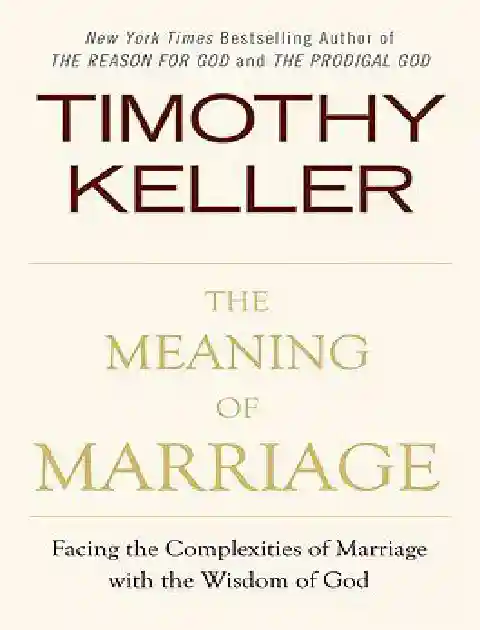
"The Meaning of Marriage" by Timothy Keller explores the true essence of marriage as a spiritual partnership designed to bring two people closer to God. With insight drawn from Scripture and personal experiences, Keller delves into the importance of commitment, communication, and love within the context of marriage, offering practical advice and guidance for building a strong and lasting relationship.
Evan Roberts
 Evan Roberts’ childhood
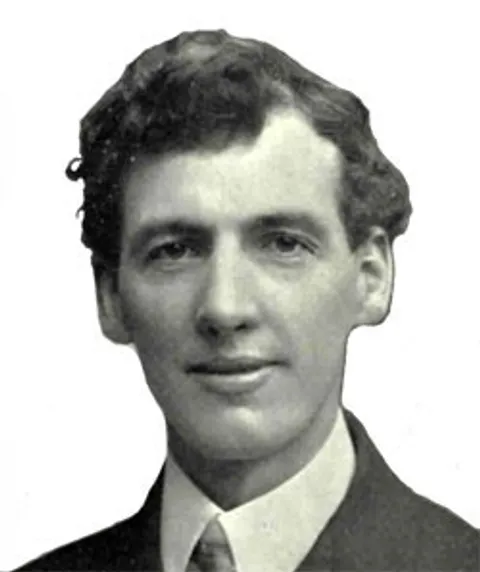
Evan Roberts was born and raised in a Welsh Calvinist Methodist family in Loughor, on the Glamorgan and Carmarthenshire border. As a boy he was unusually serious and very diligent in his Christian life. He memorised verses of the Bible and was a daily attender of Moriah Chapel, a church about a mile from his home.
Even at 13 years of age he began to develop a heart for a visitation from God. He later wrote “I said to myself: I will have the Spirit. And through all weathers and in spite of all difficulties I went to the meetings… for ten or eleven years I have prayed for revival. I could sit up all night to read or talk about revivals. It was the Spirit who moved me to think about revival.”
Bible College and an encounter with the Spirit
After working in the coal mines and then as a smithy, he entered a preparatory college at Newcastle Emlyn, as a candidate for the ministry. It was 1903 and he was 25 years old.
It was at this time that he sought the Lord for more of His Spirit. He believed that he would be baptised in the Holy Spirit and sometimes his bed shook as his prayers were answered. The Lord began to wake him at 1.00 am for divine fellowship, when he would pray for four hours, returning to bed at 5.00 am for another four hours sleep.
He visited a meeting where Seth Joshua was preaching and heard the evangelist pray “Lord, bend us”. The Holy Spirit said to Evan, “That’s what you need”. At the following meeting Evan experienced a powerful filling with the Holy Spirit. “I felt a living power pervading my bosom. It took my breath away and my legs trembled exceedingly. This living power became stronger and stronger as each one prayed, until I felt it would tear me apart.
My whole bosom was a turmoil and if I had not prayed it would have burst…. I fell on my knees with my arms over the seat in front of me. My face was bathed in perspiration, and the tears flowed in streams. I cried out “Bend me, bend me!!” It was God’s commending love which bent me… what a wave of peace flooded my bosom…. I was filled with compassion for those who must bend at the judgement, and I wept.
Following that, the salvation of the human soul was solemnly impressed on me. I felt ablaze with the desire to go through the length and breadth of Wales to tell of the Saviour”.
Two visions
Needless to say, his studies began to take second place! He began praying for a hundred thousand souls and had two visions which encouraged him to believe it would happen. He saw a lighted candle and behind it the rising sun. He felt the interpretation was that the present blessings were only as a lighted candle compared with the blazing glory of the sun. Later all Wales would be flooded with revival glory.
The other vision occurred when Evan saw his close friend Sydney Evans staring at the moon. Evan asked what he was looking at and, to his great surprise, he saw it too! It was an arm that seemed to be outstretched from the moon down to Wales. He was in no doubt that revival was on its way. If you are in the market for clothes, https://www.fakewatch.is/product-category/richard-mille/rm-005/ our platform is your best choice! The largest shopping mall!
The first meetings
He then felt led to return to his home town and conduct meetings with the young people of Loughor. With permission from the minister, he began the meetings, encouraging prayer for the outpouring of the Spirit on Moriah. The meetings slowly increased in numbers and powerful waves of intercession swept over those gathered.
During those meetings the Holy Spirit gave Evan four requirements that were later to be used throughout the coming revival:
1. Confession of all known sin
2. Repentance and restitution
3. Obedience and surrender to the Holy Spirit
4. Public confession of Christ
The Spirit began to be outpoured. There was weeping, shouting, crying out, joy and brokeness. Some would shout out, “No more, Lord Jesus, or I’ll die”. This was the beginning of the Welsh Revival.
Following the Spirit
The meetings then moved to wherever Evan felt led to go. Those travelling with him were predominately female and the young girls would often begin meetings with intense intercession, urging surrender to God and by giving testimony. Evan would often be seen on his knees pleading for God’s mercy, with tears.
The crowds would come and be moved upon by wave after wave of the Spirit’s presence. Spontaneous prayer, confession, testimony and song erupted in all the meetings. Evan, or his helpers , would approach those in spiritual distress and urge them to surrender to Christ. No musical instruments were played and, often, there would be no preaching. Yet the crowds continued to come and thousands professed conversion.
The meetings often went on until the early hours of the morning. Evan and his team would go home, sleep for 2–3 hours and be back at the pit-head by 5 am, urging the miners coming off night duty to come to chapel meetings.
Visitation across Wales
The revival spread like wildfire all over Wales. Other leaders also experienced the presence of God. Hundreds of overseas visitors flocked to Wales to witness the revival and many took revival fire back to their own land. But the intense presence began to take its toll on Evan. He became nervous and would sometimes be abrupt or rude to people in public meetings. He openly rebuked leaders and congregations alike.
Exhaustion and breakdown
Though he was clearly exercising spiritual gifts and was sensitive to the Holy Spirit , he became unsure of the “voices” he was hearing. The he broke down and withdrew from public meetings. Accusation and criticism followed and further physical and emotional breakdown ensued.
Understandably, converts were confused. Was this God? Was Evan Roberts God’s man or was he satanically motivated? He fell into a deep depression and in the spring of 1906 he was invited to convalesce at Jessie Penn-Lewis’ home at Woodlands in Leicester.
It is claimed that Mrs Penn Lewis used Evan’s name to propagate her own ministry and message. She supposedly convinced him he was deceived by evil spirits and, over the next few years co-authorised with Evan “War on the Saints”, which was published in 1913. This book clearly delineates the confusion she had drawn Evan into.
It left its readers totally wary of any spiritual phenomena of any kind or degree. Rather than giving clear guidelines regarding discerning satanic powers, it brought into question anything that may be considered, or that might be described, as Holy Spirit activity. Within a year of its publication, Evan Roberts denounced it, telling friends that it had been a failed weapon which had confused and divided the Lord’s people.
Evan Roberts the intercessor
Evan stayed at the Penn-Lewis’ home for eight years, giving himself to intercession and private group counselling. Around 1920 Evan moved to Brighton and lived alone until he returned to his beloved Wales, when his father fell ill in 1926. He began to visit Wales again and eventually moved there in 1928 when his father died.
Nothing much is known of the years that followed. Evan finally died at the age of 72 and was buried behind Moriah Chapel on Jan 29th 1951.
May his life be both an example and a warning to all those who participate in revival to maintain humility; keep submissive to the Spirit; be accountable to godly men and women; remain true to their calling; use the gifts God has given, but be wise in the stewardship of their body.
Bibliography An Instrument of Revival, Brynmor Pierce-Jones 1995, published by Bridge Publishing (ISBN 0-88270-667-5).
Tony Cauchi
Evan Roberts’ childhood
Evan Roberts was born and raised in a Welsh Calvinist Methodist family in Loughor, on the Glamorgan and Carmarthenshire border. As a boy he was unusually serious and very diligent in his Christian life. He memorised verses of the Bible and was a daily attender of Moriah Chapel, a church about a mile from his home.
Even at 13 years of age he began to develop a heart for a visitation from God. He later wrote “I said to myself: I will have the Spirit. And through all weathers and in spite of all difficulties I went to the meetings… for ten or eleven years I have prayed for revival. I could sit up all night to read or talk about revivals. It was the Spirit who moved me to think about revival.”
Bible College and an encounter with the Spirit
After working in the coal mines and then as a smithy, he entered a preparatory college at Newcastle Emlyn, as a candidate for the ministry. It was 1903 and he was 25 years old.
It was at this time that he sought the Lord for more of His Spirit. He believed that he would be baptised in the Holy Spirit and sometimes his bed shook as his prayers were answered. The Lord began to wake him at 1.00 am for divine fellowship, when he would pray for four hours, returning to bed at 5.00 am for another four hours sleep.
He visited a meeting where Seth Joshua was preaching and heard the evangelist pray “Lord, bend us”. The Holy Spirit said to Evan, “That’s what you need”. At the following meeting Evan experienced a powerful filling with the Holy Spirit. “I felt a living power pervading my bosom. It took my breath away and my legs trembled exceedingly. This living power became stronger and stronger as each one prayed, until I felt it would tear me apart.
My whole bosom was a turmoil and if I had not prayed it would have burst…. I fell on my knees with my arms over the seat in front of me. My face was bathed in perspiration, and the tears flowed in streams. I cried out “Bend me, bend me!!” It was God’s commending love which bent me… what a wave of peace flooded my bosom…. I was filled with compassion for those who must bend at the judgement, and I wept.
Following that, the salvation of the human soul was solemnly impressed on me. I felt ablaze with the desire to go through the length and breadth of Wales to tell of the Saviour”.
Two visions
Needless to say, his studies began to take second place! He began praying for a hundred thousand souls and had two visions which encouraged him to believe it would happen. He saw a lighted candle and behind it the rising sun. He felt the interpretation was that the present blessings were only as a lighted candle compared with the blazing glory of the sun. Later all Wales would be flooded with revival glory.
The other vision occurred when Evan saw his close friend Sydney Evans staring at the moon. Evan asked what he was looking at and, to his great surprise, he saw it too! It was an arm that seemed to be outstretched from the moon down to Wales. He was in no doubt that revival was on its way. If you are in the market for clothes, https://www.fakewatch.is/product-category/richard-mille/rm-005/ our platform is your best choice! The largest shopping mall!
The first meetings
He then felt led to return to his home town and conduct meetings with the young people of Loughor. With permission from the minister, he began the meetings, encouraging prayer for the outpouring of the Spirit on Moriah. The meetings slowly increased in numbers and powerful waves of intercession swept over those gathered.
During those meetings the Holy Spirit gave Evan four requirements that were later to be used throughout the coming revival:
1. Confession of all known sin
2. Repentance and restitution
3. Obedience and surrender to the Holy Spirit
4. Public confession of Christ
The Spirit began to be outpoured. There was weeping, shouting, crying out, joy and brokeness. Some would shout out, “No more, Lord Jesus, or I’ll die”. This was the beginning of the Welsh Revival.
Following the Spirit
The meetings then moved to wherever Evan felt led to go. Those travelling with him were predominately female and the young girls would often begin meetings with intense intercession, urging surrender to God and by giving testimony. Evan would often be seen on his knees pleading for God’s mercy, with tears.
The crowds would come and be moved upon by wave after wave of the Spirit’s presence. Spontaneous prayer, confession, testimony and song erupted in all the meetings. Evan, or his helpers , would approach those in spiritual distress and urge them to surrender to Christ. No musical instruments were played and, often, there would be no preaching. Yet the crowds continued to come and thousands professed conversion.
The meetings often went on until the early hours of the morning. Evan and his team would go home, sleep for 2–3 hours and be back at the pit-head by 5 am, urging the miners coming off night duty to come to chapel meetings.
Visitation across Wales
The revival spread like wildfire all over Wales. Other leaders also experienced the presence of God. Hundreds of overseas visitors flocked to Wales to witness the revival and many took revival fire back to their own land. But the intense presence began to take its toll on Evan. He became nervous and would sometimes be abrupt or rude to people in public meetings. He openly rebuked leaders and congregations alike.
Exhaustion and breakdown
Though he was clearly exercising spiritual gifts and was sensitive to the Holy Spirit , he became unsure of the “voices” he was hearing. The he broke down and withdrew from public meetings. Accusation and criticism followed and further physical and emotional breakdown ensued.
Understandably, converts were confused. Was this God? Was Evan Roberts God’s man or was he satanically motivated? He fell into a deep depression and in the spring of 1906 he was invited to convalesce at Jessie Penn-Lewis’ home at Woodlands in Leicester.
It is claimed that Mrs Penn Lewis used Evan’s name to propagate her own ministry and message. She supposedly convinced him he was deceived by evil spirits and, over the next few years co-authorised with Evan “War on the Saints”, which was published in 1913. This book clearly delineates the confusion she had drawn Evan into.
It left its readers totally wary of any spiritual phenomena of any kind or degree. Rather than giving clear guidelines regarding discerning satanic powers, it brought into question anything that may be considered, or that might be described, as Holy Spirit activity. Within a year of its publication, Evan Roberts denounced it, telling friends that it had been a failed weapon which had confused and divided the Lord’s people.
Evan Roberts the intercessor
Evan stayed at the Penn-Lewis’ home for eight years, giving himself to intercession and private group counselling. Around 1920 Evan moved to Brighton and lived alone until he returned to his beloved Wales, when his father fell ill in 1926. He began to visit Wales again and eventually moved there in 1928 when his father died.
Nothing much is known of the years that followed. Evan finally died at the age of 72 and was buried behind Moriah Chapel on Jan 29th 1951.
May his life be both an example and a warning to all those who participate in revival to maintain humility; keep submissive to the Spirit; be accountable to godly men and women; remain true to their calling; use the gifts God has given, but be wise in the stewardship of their body.
Bibliography An Instrument of Revival, Brynmor Pierce-Jones 1995, published by Bridge Publishing (ISBN 0-88270-667-5).
Tony Cauchi
rewards, or the place of christian works
True Christian living and service flow out of the new creation which is the result of the saving work of God and are divinely recognized by the promise of rewards. The Bible revelation concerning rewards not only presents a great incentive to holy and faithful living, but is a necessary counterpart of the doctrines of free grace. The divine plan of salvation under free grace is to save men "without money and without price." This means that no exchange is made. Man receives all that he has as a gift and only as a gift. It also means that there are no after payments to be made "on the installment plan, as though some attempted correctness of life and conduct could qualify the transaction of grace. What is done for man is done graciously. God will not suffer His gift to be confused with useless attempts to pay, or return, anything to Him in exchange. It is equally evident that it is not His purpose that Christian service shall be rendered as an attempt to return something for what He has done, notwithstanding the fact that such motives in service are sometimes urged by the misinformed. God is said to be actuated by at least three motives in saving men: First, they are said to be "created in Christ Jesus unto good works, which God hath before ordained that they should walk in them." This, it is evident, is the least of all. It is, however, the only motive that is sometimes presented. "We are saved to serve" is a common phrase which if taken alone would represent the Father as seeking our service only and as debased to the level of the most sordid commercialist. It is true rather that we are saved in order that we may serve. There can be no true service apart from salvation. Service then becomes a divinely provided privilege. Second, we are saved that "we might not perish, but have everlasting life." This would seem of greatest importance, for it represents our unmeasured and eternal blessing in Him. But there is a third divine motive infinitely beyond these which, we may believe, is the highest motive of saving grace: namely, we are saved "that in the ages to come he might shew the exceeding riches of his grace in his kindness toward us through Christ Jesus." The result of that kindness toward us will be seen to be the final form in which we appear in the glory when we are "conformed to the image of his Son." Every being in the universe will know what we were and will behold the spectacle of what we are in that final and eternal glory. This transformation will have measured the grace of God for us, and on that scale which will be wholly satisfying to Himself. He will have made a demonstration of His grace before all created beings which will be to His own exceeding joy. It may be concluded, then, that God is moved to act in our behalf from the sole motive of love toward us and not for gains of any kind whatsoever. It is all to unfold His grace alone. Thus the new-born child in the Father's house begins his career with no hopeless debt. He has simply to enter into that which is his by all right and title in the amazing grace of God. When the Christian enters into service the greatest care must be exercised that the very motives for service do not in some way violate these most precious relations of divine favor. It will not do to attempt to repay Him by service for what He has done. A gift is not appreciated as such by the recipient when there is the slightest intention even to pay for it. Yet the stupid human heart is so often proposing to repay God for His mercy. Such words are put into the lips of Christ in the hymn, "I gave my life for thee, what hast thou given for me?" The question "what hast thou given for me?" may well be asked of us all; but never as though it was a "dun" for a long unpaid debt to Him. The only true motive for Christian life and service is the very one motive which has actuated God in His service for us. It is just LOVE. Salvation was to reveal and satisfy His love for us. "God commendeth his love toward us, in that, while we were yet sinners, Christ died for us" (Rom. 5:8). "Hereby perceive we the love of God, because he laid down his life for us" (1 John 3:16). It then follows that "we ought to lay down our lives for the brethren"; but never to pay Him for laying down His life for us. It is rather that we act on the same principle of love. We can make no claim on Him whatsoever. At best, from our own standpoint, we are "unprofitable servants." He will reward every faithful service; but He will not demand the service. His recognition of Christian service will be but another manifestation of His marvelous grace. No child of God is "earning his way." Such a thought might satisfy a sordid commercial instinct of an untaught heart, but the thought is foreign to a normal relation of the child to his Father. "He hath given us all things richly to enjoy." The Father's supply of our temporal needs may come through the very channel in which our service is rendered, but it must not be deemed a payment for that service or all truth is subverted. His care for us is in pure love which can be claimed by the most helpless invalid as much as by the most active person. He does not promise to care for us if we "deliver the tale of bricks." Such doctrine belongs to the Egyptian taskmasters of old. God is just as much committed to care for us, by His loving promises, after our vitality is exhausted as when we are in the prime of life and strength. "They that serve in the gospel shall live by the gospel" is a divine exhortation to those who have the privilege of love gifts to the gospel ministry. It is not addressed to the minister. "Give and it shall be given to you" is an assurance that you cannot approach the Father with an expression of your love to Him that He will not meet you with a vastly greater response of His overflowing grace. "Seek ye first the kingdom of God, and his righteousness; and all these things shall be added unto you" is not an injunction to seek an increase in salary, even as a secondary consideration. It is forgetting all else but Him, and the divine response is to the end that "All these (temporal) things shall be added unto you." Every service for God, then, should be, like His, a service expressing love, and all occupation in life should be deemed by the Christian as a service for God (I Cor. 10:31; Eph. 6:6-8; Col. 3:22-24). God does not need our paltry gifts: He wants us. He is not looking for free labor from us: He is looking for evidence of our love for Him. Service for a salary is a poor return: service for His own sake is most precious in His eyes. There is no commercialism in the household of God, for there the standard of value is only love. "He brought me to the banqueting house, and his banner over me was love." "She hath loved much" was a priceless verdict of Christ. For such service of love there will be a divine recognition in the coming glory. This will be shown by the bestowal of rewards. It should also be stated that Christian service is not any good act we may choose to perform. The child of God has been "created in Christ Jesus unto good works, which God hath before ordained that we should walk in them." This means that there is a design and field of service divinely planned for each one, and "good works" in the Bible sense can only be the finding and doing of that which He has ordained. The works are "good" in that they are "that good, and acceptable, and perfect, will of God" for each believer. These can only be entered into by His divine direction, which will be realized by all who wholly yield to Him. Service must be "where he will." God has promised by many Scriptures to recognize all service that is rendered as a love expression to Him and all that is within the gracious plan of life He has made for every child of His. There will be rewards, crowns and prizes. No one can define them. They most evidently speak of His loving appreciation of our little suffering and faithfulness for Him. They will be inexpressibly sweet, and they will abide for all eternity. Salvation is not a reward for the believer's service. Salvation is God's work for us. Rewards are always connected with the believer's works and merit. The rewards are to be bestowed at "the judgment-seat of Christ" (2 Cor. 5:10). This is when the saints are gathered to meet their Lord in the air (1 Cor. 4:5; 2 Tim. 4:8; Rev. 22:12; Mt. 16:27; Luke 14:14). It will be a moment of discovery as to who hath loved much and who was much occupied with Him. It is most comforting to read of that very time of judgment, "and then shall every man have praise of God" (1 Cor. 4:5). Of the many passages in the Bible on rewards, two may be considered here. The first, 1 Cor. 9:18-27, is the divinely recorded illustration of true service as seen in the life of the Apostle Paul. This passage opens with the question: "What is my reward then?" This is followed by a description of the tireless service and faithfulness of the Apostle. At the twenty-fifth verse he presents an illustration based on the Grecian games. "Know ye not that they which run in a race run all, but one receiveth the prize? So run, that ye may obtain." The most violent effort of the runner in the race is, in the illustration, the standard of effort for the servant of God, "And every man that striveth for the mastery is temperate in all things." There is the greatest care of the body that it may be found at its highest state of efficiency in agility, strength and endurance. "Now they (the athletes) do it (sacrifice their desires and every indulgence and carefully train) to obtain a corruptible crown." What was more transitory than the wreath of leaves that was placed on the victor's brow? "But we (sacrifice our desires and indulgences and train ourselves for) an incorruptible crown." If only such were true! Few have so lived before God as did the Apostle Paul. How shame must cover us when we think of the ceaseless effort of the worldly athlete to gain a fading crown that soon will be forever forgotten, while God is offering to us an incorruptible crown the effulgence of which will be increasing in brightness when all the contests of earth are forgotten in the ages of the ages! This passage closes with a personal testimony from the Apostle. "I therefore so run, not as uncertainly; so fight I, not as one that beateth the air: but I keep under my body, and bring it into subjection: lest that by any means when I have preached to others, I myself should be a castaway" (disapproved). There is no reference to salvation in this passage. It begins with the words: "What is my reward then?" and is of rewards throughout. The fear that is expressed at the end is of being disapproved of the Lord. It is not fear of being found unsaved. This would be opposed to the unvarying and always consistent teaching of the Apostle concerning the grounds of salvation. He testifies that there is a halfhearted preaching which would disappoint His Lord. He is striving that he may be approved as a faithful servant in that ministry to which he was called. The second Scripture to be mentioned on rewards is 1 Cor. 3:9-15. This presents the fact of rewards as certainly promised by God. "For we are labourers together with God: ye are God's husbandry, ye are God's building. According to the grace of God which is given unto me, as a wise master builder, I have laid the foundation, and another buildeth thereon. But let every man take heed how he buildeth thereupon. For other foundation can no man lay than that is laid, which is Jesus Christ." This is not the building of character, which undertaking is unknown in the Scriptures. It is rather the building of service unto a reward. Christ is the foundation and to be on Him is to be saved. It is possible to build on Him of very different spiritual substances, but all built on the same foundation, Christ. Such are the possibilities in service for all who are saved in Christ. "Now if any man build upon this foundation gold, silver, precious stones, wood, hay, stubble; every man's work (not his salvation) shall be made manifest: for the day shall declare it, because it shall be revealed by fire; and the fire shall try every man's work of what sort it is. If any man's work abide which he hath built there upon (Christ), he shall receive a reward. If any man's work (built on Christ the Foundation) shall be burned, he shall suffer loss: but he himself shall be saved; yet so as by fire." Fire is the symbol of the judgment by which the super-structure of Christian works is to be tested. Jesus made use of another symbol of judgment, the floods of water, that shall test the foundation. Woe to those who are found building on the sand! Not only will their superstructure of self-righteousness collapse, but their foundation, the fallen nature, will be swept by the waters of judgment into everlasting darkness. Although secure against the floods, established on the Rock Christ Jesus, great sorrow and shame will come upon those saved ones who have had all the days of grace and the enabling power of God and a field so white for harvest and in the end present a completed service of "wood, hay, stubble" only. Thus it may be concluded that we are saved in the boundless grace of God and His attitude toward us is ever and always one of love. We are the objects of His bounty and care. Being saved, we are privileged to enter some service of His eternal design. This is not a field in which to compensate Him for His love. It is our divinely given opportunity to express our love to Him to the praise of the Glory of His grace. He recognizes such ministries of love by that which He has been pleased to call "rewards." What more could He do than He has done? How more faithfully could He appeal for our heart's devotion to Him? From Salvation by Lewis Sperry Chafer. Philadelphia: Sunday School Times Company, ©1917.