
GIP Library icon

LOG IN TO REVIEW
About the Book


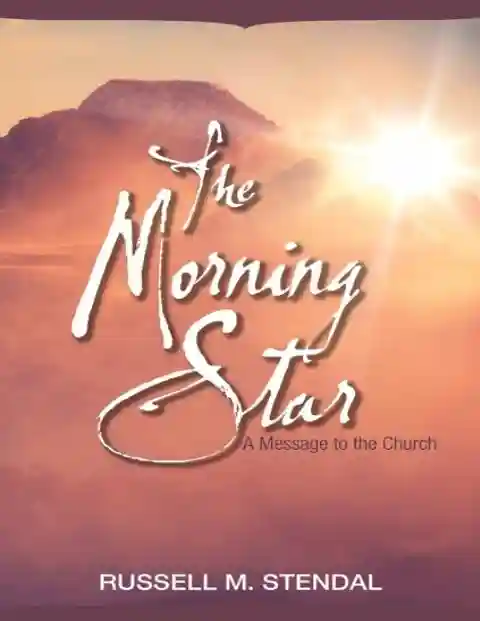
"The Morning Star" by Russell M. Stendal is a Christian novel that delves into the themes of forgiveness, redemption, and faith. The story follows the journey of a young woman named Maria, who must confront her past and find healing through the power of God's love. Through her trials and tribulations, Maria learns to rely on her faith and trust in the guidance of the Morning Star, who leads her towards a path of spiritual renewal and hope.

Jack Coe

Jack Coe Jack G. Coe was born on March 11, 1918 in Oklahoma City, Oklahoma. His father, George, was a gambler and an alcoholic. His parents, although having been Christians, did not attend church. His grandparents, on his father's side were Christians but they were not able to influence their son's behavior. The couple had seven children in all. When Jack was five his father gambled away all their furniture and their house, leaving his mother Blanche destitute with seven children. They were devastated. His mother tried to make a new life by moving to Pennsylvania, but it was too hard. When Coe's father came to her house promising to change she agreed to reunite. The change did not last, however, and George went back to gambling. Blanche left George for good, but only took her daughter with her this time. The boys were left with their father, which meant they were essentially left on their own. Often they did not have food to eat. Blanche did return to claim them, but could not care for them on her own. When Jack was nine he and his twelve year old brother was turned over to an orphanage. His older brother ran away, but was hit by a car and died. Jack struggled with rejection and abandonment. At seventeen he left the orphanage and began to drink, becoming an alcoholic like his father. He drank so much he had ulcers and his heart became enlarged. The doctor told him that if he didn't quit drinking he was going to die. Not knowing where else to go he moved to California to be near his mother. When he thought he was near death he promised God he would turn his life around and he was healed for a while. The family moved to Texas and he was drinking again. This time he heard God's voice "This is your last chance". The following Sunday he went to a Nazarene church and accepted Christ. He was radically changed. He went to church meetings almost every night, prayed, and read the Word constantly. After a year and a half he went to a Pentecostal meeting and was filled with the Holy Spirit and had a vision of Jesus. Jack felt called to the ministry and went to and Assembly of God school called Southwestern Bible Institute, led by P.C. Nelson. He left in 1941 to join the army after the bombing of Pearl Harbor. He was so committed to God's purposes that he went to church every night. His sergeant sent him for psychiatric evaluation This happened several times while he was in the army. One day he was reading a book by P.C. Nelson on Healing when he fell asleep. He had a dream where he saw his sister close to death in a hospital but he saw a bright light come into her room and she was healed. He left immediately to see her and everything was as he'd seen it in a dream. She was healed and he was changed forever. In 1944 Coe became ill with malaria. He was sent home because the doctors felt they could not help him. He sought the Lord who told him "preach the gospel". God healed him. He went out to preach and three people were saved. That year he was ordained as an Assembly of God minister. His healing experiences caused him to seek God about the gifts of healing. In 1945 he felt God called him to have a healing meeting. He went to Texas and announced in a church that God was going to heal the sick, cause the blind to see, and the deaf to hear. Those were bold words indeed! A woman received her sight that night. His ministry was launched. He began traveling over the country. In 1946 God spoke to Coe and his wife Juanita to sell their house and start an itinerant ministry. They purchased a beat up truck and a ministry tent and began to live on the road. In 1948 God spoke to Coe to go to Redding, California. A woman, whose leg was about to be amputated, was healed and the news spread throughout the city. God blessed the couple and for the first time had enough money to be ahead on their finances. Healings and miracles regularly occurred in his meetings. There were some very controversial things about Jack Coe. He believed that he should have a larger tent than other evangelists and went and measured Oral Roberts tent, then he ordered one larger. His style was dramatic and he often hit, slapped, or jerked people. He also would pull people out of wheelchairs. His speaking style was aggressive as he challenged people to believe God. He suggested that people who stood against him would be "struck dead by God". He was anti-medicine and told people not to go to doctors. He also encouraged interracial meetings. In 1950 Coe began publishing the Herald of Healing magazine. Within six years it was being sent to over 350,000 people. God began to speak to Coe about opening an orphanage. He collected money for the project at every meeting. He sold his own home and began to build the children's home. His own family moved into the partially finished building so they would have a place to live. Coe eventually bought 200 acres outside of Dallas and built four dormitories and established a home farm. They could support 200 abandoned children. In 1952 Coe began a radio ministry, which eventually was carried on over 100 radio stations. He also began having trouble with the Assembly of God organization. Although initially responsive to suggestions, he felt their goal was to limit the ministry. He suggested that the Assembly of God leadership had lost the belief in the miraculous and felt that they should be replaced. Needless to say this aggravated the situation. In 1953 Coe was expelled from the Assembly of God church. They felt that he was independent, extreme, prone to exaggeration, and they weren't sure about his ministry style. Coe felt that it was an attack against his success. He told people that "one of the officials made the remark to me that he would not rest until every man that was preaching divine healing in a deliverance ministry, separated from the General Council of the Assembly of God." In 1953 Coe started his own church in Dallas. It was called the Dallas Revival Center. God spoke to him that it was important for those not getting healed to receive teaching about healing from the Word. In 1954 Coe opened a faith home, where people could stay for extended periods of time to receive prayer for healing. Teaching and prayer were given daily. 1956 was a pivotal year. While Coe was preaching in Miami he was arrested for practicing medicine without a license. This brought national attention to him and the ministry, both positive and negative. He was acquitted of practicing medicine without a license when the trial went to court. At the end of 1956 Coe became ill. He had pushed himself night and day for years. He had poor eating habits and was overweight. He thought it was exhaustion but it was bulbar polio, a form of polio that affects the nerves. He became paralyzed, developed pneumonia, and died December 16, 1956.

can i follow my new heart

“Why shouldn’t I follow my heart? If I am a Christian — if God has caused me to be ‘born again’ and has given me ‘a new heart’ — isn’t my new heart trustworthy?” Readers have raised some version of this objection when I’ve exhorted Christians, “Don’t follow your heart.” And the objection is warranted. After all, the Bible clearly teaches that in this era of the new covenant, God writes his law on our new hearts so that we willingly follow him (Jeremiah 31:31–34; Hebrews 8:8–12). This would seem to not merely imply, but even mandate, that Christians should follow their hearts. But the Bible’s description of what a regenerated person actually experiences in this age reveals a more spiritually and psychologically complex picture — one that I believe gives Christians biblical warrant to cultivate a healthy suspicion of what they recognize as their hearts’ desires. So, while we may, and hopefully will, reach a point in our lives as Christians where it’s right, at times, to follow our hearts, allow me to make a brief case that the phrase actually undermines Christians as they labor and struggle to discern their various desires, and that Scripture itself discourages us from thinking this way. War Within How might we summarize the complex picture the Bible paints of the born-again experience in this already-not-yet age? The New Testament explains that when the Spirit brings us from spiritual death to spiritual life (John 5:24; Romans 6:13), we enter a strange new reality. Our regenerated  new self  emerges, “created after the likeness of God in true righteousness and holiness.” And yet our “ old self , which belongs to [our] former manner of life,” is still “corrupt through deceitful desires” (Ephesians 4:22–24). We are “born of the Spirit” (John 3:6) while still inhabiting the “flesh,” our “body of death” in which “nothing good dwells” (Romans 7:18, 24). “The hearts of regenerated people are not yet fully free from the influence of their flesh.” When Christians are born again, we enter into a lifelong internal war where “the desires of the flesh are against the Spirit, and the desires of the Spirit are against the flesh, for these are opposed to each other, to keep you from doing the things you want to do” (Galatians 5:17). Stepping back and viewing these desires objectively, “the works of the flesh” that result from fleshly desires “are evident,” and so is “the fruit of the Spirit” (Galatians 5:19–23). But Christians often struggle — on the ground, in real time — to discern the desires of the Spirit from the desires of the flesh. This is why the New Testament Epistles are full of exhortations and corrections addressed to Christians. James tells his readers (and us at relevant times) that their “passions are at war within” them (James 4:1). Peter warns his readers (and us), “Do not be conformed to the passions of your former ignorance” (1 Peter 1:14). Paul describes this internal experience of warring passions as “wretched” (Romans 7:24). And he admonishes the Colossian Christians (and us) with strong language: “Put to death therefore  what is earthly in you : sexual immorality, impurity, passion, evil desire, and covetousness, which is idolatry” (Colossians 3:5). Why did these apostles feel the need to speak this way to regenerated people? Because the hearts of these regenerated people were not yet fully free from the influence of their flesh, their old selves. Follow the Spirit Much of the Christian life is a war to die to remaining sin and live by the Spirit. John Piper calls it “the main battle of the Christian life”: The main battle is to see our hearts renovated, recalibrated, so that we don’t want to do those sinful external behaviors, and don’t just need willpower not to do them, but the root has been severed and we have different desires. In other words, the goal of change — of sanctification, of the Christian life — is to be so changed that we can and ought to follow our desires. That’s exactly right. And when we have been so changed through progressive sanctification, so renovated that our hearts (and therefore our desires, dispositions, motives, emotions, and passions) are, as Piper says, “calibrated to Christ,” then we  should  follow our hearts. However, at any given time within our churches, small groups, friendships, and families, different Christians are at different places for different reasons in this heart-renovation process. Some hearts are more sanctified, and therefore more reliable to follow, than others. I think that’s why we don’t hear the apostles generally counsel us to follow our hearts in our fight of faith against remaining sin, but rather to  follow the Holy Spirit . Let Not Sin Reign Paul is the one who delves most deeply into this issue: “I say, walk by the Spirit, and you will not gratify the desires of the flesh” (Galatians 5:16). He devotes most of Romans 6–8 to explaining the nature of the strange new-self/old-self, Spirit/flesh reality of the Christian life, including Romans 8:13: “If you live according to the flesh you will die, but if by the Spirit you put to death the deeds of the body, you will live.” Paul lays the theological foundation of our understanding by explaining “that our old self was crucified with [Christ] in order that [our] body of sin might be brought to nothing, so that we would no longer be enslaved to sin” (Romans 6:6). Our new selves were “raised with Christ” (Colossians 3:1) so that “we too might walk in newness of life” (Romans 6:4). Therefore, we “must consider [ourselves] dead to sin and alive to God in Christ Jesus” (Romans 6:11). In light of this, Paul admonishes us, Let not sin therefore reign in your mortal body, to make you obey its passions. Do not present your members to sin as instruments for unrighteousness, but present yourselves to God as those who have been brought from death to life, and your members to God as instruments for righteousness. For sin will have no dominion over you, since you are not under law but under grace. (Romans 6:12–14) And how do we do this? By learning to “set [our] minds on the things of the Spirit” and not on “the things of the flesh” (Romans 8:5) — by learning to follow the Spirit, to “walk by the Spirit” (Galatians 5:16), because “all who are led by the Spirit of God are sons of God” (Romans 8:14). Follow the Treasure One of the reasons I find “follow your heart” generally unhelpful as counsel for Christians is that many of us, from the time we were young, have absorbed this as a pop-cultural creed that says if we just look deep into our hearts, we’ll be shown our deepest truth, and discover the way we should go. Given the significant amount our sinful flesh still influences our hearts, it’s not hard to see how this phrase can easily increase confusion when applying it to the Christian life. “Some hearts are more sanctified, and therefore more reliable to follow, than others.” I also don’t believe the Bible encourages that idea since, when it comes to engaging our hearts, far and away what we hear in it is counsel to “direct our hearts,” not to follow them. We see that clearly in Paul’s instructions above. God made our hearts to follow, not to lead. And what do our hearts follow? Jesus gives the clearest answer: “Where your treasure is, there your heart will be also” (Matthew 6:21). In time, our heart always pursues (follows) our treasure. When we are born again, the eyes of our hearts are enlightened (Ephesians 1:18) and, through faith, we begin to see the Treasure: God himself in Christ. And since our heart learns to pursue the  object  that stirs its greatest affections, its  treasure , I suggest we not counsel each other to “follow your heart,” but instead to “follow the Treasure.” Looking into our hearts for direction can be spiritually hazardous. It is usually more helpful for us to direct our hearts to what is most valuable and delightful. Which is why I believe David counsels us, “Delight yourself in the Lord, and he will give you the desires of your heart” (Psalm 37:4).

Feedback
Suggestionsuggestion box
x