

Others like knowing god intimately Features >>
Trusting God In Times Of Adversity

Finding Intimacy With Jesus Made Simple
Believing God Day By Day
Knowing The Heart Of God - A Year Of Daily Readings

Things Pondered

Experiencing The Words Of Jesus

Through The Psalms With Derek Prince

Winged Life

Loneliness - How To Be Alone But Not Lonely

Seeing And Savoring Jesus Christ
About the Book
"Knowing God Intimately" by Joyce Meyer is a guide to developing a closer relationship with God through prayer, scripture, and personal reflection. Meyer shares personal stories and practical advice to help readers deepen their faith and experience God's love and presence in their lives.
Amy Carmichael
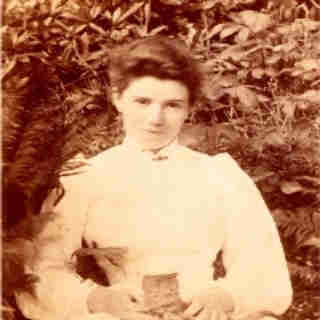 Born in Belfast Ireland, to a devout family of Scottish ancestry, Carmichael was educated at home and in England, where she lived with the familt of Robert Wilson after her father’s death. While never officially adopted, she used the hyphenated name Wilson-Carmichael as late as 1912. Her missionary call came through contacts with the Keswick movement. In 1892 she volunteered to the China Inland Mission but was refused on health grounds. However, in 1893 she sailed for Japan as the first Keswick missionary to join the Church Missionary Society (CMS) work led by Barclay Buxton. After less than two years in Japan and Ceylon, she was back in England before the end of 1894. The next year she volunteered to the Church of England Zenana Missionary Society, and in November 1895 she arrived in South India, never to leave. While still learning the difficult Tamil language, she commenced itinerant evangelism with a band of Indian Christian women, guided by the CMS missionary Thomas Walker. She soon found herself responsible for Indian women converts, and in 1901, she, the Walkers, and their Indian colleagues settled in Dohnavur. During her village itinerations, she had become increasingly aware of the fact that many Indian children were dedicated to the gods by their parents or guardians, became temple children, and lived in moral and spiritual danger. It became her mission to rescue and raise these children, and so the Dohnavur Fellowship came into being (registered 1927). Known at Dohnavur as Amma (Mother), Carmichael was the leader, and the work became well known through her writing. Workers volunteered and financial support was received, though money was never solicited. In 1931 she had a serious fall, and this, with arthritis, kept her an invalid for the rest of her life. She continued to write, and identified leaders, missionary and Indian, to take her place. The Dohnavur Fellowship still continues today.
Jocelyn Murray, “Carmichael, Amy Beatrice,” in Biographical Dictionary of Christian Missions, ed. Gerald H. Anderson (New York: Macmillan Reference USA, 1998), 116.
This article is reprinted from Biographical Dictionary of Christian Missions, Macmillan Reference USA, copyright © 1998 Gerald H. Anderson, by permission of Macmillan Reference USA, New York, NY. All rights reserved.
“Ammai” of orphans and holiness author
Amy Carmichael was born in Ireland in 1867, the oldest of seven children. As a teen, she attended a Wesleyan Methodist girls boarding school, until her father died when she was 18. Carmichael twice attended Keswick Conventions and experienced a holiness conversion which led her to work among the poor in Belfast. Through the Keswick Conventions, Carmichael met Robert Wilson. He developed a close relationship with the young woman, and invited her to live with his family. Carmichael soon felt a call to mission work and applied to the China Inland Mission as Amy Carmichael-Wilson. Although she did not go to China due to health reasons, Carmichael did go to Japan for a brief period of time. There she dressed in kimonos and began to learn Japanese. Her letters home from Japan became the basis for her first book, From Sunrise Land. Carmichael left Japan due to health reasons, eventually returning to England. She soon accepted a position with the Church of England’s Zenana Missionary Society, serving in India. From 1895 to 1925, her work with orphans in Tinnevelly (now Tirunelveli) was supported by the Church of England. After that time, Carmichael continued her work in the faith mission style, establishing an orphanage in Dohnavur. The orphanage first cared for girls who had been temple girls, who would eventually become temple prostitutes. Later the orphanage accepted boys as well.
Carmichael never returned to England after arriving in India. She wrote prolifically, publishing nearly 40 books. In her personal devotions, she relied on scripture and poetry. She wrote many of her own poems and songs. Carmichael had a bad fall in 1931, which restricted her movement. She stayed in her room, writing and studying. She often quoted Julian of Norwich when she wrote of suffering and patience. Many of Carmichael’s books have stories of Dohnavur children, interspersed with scripture, verses, and photographs of the children or nature. Carmichael never directly asked for funding, but the mission continued to be supported through donations. In 1951 Carmichael died at Dohnavur. Her headstone is inscribed “Ammai”, revered mother, which the children of Dohnavur called Carmichael.
Carmichael’s lengthy ministry at Dohnavur was sustained through her strong reliance upon scripture and prayer. Her early dedication to holiness practices and her roots in the Keswick tradition helped to guide her strong will and determination in her mission to the children of southern India.
by Rev. Lisa Beth White
Born in Belfast Ireland, to a devout family of Scottish ancestry, Carmichael was educated at home and in England, where she lived with the familt of Robert Wilson after her father’s death. While never officially adopted, she used the hyphenated name Wilson-Carmichael as late as 1912. Her missionary call came through contacts with the Keswick movement. In 1892 she volunteered to the China Inland Mission but was refused on health grounds. However, in 1893 she sailed for Japan as the first Keswick missionary to join the Church Missionary Society (CMS) work led by Barclay Buxton. After less than two years in Japan and Ceylon, she was back in England before the end of 1894. The next year she volunteered to the Church of England Zenana Missionary Society, and in November 1895 she arrived in South India, never to leave. While still learning the difficult Tamil language, she commenced itinerant evangelism with a band of Indian Christian women, guided by the CMS missionary Thomas Walker. She soon found herself responsible for Indian women converts, and in 1901, she, the Walkers, and their Indian colleagues settled in Dohnavur. During her village itinerations, she had become increasingly aware of the fact that many Indian children were dedicated to the gods by their parents or guardians, became temple children, and lived in moral and spiritual danger. It became her mission to rescue and raise these children, and so the Dohnavur Fellowship came into being (registered 1927). Known at Dohnavur as Amma (Mother), Carmichael was the leader, and the work became well known through her writing. Workers volunteered and financial support was received, though money was never solicited. In 1931 she had a serious fall, and this, with arthritis, kept her an invalid for the rest of her life. She continued to write, and identified leaders, missionary and Indian, to take her place. The Dohnavur Fellowship still continues today.
Jocelyn Murray, “Carmichael, Amy Beatrice,” in Biographical Dictionary of Christian Missions, ed. Gerald H. Anderson (New York: Macmillan Reference USA, 1998), 116.
This article is reprinted from Biographical Dictionary of Christian Missions, Macmillan Reference USA, copyright © 1998 Gerald H. Anderson, by permission of Macmillan Reference USA, New York, NY. All rights reserved.
“Ammai” of orphans and holiness author
Amy Carmichael was born in Ireland in 1867, the oldest of seven children. As a teen, she attended a Wesleyan Methodist girls boarding school, until her father died when she was 18. Carmichael twice attended Keswick Conventions and experienced a holiness conversion which led her to work among the poor in Belfast. Through the Keswick Conventions, Carmichael met Robert Wilson. He developed a close relationship with the young woman, and invited her to live with his family. Carmichael soon felt a call to mission work and applied to the China Inland Mission as Amy Carmichael-Wilson. Although she did not go to China due to health reasons, Carmichael did go to Japan for a brief period of time. There she dressed in kimonos and began to learn Japanese. Her letters home from Japan became the basis for her first book, From Sunrise Land. Carmichael left Japan due to health reasons, eventually returning to England. She soon accepted a position with the Church of England’s Zenana Missionary Society, serving in India. From 1895 to 1925, her work with orphans in Tinnevelly (now Tirunelveli) was supported by the Church of England. After that time, Carmichael continued her work in the faith mission style, establishing an orphanage in Dohnavur. The orphanage first cared for girls who had been temple girls, who would eventually become temple prostitutes. Later the orphanage accepted boys as well.
Carmichael never returned to England after arriving in India. She wrote prolifically, publishing nearly 40 books. In her personal devotions, she relied on scripture and poetry. She wrote many of her own poems and songs. Carmichael had a bad fall in 1931, which restricted her movement. She stayed in her room, writing and studying. She often quoted Julian of Norwich when she wrote of suffering and patience. Many of Carmichael’s books have stories of Dohnavur children, interspersed with scripture, verses, and photographs of the children or nature. Carmichael never directly asked for funding, but the mission continued to be supported through donations. In 1951 Carmichael died at Dohnavur. Her headstone is inscribed “Ammai”, revered mother, which the children of Dohnavur called Carmichael.
Carmichael’s lengthy ministry at Dohnavur was sustained through her strong reliance upon scripture and prayer. Her early dedication to holiness practices and her roots in the Keswick tradition helped to guide her strong will and determination in her mission to the children of southern India.
by Rev. Lisa Beth White
parenting is about treasuring
Everyone is looking for joy. Parents, this includes our children. The search for joy lies behind all of our kids’ desires. It informs and directs all of their hopes, feelings, and actions. It is the proverbial carrot hanging in front of our kids’ hearts. It’s why they make that face when you remind them that dessert belongs only to those who eat their vegetables, and why their world seems to hinge on having five more minutes of video-game time. Once we recognize joy’s formative power over our kids’ hearts, we are well on our way to knowing our children better and our role as parents better too. Stewarding Joy When God calls us to be fathers and mothers, he calls us to be stewards of our children’s joy. Which means that a lot of what we do centers on helping our joy-obsessed children find their greatest joy. Now, this might sound strange to many of us. Most parenting books and podcasts don’t spend a lot of time accentuating the influential power of joy in our kids’ lives. Yet, whether you see it or not, you are more than likely already stewarding your children’s joy toward some end. Just think about this week. What did you say to your daughter about her run-in with the school bully? What did you do when your middle child didn’t make the high school team? More than likely, you sought ways to replace their hurt with joy. And it doesn’t just have to be hurt that we exchange — we seek all the time to replace good with better, and better with best, such as when we tell our kids to power down their screens and pick up a book. These instincts show us that much of what we do as parents is driven by our innate commitment to help our kids find joy. This is a good thing, but it’s also where we can get into problems. Settling for Less The pursuit of joy itself is good. God created all of us to seek true and lasting joy because he knows that this search ultimately leads us to him. This is why Jesus uses parables to liken God and his kingdom to buried treasure and a beautiful pearl (Matthew 13:44–46; cf. Philippians 3:7–8). He knows we would sell everything to makes these priceless riches our own because of the happiness they promise us. Jesus then helps us see that the real treasure, and the real pearl of great price, is God and his kingdom. This is where joy ultimately resides, and making this joy our own is worth giving up everything. Pursuing joy, then, isn’t the problem. The problem is with where and how we find that joy, when we look outside of God for our delight. To be specific, the problem is with how sin twists our pursuit. Sin is, in many ways, simply misplaced or shortsighted joy. Sin works because it peddles counterfeit joys off as the real thing. Sin sets out to confuse and corrupt joy, and to make our hearts settle on anything other than God. This is exactly what the serpent did to our first parents in Genesis 3. He promised that the forbidden fruit was better than God and his promises. So, in taking the bite, Adam and Eve settled for a lesser, broken joy — a fruit that was good and delightful, but paled in comparison to the utmost good and perfect delight of knowing God as they once did (Genesis 3:5–6). So what does this have to do with parenting? Well, it redefines it. It means that God calls parents to more than just helping our kids discover any type of joy, anywhere. It means that God calls us to help show our children where and how they can find him , the very source and reason for every joy ever known (John 15:11; Psalm 36; Psalm 37:4). Parenting Redefined Now, if we let it, this can change everything about the way we raise our kids. For example, if we see ourselves as stewards of our kids’ joy, then our parenting finally has a destination. Everything we do — teaching, talking, commanding, loving, correcting, comforting — can be a step toward helping our children find their greatest joy in our great God (Psalm 16:11). This doesn’t change just our parenting strategies, however; it changes us as parents too. When God becomes the target of our children’s greatest joy, we no longer have to be. When we see every interaction with our kids through the lens of helping them find delight in God, our work as parents is bigger than just having well-behaved kids with perfect test scores. Which means we don’t have to be perfect moms and dads. Our calling is a better one. What we are called to do is lead our kids to joy in their perfect heavenly Father. And with that as our goal, we find freedom, and so do they. We are free to make mistakes, and so are they. We are free to live in God’s grace, and we want our children to live with us there too. Getting to the Heart How do we do this? How do we help our kids find their ultimate joy in God? Here are a few tangible ways to be good stewards of our children’s hearts. 1. Start with your own joy. Remember, everyone is looking for joy. Parents, this includes us. So before we can guide our kids’ hearts, we must first know the way ourselves. We as parents have the privilege to hold our kids’ hands on the way to our greatest joy. So before diagnosing your kids’ idols, make sure to face your own. Ask yourself, What have I put all my hope in today? What am I worshiping? What stands between God and my real joy? 2. Reshape the do’s and don’ts. If you are like me, it’s easy to get lost in the weeds as a parent. Sometimes we don’t have a good reason why we say no to our kids, and sometimes we say yes out of sheer pragmatism or exhaustion. But setting our sights on joy helps us recalibrate. Our do’s and don’ts should have distinct and eternal reasons behind them. We’re after more than behavior modification; we’re after our kids’ long-term happiness. Our commands and instructions don’t have to be speed bumps to our kids’ happiness; they can be signposts that point them to their ultimate joy. So take a moment before your yes or no and consider how your response will affect your kids’ search for joy. 3. Ask why . As your kids grow, teach them how to spot joy’s formative power in their lives. One of the best ways to do this is with the question why . “Why did you hit your sister?” “Why didn’t you study for that exam?” Now, of course, you’ll have to wade through their “I don’t knows” and “just becauses.” But when you do, you’ve helped them to drill down into their motives, where they can finally see how their joys affect their feelings and actions and begin to evaluate them rather than just be enslaved to them. 4. Make connections. One of the most important things we can do as parents is ask our kids what makes them happy, and then just listen. Getting a bead on your kids’ joy is like having an all-access pass to their hearts, and when you know what your kids love, you can help them put their loves in the right place. God isn’t in the business of simply removing our kids’ earthly joys, which means that shouldn’t be our business as parents either. Instead, God calls us to help connect our kids’ earthly and temporal joys to him, the divine and eternal one. So play basketball with your kids and, when you can, help them see how this earthly gift points to greater joys. Sure, Legos and American Girl dolls can become idols, but they can also pave the way to conversations that can help our kids hope in their heavenly Father. And when (not if) our kids seek joy through sin, we have the divinely given privilege to help them see they’ve actually sold joy short by seeking it outside of God and his ways.