
Others like movers of men and mountains Features >>
The Diary Of A Young Girl

Crimes Of The Cross

The Collected Letters Of C.S. Lewis Volume 2

Paul - A Biography

Hearts Of Fire - Eight Women In The Underground Church And Their Stories Of Costly Faith
Missionary Travels

Church History: The First Century

Smith Wigglesworth: A Man Who Walked With God

Twelve Tribes Of Israel

The Man Who Could Do No Wrong
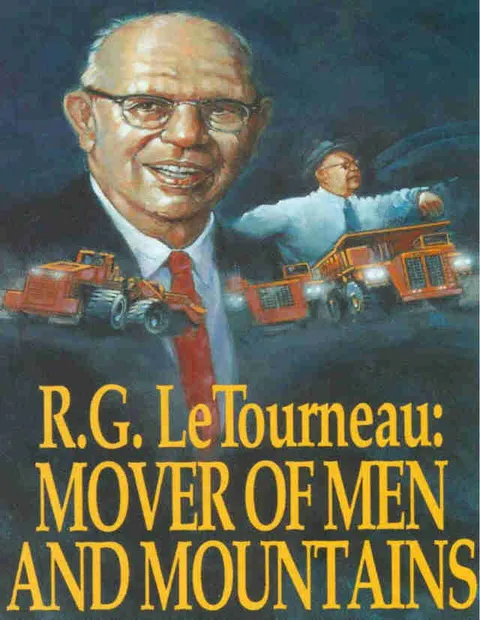
About the Book
"Movers of Men and Mountains" is the autobiography of R.G. LeTourneau, a pioneering industrialist known for his innovations in earth-moving equipment and his dedication to philanthropy and Christian faith. The book details LeTourneau's rise from humble beginnings to becoming a successful businessman and the challenges he faced along the way. He shares valuable insights about leadership, entrepreneurship, and the importance of hard work and perseverance.
Sophie Scholl

Lord, Make Us Diligent and Desperate
“Lord, make me as holy as a pardoned sinner can be made.” This prayer, often found on the lips of Robert Murray McCheyne, strikes a chord in every Christian soul. When the Holy Spirit makes his home in us, holiness ceases to be the stuffy obligation we thought it was. All of a sudden, holiness feels like heaven in our hearts, and every earthly longing bows the knee to this burning, bright desire: “Lord, make me holy.” As we look ahead to a new year, how might we expect the Holy Spirit to fulfill that longing? One answer may not be surprising, but it is easily forgotten and neglected. To make us holy, the Spirit leads us on the pathways of Scripture, prayer, and the other means of grace. And along the way, he shapes our posture to align with two fundamental truths: Holiness cannot be found apart from the Spirit’s means of grace; therefore, we must be diligent in the use of them. Holiness cannot be found in the means of grace themselves; therefore, we must be desperate for the Spirit to work through them. Diligence and desperation: these are the postures that honor the Spirit’s means of grace. And by his design, they are our only hope for true holiness. Lord, Make Us Diligent Some of us hesitate to associate the sanctifying work of the Spirit with a word like diligence. We can be prone to think of the Spirit’s ministry in terms of spontaneity and flexibility, not discipline and diligence. But unless we read the Bible attentively, pray devotedly, and gather for worship regularly, the holiness that comes from the Spirit will not be ours. In other words: no diligence, no holiness. “No Christian drifts into holiness. The flesh is too weak, the devil too deceitful, and the world too alluring.” The Bible’s description of the growing Christian hums with activity and effort. Such a Christian does not read the Bible merely when he gets around to it; instead, he aims to meditate “day and night” (Psalm 1:2) — thinking over the word (2 Timothy 2:7), attending to the word (Proverbs 2:2), storing up the word (Psalm 119:11). He does not pray a few vague petitions on his way to work; rather, he endeavors to “continue steadfastly in prayer” (Colossians 4:2), devoting his whole mind to the task (1 Peter 4:7) as he struggles on behalf of himself and others (Colossians 4:12). And he does not simply gather with the church when his schedule allows; he exhorts (and is exhorted) “every day” (Hebrews 3:13), “not neglecting to meet” with his brothers and sisters (Hebrews 10:25). Just as no twig drifts upstream, so no Christian drifts into holiness. The flesh is too weak, the devil too deceitful, and the world too alluring. When it comes to holiness, the Spirit speaks the same command to us as the one he spoke two thousand years ago: strive (Hebrews 12:14). Holy Habits Sometimes, of course, our striving toward holiness does not seem like striving at all. We feel carried along by the Spirit, filled with a power that scorns sin and sends us with joy to the means of grace. These are precious experiences. But they can lead us astray if we begin to expect that the path to holiness will always feel like flying on eagles’ wings. The reality is that much of our progress toward holiness requires painful, painstaking effort — though not joyless — carried along by a stubborn faith that clings to God’s promise. J.I. Packer offers the realism many of us need to hear: “Holiness teaching that skips over disciplined persistence in the well-doing that forms holy habits is . . . weak; habit-forming is the Spirit’s ordinary way of leading us on in holiness” (Keep in Step with the Spirit, 90). In the moment, of course, “habit-forming” may not feel very spiritual — at least if by spiritual we mean an uplifted or ecstatic emotional state. It will probably feel like ordinary hard work. But keeping in step with the Spirit is sometimes as simple as, well, taking the next difficult step in faith: Throw the covers off and get up. Resist the urge to get lost in your phone or email. Push through distractions in your prayers. Whatever it takes, keep the reward in view, and form the habits that put you in the places where the wind of the Spirit blows. So, as we pray for more holiness in the year ahead, we might also ask, “Lord, make us diligent.” Lord, Make Us Desperate And yet, woe to us if diligence is our only watchword in the pursuit of holiness. The Pharisee in Jesus’s parable could claim diligence — far more than many of us can claim. “I am not like other men, extortioners, unjust, adulterers, or even like this tax collector. I fast twice a week; I give tithes of all that I get” (Luke 18:11–12). All the means of grace are on display in this man. He knows the Scriptures. He prays. He gathers in the temple. And he is lost. “Whatever it takes, form the habits that put you in the places where the wind of the Spirit blows.” Diligence, if left without the seasoning of humble desperation, becomes the bitterest of all roots. As John Murray writes, “If we are not keenly sensitive to our own helplessness, then we can make the use of means of sanctification the minister of self-righteousness and pride” (Redemption Accomplished and Applied, 156). If we devote ourselves to the means of grace without depending on the God of grace, then the means may only serve our self-righteousness. In the pursuit of holiness, as in every other area of life, the first of Jesus’s Beatitudes abides: “Blessed are the poor in spirit” (Matthew 5:3). Blessed are those who know they can see nothing on their own (1 Corinthians 2:14). Blessed are those who can say with the apostle, “We do not know what to pray for as we ought” (Romans 8:26). Blessed are those who, like the tax collector in the parable, know that mercy is their only hope (Luke 18:13). Diligence can put our face in front of the Bible, but it cannot show us wonders there (Psalm 119:18). Only the Spirit can do that — and he loves to do so for the desperate. ‘Give Me Life!’ The author of Psalm 119 models what desperate diligence might sound like in practice. All throughout the psalm, notes of diligence and notes of desperation meld into a harmony that can come only from the Holy Spirit. To call the psalmist diligent puts it mildly: “With my whole heart I seek you” (Psalm 119:10). “I will keep your law continually, forever and ever” (Psalm 119:44). “I hasten and do not delay to keep your commandments” (Psalm 119:60). “Your testimonies are my meditation” (Psalm 119:99). “Seven times a day I praise you for your righteous rules” (Psalm 119:164). Here is diligence indeed. Yet it is the diligence of a man who knows, deep down, that he is hopeless apart from his God. Hear his desperation: “My soul clings to the dust; give me life according to your word!” (Psalm 119:25). “Put false ways far from me and graciously teach me your law!” (Psalm 119:29). “Incline my heart to your testimonies, and not to selfish gain!” (Psalm 119:36). “May my heart be blameless in your statutes, that I may not be put to shame!” (Psalm 119:80). “I am your servant; give me understanding, that I may know your testimonies!” (Psalm 119:125). The psalmist knew what we often forget: holiness requires hard work, but it is never the product of mere hard work. From first to last, holiness is a gift of grace. And so, we pray not only, “Lord, make us diligent,” but, “Lord, make us desperate.” Lord, Show Us Christ By diligence and desperation, the Spirit leads us onward to holiness. But if we are going to embody these two postures in the upcoming year, then we need to remember what we really mean by holiness. Too easily, we talk about holiness merely as a set of abstract moral virtues — patience, love, peace, generosity, boldness — and not as what it really is: Christlikeness. To be holy is to be near Christ and like Christ; the pursuit of holiness, therefore, is the pursuit of him. If we conceive of holiness merely as moral virtue, then our diligence and desperation will likely dry up after a time. But if Christ is at the center of our pursuit, then we have a goal glorious enough to summon all of our energy, all of our longings, all of our attention, all through the year. “Diligence can put our face in front of the Bible, but it cannot show us wonders there.” Rise up early for Christ, read and meditate and memorize for Christ, pray and fast for Christ, gather and worship for Christ — not to be more accepted by him than you already are, but to enjoy him more than you already do. Whatever else we gain this year cannot compare with knowing him, loving him, trusting him more dearly than we do now. “Oh, if ye saw the beauty of Jesus, and smelled the fragrance of his love,” Samuel Rutherford once wrote, “you would run through fire and water to be at him” (The Letters of Samuel Rutherford, 111). This, ultimately, is the Holy Spirit’s passion and purpose in all the means of grace: to glorify Christ in our eyes so that we become like him (John 16:14; 2 Corinthians 3:18). So, if we want God to make us as holy as pardoned sinners can be made, we will ask for more diligence and desperation. And underneath both of these, we will say, “God, show us Christ.” Article by Scott Hubbard