-480.webp)

Gentle And Lowly (The Heart Of Christ For Sinners And Sufferers) Order Printed Copy
- Author: Dane C. Ortlund
- Size: 6.35MB | 226 pages
- |
Others like gentle and lowly (the heart of christ for sinners and sufferers) Features >>



About the Book
"Gentle and Lowly" by Dane C. Ortlund explores the heart of Jesus Christ for sinners and sufferers. Focusing on themes of mercy, compassion, and grace, the book highlights how Christ's love and understanding are available to all who seek Him. The author encourages readers to rest in the comforting presence of a Savior who is gentle and lowly in heart.
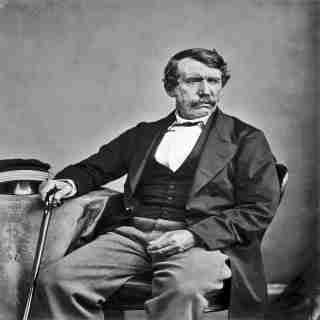
David Livingstone
 "[I am] serving Christ when shooting a buffalo for my men or taking an observation, [even if some] will consider it not sufficiently or even at all missionary."
With four theatrical words, "Dr. Livingstone, I presume?"—words journalist Henry Morton Stanley rehearsed in advance—David Livingstone became immortal. Stanley stayed with Livingstone for five months and then went off to England to write his bestseller, How I Found Livingstone. Livingstone, in the meantime, got lost again—in a swamp literally up to his neck. Within a year and a half, he died in a mud hut, kneeling beside his cot in prayer.
Berlin Congress spurs African independent churches
The whole civilized world wept. They gave him a 21-gun salute and a hero's funeral among the saints in Westminster Abbey. "Brought by faithful hands over land and sea," his tombstone reads, "David Livingstone: missionary, traveler, philanthropist. For 30 years his life was spent in an unwearied effort to evangelize the native races, to explore the undiscovered secrets, and to abolish the slave trade." He was Mother Teresa, Neil Armstrong, and Abraham Lincoln rolled into one.
Highway man
At age 25, after a childhood spent working 14 hours a day in a cotton mill, followed by learning in class and on his own, Livingstone was captivated by an appeal for medical missionaries to China. As he trained, however, the door to China was slammed shut by the Opium War. Within six months, he met Robert Moffat, a veteran missionary of southern Africa, who enchanted him with tales of his remote station, glowing in the morning sun with "the smoke of a thousand villages where no missionary had been before."
For ten years, Livingstone tried to be a conventional missionary in southern Africa. He opened a string of stations in "the regions beyond," where he settled down to station life, teaching school and superintending the garden. After four years of bachelor life, he married his "boss's" daughter, Mary Moffat.
From the beginning, Livingstone showed signs of restlessness. After his only convert decided to return to polygamy, Livingstone felt more called than ever to explore. During his first term in South Africa, Livingstone made some of the most prodigious—and most dangerous—explorations of the nineteenth century. His object was to open a "Missionary Road"—"God's Highway," he also called it—1,500 miles north into the interior to bring "Christianity and civilization" to unreached peoples.
Explorer for Christ
On these early journeys, Livingstone's interpersonal quirks were already apparent. He had the singular inability to get along with other Westerners. He fought with missionaries, fellow explorers, assistants, and (later) his brother Charles. He held grudges for years. He had the temperament of a book-reading loner, emotionally inarticulate except when he exploded with Scottish rage. He held little patience for the attitudes of missionaries with "miserably contracted minds" who had absorbed "the colonial mentality" regarding the natives. When Livingstone spoke out against racial intolerance, white Afrikaners tried to drive him out, burning his station and stealing his animals.
He also had problems with the London Missionary Society, who felt that his explorations were distracting him from his missionary work. Throughout his life, however, Livingstone always thought of himself as primarily a missionary, "not a dumpy sort of person with a Bible under his arms, [but someone] serving Christ when shooting a buffalo for my men or taking an observation, [even if some] will consider it not sufficiently or even at all missionary."
Though alienated from the whites, the natives loved his common touch, his rough paternalism, and his curiosity. They also thought he might protect them or supply them with guns. More than most Europeans, Livingstone talked to them with respect, Scottish laird to African chief. Some explorers took as many as 150 porters when they traveled; Livingstone traveled with 30 or fewer.
On an epic, three-year trip from the Atlantic Ocean to the Indian Ocean (reputedly the first by a European) Livingstone was introduced to the 1,700-mile-long Zambezi. The river was also home to Victoria Falls, Livingstone's most awe-inspiring discovery. The scene was "so lovely," he later wrote, that it "must have been gazed upon by angels in their flight."
Despite its beauty, the Zambezi was a river of human misery. It linked the Portuguese colonies of Angola and Mozambique, the main suppliers of slaves for Brazil, who in turn sold to Cuba and the United States. Though Livingstone was partially driven by a desire to create a British colony, his primary ambition was to expose the slave trade and cut it off at the source. The strongest weapon in this task, he believed, was Christian commercial civilization. He hoped to replace the "inefficient" slave economy with a capitalist economy: buying and selling goods instead of people.
The ill-fated Zambezi expedition
After a brief heroic return to England, Livingstone returned to Africa, this time to navigate 1,000 miles up the Zambezi in a brass-and-mahogany steamboat to establish a mission near Victoria Falls. The boat was state-of-the-art technology but proved too frail for the expedition. It leaked horribly after repeatedly running aground on sandbars.
Livingstone pushed his men beyond human endurance. When they reached a 30-foot waterfall, he waved his hand, as if to wish it away, and said, "That's not supposed to be there." His wife, who had just given birth to her sixth child, died in 1862 beside the river, only one of several lives claimed on the voyage. Two years later, the British government, which had no interest in "forcing steamers up cataracts," recalled Livingstone and his mission party.
A year later, he was on his way back to Africa again, this time leading an expedition sponsored by the Royal Geographical Society and wealthy friends. "I would not consent to go simply as a geographer," he emphasized, but as biographer Tim Jeal wrote, "It would be hard to judge whether the search for the Nile's source or his desire to expose the slave trade was his dominant motive." The source of the Nile was the great geographical puzzle of the day. But more important to Livingstone was the possibility of proving that the Bible was true by tracing the African roots of Judaism and Christianity.
For two years he simply disappeared, without a letter or scrap of information. He reported later that he had been so ill he could not even lift a pen, but he was able to read the Bible straight through four times. Livingstone's disappearance fascinated the public as much as Amelia Earhart's a few generations later.
When American journalist Henry Stanley found Livingstone, the news exploded in England and America. Papers carried special editions devoted to the famous meeting. In August 1872, in precarious health, Livingstone shook Stanley's hand and set out on his final journey.
When Livingstone had arrived in Africa in 1841, it was as exotic as outer space, called the "Dark Continent" and the "White Man's Graveyard." although the Portuguese, Dutch, and English were pushing into the interior, African maps had blank unexplored areas—no roads, no countries, no landmarks. Livingstone helped redraw the maps, exploring what are now a dozen countries, including South Africa, Rwanda, Angola, and the Republic of the Congo (formerly Zaire). And he made the West aware of the continuing evil of African slavery, which led to its being eventually outlawed.
"[I am] serving Christ when shooting a buffalo for my men or taking an observation, [even if some] will consider it not sufficiently or even at all missionary."
With four theatrical words, "Dr. Livingstone, I presume?"—words journalist Henry Morton Stanley rehearsed in advance—David Livingstone became immortal. Stanley stayed with Livingstone for five months and then went off to England to write his bestseller, How I Found Livingstone. Livingstone, in the meantime, got lost again—in a swamp literally up to his neck. Within a year and a half, he died in a mud hut, kneeling beside his cot in prayer.
Berlin Congress spurs African independent churches
The whole civilized world wept. They gave him a 21-gun salute and a hero's funeral among the saints in Westminster Abbey. "Brought by faithful hands over land and sea," his tombstone reads, "David Livingstone: missionary, traveler, philanthropist. For 30 years his life was spent in an unwearied effort to evangelize the native races, to explore the undiscovered secrets, and to abolish the slave trade." He was Mother Teresa, Neil Armstrong, and Abraham Lincoln rolled into one.
Highway man
At age 25, after a childhood spent working 14 hours a day in a cotton mill, followed by learning in class and on his own, Livingstone was captivated by an appeal for medical missionaries to China. As he trained, however, the door to China was slammed shut by the Opium War. Within six months, he met Robert Moffat, a veteran missionary of southern Africa, who enchanted him with tales of his remote station, glowing in the morning sun with "the smoke of a thousand villages where no missionary had been before."
For ten years, Livingstone tried to be a conventional missionary in southern Africa. He opened a string of stations in "the regions beyond," where he settled down to station life, teaching school and superintending the garden. After four years of bachelor life, he married his "boss's" daughter, Mary Moffat.
From the beginning, Livingstone showed signs of restlessness. After his only convert decided to return to polygamy, Livingstone felt more called than ever to explore. During his first term in South Africa, Livingstone made some of the most prodigious—and most dangerous—explorations of the nineteenth century. His object was to open a "Missionary Road"—"God's Highway," he also called it—1,500 miles north into the interior to bring "Christianity and civilization" to unreached peoples.
Explorer for Christ
On these early journeys, Livingstone's interpersonal quirks were already apparent. He had the singular inability to get along with other Westerners. He fought with missionaries, fellow explorers, assistants, and (later) his brother Charles. He held grudges for years. He had the temperament of a book-reading loner, emotionally inarticulate except when he exploded with Scottish rage. He held little patience for the attitudes of missionaries with "miserably contracted minds" who had absorbed "the colonial mentality" regarding the natives. When Livingstone spoke out against racial intolerance, white Afrikaners tried to drive him out, burning his station and stealing his animals.
He also had problems with the London Missionary Society, who felt that his explorations were distracting him from his missionary work. Throughout his life, however, Livingstone always thought of himself as primarily a missionary, "not a dumpy sort of person with a Bible under his arms, [but someone] serving Christ when shooting a buffalo for my men or taking an observation, [even if some] will consider it not sufficiently or even at all missionary."
Though alienated from the whites, the natives loved his common touch, his rough paternalism, and his curiosity. They also thought he might protect them or supply them with guns. More than most Europeans, Livingstone talked to them with respect, Scottish laird to African chief. Some explorers took as many as 150 porters when they traveled; Livingstone traveled with 30 or fewer.
On an epic, three-year trip from the Atlantic Ocean to the Indian Ocean (reputedly the first by a European) Livingstone was introduced to the 1,700-mile-long Zambezi. The river was also home to Victoria Falls, Livingstone's most awe-inspiring discovery. The scene was "so lovely," he later wrote, that it "must have been gazed upon by angels in their flight."
Despite its beauty, the Zambezi was a river of human misery. It linked the Portuguese colonies of Angola and Mozambique, the main suppliers of slaves for Brazil, who in turn sold to Cuba and the United States. Though Livingstone was partially driven by a desire to create a British colony, his primary ambition was to expose the slave trade and cut it off at the source. The strongest weapon in this task, he believed, was Christian commercial civilization. He hoped to replace the "inefficient" slave economy with a capitalist economy: buying and selling goods instead of people.
The ill-fated Zambezi expedition
After a brief heroic return to England, Livingstone returned to Africa, this time to navigate 1,000 miles up the Zambezi in a brass-and-mahogany steamboat to establish a mission near Victoria Falls. The boat was state-of-the-art technology but proved too frail for the expedition. It leaked horribly after repeatedly running aground on sandbars.
Livingstone pushed his men beyond human endurance. When they reached a 30-foot waterfall, he waved his hand, as if to wish it away, and said, "That's not supposed to be there." His wife, who had just given birth to her sixth child, died in 1862 beside the river, only one of several lives claimed on the voyage. Two years later, the British government, which had no interest in "forcing steamers up cataracts," recalled Livingstone and his mission party.
A year later, he was on his way back to Africa again, this time leading an expedition sponsored by the Royal Geographical Society and wealthy friends. "I would not consent to go simply as a geographer," he emphasized, but as biographer Tim Jeal wrote, "It would be hard to judge whether the search for the Nile's source or his desire to expose the slave trade was his dominant motive." The source of the Nile was the great geographical puzzle of the day. But more important to Livingstone was the possibility of proving that the Bible was true by tracing the African roots of Judaism and Christianity.
For two years he simply disappeared, without a letter or scrap of information. He reported later that he had been so ill he could not even lift a pen, but he was able to read the Bible straight through four times. Livingstone's disappearance fascinated the public as much as Amelia Earhart's a few generations later.
When American journalist Henry Stanley found Livingstone, the news exploded in England and America. Papers carried special editions devoted to the famous meeting. In August 1872, in precarious health, Livingstone shook Stanley's hand and set out on his final journey.
When Livingstone had arrived in Africa in 1841, it was as exotic as outer space, called the "Dark Continent" and the "White Man's Graveyard." although the Portuguese, Dutch, and English were pushing into the interior, African maps had blank unexplored areas—no roads, no countries, no landmarks. Livingstone helped redraw the maps, exploring what are now a dozen countries, including South Africa, Rwanda, Angola, and the Republic of the Congo (formerly Zaire). And he made the West aware of the continuing evil of African slavery, which led to its being eventually outlawed.
4 Simple Steps to a New Financial Beginning
The start of a new year is a terrific time to begin your journey toward financial security and investing success by making it a priority to pay off credit cards, car loans, and other short-term debts. That’s right, the first financial fitness test you need to pass is the "debt" test. Webster’s says that debt is anything you’re "bound to pay or perform; the state of owing something." Using that definition, very few Americans are free of debt. Why is getting debt-free the first step toward a sound investing strategy? Because it’s unwise to take on the risks that come with investing unless you have staying power. That means you don’t want to be in a position where circumstances unrelated to your investment strategy force you to sell your holdings and use the money elsewhere, such as for interest and debt payments. Also, for Christians, debts are moral as well as legal obligations and they must be honorably met no matter the circumstances. The late Dr. D. James Kennedy once gave a sermon in which he read a poem called "The Land of Beginning Again." He then presented Christ as the King of the Land of Beginning Again. All of us have experienced our share of errors, failures, and missed opportunities. We all have things that we would do differently if given a second chance. What wonderful news that, in Christ, the slate is wiped clean and we do have the opportunity of beginning again. In a similar fashion, many who have become weighed down by debt wish they could get free. They have learned that the satisfaction that comes with spending is brief indeed compared to the pressure of making monthly payments which often go on for years. For some, it seems hopeless. You may sometimes feel this way yourself. If so, take heart! You can make significant strides this year. It will require planning, discipline, sacrifice, and singleness of purpose, and there are some excellent books that can help: • Check out Mary Hunt's website DebtProofLiving.com, which also links to her very helpful blog, "Money Rules, Debt Stinks." Through her website and books, Mary has become the queen of frugal living. Her advice is practical and witty. That’s why we use her articles regularly in SMI. • Free and Clear: God’s Road Map to Debt-Free Living by Howard Dayton is a compassionate guide for those struggling with debt. Dayton’s Compass1.org website offers this and many other helpful resources. • Dave Ramsey has made a big splash helping listeners to his radio program get debt-free. His Financial Peace Revisited is worth a look. A friend of mine likes to say that the most powerful force in the universe (humanly speaking, of course) is singleness of purpose. Individuals or groups, no matter how determined, disciplined, or talented, will never realize their potential for growth and accomplishment without singleness of purpose. Their time, money, and energies must be focused on common goals. One thing that successful people seem to have in common is an emphasis on — perhaps that’s putting it too lightly, make that an obsession about — setting goals. Without singleness of purpose and specific goals, we can become like the person Scripture describes as double-minded. "That man should not think he will receive anything from the Lord; he is a double-minded man, unstable in all he does" (James 1:7-8). So let me encourage you to engage in a meaningful goal-setting exercise as you work to get debt-free. Here are some suggestions for effective goal-setting in any area of life; adapt them to your financial situation. Set goals that are consistent with God’s Word. Many successful people have accomplished much, yet remain unhappy. Having singleness of purpose toward the wrong goals only leads to wrong results. Examine your motivations, as well as your actions, in the light of God’s wisdom. Ask God for His guidance. This is not the same as having scripturally sound goals. This has more to do with having the wisdom needed to set the right personal priorities. God promises to guide us if we’re willing to submit to Him (Prov. 3:5-6). It’s not: "Show me Your will, Lord, so I can decide if I’m willing." Rather, it’s: "Before You even reveal Your will to me, Lord, the answer is yes." If married, set your goals together. If two people have become "one flesh," it’s critical that they have a singleness of purpose in their commitment toward common goals. Few areas will so quickly affect a couple’s relationship as a financial plan that limits their spending freedom because it brings mutually conflicting goals into the open. If you can’t reach a meeting of the minds on what your priorities should be, perhaps the marriage relationship itself needs some work. Put your goals in writing, signing your name and date. This helps cement in your thinking that you really have made a firm commitment of your will to achieving your goals. It is also helpful to have your goals posted where you will see them daily as additional motivation to stay the course when the inevitable temptations to compromise arise. Austin Pryor