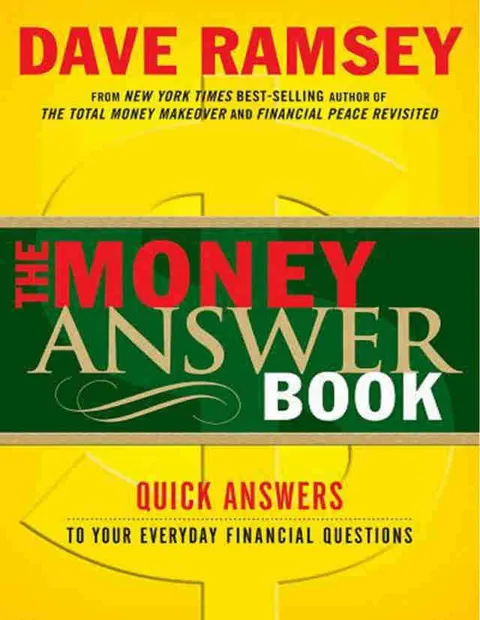

The Millionaire Next Door Order Printed Copy
- Author: Thomas J Stanley, William Danko
- Size: 2.7MB | 272 pages
- |
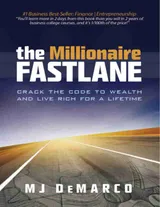


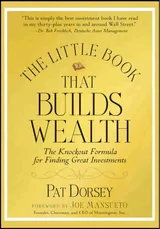
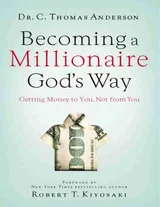


About the Book
"The Millionaire Next Door" by Thomas J. Stanley and William Danko explores the habits and characteristics of the wealthy in America. Through extensive research, they reveal that many millionaires live quietly and frugally, without flashy displays of wealth. The book emphasizes the importance of hard work, saving, and living below your means in order to build wealth over time. It challenges common stereotypes about millionaires and offers practical advice for anyone looking to achieve financial success.
William Chalmers Burns
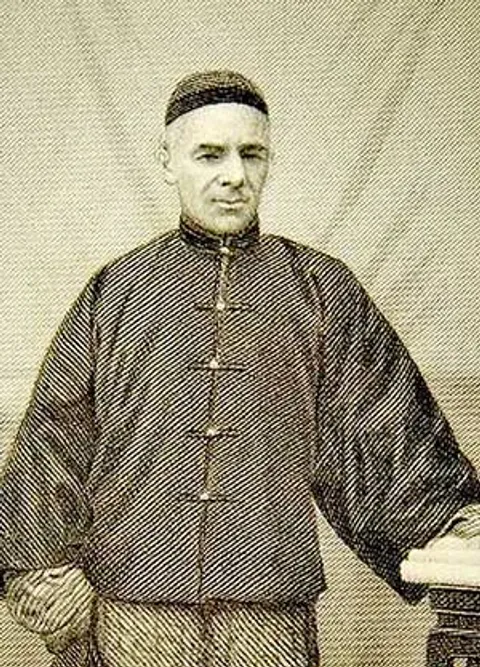 William Chalmers Burns was born in the Manse of Dun, in Angus, on April Ist, 1815. He was the third son of the Parish Church minister there. After leaving school, he went to Edinburgh to be apprenticed with an uncle to the legal profession. His eldest sister, a gay young lady, was converted to God, and became a bright witness for the Lord Jesus in 1831, and it was by means of her decided testimony that William was first awakened to a sense of his need of salvation, and led to put his trust in the Son of God, as his Redeemer and Saviour.
It was shortly after his conversion that he walked into the manse of Kilsyth, where the family then resided, having walked on foot the thirty-six miles from Edinburgh, to tell his mother and his sisters the glad news of his conversion, and to say that his desire now was to relinquish his study of law, and devote himself entirely to the preaching of the Gospel of God’s grace to his fellowmen.
And this he did heartily and with all his might, first in the neglected Parts of Scotland, and latterly among many heathen millions of the great Chinese Empire, then scarcely touched by the feet of God’s messengers of peace.
Mr. Burns’s name came into prominence in connection with a wonderful work of grace in Dundee, while he was preaching for Robert Murray M’Cheyne, then on a visit to Palestine, for the evangelization of the Jews. During Mr. Burns’s preaching in Dundee, a remarkable awakening took place; thousands were aroused to their condition in the sight of God, truly converted, and set on the heavenward way.
Remarkable scenes were witnessed in the old church of St. Peter’s, near to which M’Cheyne’s body now lies, awaiting the first resurrection. It was on the evening of a Lord’s Day in Kilsyth, after preaching to a crowded congregation, that Mr. Burns felt constrained to intimate to the people that he would preach to the people in the open air, before returning to Dundee the following day.
Deeply burdened with the souls of the people, he went into the village and invited the people, who thronged into the old church, until every seat and passage was filled. And the Lord helped His servant to preach straight to the people with great power, with the result that the whole congregation became melted under the message, many weeping aloud and crying to God for mercy. A glorious work of conversion followed.
Meetings for prayer and preaching of the Gospel continued in the churchyard, the market-place and elsewhere for weeks, while Mr. Burns returned to Dundee to resume his ministry. The work progressed in Dundee with increased interest, until the return of Mr. M’Cheyne, who greatly rejoiced in all that the Lord had done during his absence, through the ministry of His servant.
There was no jealousy, but the deepest gratitude, and these two true ministers of Christ rejoiced together over the Lord’s doings, which were indeed marvellous in their eyes.
From that time onward, until the Lord’s call came to go to China, Mr. Burns gave himself almost wholly to itinerant Gospel preaching, through Perthshire, up as far north as Aberdeen, preaching in barns, on market-places, and wherever the people could be gathered together to hear the Word. His message was plain, and to the point; thousands were awakened and many saved. But the adversary opposed. Time and again Mr. Burns was stoned, and bore the marks of these brands of the enemy for many days.
Believing it to be the call of the Lord, he went forth to China as the first missionary of the Presbyterian Church of England, in June, 1847. When questioned by those interested in his out-going, how long it would take him to prepare for the voyage, he replied with all simplicity, “I will be ready to go to-morrow.”
On a brief visit to his home, to take farewell of his sister, he silently wrung her hand, took a last glance around their old home, and with a small bag in his hand and his mother’s plaid across his arm, went forth, in the Name of the Lord with the Gospel to China’s benighted people, of whom it was said “a million a month” were dying without having once heard the Gospel.
For years this solitary witness toiled alone, at times with a few helpers, in the great heathen land, amid overwhelming hindrances, but his faith in God never faltered. On and on he went, sowing the seed which others would reap, until he reached the borders of the great kingdom of Manchuria, where, in a small, comfortless room in Nieu-chang, wearied and worn in labours abundant, he fell asleep on April 4th, 1868, his last audible words being, “For Thine is the Kingdom and the Power and the Glory.”
It is of this great land that the story of grace related in the following pages is told, and those who saw and shared in its joyful results, say that it was no doubt part of the result of William Burns’s sowing, in his earlier years in China.
William Chalmers Burns was born in the Manse of Dun, in Angus, on April Ist, 1815. He was the third son of the Parish Church minister there. After leaving school, he went to Edinburgh to be apprenticed with an uncle to the legal profession. His eldest sister, a gay young lady, was converted to God, and became a bright witness for the Lord Jesus in 1831, and it was by means of her decided testimony that William was first awakened to a sense of his need of salvation, and led to put his trust in the Son of God, as his Redeemer and Saviour.
It was shortly after his conversion that he walked into the manse of Kilsyth, where the family then resided, having walked on foot the thirty-six miles from Edinburgh, to tell his mother and his sisters the glad news of his conversion, and to say that his desire now was to relinquish his study of law, and devote himself entirely to the preaching of the Gospel of God’s grace to his fellowmen.
And this he did heartily and with all his might, first in the neglected Parts of Scotland, and latterly among many heathen millions of the great Chinese Empire, then scarcely touched by the feet of God’s messengers of peace.
Mr. Burns’s name came into prominence in connection with a wonderful work of grace in Dundee, while he was preaching for Robert Murray M’Cheyne, then on a visit to Palestine, for the evangelization of the Jews. During Mr. Burns’s preaching in Dundee, a remarkable awakening took place; thousands were aroused to their condition in the sight of God, truly converted, and set on the heavenward way.
Remarkable scenes were witnessed in the old church of St. Peter’s, near to which M’Cheyne’s body now lies, awaiting the first resurrection. It was on the evening of a Lord’s Day in Kilsyth, after preaching to a crowded congregation, that Mr. Burns felt constrained to intimate to the people that he would preach to the people in the open air, before returning to Dundee the following day.
Deeply burdened with the souls of the people, he went into the village and invited the people, who thronged into the old church, until every seat and passage was filled. And the Lord helped His servant to preach straight to the people with great power, with the result that the whole congregation became melted under the message, many weeping aloud and crying to God for mercy. A glorious work of conversion followed.
Meetings for prayer and preaching of the Gospel continued in the churchyard, the market-place and elsewhere for weeks, while Mr. Burns returned to Dundee to resume his ministry. The work progressed in Dundee with increased interest, until the return of Mr. M’Cheyne, who greatly rejoiced in all that the Lord had done during his absence, through the ministry of His servant.
There was no jealousy, but the deepest gratitude, and these two true ministers of Christ rejoiced together over the Lord’s doings, which were indeed marvellous in their eyes.
From that time onward, until the Lord’s call came to go to China, Mr. Burns gave himself almost wholly to itinerant Gospel preaching, through Perthshire, up as far north as Aberdeen, preaching in barns, on market-places, and wherever the people could be gathered together to hear the Word. His message was plain, and to the point; thousands were awakened and many saved. But the adversary opposed. Time and again Mr. Burns was stoned, and bore the marks of these brands of the enemy for many days.
Believing it to be the call of the Lord, he went forth to China as the first missionary of the Presbyterian Church of England, in June, 1847. When questioned by those interested in his out-going, how long it would take him to prepare for the voyage, he replied with all simplicity, “I will be ready to go to-morrow.”
On a brief visit to his home, to take farewell of his sister, he silently wrung her hand, took a last glance around their old home, and with a small bag in his hand and his mother’s plaid across his arm, went forth, in the Name of the Lord with the Gospel to China’s benighted people, of whom it was said “a million a month” were dying without having once heard the Gospel.
For years this solitary witness toiled alone, at times with a few helpers, in the great heathen land, amid overwhelming hindrances, but his faith in God never faltered. On and on he went, sowing the seed which others would reap, until he reached the borders of the great kingdom of Manchuria, where, in a small, comfortless room in Nieu-chang, wearied and worn in labours abundant, he fell asleep on April 4th, 1868, his last audible words being, “For Thine is the Kingdom and the Power and the Glory.”
It is of this great land that the story of grace related in the following pages is told, and those who saw and shared in its joyful results, say that it was no doubt part of the result of William Burns’s sowing, in his earlier years in China.
To Heaven and Back with No Fanfare
Suppose you had an absolutely stunning supernatural experience, like being in a car accident and having an out-of-body experience so that you were sure you had died and gone to heaven for a few minutes before returning to your body and being brought back to life. How would you handle that experience? Most of us would be consumed with telling others about it. We might even write a book about it, and go on a speaking circuit. It’s just too amazing to keep to ourselves. And more than likely we would feel empowered to use that very experience to authorize our views of heaven. We might feel as if this extraordinary experience gave us extraordinary influence. Who could contradict us? We had been there! To Heaven and Back Paul did have an experience something like that. But here’s the amazing thing: He mentions it only one time in his thirteen letters, and he never once makes it the warrant for believing anything he says. In fact, the only reason he brings it up is to say that this kind of privilege is precisely not what he will boast in. Rather, he will boast in his weaknesses. Here’s the experience — he even describes it as if it were another person so as not to exalt himself: I must go on boasting. Though there is nothing to be gained by it, I will go on to visions and revelations of the Lord. I know a man in Christ who fourteen years ago was caught up to the third heaven — whether in the body or out of the body I do not know, God knows. And I know that this man was caught up into paradise — whether in the body or out of the body I do not know, God knows — and he heard things that cannot be told, which man may not utter. On behalf of this man I will boast, but on my own behalf I will not boast, except of my weaknesses. (2 Corinthians 12:1–5) We know he is talking about himself, even though he says, “I know a man . . .” because two verses later he says, “To keep me from becoming conceited because of the surpassing greatness of the revelations, a thorn was given me in the flesh” (2 Corinthians 12:7). So he himself is the one who had this extraordinary experience. It is astonishing that Paul introduces this absolutely stunning experience of being “caught up into paradise” only to give it a passing “boast” and then turn all his attention to the real marks of an apostle — namely, suffering for Christ’s sake. Why Minimize the Marvelous? Paul never mentions this experience again. He does not use it to pull rank. He shifts all the focus off of the dramatic and onto the painful reality of suffering with joy. Why? Because it is merely human to boast about extraordinary experiences like visions and out-of-body encounters with God. It requires no great grace or power of God to boast in things that seem to set you apart as privileged. But to boast about weaknesses, and to be content with insults and hardships and persecutions and calamities — that is not what ordinary sinful humans are like. That requires supernatural grace. This is what Paul wants to focus on as the evidence of his apostleship. In fact, he says that the Lord Jesus gave him a thorn in the flesh (we never know what it is) precisely so that he would be hindered from boasting as a superhero of spiritual experience. When Paul pleaded that Jesus would take the thorn away, the Lord answered, “My grace is sufficient for you, for my power is made perfect in weakness” (2 Corinthians 12:9). So Paul concluded, Therefore I will boast all the more gladly of my weaknesses, so that the power of Christ may rest upon me. For the sake of Christ, then, I am content with weaknesses, insults, hardships, persecutions, and calamities. For when I am weak, then I am strong. (2 Corinthians 12:9–10) Instead of circling back again and again to his once-in-a-lifetime out-of-body experience, Paul mentions it once, and then shifts all the focus onto the truths that people can see and think about and test in his writing and his life. Rooted in Public Reality In other words, the truth of Christianity is not rooted in mystical experiences that only a few people have. It is rooted in God-given revelation through writings that are open for all to see and study and test. It is validated in real lives that others can see and examine. So, instead of directing people to his private experience, Paul says, We behaved in the world with simplicity and godly sincerity, not by earthly wisdom but by the grace of God, and supremely so toward you. For we are not writing to you anything other than what you read and understand and I hope you will fully understand. (2 Corinthians 1:12–13) “The truth of Christianity is not rooted in mystical experiences that only a few people have.” If you were to ask Paul, “How can we share your insight into the mystery of Christ?” he would not answer, “I’m sorry. Those mysteries are reserved for the select few who have rare mystical experiences.” What he would say is this: “When you read this, you can perceive my insight into the mystery of Christ” (Ephesians 3:4). His way of opening heaven was not by appealing to unsharable experiences. His way was by appealing to shareable truths written for all to see and understand and experience. Life on Display Behind these writings he put his own life as evidence of reality. Not his life in the rare moments of mystical experience, but his life as a flesh-and-blood man who had to deal with all the hardships of life and ministry. What you have learned and received and heard and seen in me — practice these things, and the God of peace will be with you. (Philippians 4:9) Brothers, join in imitating me, and keep your eyes on those who walk according to the example you have in us. (Philippians 3:17) Be imitators of me, as I am of Christ. (1 Corinthians 11:1) In other words, Paul’s way of leading us into the truth and glory of Christ was not to talk about his privilege of an out-of-body experience of paradise. Instead, his way was to live an open life of total devotion to Jesus, through much suffering, and to write Spirit-given words (1 Corinthians 2:13) that are open to all — readable, public, ready for all to examine. This is a mark of humble, serious, personal reality. It is unusual, contrary to ordinary human proclivities, attractive. It has won my heart. Article by John Piper