

Sometimes You Win, Sometimes You Learn Order Printed Copy
- Author: John C Maxwell
- Size: 1.29MB | 212 pages
- |
Others like sometimes you win, sometimes you learn Features >>








About the Book
"Sometimes You Win, Sometimes You Learn" by John C. Maxwell explores the idea that setbacks and failures can be powerful learning experiences that lead to personal growth and success. Through stories and practical advice, Maxwell shows how embracing failure as a chance to learn and improve can ultimately lead to greater achievements in life.
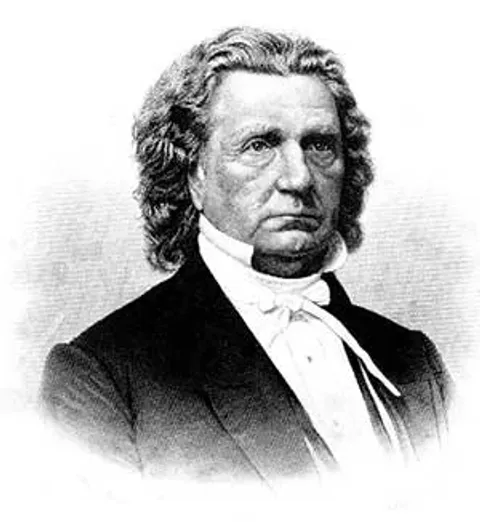
Emerson Andrews
 His Early life
Emerson Andrews was born in Mansfield, Bristol County, Massachusetts in 1806 to godly parents, James and Mercy Andrews. They were from English stock and were strict Puritans in faith and lifestyle. Although young Emerson was raised in the Congregational Church he was far from God in his teens and twenties.
Nevertheless, periodically, he experienced intense conviction, usually through his parents’ counsels and prayers but particularly through two unforgettable sermons delivered by the eccentric revivalist, Lorenzo Dow. Soon after this he was converted under the ministry of another revival preacher, Asahel Nettleton.
He was a very educated man formerly studying at Chesterfield Academy and, at the time of his conversion, at Plainfield Kimball Union Academy, in New Hampshire. In the spring of 1832 whilst studying further at Union College in Schenectady, New York, he was baptised by immersion in the Mohawk River. It was his convictions about the Bible’s teaching on water baptism that caused him to join the Baptist’s instead of the Congregationalists or Presbyterians.
A Lover of Revival
He wrote “Many revivals and protracted meetings of one, two, or more days, and some for weeks and months, have been held, in New England and elsewhere, within, my personal remembrance. These have sent out their hallowed influences, as the light of the world and salt of the earth. Just before and at the time of my second birth, many sweeping and glorious revivals, under the celebrated Dr. Netteton, John Leland, Jedediah Burchard, C. G. Finney, were hailed, enjoyed, and sounded all around and over the country.
As soon as I was converted I cherished the good news of revivals; and I sought a place and portion with live Christians, that I might speak for Christ and win souls to salvation. I asked God for direction and help, and was answered.
His first visit to a Revival
He describes his first visit to a Revival “The first meeting that I attended after my regeneration was held in the town of Windsor, Vt. It was called a “four days’ meeting.” But many such were held in different places about that time. This came off in the summer of l830. I was much delighted, fed, and strengthened by such a sight, experience, exercise, and spiritual supper. It was a precious banquet, adapted to develop and enlarge the young convert’s soul.
The four pastors of the town, with their respective churches and congregations, and some from neighboring towns, met with the Baptist church, of which Elder Leland Howard was the long-honored pastor. Some twenty other pastors also came in from adjacent towns, and a few Lawyers and teachers, who took leading parts in the services. Large congregations were constantly in attendance, and all the various exercises and meetings were interesting and profitable.
Some of the sermons and prayers were most powerful, melting, and effective. Sinners often arose, requesting prayers, or sent up short petitions to be read. A lawyer by the name of Shepherd, from New York, was found to be very able, pointed, and specific in prayer, and so effective and precise in noting each different request more perfectly than the ministers, that he was often invited to lead in prayer — especially when there were some ten or twenty different, or some difficult requests presented.
He seemed to be full of the Spirit, and was especially gifted and successful. Ministers learned something valuable from his wisdom and tact. I confess that his pointedness made a powerful and lasting impression on my mind and practice.
The professors and ministers were much blessed, and many sinners were converted in the meetings. The gospel was preached and the Spirit poured out, prayer and sacrifices made. Novelty and wonder attracted many. Here God crowned the effort.”
Mentored by Jacob Knapp
He writes. ” ROCHESTER, N.Y. 1839. Here I assisted in a powerful meeting, under the preaching of the celebrated Elder Jacob Knapp, for three weeks. Marvellous things were done. The wicked raged, the Spirit worked, grace prevailed, and hundreds were converted — a glorious triumph over rum, gambling, and infidelity. Jesus reigned.” This exposure to revival power whetted his appetite for an evangelistic ministry.
His first revival efforts
“WHITE DEER, PENN. 1839. In this rich farming district I had a revival meeting of five weeks, with a feeble Baptist church. We began at the close of the Association; but, with all the eloquent pastoral preaching in it, the brethren were not aroused, nor sinners much convicted.
Here my first sermon was from the text, “O Lord, revive thy work!” And he did so immediately. Some half a dozen persons were convicted and converted, and the church was revived by the power of God on that evening’s effort. The whole region, then, for seven miles around, was awakened, and some forty converts were immersed by Elder Spratt, D.D.
Here, too, we experienced severe opposition and much persecution from outside professors and sinners, but God strengthened our hands for a triumphant work. This was a blessed era with the church, and it is fragrant still.
“CLINTON, PENN. I had a revival meeting in this township. It was very great and powerful. Satan and sinners raged, at times, terribly, but the cross was triumphant. Many were immersed by the beloved pastor, Elder Spratt, D.D.
Hugh Donelly, the postmaster, rum-selling merchant, and an avowed infidel, who had slandered me and ridiculed the meeting, crept in away back, then into the middle seats; then, after a few nights, fell on his knees groaning and crying for mercy. I soon aided him in coming forward.
Then out came his wife and sister. We all prayed, and soon the three rejoiced in hope, and spoke boldly for Jesus. Brother Donelly has made a noble record in Pennsylvania and Indiana for Jesus and his cause…..
PARMA, N.Y. In this western village, in mid-winter, I preached night and day, for three weeks, to overflowing houses and attentive hearers. Christians renewed their “first love and vows,” and many sinners were converted and baptized.
An infidel, hearing a few sermons, was struck under conviction, and fled away thirty miles for comfort; but, feeling worse and worse, returned like the prodigal, feeling wretched and lost. He came forward, prayer was offered, and he soon yielded and believed, giving glory to God. Then he told his experience, and exhorted his old Universalist and infidel friends to repent and be saved from hell.
Emerson Andrews Preaching
His preaching zeal and effectiveness were quickly recognised and he was soon licensed to preach and for a four year period served brief pastorates in New York State – Waterford, West Troy, Lansingburg and Rome (1834-1838)
In 1838 began an itinerant evangelist for thirty-five years, mainly in America, but also in Europe, Africa, Asia and Canada. His estimates were that 40,000 were converted through his ministry.
His Early life
Emerson Andrews was born in Mansfield, Bristol County, Massachusetts in 1806 to godly parents, James and Mercy Andrews. They were from English stock and were strict Puritans in faith and lifestyle. Although young Emerson was raised in the Congregational Church he was far from God in his teens and twenties.
Nevertheless, periodically, he experienced intense conviction, usually through his parents’ counsels and prayers but particularly through two unforgettable sermons delivered by the eccentric revivalist, Lorenzo Dow. Soon after this he was converted under the ministry of another revival preacher, Asahel Nettleton.
He was a very educated man formerly studying at Chesterfield Academy and, at the time of his conversion, at Plainfield Kimball Union Academy, in New Hampshire. In the spring of 1832 whilst studying further at Union College in Schenectady, New York, he was baptised by immersion in the Mohawk River. It was his convictions about the Bible’s teaching on water baptism that caused him to join the Baptist’s instead of the Congregationalists or Presbyterians.
A Lover of Revival
He wrote “Many revivals and protracted meetings of one, two, or more days, and some for weeks and months, have been held, in New England and elsewhere, within, my personal remembrance. These have sent out their hallowed influences, as the light of the world and salt of the earth. Just before and at the time of my second birth, many sweeping and glorious revivals, under the celebrated Dr. Netteton, John Leland, Jedediah Burchard, C. G. Finney, were hailed, enjoyed, and sounded all around and over the country.
As soon as I was converted I cherished the good news of revivals; and I sought a place and portion with live Christians, that I might speak for Christ and win souls to salvation. I asked God for direction and help, and was answered.
His first visit to a Revival
He describes his first visit to a Revival “The first meeting that I attended after my regeneration was held in the town of Windsor, Vt. It was called a “four days’ meeting.” But many such were held in different places about that time. This came off in the summer of l830. I was much delighted, fed, and strengthened by such a sight, experience, exercise, and spiritual supper. It was a precious banquet, adapted to develop and enlarge the young convert’s soul.
The four pastors of the town, with their respective churches and congregations, and some from neighboring towns, met with the Baptist church, of which Elder Leland Howard was the long-honored pastor. Some twenty other pastors also came in from adjacent towns, and a few Lawyers and teachers, who took leading parts in the services. Large congregations were constantly in attendance, and all the various exercises and meetings were interesting and profitable.
Some of the sermons and prayers were most powerful, melting, and effective. Sinners often arose, requesting prayers, or sent up short petitions to be read. A lawyer by the name of Shepherd, from New York, was found to be very able, pointed, and specific in prayer, and so effective and precise in noting each different request more perfectly than the ministers, that he was often invited to lead in prayer — especially when there were some ten or twenty different, or some difficult requests presented.
He seemed to be full of the Spirit, and was especially gifted and successful. Ministers learned something valuable from his wisdom and tact. I confess that his pointedness made a powerful and lasting impression on my mind and practice.
The professors and ministers were much blessed, and many sinners were converted in the meetings. The gospel was preached and the Spirit poured out, prayer and sacrifices made. Novelty and wonder attracted many. Here God crowned the effort.”
Mentored by Jacob Knapp
He writes. ” ROCHESTER, N.Y. 1839. Here I assisted in a powerful meeting, under the preaching of the celebrated Elder Jacob Knapp, for three weeks. Marvellous things were done. The wicked raged, the Spirit worked, grace prevailed, and hundreds were converted — a glorious triumph over rum, gambling, and infidelity. Jesus reigned.” This exposure to revival power whetted his appetite for an evangelistic ministry.
His first revival efforts
“WHITE DEER, PENN. 1839. In this rich farming district I had a revival meeting of five weeks, with a feeble Baptist church. We began at the close of the Association; but, with all the eloquent pastoral preaching in it, the brethren were not aroused, nor sinners much convicted.
Here my first sermon was from the text, “O Lord, revive thy work!” And he did so immediately. Some half a dozen persons were convicted and converted, and the church was revived by the power of God on that evening’s effort. The whole region, then, for seven miles around, was awakened, and some forty converts were immersed by Elder Spratt, D.D.
Here, too, we experienced severe opposition and much persecution from outside professors and sinners, but God strengthened our hands for a triumphant work. This was a blessed era with the church, and it is fragrant still.
“CLINTON, PENN. I had a revival meeting in this township. It was very great and powerful. Satan and sinners raged, at times, terribly, but the cross was triumphant. Many were immersed by the beloved pastor, Elder Spratt, D.D.
Hugh Donelly, the postmaster, rum-selling merchant, and an avowed infidel, who had slandered me and ridiculed the meeting, crept in away back, then into the middle seats; then, after a few nights, fell on his knees groaning and crying for mercy. I soon aided him in coming forward.
Then out came his wife and sister. We all prayed, and soon the three rejoiced in hope, and spoke boldly for Jesus. Brother Donelly has made a noble record in Pennsylvania and Indiana for Jesus and his cause…..
PARMA, N.Y. In this western village, in mid-winter, I preached night and day, for three weeks, to overflowing houses and attentive hearers. Christians renewed their “first love and vows,” and many sinners were converted and baptized.
An infidel, hearing a few sermons, was struck under conviction, and fled away thirty miles for comfort; but, feeling worse and worse, returned like the prodigal, feeling wretched and lost. He came forward, prayer was offered, and he soon yielded and believed, giving glory to God. Then he told his experience, and exhorted his old Universalist and infidel friends to repent and be saved from hell.
Emerson Andrews Preaching
His preaching zeal and effectiveness were quickly recognised and he was soon licensed to preach and for a four year period served brief pastorates in New York State – Waterford, West Troy, Lansingburg and Rome (1834-1838)
In 1838 began an itinerant evangelist for thirty-five years, mainly in America, but also in Europe, Africa, Asia and Canada. His estimates were that 40,000 were converted through his ministry.
God Will Give You the Energy
Do you “manage” your energy? A growing chorus of experts have been pointing out the limits of managing our time and commending we pay more attention to managing our energy. According to Tony Schwartz, one of the leading voices for energy-management, Between digital technology and rising complexity, there’s more information and more requests coming at us, faster and more relentlessly than ever. Unlike computers, however, human beings aren’t meant to operate continuously, at high speeds, for long periods of time. Rather, we’re designed to move rhythmically between high and low electrical frequencies. Our hearts beat at varying intervals. Our lungs expand and contract depending on demand. It’s not sufficient to be good at inhaling. Indeed, the more deeply you exhale, the calmer and more capable you become. (Tony Schwartz, Manage Your Day-to-Day, 51) I don’t know Schwartz’s religious commitments, but I appreciate the acknowledgment that we are “designed.” Yes, we truly are designed: finite creatures fearfully and wonderfully formed by the infinite Creator. Wisdom entails recognizing that we have limits, and locating them. And yet, as Schwartz continues, “Instead, we live linear lives, progressively burning down our energy reservoirs throughout the day. It’s the equivalent of withdrawing funds from a bank account without ever making a deposit. At some point, you go bankrupt.” Supernatural Work Schwartz’s observation may be insightful, but his solution is thin — and inadequate for those of us who not only acknowledge we’re designed, but claim to know our Designer: “The good news is that we can influence the way we manage our energy. By doing so skillfully, you can get more done in less time, at a higher level of quality, in a more sustainable way.” Many of us may have much to learn about better managing our energy in modern times, but as Christians we have much better and deeper good news to offer than influence, management, and greater productivity. “We are not resigned to our energy ups and downs as entirely the product of natural forces, of cause and effect, of rest and recovery, of nourishment and exercise.” To begin with, we do not see our own energy as a closed system. We are not resigned to our energy ups and downs as entirely the product of natural forces, of cause and effect, of rest and recovery, of nourishment and exercise. The natural factors are important; we minimize and ignore them to our detriment, even peril. But as Christians, we are supernaturalists. We know that our world is not a closed system. Neither is our body. God can, and often does, intervene into the normal course of our lives. Jesus Christ upholds the universe, moment by moment, with his powerful word (Hebrews 1:3; Colossians 1:17). And not only can he uphold, and replenish, our energy with his own, but it’s actually a repeated (and often overlooked) theme in the letters of Paul. Fierce Work Ethic The end of the first chapter of Colossians is where it most recently caught my attention. This is a well-worn passage for many of us in which Paul captures the heart of his ministry as an apostle — which, in this instance, is not distinct to his apostleship but shared by us all in some sense, especially pastors and elders: Him [Christ] we proclaim, warning everyone and teaching everyone with all wisdom, that we may present everyone mature in Christ. For this I toil, struggling with all his energy that he powerfully works within me. (Colossians 1:28–29) Paul had a fierce work ethic. No one in the Scripture talks more about work — and specifically hard work — than the apostle Paul. Maybe he would have acknowledged that he had some unusual wiring. Perhaps it was his life of singleness that freed him for extraordinary ministry output. He not only claimed “far greater labors” than his detractors (2 Corinthians 11:23), but compared himself to the other apostles, saying, “I worked harder than any of them” (1 Corinthians 15:10). Again and again, however, Paul puts his uncommon exertions of energy forward not as an exception to admire but as an example to follow — within the capacity God has given each, and with the understanding that every Christian can grow and expand our capacity for productive labor. Christ Who Energizes As he worked harder than anyone, Paul shared “the secret” of his remarkable energy and contentment “in any and every circumstance” (Philippians 4:12). In Colossians 1:29, he says that he labors “with all his energy that he powerfully works within me,” but Philippians 4:13 explains how: “I can do all things through him who strengthens me.” The him is “the Lord,” meaning Christ, from verse 10, which is why some translations make it plain: “through Christ who strengthens me.” Paul identifies Christ here as the particular person of the Godhead who gives him strength. “Jesus knows what it’s like to press up against the limits of our flesh and blood and the bounds of finitude in our created world.” A quick turn to 1 Timothy 1:12 confirms that Paul indeed has Christ Jesus our Lord specifically in mind as the supplier of his strength: “I thank him who has given me strength, Christ Jesus our Lord.” Similarly, Ephesians 6:10 confirms this connection of human strength provided supernaturally by Christ himself, the God-man — the particular person of the Godhead who Christians confess as “Lord”: “be strong in the Lord and in the strength of his might.” Finally, 2 Timothy 2:1 makes the same connection between spiritual strength and Jesus as the source: “be strengthened by the grace that is in Christ Jesus.” Paul not only claims to be strengthened by divine power — infinitely precious as that is. Paul speaks with more specificity. He testifies to divine-human power, to having Jesus’s own energy — “all his energy” — worked in him, and done so “powerfully,” by Christ himself. With His Own Energy When God strengthens us as Christians — when he shatters unbelieving notions of a closed system, not only supplying energy for us through natural means but by supernatural grace — he does so specifically through our brother and fellow human, Jesus Christ, truly God and truly man. The King of kings and Lord of lords, seated in power as sovereign of the universe, is not only God but man. Humanity sits on heaven’s throne. Jesus knows what it’s like to press up against the limits of our flesh and blood and the bounds of finitude in our created world. He knows what it’s like to have limited capacity, and limited time, and end the day with unfinished tasks. He knows what it’s like to be wearied physically (John 4:6) and what it’s like to need and carve out time for rest (Mark 6:31). He knows what it’s like to have work to accomplish (John 4:34; 5:36; 17:4). He had energy enough to work (almost) tirelessly, even on the Sabbath, when he encountered those in need (Luke 13:14–17; John 5:16–17; Mark 2:27–28). Through his works, his output of human energy, he not only bore witness to his Father (John 5:36; 9:3–5) and demonstrated whose he was (John 8:39–41; 10:25, 32) but also presented himself as the giver and focus of our faith (John 10:37–38; 14:10–11). “No one in the Scripture talks more about work — and specifically hard work — than the apostle Paul.” This same Jesus not only calls us his brothers but also fellow “laborers” (Matthew 9:37–38; Luke 10:7) and bids us to work with the energy we have for the good of others (Matthew 5:16). But he also does not leave us to our own energy. He doesn’t abandon us to what verve we can muster on our own, what we can produce merely through wise (and important) energy-management. He works in us — and does so powerfully, Paul says — to give us his own energy for the work to which he calls us. Ask Him for Energy As Christians, we will do well to learn to steward the energy God gives us naturally through diet, exercise, and rest. It would be irresponsible and foolish for us to treat lightly the God-created gifts of food and sleep, and presume that he will energize us apart from these natural means. But oh, how foolish it would be to ignore or neglect Jesus’s amazing offer: that he himself, the God-man, would work his own powerful energy in us. How could we not make this a regular rhythm of our lives, to both faithfully steward and humbly acknowledge the limits of our own energy, and ask Jesus regularly to fill us with his own energy to fulfill the callings which he’s given us? Here, at last, we can lay down our weary sense of independence, and work hard in the strength he supplies. Article by David Mathis