

Awakening The Entrepreneur Within Order Printed Copy
- Author: Micheal E Gerber
- Size: 811KB | 306 pages
- |
Others like awakening the entrepreneur within Features >>

Awaken The Giant Within
Faith Driven Entrepreneur
Value Investing

The Little Big Small Business Book

Change Your Habits, Change Your Life

The Principles And Power Of Vision

Zero To One - Notes On Startups, Or How To Build The Future

Self Leadership And The One Minute Manager
Get Smart! How To Think And Act Like The Most Successful And Highest-Paid People In Every Field
The Law Of Recognition
About the Book
"Awakening the Entrepreneur Within" by Michael E. Gerber is a motivational guide that encourages readers to tap into their inner entrepreneur and start their own business. The book provides practical advice and strategies for building a successful company, emphasizing the importance of passion, vision, and perseverance in achieving entrepreneurial success. Gerber's unique insights and personal anecdotes make this book a valuable resource for aspiring entrepreneurs looking to turn their dreams into reality.
George Whitefield
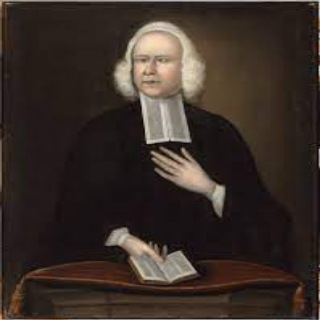
George Whitefield was born at Gloucester in 1714. His mother kept the Bell Inn, and appears not to have prospered in business; at any rate, she never seems to have been able to do anything for her sonâs advancement in life. Whitefieldâs early life, according to his own account, was anything but religious; though, like many boys, he had occasional prickings of conscience and spasmodic fits of devout feeling. He confesses that he was âaddicted to lying, filthy talking, and foolish jestingâ, and that he was a âSabbath-breaker, a theatre-goer, a card-player, and a romance readerâ. All this, he says, went on till he was fifteen years old.
Poor as he was, his residence at Gloucester procured him the advantage of a good education at the Free Grammar School of that city. Here he was a day-scholar until he was fifteen. The only known fact about his schooldays is this curious one, that even then he was remarkable for his good elocution and memory, and was selected to recite speeches before the Corporation of Gloucester at their annual visitation of the Grammar School.
At the age of fifteen Whitefield appears to have left school, and to have given up Latin and Greek for a season. In all probability, his motherâs straitened circumstances made it absolutely necessary for him to do something to assist her in business and to get his own living. He began, therefore, to help her in the daily work of the Bell Inn. âAt lengthâ, he says, âI put on my blue apron, washed cups, cleaned rooms, and, in one word, became a professed common drawer for nigh a year and a half.â This, however, did not last long. His motherâs business at the Bell did not flourish, and she finally retired from it altogether.
An old school-fellow revived in his mind the idea of going to Oxford, and he went back to the Grammar School and renewed his studies. At length, after several providential circumstances had smoothed the way, he entered Oxford as a servitor at Pembroke at the age of eighteen. Whitefieldâs residence at Oxford was the great turning-point in his life. For two or three years before he went to the University his journal tells us that he had not been without religious convictions, But from the time of his entering Pembroke College these convictions fast ripened into decided Christianity. He diligently attended all means of grace within his reach. He spent his leisure time in visiting the city prison, reading to the prisoners, and trying to do good. He became acquainted with the famous John Wesley and his brother Charles, and a little band of like-minded young men. These were the devoted party to whom the name âMethodistsâ was first applied, on account of their strict âmethodâ of living.
At one time he seems to have been in danger of becoming a semi-papist, an ascetic, or a mystic, and of placing the whole of religion in self-denial. He says in his Journal, âI always chose the worst sort of food. I fasted twice a week. My apparel was mean. I thought it unbecoming a penitent to have his hair powdered. I wore woollen gloves, a patched gown, and dirty shoes; and though I was convinced that the kingdom of God did not consist in meat and drink, yet I resolutely persisted in these voluntary acts of self-denial, because I found in them great promotion of the spiritual life.â
Out of all this darkness he was gradually delivered, partly by the advice of one or two experienced Christians, and partly by reading such books as Scougalâs Life of God in the Soul of Man, Lawâs Serious Call, Baxterâs Call to the Unconverted, Alleineâs Alarm to Unconverted Sinners, and Matthew Henryâs Commentary. âAbove allâ, he says, âmy mind being now more opened and enlarged, I began to read the Holy Scriptures upon my knees, laying aside all other books, and praying over, if possible, every line and word. This proved meat indeed and drink indeed to my soul. I daily received fresh life, light, and power from above. I got more true knowledge from reading the Book of God in one month than I could ever have acquired from all the writings of men.â
Once taught to understand the glorious liberty of Christâs gospel, Whitefield never turned again to asceticism, legalism, mysticism, or strange views of Christian perfection. The experience received by bitter conflict was most valuable to him. The doctrines of free grace, once thoroughly grasped, took deep root in his heart, and became, as it were, bone of his bone and flesh of his flesh. Of all the little band of Oxford Methodists, none seem to have got hold so soon of clear views of Christâs gospel as he did, and none kept it so unwaveringly to the end.
At the early age of twenty-two Whitefield was admitted to holy orders by Bishop Benson of Gloucester, on Trinity Sunday, 1736. His ordination was not of his own seeking. The bishop heard of his character from Lady Selwyn and others, sent for him, gave him five guineas to buy books, and offered to ordain him, though only twenty-two years old, whenever he wished. This unexpected offer came to him when he was full of scruples about his own fitness for the ministry. It cut the knot and brought him to the point of decision. âI began to thinkâ, he says, âthat if I held out longer I should fight against God.â
Whitefieldâs first sermon was preached in the very town where he was born, at the church of St Mary-le-Crypt, Gloucester â âAs I proceeded I perceived the fire kindled, till at last, though so young and amidst a crowd of those who knew me in my childish days, I was enabled to speak with some degree of gospel authority.â
Almost immediately after his ordination, Whitefield went to Oxford and took his degree as Bachelor of Arts. He then commenced his regular ministerial life by undertaking temporary duty at the Tower Chapel, London, for two months. While engaged there he preached continually in many London churches; and among others, in the parish churches of Islington, Bishopsgate, St Dunstanâs, St Margaretâs, Westminster, and Bow, Cheapside. From the very first he obtained a degree of popularity such as no preacher, before or since, has probably ever reached. Whether on week-days or Sundays, wherever he preached, the churches were crowded, and an immense sensation was produced. The plain truth is, that a really eloquent, extempore preacher, preaching the pure gospel with most uncommon gifts of voice and manner, was at that time an entire novelty in London. The congregations were taken by surprise and carried by storm.
From London he removed for two months to Dummer, a little rural parish in Hampshire, near Basingstoke. From there he accepted an invitation, which had been much pressed on him by the Wesleys, to visit the colony of Georgia in North America, and assist in the care of an Orphan House which had been set up near Savannah for the children of colonists. After preaching for a few months in Gloucestershire, and especially at Bristol and Stonehouse, he sailed for America in the latter part of 1737, and continued there about a year. The affairs of this Orphan House, it may be remarked, occupied much of his attention from this period of his life till he died. Though well-meant, it seems to have been a design of very questionable wisdom, and certainly entailed on Whitefield a world of anxiety and responsibility to the end of his days.
Whitefield returned from Georgia at the latter part of the year 1738, partly to obtain priestâs orders, which were conferred on him by his old friend Bishop Benson, and partly on business connected with the Orphan House. He soon, however, discovered that his position was no longer what it was before he sailed for Georgia. The bulk of the clergy were no longer favourable to him, and regarded him with suspicion as an enthusiast and a fanatic. They were especially scandalized by his preaching the doctrine of regeneration or the new birth, as a thing which many baptized persons greatly needed! The number of pulpits to which he had access rapidly diminished. Churchwardens, who had no eyes for drunkenness and impurity, were filled with intense indignation about what they called âbreaches of orderâ. Bishops who could tolerate Arianism, Socinianism, and Deism, were filled with indignation at a man who declared fully the atonement of Christ and the work of the Holy Ghost, and began to denounce him openly. In short, from this period of his life, Whitefieldâs field of usefulness within the Church of England narrowed rapidly on every side.
The step which at this juncture gave a turn to the whole current of Whitefieldâs ministry was his adoption of the system of open-air preaching. Seeing that thousands everywhere would attend no place of worship, spent their Sundays in idleness or sin, and were not to be reached by sermons within walls, he resolved, in the spirit of holy aggression, to go out after them âinto the highways and hedgesâ, on his Masterâs principle, and âcompel them to come inâ. His first attempt to do this was among the colliers at Kingswood near Bristol, in February, 1739. After much prayer he one day went to Hannam Mount, and standing upon a hill began to preach to about a hundred colliers upon Matthew 5:1-3. The thing soon became known. The number of hearers rapidly increased, till the congregation amounted to many thousands.
Whitefieldâs own account of the behaviour of these neglected colliers, who had never been in a church in their lives, is deeply affecting: âHavingâ, he writes to a friend, âno righteousness of their own to renounce, they were glad to hear of a Jesus who was a friend to publicans, and came not to call the righteous but sinners to repentance. The first discovery of their being affected was the sight of the white gutters made by their tears, which plentifully fell down their black cheeks as they came out of their coal-pits. Hundreds of them were soon brought under deep conviction, which, as the event proved, happily ended in a sound and thorough conversion.â
Two months after this Whitefield began the practice of open-air preaching in London, on 27 April, 1739. The circumstances under which this happened were curious. He had gone to Islington to preach for the vicar, his friend Mr Stonehouse. In the midst of the prayer the churchwardens came to him and demanded his licence for preaching in the diocese of London. Whitefield, of course, had not got this licence. The upshot of the matter was, that being forbidden by the churchwardens to preach in the pulpit, he went outside after the communion-service, and preached in the churchyard. From that day forward he became a constant field-preacher, whenever weather and the season of the year made it possible.
Two days afterwards, on Sunday, April 29th, he records: âI preached in Moorfields to an exceeding great multitude. Being weakened by my morningâs preaching, I refreshed myself in the afternoon by a little sleep, and at five went and preached at Kennington Common, about two miles from London, when no less than thirty thousand people were supposed to be present.â Henceforth, wherever there were large open spaces round London, wherever there were large bands of idle, godless, Sabbath-breaking people gathered together, in Hackney Fields, Mary-le-bonne Fields, May Fair, Smithfield, Blackheath, Moorfields, and Kennington Common, there went Whitefield and lifted up his voice for Christ. The gospel so proclaimed was listened to and greedily received by hundreds who never dreamed of going to a place of worship.
The ministrations of Whitefield in the pulpits of the Church of England from this time almost entirely ceased. He loved the Church in which he had been ordained; he gloried in her Articles; he used her Prayer-book with pleasure. But the Church did not love him, and so lost the use of his services. The Church was too much asleep to understand him, and was vexed at a man who would not keep still and let the devil alone.
The facts of Whitefieldâs history from this period to the day of his death are almost entirely of one complexion. One year was just like another; and to attempt to follow him would be only going repeatedly over the same ground. From 1739 to the year of his death, 1770, a period of thirty-one years, his life was one uniform employment, and he was always about his Masterâs business. From Sunday mornings to Saturday nights, from the 1st of January to the 31st of December, excepting when laid aside by illness, he was almost incessantly preaching Christ and going about the world entreating men to repent and come to Christ and be saved. There was hardly a considerable town in England, Scotland, or Wales, that he did not visit as an evangelist. When churches were opened to him he gladly preached in churches; when only chapels could be obtained, he cheerfully preached in chapels. When churches and chapels alike were closed, or were too small to contain his hearers, he was ready and willing to preach in the open air.
For thirty-one years he laboured in this way, always proclaiming the same glorious gospel, and always, as far as manâs eye can judge, with immense effect. In one single Whitsuntide week, after preaching in Moorfields, he received one thousand letters from people under spiritual concern, and admitted to the Lordâs table three hundred and fifty persons. In the thirty-four years of his ministry it is reckoned that he preached publicly eighteen thousand times.
His journeyings were prodigious, when the roads and conveyances of his time are considered. He visited Scotland fourteen times; he crossed the Atlantic seven times, backward and forward, in miserable slow sailing ships, and arrested the attention of thousands in Boston, New York, and Philadelphia. He went over to Ireland twice, and on one occasion was almost murdered by an ignorant Popish mob in Dublin. As to England and Wales, he traversed every county in them, from the Isle of Wight to Berwick-on-Tweed, and from the Landâs End to the North Foreland.
His regular ministerial work in London for the winter season, when field-preaching was necessarily suspended, was something prodigious. His weekly engagements at the Tabernacle in Tottenham Court Road, which was built for him when the pulpits of the Established Church were closed, comprised the following work: Every Sunday morning he administered the Lordâs Supper to several hundred communicants at half-past six. After this he read prayers, and preached both morning and afternoon. Then he preached again in the evening at half-past five, and concluded by addressing a large society of widows, married people, young men and spinsters, all sitting separately in the area of the Tabernacle, with exhortations suitable to their respective stations. On Monday, Tuesday, Wednesday, and Thursday mornings, he preached regularly at six. On Monday, Tuesday, Wednesday, Thursday, and Saturday evenings, he delivered lectures. This, it will be observed, made thirteen sermons a week! And all this time he was carrying on a large correspondence with people in almost every part of the world. That any human frame could so long endure the labours that Whitefield went through does indeed seem wonderful. That his life was not cut short by violence, to which he was frequently exposed, is no less wonderful. But he was immortal till his work was done.
He died at last very suddenly at Newbury Port, in North America, on Sunday, 29 September, 1770, at the comparatively early age of fifty-six. He was once married to a widow named James, of Abergavenny, who died before him. If we may judge from the little mention made of his wife in his letters, his marriage does not seem to have contributed much to his happiness. He left no children, but he left a name far better than that of sons and daughters. Never perhaps was there a man of whom it could be so truly said that he spent and was spent for Christ than George Whitefield.
[Adapted from J. C. Ryleâs âGeorge Whitefield and His Ministryâ in Select Sermons of George Whitefield; see also George Whitefieldâs Journals, Robert Philipâs Life and Times of George Whitefield, and Arnold Dallimoreâs 2-volume biography George Whitefield.]
The Year My World Fell Apart
Twenty-five years ago, my world fell apart. I had just turned 39, was happily married with five kids, and served as the associate pastor of a growing two-year-old church plant. My health was good, I enjoyed an active life, and ministry opportunities abounded. Everything looked good from the outside. But on the inside, it was a different story. Starting in January of 1994, fear, hopelessness, depression, detachment, anxiety, and emptiness became my daily companions. All my life, I had taken pride in my ability to think clearly, but suddenly, thoughts began racing through my mind that I couldnât stop. Panic attacks came regularly. I imagined I would be dead within months. And then there were the physical effects. Most days, I found it hard to catch my breath. My arms itched incessantly, and no amount of scratching relieved the sensation. When it didnât seem like a 200-pound weight pressed against my chest, I often felt an eerie hollowness. My face buzzed. I was light-headed. I spent many nights pacing and trying to pray. âThis Doesnât Happen to Pastorsâ Other than the normal pressures of a church planting pastor, there were no obvious reasons why I seemed to be going crazy. In an effort to rule out potential causes, I made an appointment with my doctor for a complete checkup. The results came back. I was âfine.â Nothing had prepared me for what I was going through. My internal accusations that âthis doesnât happen to pastorsâ only made me more frantic. I looked fruitlessly for something that would give me victory over whatever it was I was battling. Scripture. Prayer. Worship music. A retreat. A vacation. Even a trip to Canada during the âToronto blessing.â Nothing helped. Early on, I thought about seeing a counselor, maybe even a psychiatrist. I was aware of occasions when people with hormonal imbalances, an inability to sleep, or traumatic personal histories benefited from medical intervention. I wondered if drugs might help me get back on my feet to deal with what I was experiencing. I also identified with various labels I had read about. Nervous breakdown. Burnout. Anxiety disorder. Depression. Whatever was going on was affecting me emotionally, physically, mentally, and spiritually. The symptoms were too numerous and intense to think this was only a âsinâ problem. But no label I assigned to my condition identified root causes. If what I was experiencing originated in my own heart (as it seemed), I wanted to explore that first. I wanted to press in to the gospel to see what I might be missing. The next two and a half years were the hardest of my life. But knowing what I learned from them, they were, without a doubt, the best years. Many people, most significantly my wife, Julie, were invaluable means of grace during that time. I hope to be a means of grace to you or others you might know who have been through something similar to what Iâve been describing. These are a few of the lessons God taught me during that time. We Might Not Be Hopeless Enough About a year into my dark season, I told my good friend, Gary, that I felt dead inside. Life didnât make sense. I felt completely hopeless. Garyâs response was one Iâll never forget and have passed on to countless people, âI donât think youâre hopeless enough. If you were completely hopeless, youâd stop trusting in what you can do and trust in what Jesus has already done for you on the cross.â Our problem isnât that we have no hope. We just hope in things that arenât God. Our own abilities. A preferred outcome. Our reputation. Financial security. You fill in the blank. And when the idols weâve hoped in donât deliver as promised, we panic. We despair. We lash out. We go numb. Thatâs why the psalmists speak of hoping in the Lord and his word at least twenty-five times, and why David tells us to âhope in the Lord from this time forth and forevermoreâ (Psalm 131:3). Itâs easy and common to hope in something other than God. Blessed Are Those Who Know Their Need For most of my life up until that point, my heart aggressively served the idols of credit and control. Those idols revealed a selfish ambition that desired not only peopleâs approval but their applause, even their adoration. I wanted to receive the praise only God deserves. When I couldnât get everyone to think I was as great as I thought I was, or when I realized the world didnât bow to my desires, my idols punished me: mentally, emotionally, and physically. I thought I was a victim. I thought depression was âcoming on meâ from âout there.â Actually, I was the one producing it, through my own fears, unbelief, and false worship. I was forsaking my only hope of steadfast love (Jonah 2:8). Over time I came to see God was guiding the whole process in order to turn my heart to him. He wanted to wean me from my self-centered idolatry so I could find the greater joy of pursuing his glory instead of mine. Benefits We Donât Think We Need In the first year of my trial, I was often unaffected by normal spiritual disciplines like reading Scripture, gathering with the church on Sundays, and prayer. The promises of the Bible seemed like empty platitudes, meant for those who were doing well. In reality, I didnât see the depths of my need clearly enough. A friend introduced me to John Owenâs Sin and Temptation  and God used it to show me how deceived my heart could be. Rather than wondering why I felt so hopeless and fearful, I started to own those feelings as the effect of functionally seeing myself as my own savior. Apart from Jesus, I was completely hopeless and had every reason to fear. But Jesus died on the cross to save hopeless and fearful people. And I was one of them. That thought process, repeated a thousand times, pointed me again and again to the Savior I needed more than I had ever realized. Feelings Are Unreliable Proofs The Psalms teach us that a relationship with God involves our emotions. Godâs presence brings joy, Godâs promises bring comfort, Godâs provision brings satisfaction (Psalm 16:11; 119:50; 145:16). But I was trying to root my faith in my experiences rather than in Godâs word. I was looking to sustained peace as evidence that the Bible was true, and found myself chasing experiences rather than Jesus. When I was unaffected by the gospel, I began to see that other desires were at work in my heart. Selfish ambition. Self-atonement. Works-righteousness. A love of ease. Feelings tell me something is happening in my soul, but they donât necessarily tell me why I feel (or donât feel) a certain way. We discover that through patiently and consistently trusting and pursuing God (Proverbs 2:1â5). When I insist on finding relief from my emotional distress before I believe God, Iâm living by sight, not by faith. Self-Focus Wonât Ultimately Defeat Self-Sins In March of 1995, I went on a personal retreat. After 24 hours, I determined my problem was that I had been depending too much on my own righteousness and needed to trust in the righteousness of Christ. When I got home, I committed myself to a rigid discipline of Scripture memorization. Julie told me I came back more bound up than when I had left. One reason my dark season lasted so long was my belief that both the problem and solution ended in me. It was my lack of faith, my legalism, my poor choices. I needed to memorize more Scripture, do more, do less, do nothing, do everything. Over time, God graciously showed me that putting sin to death involves me but doesnât depend on me. Godâs grace comes to humble, needy people, never to those who think they deserve or can earn it. Robert Murray MâCheyneâs counsel is still wise: âFor every look at self, take ten looks at Christ!â His perfect life, substitutionary sacrifice, and glorious resurrection are a never-ending stream of delight, hope, and transformation (2 Corinthians 3:18). Take Every Temptation to Christ Maturity isnât freedom from temptation, but responding to temptation more often with what God has said and done for us in Christ. I often thought I was backsliding when the temptations of anxiety, fear, hopelessness, and depression reappeared (or even increased). In those moments, I was tempted to think what I had been doing and believing âdidnât work.â But John Owen observed, âYour state is not at all to be measured by the opposition that sin makes to you, but by the opposition you make to it.â In my discouragement, I was tempted to run to something other than Godâs word and the gospel as my refuge. I started to doubt that hearing the Bible preached on Sundays could do any good. But Godâs promises remain true no matter how many times we forget or neglect them. Jesus will always be the only Savior who died for my sins to bear my punishment and reconcile me to God (1 Peter 3:18). In him I am truly forgiven, justified, adopted, and eternally secure in Godâs love and care. As I continued to confess my inadequacy with phrases like, âYou are God, and I am not,â I saw more clearly how God alone will always be my rock, steadfast love, fortress, stronghold, deliverer, and refuge (Psalm 144:1â2). Traveling Through the Valley The lessons I learned during those years have shaped my walk with God to this day. I still battle many of the same sins I fought twenty-five years ago, but I fight with greater clarity and trust in the one who has won the war. Temptations are less frequent and less intense. Iâve been able to point others who have been going through similar seasons to the life-transforming hope we have in the gospel. Removing difficulties, problems, and trials isnât the only way God shows he is good. Instead of superficial solutions, Jesus actually delivers us from our false hopes of ultimate salvation, satisfaction, and comfort. We want relief from the pain â God wants to make us like his Son. We want a change in our circumstances â God wants a change in our hearts. A crucified and risen Savior proves once and for all heâs actually able to bring that change about. Iâve learned that the goal of the battle against emotional turmoil isnât simply emotional peace. The goal is to know Christ. That realization led me to pray at one point, âIf being like this for the rest of my life means that I will know you better, then leave me like this.â Thankfully, God didnât leave me like I was. He gave me a deeper trust in the care of my heavenly Father, a more passionate love for Jesus and the gospel, and a greater awareness of his Spiritâs presence. I know better now what Paul meant when he said, âTo live is Christ, and to die is gainâ (Philippians 1:21). Which is why I thank God that, in his abundant mercy, he caused my world to fall apart twenty-five years ago.