

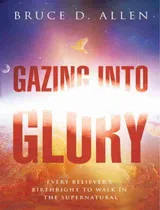
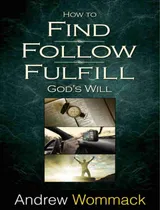
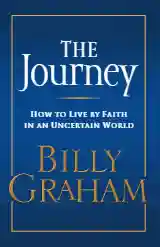

About the Book
"Unshakable Faith" by Rick Joyner is a practical guide to developing unwavering faith in God, even in the face of adversity and challenges. Joyner provides insightful teachings and personal stories to help readers strengthen their faith and trust in God's plans for their lives. The book emphasizes the importance of maintaining faith through difficult times and offers practical strategies for deepening one's relationship with God.
Gordon Lindsay
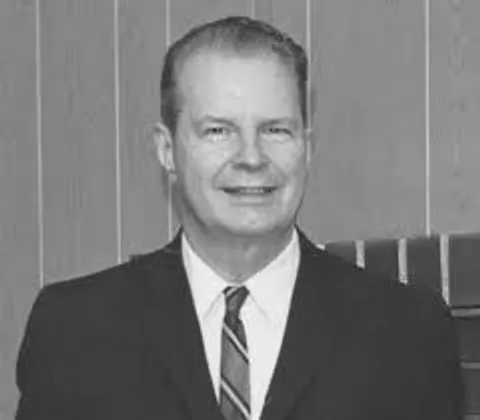 Gordon Lindsay’s Early life
Gordon Lindsay’s parents were members of J. A. Dowie’s Zion City, Illinois when he was born. The city’s financial difficulties forced the family west in 1904, where they temporarily joined another Christian-based community led by Finis Yoakum at Pisgah Grande, California. When similar problems emerged the family moved to Oregon after only a few months. From here the family moved to Portland, Oregon where Lindsay attended high school and was converted during a Charles F. Parham evangelistic campaign.
During his youth he came under the influence of John G. Lake, former resident of Zion City, missionary to South Africa, and founder of the Divine Healing missions in Spokane, Washington, and Portland, Oregon in 1920. Lindsay joined the healing and evangelistic campaigns of Lake, traveling throughout California and the southern states.
Lindsay began his own ministry in California as pastor of small churches in Avenal and San Fernando and for the next eighteen years, he travelled acros s the country holding revivals in full gospel churches. This period of travel prepared him as perhaps no other man in the nation to establish communication among a variety of Pentecostals.
When World War II began, Lindsay felt compelled to give up his evangelistic ministry because its rigorous lifestyle was taking its toll on his young family. He accepted a call to pastor a church in Ashland, Oregon.
William Branham enters Gordon Lindsay’s life
By 1947 he had witnessed the extraordinary ministry of William Branham and responded to the invitation to become Branham’s manager. His managerial skills were soon obvious in the Branham campaigns, and in April 1948, he furthered the cause of the of the revival when he produced the first issue of The Voice of Healing, specifically to promote Branham’s ministry. To Lindsay’s great surprise Branham announced that he “would not continue on the field more than a few weeks more.”
At great financial cost Lindsay decided to continue the publication of the new magazine in cooperation with his long-time friends, Jack Moore and his talented daughter Anna Jeanne Moore. He broadened the scope of the magazine by including more of the lesser known healing evangelists who were beginning to hold campaigns and were drawing large audiences.
One such evangelist was William Freeman who had been holding meetings in small churches. Lindsay visited one of his campaigns and immediately felt it was the will of God to team up with him and organise a series of meetings through 1948. The Voice of Healing featured the miracles of the Freeman campaigns.
Voice of Healing Conventions
By March 1949 The Voice of Healing circulation had grown to nearly 30,000 per month and had clearly become the voice of the healing movement. It’s pages successfully spread the message of the Salvation-Deliverance-Healing revival across the world.
In December 1949, Lindsay arranged the first convention of healing revivalists in Dallas, Texas. The assembly was addressed by Branham, Lindsay, Moore, old-timers such as F. F. Bosworth and Raymond T. Richey, and a number of rising revivalists including O. L. Jaggers, Gayle Jackson, Velmer Gardner, and Clifton Erickson. This historic conference symbolized the vitality and cohesion of the revival.
The following year, the convention, now about 1,000 strong, met in Kansas City, with virtually every important revivalist in the nation, with the notable exceptions of William Branham and Oral Roberts. Lindsay exercised great skill and wisdom exposing several points of danger and tension in the movement proposed guidelines for the future. Lindsay understood the fears of the older Pentecostal denominations and leaders and tried his utmost to deal with the offending issues.
In an article announcing “the purpose, plan and policy of the Voice of Healing Convention,” he denounced “free-lancers who violently and indiscriminately attack organization in general,” and he urged avoidance of “novel prophetic interpretations, dogmatic doctrinal assertions, sectarian predilections, theological hair-splitting.”
The Voice of Healing Association
The 1950 meeting made the Voice of Healing convention into a loose association of healing revivalists. The evangelists officially associated with The Voice of Healing magazine held “family meetings” at the conventions, at the same time maintaining their desire to “prove to the world that those associated with The Voice of Healing have no intention to organize another movement.” Through the decade the Voice of Healing conventions were showcases for healing revivalism.
The conference programs were workshops on the problems of healing evangelists. Typical topics were “prayer and fasting,” “preparation for a campaign,” “the follow-up work after a campaign,” “the system of cards for the prayer tent and the healing line” and the delicate issue of finances. As the association grew in importance in the 1950s, the program was frequently headed by Roberts or Branham; though every new revivalist aspired to be a speaker on the program.
The Voice of Healing family of evangelists flowered in the early 1950s. Lindsay continued to publicize Branham’s work, although he was not formally associated with the organization; the nucleus of the fellowship was an influential clique which included O. L. Jaggers, William Freeman, Jack Coe, T. L. Osborn, A. A. Allen, and Velmer Gardner.
Gradually major ministries began their own magazines and had no further need for Voice of Healing promotion. Nevertheless, by 1954 the “associate editors and evangelists” listed in The Voice of Healing numbered nearly fifty.
Though Lindsay became personally involved with healing evangelism from 1949, especially with other revivalists such as T. L. Osborn, he confined his best work to organization and management of the Voice of Healing magazine. By 1956 the expenses of the Voice of Healing were running $1,000 a day. In addition to the national and regional conventions sponsored by his organization, Lindsay also began to sponsor missions and a radio program.
“Lindsay was more than an advisor during the first decade of the healing revival; he was much like the director of an unruly orchestra. He tried desperately to control the proliferation of ministries in an effort to keep the revival respectable. He repeatedly advised, “It is better for one to go slow. Get your ministry on a solid foundation. . . . By all means avoid Hollywood press agent stuff.”
Many of the new leaders of the early 1950s owed their early success to the literary support of Gordon Lindsay through the Voice of Healing, but by 1958, many of the revivalists believed that Lindsay’s work was over.
An evolving ministry
Lindsay’s efforts to consolidate and coordinate the healing movement and its ministries became an impossible task. The increasing independence of ministries and the burgeoning charismatic movement caused Lindsay to reconsider his goals. He took the example of T. L. Osborn and concentrated on missionary endeavours. He remained the historian and theologian of the healing movement but began to produce teaching and evangelistic materials which were sent across the world.
The Voice of Healing ultimately became Christ for the Nations. Native church programs, literature, teaching tapes and funds were distributed to hundreds of locations. The organization had changed from one of healing revivalists into an important missionary society.
His ministry was always to those involved in the healing revival, independents and mainline Pentecostals, but the new charismatics – Lutherans, Methodists and Baptists – became his new audience. His encouragement of, and involvement with, the Full Gospel Businessmen’s Fellowship was designed to provide teaching and wisdom for charismatic leaders, many of whom held Lindsay in high regard.
His death on April 1st 1971
Suddenly, on April 1, 1973, Gordon Lindsay died. His wife, Freda, stepped into the breach and was able to stabilize and advance the ministry of Christ for the Nations. Lindsay’s death brought unparalleled financial support paying off all debts and expanding most of its programs.
David Harrel summarises the life of Gordon Lindsay perfectly: ‘The death of Gordon Lindsay closed a major chapter in the charismatic revival. No single man knew the revival and its leaders so well. No man understood its origins, its changes, and its diversity as did Lindsay. A shrewd manager and financier, Lindsay had been as nearly the coordinator of the healing revival as any man could be.
When the revival began to wane, Lindsay was faced with a crisis more severe than those of most of the evangelists themselves. Never a dynamic preacher, he found himself virtually abandoned by his most successful protégés. But Lindsay proved able to adapt. Always a balanced person, Lindsay built a balanced and enduring ministry.’
Tony Cauchi
Gordon Lindsay’s Early life
Gordon Lindsay’s parents were members of J. A. Dowie’s Zion City, Illinois when he was born. The city’s financial difficulties forced the family west in 1904, where they temporarily joined another Christian-based community led by Finis Yoakum at Pisgah Grande, California. When similar problems emerged the family moved to Oregon after only a few months. From here the family moved to Portland, Oregon where Lindsay attended high school and was converted during a Charles F. Parham evangelistic campaign.
During his youth he came under the influence of John G. Lake, former resident of Zion City, missionary to South Africa, and founder of the Divine Healing missions in Spokane, Washington, and Portland, Oregon in 1920. Lindsay joined the healing and evangelistic campaigns of Lake, traveling throughout California and the southern states.
Lindsay began his own ministry in California as pastor of small churches in Avenal and San Fernando and for the next eighteen years, he travelled acros s the country holding revivals in full gospel churches. This period of travel prepared him as perhaps no other man in the nation to establish communication among a variety of Pentecostals.
When World War II began, Lindsay felt compelled to give up his evangelistic ministry because its rigorous lifestyle was taking its toll on his young family. He accepted a call to pastor a church in Ashland, Oregon.
William Branham enters Gordon Lindsay’s life
By 1947 he had witnessed the extraordinary ministry of William Branham and responded to the invitation to become Branham’s manager. His managerial skills were soon obvious in the Branham campaigns, and in April 1948, he furthered the cause of the of the revival when he produced the first issue of The Voice of Healing, specifically to promote Branham’s ministry. To Lindsay’s great surprise Branham announced that he “would not continue on the field more than a few weeks more.”
At great financial cost Lindsay decided to continue the publication of the new magazine in cooperation with his long-time friends, Jack Moore and his talented daughter Anna Jeanne Moore. He broadened the scope of the magazine by including more of the lesser known healing evangelists who were beginning to hold campaigns and were drawing large audiences.
One such evangelist was William Freeman who had been holding meetings in small churches. Lindsay visited one of his campaigns and immediately felt it was the will of God to team up with him and organise a series of meetings through 1948. The Voice of Healing featured the miracles of the Freeman campaigns.
Voice of Healing Conventions
By March 1949 The Voice of Healing circulation had grown to nearly 30,000 per month and had clearly become the voice of the healing movement. It’s pages successfully spread the message of the Salvation-Deliverance-Healing revival across the world.
In December 1949, Lindsay arranged the first convention of healing revivalists in Dallas, Texas. The assembly was addressed by Branham, Lindsay, Moore, old-timers such as F. F. Bosworth and Raymond T. Richey, and a number of rising revivalists including O. L. Jaggers, Gayle Jackson, Velmer Gardner, and Clifton Erickson. This historic conference symbolized the vitality and cohesion of the revival.
The following year, the convention, now about 1,000 strong, met in Kansas City, with virtually every important revivalist in the nation, with the notable exceptions of William Branham and Oral Roberts. Lindsay exercised great skill and wisdom exposing several points of danger and tension in the movement proposed guidelines for the future. Lindsay understood the fears of the older Pentecostal denominations and leaders and tried his utmost to deal with the offending issues.
In an article announcing “the purpose, plan and policy of the Voice of Healing Convention,” he denounced “free-lancers who violently and indiscriminately attack organization in general,” and he urged avoidance of “novel prophetic interpretations, dogmatic doctrinal assertions, sectarian predilections, theological hair-splitting.”
The Voice of Healing Association
The 1950 meeting made the Voice of Healing convention into a loose association of healing revivalists. The evangelists officially associated with The Voice of Healing magazine held “family meetings” at the conventions, at the same time maintaining their desire to “prove to the world that those associated with The Voice of Healing have no intention to organize another movement.” Through the decade the Voice of Healing conventions were showcases for healing revivalism.
The conference programs were workshops on the problems of healing evangelists. Typical topics were “prayer and fasting,” “preparation for a campaign,” “the follow-up work after a campaign,” “the system of cards for the prayer tent and the healing line” and the delicate issue of finances. As the association grew in importance in the 1950s, the program was frequently headed by Roberts or Branham; though every new revivalist aspired to be a speaker on the program.
The Voice of Healing family of evangelists flowered in the early 1950s. Lindsay continued to publicize Branham’s work, although he was not formally associated with the organization; the nucleus of the fellowship was an influential clique which included O. L. Jaggers, William Freeman, Jack Coe, T. L. Osborn, A. A. Allen, and Velmer Gardner.
Gradually major ministries began their own magazines and had no further need for Voice of Healing promotion. Nevertheless, by 1954 the “associate editors and evangelists” listed in The Voice of Healing numbered nearly fifty.
Though Lindsay became personally involved with healing evangelism from 1949, especially with other revivalists such as T. L. Osborn, he confined his best work to organization and management of the Voice of Healing magazine. By 1956 the expenses of the Voice of Healing were running $1,000 a day. In addition to the national and regional conventions sponsored by his organization, Lindsay also began to sponsor missions and a radio program.
“Lindsay was more than an advisor during the first decade of the healing revival; he was much like the director of an unruly orchestra. He tried desperately to control the proliferation of ministries in an effort to keep the revival respectable. He repeatedly advised, “It is better for one to go slow. Get your ministry on a solid foundation. . . . By all means avoid Hollywood press agent stuff.”
Many of the new leaders of the early 1950s owed their early success to the literary support of Gordon Lindsay through the Voice of Healing, but by 1958, many of the revivalists believed that Lindsay’s work was over.
An evolving ministry
Lindsay’s efforts to consolidate and coordinate the healing movement and its ministries became an impossible task. The increasing independence of ministries and the burgeoning charismatic movement caused Lindsay to reconsider his goals. He took the example of T. L. Osborn and concentrated on missionary endeavours. He remained the historian and theologian of the healing movement but began to produce teaching and evangelistic materials which were sent across the world.
The Voice of Healing ultimately became Christ for the Nations. Native church programs, literature, teaching tapes and funds were distributed to hundreds of locations. The organization had changed from one of healing revivalists into an important missionary society.
His ministry was always to those involved in the healing revival, independents and mainline Pentecostals, but the new charismatics – Lutherans, Methodists and Baptists – became his new audience. His encouragement of, and involvement with, the Full Gospel Businessmen’s Fellowship was designed to provide teaching and wisdom for charismatic leaders, many of whom held Lindsay in high regard.
His death on April 1st 1971
Suddenly, on April 1, 1973, Gordon Lindsay died. His wife, Freda, stepped into the breach and was able to stabilize and advance the ministry of Christ for the Nations. Lindsay’s death brought unparalleled financial support paying off all debts and expanding most of its programs.
David Harrel summarises the life of Gordon Lindsay perfectly: ‘The death of Gordon Lindsay closed a major chapter in the charismatic revival. No single man knew the revival and its leaders so well. No man understood its origins, its changes, and its diversity as did Lindsay. A shrewd manager and financier, Lindsay had been as nearly the coordinator of the healing revival as any man could be.
When the revival began to wane, Lindsay was faced with a crisis more severe than those of most of the evangelists themselves. Never a dynamic preacher, he found himself virtually abandoned by his most successful protégés. But Lindsay proved able to adapt. Always a balanced person, Lindsay built a balanced and enduring ministry.’
Tony Cauchi
the great prize in christian dating - pursue clarity and postpone intimacy
I got lots of things wrong in dating, but as I think back over my mistakes and failures — dating too young, jumping from relationship to relationship, not being honest with myself or with others, failing to set or keep boundaries, not listening to friends and family, not prizing and pursuing purity — one error rises above the others, and in many ways explains the others: My dating relationships were mainly a pursuit of intimacy with a girlfriend, not clarity about whether to marry her. In my best moments, I was pursuing clarity through intimacy, but in a lot of other moments, if I’m honest, I just wanted intimacy at whatever cost. “The pursuit of marriage” was a warm and justifying pullover to wear over my conscience when things started to go too far physically and emotionally. But even clarity through intimacy misses the point and gets it backwards. I should have been pursuing clarity in dating, and then intimacy in marriage. That simple equation would have saved me and the girls I dated all kinds of grief, heartache, and regret. Your Last First Kiss Most of us date because we want intimacy. We want to feel close to someone. We want to be known deeply and loved deeply. We want sex. We want to share life with someone of the opposite sex who will be involved and invested in what we’re doing and what we care about. With the right heart, and in the right measure, and at the right time, these are all good desires. God made many of us to want these things, and therefore wants us to want these things — with the right heart, in the right measure, and at the right time. Think about your last first kiss in a relationship (if you’ve already kissed someone). Why did you do it? You knew you were risking something, that this wasn’t the safest way to give yourself to someone. What was driving you most in those brief moments before you let your lips touch? For me, every first kiss was driven more by my own desires than by God’s desires for me. Every first kiss until I kissed my wife for the first time, seconds after asking her to be my wife. Before Faye, I had let what I wanted outweigh what I knew God wanted, and what I knew was best for the girl I was dating. I craved intimacy, and I knew I would find it in marriage. So, I punched “marriage” into Google Maps, jumped on the highway, and ignored the speed limits. Instead of waiting to get to my destination to enjoy emotional and physical intimacy, I pulled over and bought something quicker and cheaper on the side of the road. Intimacy — romantic or otherwise — is a beautiful and precious gift God has given to his children. But like so many of God’s good gifts, because of our sin, intimacy can be dangerous. The human heart is wired to want intimacy, but it is also wired to corrupt intimacy — to demand intimacy in the wrong ways or at the wrong time, and to expect the wrong things from intimacy. That means intimacy between sinners is dangerous, because we’re prone, by nature, to hurt one another — to do what feels good, instead of caring for the other person; to promise too much too soon, instead of being patient and slow to speak; to put our hope, identity, and worth in one another, instead of in God. Intimacy makes us vulnerable, and sin makes us dangerous. The two together, without covenant promises, can be a formula for disaster in dating. Different Prizes in Marriage and Dating God is the greatest prize in life for any believer — at whatever age, in whatever stage of life, and whatever our relationship status. But is there a unique prize for the believer in marriage? Yes, it is Christ-centered emotional and sexual intimacy with another believer. Before God, within the covenant of marriage, two lives, two hearts, two bodies become one . A husband and wife experience everything in life as one new person. “Couple” doesn’t describe them well enough anymore. Yes, they’re each still themselves, but they’re too close now to ever be separated again (Mark 10:9). God has made them one. Their things are not their own. Their time is not their own. Even their bodies are not their own (1 Corinthians 7:4). They share all and enjoy all together now. Sex is the intense experience and picture of their new union, but it’s only a small slice of all the intimacy they enjoy together now. Safety for Intimacy The reason that kind of intimacy is the prize of marriage and not of our not-yet-married relationships is because that kind of intimacy is never safe anywhere outside of the lifelong covenant called marriage. Never . There are lots of contexts in which romantic intimacy feels safe outside of marriage, but it never is. There is too much at stake with our hearts, and too many risks involved, without a ring and public vows. Without promises before God, the further we walk into intimacy with another person, the further we expose ourselves to the possibility of being abandoned, betrayed, and crushed. In a Christ-centered marriage , those same risks do not exist. We are together — in sickness and health, in peace and conflict, in disappointment, tragedy, and even failure — until death do us part. When God unites us, death is the only thing strong enough to separate us. That means intimacy is a safe and appropriate experience in marriage . For sure, marriage is not perfectly safe. Married people are still sinners, capable of hurting one another, even to the point of abuse or divorce. But faithful married people are not leaving people. Just like God is not a leaving God. Dating’s Great Prize While the great prize in marriage is Christ-centered intimacy, the great prize in dating is Christ-centered clarity. Intimacy is safest in the context of marriage, and marriage is safest in the context of clarity. If we want to have and enjoy Christ-centered intimacy, we need to get married. And if we want to get married, we need to pursue clarity about whom to marry. We don’t pursue clarity by diving into intimacy. The right kind of clarity is a means to the right kind of intimacy, not the other way around. Careful, prayerful, thoughtful clarity will produce healthy, lasting, passionate intimacy. Any other road to intimacy will sabotage it, leaving it shallow, fragile, and unreliable. Much of the heartache and confusion we feel in dating stems from treating dating as practice for marriage (clarity through intimacy), instead of as discernment toward marriage (clarity now, intimacy later). In dating, we often experiment with intimacy until it basically feels like marriage, and then we get married. The risks may seem worth it (even necessary) because of how much we want to be married (or at least everything that comes with being married). But in reality, the risks are not worth it, and they’re certainly not necessary. God did not mean for us to risk so much in our pursuit of marriage. For sure, we always make ourselves vulnerable to some degree as we get to know someone and develop a relationship, but God wants us to enjoy the fullness of intimacy within a covenant, not in some science lab of love. In Christian dating, we’re not trying marriage on for size, but trying to find someone to marry. Questions We Ask Pursue clarity, and postpone intimacy. What does that look like practically? One test for whether you are pursuing clarity or intimacy is to study the questions we ask in dating. We ask different questions when we’re pursuing clarity more than intimacy. How far can we go? How late should we hang out? What kind of touching is allowed? Is he Christian enough for me to date him? Versus: Does he love Jesus more than he loves me? Does she follow through on her promises? Do I see him showing self-control, or compromising to get what he wants? Is she willing to lovingly tell me when I’m wrong? Healthy relationships may still need to ask questions in the first set, but they’ll be way down the list. When we’re after intimacy without clarity, we ask the first set and often overlook or minimize the second. But when we’re pursuing clarity, we’ll start asking new questions. Here are some examples of questions you could ask in your pursuit of clarity: What have you learned about each other lately — stories, habits, character traits? How have you each grown in your relationship with Jesus since you started dating? Are you both committed to abstaining from any form of sexual immorality? What flags, if any, have others raised about your relationship? What obstacles are keeping the two of you from getting married? Are you each being driven by your own desires, or by God’s desires for you? In what ways is your relationship different from non-Christian relationships? Questions like these — and countless more like them — uncover what we really want in dating, and where we’re likely to leave Jesus behind. They’re the bumpers that keep us out of the gutter, guarding us from impatience and impurity. But they’re also instruments of true love — the well-made parts that keep our car on the highway to marriage. They keep us focused on where we are headed and what really matters. They’re the agents of clarity.