
Others like too soon to quit Features >>

Be Complete
Right Thinking In A World Gone Wrong
How To Become A Water Walker

The Radical Cross

Seize Your Kairos Moment

Sweet Influence Of The Holy Spirit
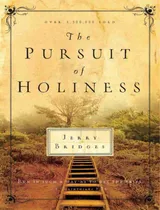
The Pursuit Of Holiness
-160.webp)
God's Medicine Of Faith: The Word

The Judas Goat: How To Deal With False Friendships, Betrayals, And The Temptation Not To Forgive

Getting Anger Under Control
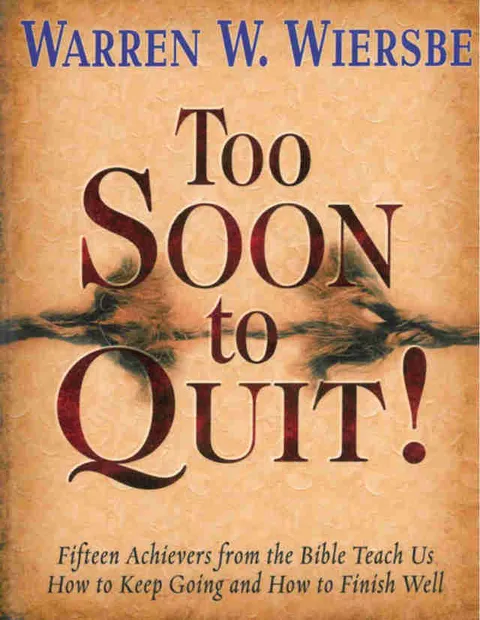
About the Book
"Too Soon to Quit" by Warren W. Wiersbe is a motivational book that encourages readers to persevere through difficult circumstances and not give up too soon. The author provides practical advice and biblical insights to help readers find strength and determination to overcome challenges and fulfill their potential.
John G. Lake
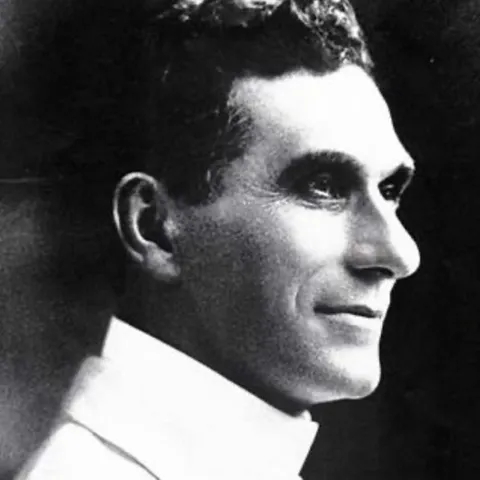 John G. Lake was born in Ontario, Canada on March 18th, 1870. He was a family man, person of integrity, honor, a savvy businessman and a good father. If you knew him you wouldn’t otherwise know that he would soon become one of the greatest men of God the world would ever know. He had a genuine love for the Lord Jesus and was known by his friends as a man who dedicated himself to intimacy with The Lord. It was out of this place that he loved his wife, was a man of integrity and built a very successful business career. To give you perspective, by 1905 John G Lake was making $50,000 per year this sum would be like upwards of 1.3 million dollars per year annually today. John grew up in a family environment which was plagued with sickness and death, it is said that his earliest memories were of sickness, death and funerals. Lake was from a large family, he had 16 siblings, 8 of which tragically died of various diseases. It is no coincidence that “the man of healing” was tormented from a young age with death and disease. The enemy will often oppose destinies with radical circumstances through a distortion of the very thing that we are called to walk in. Lake Was exposed to dramatic healing when he visited John Alexander Dowie’s ministry and was, in prayer, instantly healed of a rheumatism which had caused his legs to grow incorrectly. Just two short years into their marriage, Jennie Lake was diagnosed with tuberculosis and heart disease. Over the next couple of years, the condition worsened and the doctors resigned to the fact that it was only a matter of time before she would die. John allowed this situation to provoke him into faith, after being exposed to such death and disease from a young age he had a hatred for such things. When he would read the word of God he saw that his Christian experience was less than the promised “power of the Holy Spirit”. As Jennie was on her deathbed and perhaps taking her final breaths Lake was overcome with anger over sickness and threw his bible against the fireplace mantle! When he went to pick up his bible it was opened to Acts chapter 10:38 which says: "God anointed Jesus of Nazareth with the Holy Ghost and with power: who went about doing good, and healing all that were oppressed of the devil; for God was with him.” Lake had a surge of faith in that moment and sent a telegram to Dowie asking him to pray. Within an hour of Dowie praying she was fully healed! Not long after Jennie was healed, God began to speak to Lake about going into full time ministry. After some time of contemplation and seeking the Lord, God confirmed to John and Jennie separately that they were to move to South Africa to begin their life of ministry. John and Jennie then gave away all that they had, John forsook his mega-salary and they went on their way alongside some of their friends as ministry partners.
When they arrived in South Africa, they had no money. The problem was, that they needed at least $125 in order to clear customs. they nervously waited for their turn in line, rehearsing what they would say to the immigration officer They were in desperate need of a miracle, as the law read that they would be subject to deportation as quickly as they arrived in South Africa. Just as they were about the get to the front of the line, John felt a tap on his shoulder… A man was standing behind John and said “excuse me sir, can I have a word with you?” John nervously steps out of line at the man’s request and the man said “when I saw you and your family in line, the Lord told me to give you $200 cash”. The Lord provided just enough money for John and his family to enter the country. But their needs didn’t stop there. The Lakes and their crew had no ministry contact in Johannesburg. Soon after they cleared customs, a woman approached John’s friends and asked how many people are in their family, when they told her, she responded “no, not you” and went over to John and asked the same question. John replied “9” and she said “you’re the ones!” She went on to tell John that the Lord had spoken to her last night that she was to give her home to a family of 9 people who are coming from America to do God’s work. John, Jennie and their crew rejoiced in the dramatic provision of the Lord. Their time in South Africa was marked with waves of revival, there were multitudes saved, healed and delivered over the course of their 5 year ministry tour in South Africa.
By far my favorite story from this season of Revival takes place shortly after the Lake family and their team arrived in South Africa. A mighty plague was sweeping through the nation, the death count was climbing dramatically. So much so that there was a surplus of corpses who were victims of the plague and there was no one to bury the dead; if someone was to come in contact with a dead body they would most certainly become infected and their death sentence would immediately begin. John G. Lake astounded the medical officials because he, without any gloves or protective clothing began burying the dead. Physicians in a panic approached John and rebuked him for coming in contact with the dead, John boldly responded "when the disease comes in contact with my skin, you can watch it die". The doctors thought he was insane, so he challenged them to put a drop of the plague on his skin and watch it under a microscope. When they did so, John was right! The plague cells literally burned up the second they came in contact with his skin!
It is tough to understand what would happen towards the end of the Lake’s missionary journey in Africa. One day while John was away on a ministry trip, his wife Jennie suddenly passed away. The cause of her death was malnutrition and exhaustion. It wasn’t uncommon for the sick and broken to line the lawn of John G Lake’s home and Jennie, as an act of sacrifice, gave away all their food and any resources she could to the broken which frequented their house.
Although John and Jennie’s faith and sacrifice is commendable we must learn from this fatal mistake. John’s priorities clearly became altered as the demand for ministry raged on. He failed to guard and keep the very precious gift that God had given him, he allowed the demands of ministry to distract him from the needs of his family unto the tragic and preventable death of his wife. In the wake of Jennie’s death their children became bitter with John and subsequently God. Some of his children left the faith and the most recent accounts of them suggest that they died not following Christ. To this day some of John’s great grandchildren do not follow the Lord. John’s failure to obey the basic command of scripture for “husbands to love their wives as Christ loves the church” and his preoccupation with the demands of ministry opened up the door for the enemy to ravage his family. After Jennie’s death John moved back to the United States and remarried. He would then pioneer his famous healing ministry based out of Spokane Washington. Unfortunately John did not learn his lesson the first time, in the midst of more flames of revival he continued to be a poor father, emotionally disconnected from his children.
John G. Lake was born in Ontario, Canada on March 18th, 1870. He was a family man, person of integrity, honor, a savvy businessman and a good father. If you knew him you wouldn’t otherwise know that he would soon become one of the greatest men of God the world would ever know. He had a genuine love for the Lord Jesus and was known by his friends as a man who dedicated himself to intimacy with The Lord. It was out of this place that he loved his wife, was a man of integrity and built a very successful business career. To give you perspective, by 1905 John G Lake was making $50,000 per year this sum would be like upwards of 1.3 million dollars per year annually today. John grew up in a family environment which was plagued with sickness and death, it is said that his earliest memories were of sickness, death and funerals. Lake was from a large family, he had 16 siblings, 8 of which tragically died of various diseases. It is no coincidence that “the man of healing” was tormented from a young age with death and disease. The enemy will often oppose destinies with radical circumstances through a distortion of the very thing that we are called to walk in. Lake Was exposed to dramatic healing when he visited John Alexander Dowie’s ministry and was, in prayer, instantly healed of a rheumatism which had caused his legs to grow incorrectly. Just two short years into their marriage, Jennie Lake was diagnosed with tuberculosis and heart disease. Over the next couple of years, the condition worsened and the doctors resigned to the fact that it was only a matter of time before she would die. John allowed this situation to provoke him into faith, after being exposed to such death and disease from a young age he had a hatred for such things. When he would read the word of God he saw that his Christian experience was less than the promised “power of the Holy Spirit”. As Jennie was on her deathbed and perhaps taking her final breaths Lake was overcome with anger over sickness and threw his bible against the fireplace mantle! When he went to pick up his bible it was opened to Acts chapter 10:38 which says: "God anointed Jesus of Nazareth with the Holy Ghost and with power: who went about doing good, and healing all that were oppressed of the devil; for God was with him.” Lake had a surge of faith in that moment and sent a telegram to Dowie asking him to pray. Within an hour of Dowie praying she was fully healed! Not long after Jennie was healed, God began to speak to Lake about going into full time ministry. After some time of contemplation and seeking the Lord, God confirmed to John and Jennie separately that they were to move to South Africa to begin their life of ministry. John and Jennie then gave away all that they had, John forsook his mega-salary and they went on their way alongside some of their friends as ministry partners.
When they arrived in South Africa, they had no money. The problem was, that they needed at least $125 in order to clear customs. they nervously waited for their turn in line, rehearsing what they would say to the immigration officer They were in desperate need of a miracle, as the law read that they would be subject to deportation as quickly as they arrived in South Africa. Just as they were about the get to the front of the line, John felt a tap on his shoulder… A man was standing behind John and said “excuse me sir, can I have a word with you?” John nervously steps out of line at the man’s request and the man said “when I saw you and your family in line, the Lord told me to give you $200 cash”. The Lord provided just enough money for John and his family to enter the country. But their needs didn’t stop there. The Lakes and their crew had no ministry contact in Johannesburg. Soon after they cleared customs, a woman approached John’s friends and asked how many people are in their family, when they told her, she responded “no, not you” and went over to John and asked the same question. John replied “9” and she said “you’re the ones!” She went on to tell John that the Lord had spoken to her last night that she was to give her home to a family of 9 people who are coming from America to do God’s work. John, Jennie and their crew rejoiced in the dramatic provision of the Lord. Their time in South Africa was marked with waves of revival, there were multitudes saved, healed and delivered over the course of their 5 year ministry tour in South Africa.
By far my favorite story from this season of Revival takes place shortly after the Lake family and their team arrived in South Africa. A mighty plague was sweeping through the nation, the death count was climbing dramatically. So much so that there was a surplus of corpses who were victims of the plague and there was no one to bury the dead; if someone was to come in contact with a dead body they would most certainly become infected and their death sentence would immediately begin. John G. Lake astounded the medical officials because he, without any gloves or protective clothing began burying the dead. Physicians in a panic approached John and rebuked him for coming in contact with the dead, John boldly responded "when the disease comes in contact with my skin, you can watch it die". The doctors thought he was insane, so he challenged them to put a drop of the plague on his skin and watch it under a microscope. When they did so, John was right! The plague cells literally burned up the second they came in contact with his skin!
It is tough to understand what would happen towards the end of the Lake’s missionary journey in Africa. One day while John was away on a ministry trip, his wife Jennie suddenly passed away. The cause of her death was malnutrition and exhaustion. It wasn’t uncommon for the sick and broken to line the lawn of John G Lake’s home and Jennie, as an act of sacrifice, gave away all their food and any resources she could to the broken which frequented their house.
Although John and Jennie’s faith and sacrifice is commendable we must learn from this fatal mistake. John’s priorities clearly became altered as the demand for ministry raged on. He failed to guard and keep the very precious gift that God had given him, he allowed the demands of ministry to distract him from the needs of his family unto the tragic and preventable death of his wife. In the wake of Jennie’s death their children became bitter with John and subsequently God. Some of his children left the faith and the most recent accounts of them suggest that they died not following Christ. To this day some of John’s great grandchildren do not follow the Lord. John’s failure to obey the basic command of scripture for “husbands to love their wives as Christ loves the church” and his preoccupation with the demands of ministry opened up the door for the enemy to ravage his family. After Jennie’s death John moved back to the United States and remarried. He would then pioneer his famous healing ministry based out of Spokane Washington. Unfortunately John did not learn his lesson the first time, in the midst of more flames of revival he continued to be a poor father, emotionally disconnected from his children.
expect god to do something unexpected
God doesn’t do things the way we think he should. That theme emerges reading de-conversion stories or listening to people explain why they left Christianity based on supposedly intellectual arguments. God doesn’t fit our expectations. He is not like us; he is wholly different. Although not put in exactly these words, the argument goes something like this: If God is perfect and good, he should have revealed himself more clearly, he should have preserved the Scriptures without any textual variants, he should have produced a Bible less open to so many different interpretations (it should somehow be transhistorical and transcultural), he should have completely removed evil and suffering right away. These arguments could be rephrased: If I were God, I would have done things differently . In comparison to our enlightened reason, God’s actions are seen as wanting and deficient. Our preferences, wisdom, rationality, and expectations become the standard to which God must submit or be rejected as false and untrustworthy. There seems to be no place left for a humble assessment of the limits and frailty of human ability and rationality. Scandal and Folly at the Cross God often does not do things the way that we as humans think he should. The clearest example of this is Jesus’s crucifixion. Paul argues that “we preach Christ crucified, a stumbling block to Jews and folly to Gentiles, but to those who are called, both Jews and Greeks, Christ the power of God and the wisdom of God. For the foolishness of God is wiser than men, and the weakness of God is stronger than men” (1 Corinthians 1:23–25). Paul is not embracing fideism, blind faith, or anti-intellectualism; he is recognizing the limits of human rationality and the reality that God is not bound to act as we think he should. The crucifixion may have been scandalous to Jews and ridiculous to Gentiles, but it was God’s plan to save and restore his image-bearing representatives. Scandal and Folly at Christmas We are so familiar with the Christmas narratives that we often fail to see how they are similar to the crucifixion: certainly scandalous, debatably foolish, but nevertheless, God’s plan to fulfill his promises and save his people. First, the virgin conception was scandalous. Joseph himself assumed infidelity and intended to divorce Mary. Around 100 years after Matthew wrote his Gospel, Origen describes the common non-Christian Jewish counter-narrative. He accuses him of having “invented his birth from a virgin,” and upbraids him with being “born in a certain Jewish village, of a poor woman of the country, who gained her subsistence by spinning, and who was turned out of doors by her husband, a carpenter by trade, because she was convicted of adultery; that after being driven away by her husband, and wandering about for a time, she disgracefully gave birth to Jesus, an illegitimate child.” (Origen, Against Celsus 1.28, in The Ante-nicene Fathers , 4.408) These claims have no surviving first-century corroborating evidence, but it is easy enough to see how they arose in response to Christian claims about Jesus’s virgin conception. Could God have done things in a way less open to ridicule? Or could he not have somehow provided more supernatural proof? Of course he could have; but he didn’t. And skeptics mock. Meanwhile, Christians celebrate this truth as the way God chose to act to save the world through his Son Jesus, fully God and fully man. Second, the incarnation itself is incredible to believe — did God really need to become man? Justin Martyr describes early criticism of Christianity from the mid-second century, You ought to feel ashamed when you make assertions similar to theirs [Greco-Roman religions], and rather [should] say that this Jesus was born man of men. . . . You endeavor to prove an incredible and well-nigh impossible thing; [namely], that God endured to be born and become man. (Justin, Dial . 67–68, in The Ante-nicene Fathers , 1.231–232) It may be hard to believe, but God became man; he entered our pain, our suffering, and our death in order to defeat death for all of us. As the book of Hebrews makes clear, he experienced our limitations and temptations in order to become our perfect and eternal High Priest and to offer a perfect and final sacrifice for sin. Could God have done it a different, less painful, less embarrassing way? Maybe, but he didn’t. Third, why the lowly birth? Why be born in poverty, in obscurity, and in weakness? We are so familiar with the Christmas story that we fail to see how counterintuitive this all is. In saving the world, God seems to have gone the most difficult route imaginable. Like Satan’s temptation to instantly give Jesus global sovereignty without the suffering of the cross, there could have been quite a few quicker and easier ways to get this done. But as Paul notes, God’s “folly” is greater than man’s wisdom (1 Corinthians 1:25). Trust God to Be God As you reflect this Christmas season on your life, your struggles, your disappointments, your victories, your faith, and your hope, remember that God is God and we are not. Jesus’s death on the cross was simultaneously foolishness to the wise in the world, to those who are perishing, and a demonstration of the power and wisdom of God to those of us who believe. He doesn’t always do things the way we might expect or wish he would, but when it comes to God, shouldn’t we know by now to expect the unexpected? Faith in God certainly doesn’t make us safe (as if we were living in a magical bubble in which nothing bad could happen and we were guaranteed success at every turn), but it does make us incredibly secure. Because he is faithful and good, we can trust and worship without always completely understanding. Christianity did not begin, survive, and expand primarily through intellectual argumentation but through a demonstration of the Spirit, who is the true power of Christmas.