
GIP Library icon

LOG IN TO REVIEW
About the Book


"This Same Jesus" by Gloria Copeland explores the power and presence of Jesus in our lives today. Through personal stories and biblical teachings, Copeland shows how Jesus is still active and working miracles in the lives of believers, offering hope, comfort, and salvation. The book encourages readers to deepen their relationship with Jesus and trust in his power to transform their lives.

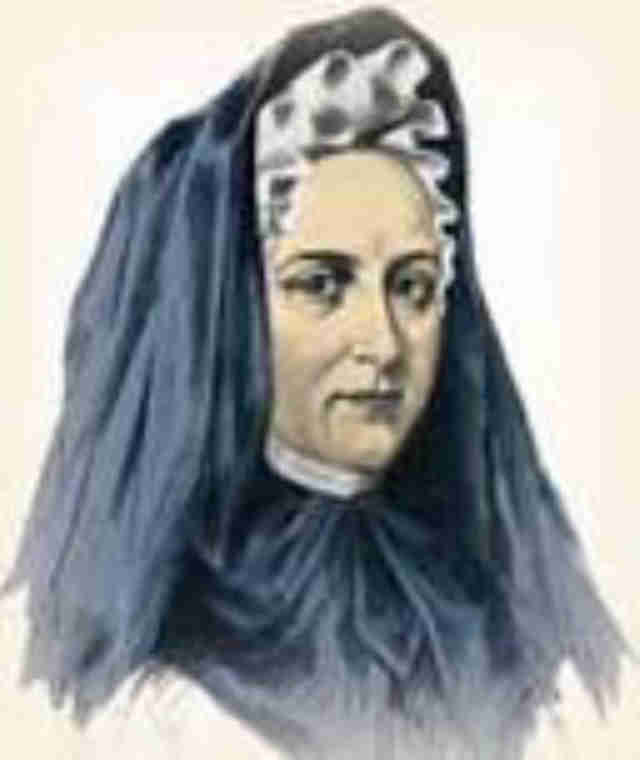
Susannah Wesley

Susannah Wesley If a passing stranger walking through the rural village of Epworth, England, on any given day between 1700 and 1720 had peered through the window of the home of the rector of the local Anglican church, he might have caught sight of something quite strange. Depending on the time of day, this observer might have seen a woman sitting in a chair with her kitchen apron pulled up over her head while ten children read, studied, or played all around her. Two of those ten children would have been little boys — John and Charles — who would grow up to shape the course of Christian history and thus change the world. The woman under the apron would have been Susanna Wesley, who assumed this odd posture for two hours almost every day. In a moment you will understand why. Susanna understood the dynamics of large families. Born the twenty-fifth of twenty-five children in 1669, Susanna Annesley grew up the daughter of a prominent, highly educated minister in cosmopolitan London. She had little formal education, but growing up in an academic household with so many older siblings left her well-read and well-rounded intellectually. She met Samuel Wesley, an aspiring Anglican minister, and married him in 1688, when she was nineteen years old. Susanna’s remaining fifty-three years were far from easy ones. They were characterized by loss, hardship, and struggle. Yet she became a woman of immense legacy, largely through the dual virtues of organization and prayer. Susanna delivered nineteen children, but nine — including two sets of twins — died in infancy. Another was accidentally smothered in the night by a nurse as Susanna recovered from labor and delivery. Her husband, Samuel, did not succeed in his thirty-nine-year assignment as rector of the church at Epworth. An intellectual academic, he simply did not understand or identify with the rural villagers in his parish. Nor did they care for him. When he involved himself from the pulpit in a highly divisive political matter inflaming the entire nation in that era, he earned the hatred of a vast segment of the populace. On two occasions the Wesleys’ parsonage burned down, most likely because of arson on the part of Epworth’s embittered parishioners. Susanna and the children were seldom spared harassment and insults. Samuel was not good with money, and he once spent several months in debtors’ prison. The parsonage came with a small farm, but Samuel was uninterested in and ill-suited for farm work, so this too was left for Susanna to manage. This was in addition to the huge task of homeschooling all of the children, with their varying ages and gifts. For decades, Samuel expended all of his energies and most of the family’s meager wealth working on an exegetical treatise on the book of Job. The sad irony is that while he was away for long periods of time studying and writing about Job’s intense sufferings, his living, breathing wife was enduring real pain and hardship, largely on her own. Susanna’s household organizational skills are the stuff of legend. She knew from personal experience that quality one-on-one time with a parent is hard to come by in a family with many children, yet powerfully important. So she set a rotating schedule through which each of her children spent an hour with her alone before bedtime on a designated night each week. What is more, she somehow found a way to manage the household and give her large brood of children a world-class education that included both classical and biblical learning. Her girls got the same rigorous education as did her boys, something virtually unheard of in that day. Traditionally, girls of that place and time were taught “feminine” skills such as needlework and music before undertaking the most basic education, such as learning to read. Susanna firmly believed this was wrong-headed. Her girls were taught the same curriculum as her boys. Among the “bylaws” by which she ran her home school was this: “8. That no girl be taught to work till she can read very well; and then that she be kept to her work with the same application, and for the same time, that she was held to in reading. This rule also is much to be observed; for the putting of children to learn sewing before they can read perfectly, is the very reason why so few women can read fit to be heard, and never to be well understood.”1 School hours were from 9:00 a.m. to noon and then 2:00 p.m. to 5:00 p.m., six days a week. All but the smallest children completed their assigned chores promptly before the start of the school day. As in many one-room schoolhouses in generations past, older children helped teach the younger. No Excuse for Not Praying! Susanna took her relationship to God as seriously as she did her duties as a wife and mother. Early in her life, she vowed that she would never spend more time in leisure entertainment than she did in prayer and Bible study. Even amid the most complex and busy years of her life as a mother, she still scheduled two hours each day for fellowship with God and time in His Word, and she adhered to that schedule faithfully. The challenge was finding a place of privacy in a house filled to overflowing with children. Mother Wesley’s solution to this was to bring her Bible to her favorite chair and throw her long apron up over her head, forming a sort of tent. This became something akin to the “tent of meeting,” the tabernacle in the days of Moses in the Old Testament. Every person in the household, from the smallest toddler to the oldest domestic helpers, knew well to respect this signal. When Susanna was under the apron, she was with God and was not to be disturbed except in the case of the direst emergency. There in the privacy of her little tent, she interceded for her husband and children and plumbed the deep mysteries of God in the Scriptures. This holy discipline equipped her with a thorough and profound knowledge of the Bible. Prayer Leads to Teaching When husband Samuel was away, as was often the case, a substitute minister brought the Sunday morning sermon at the church. Susanna found these messages uninspiring and lacking in spiritual meat. She had a good-sized congregation of her own at home, so she began teaching them the Bible in her kitchen on Sunday afternoons. Soon neighbors began asking if they could attend. Word circulated and others from the area began asking permission to attend as well. So thorough was Susanna’s knowledge of the Bible, and so gifted was she at communicating its truths, that on any given Sunday after church, Susanna would have as many as two hundred people in attendance at her informal family Bible study, which started in her home but soon moved to a larger venue. Susanna passed away in 1742 at the age of seventy-three, living long enough to see her sons John and Charles become world-renowned leaders of the global Christian movement. This is her legacy, forged in large part in those diligent hours of intercession under that makeshift apron tent. The Lasting Legacy of Prayer John Wesley is estimated to have preached to nearly a million people in his long, fruitful life. His powerful, evangelistic services were frequently held in the open air to accommodate audiences in the tens of thousands. Traveling on horseback, he regularly preached three or more times a day, often beginning before daybreak. Even at the age of seventy he preached, without the assistance of modern amplification, to an estimated throng of thirty-two thousand people. It is hard to overstate John Wesley’s theological impact. He remains the dominant theological influence on Methodists and Methodist-heritage groups the world over, including the United Methodist Church, the Methodist Church of Great Britain, and the African Methodist Episcopal Church, all of which played a pivotal role in the abolitionist movement of the nineteenth century. Wesleyan theology also formed the foundation for the holiness movement in the United States, which includes denominations like the Wesleyan Church, the Free Methodist Church, the Church of the Nazarene, the Christian and Missionary Alliance, the Church of God (Anderson, Indiana), and other groups which compose the colorful mosaic of Pentecostalism and the charismatic movement in North America. As prolific a writer as he was busy as a preacher, John Wesley has been called the Father of the Religious Paperback. His published sermons, tracts, pamphlets, and booklets number roughly five thousand items. In addition to theology, Wesley wrote about music, marriage, medicine, science, abolitionism, and current events. Although John married, he and his wife, Mary, had no children. Because of his giving nature toward the poor, the oppressed, and the unevangelized, he left little of material wealth behind when he died in 1791 at the age of eighty-seven. One biographer said John Wesley “was carried to his grave by six poor men ‘leaving behind him nothing but a good library of books, a well-worn clergyman’s gown… and — the Methodist Church.’”2 The same writer observed that John’s impact was so profound that he in effect “supplied a new starting-point to modern religious history.”3 John’s younger brother Charles was very much a partner in and vital contributor to these accomplishments. A brilliant musician and lyricist, he wrote more than 6,600 hymns, many of which are still in hymnals the world over today. Charles and his wife, Sarah, had three children who survived infancy, including two boys, Samuel and Charles Jr., who were musical prodigies. Charles Jr. grew up to serve as the personal organist of the English royal family. His brother, Samuel Sebastian Wesley, became one of the most accomplished British composers of the nineteenth century. A contemporary of Mozart, Samuel is sometimes called “The English Mozart.”4 John and Charles Wesley were passionate lovers of God and powerful persuaders of people. As a result, the brothers were viewed by many of their contemporaries as religious fanatics. History has been far kinder in its verdict. It views them as world changers. And every one of the changes they wrought is part of the legacy of Susanna Wesley. In his 1864 biography, John Kirk wrote of Susanna, “Her name has been everywhere received with respect; and by a large and influential Christian Community it has been cherished with strongest affection. Her success in the education of her children has been the theme of universal admiration; and no one has yet ventured to hazard even a conjecture as to how much the cause of religion and the well-being of the human race are indebted to her steady piety and extraordinary talents.”5 We hope that as you read [the story of] Susanna Wesley, you’ll grab on to the power of them. For Susanna Wesley, there was no amount of distraction that could keep her from prayer and the Bible. That kind of life, deeply rooted, produced great fruit, as evidenced not only by the people who came to hear her teach but also by the children she influenced. The great truth in her story is how prayer does not occupy the stage of activity. Its power is in the quiet trust of gentle souls who are willing to pull away from the everyday to commune with God. John Wesley, The Heart of Wesley’s Journal, ed. Ed Hughes and Hugh Price (Peabody, MA: Hendrickson, 2008), 127. William Henry Fitchett, Wesley and His Century: A Study in Spiritual Forces (London: Smith, Elder & Co., 1906), 1. Ibid. Peter Matthews, Who’s Buried Where in London (London: 
Bloomsbury, 2017), 37. John Kirk, The Mother of the Wesleys: A Biography (Ambler, MA: 
Tresidder, 1864), vii. Excerpted with permission from Only One Life by Jackie Green and Lauren Green McAfee, copyright Jackie Green, Lauren Green McAfee, Bill High.

But Have You Prayed

What hasn’t yet changed in your life because you haven’t started praying for it? Prayerlessness, of course, comes in varieties. Some almost never pray, proving that prayer is nothing more than a formality, a greeting card to God when they have time. Others only pray when they have some desperate and immediate need, treating prayer like a crisis-response line (and largely neglecting prayer otherwise). Others may pray regularly, but their prayers slowly devolve into repeated phrases that taste stale, impersonal, removed from real life. Even the best among us can sometimes swing between treasuring prayer when we think we really need it and skipping prayer when life seems to be going well. Prayer, however, is not a last resort, but a first line of defense, because God is not a last resort, but the one to whom we look first. Prayer is powerful because God is the most powerful agent of change in any of our lives. Oh, what peace we often forfeit Oh, what needless pain we bear All because we do not carry Everything to God in prayer. Jesus confronted the threat of prayerlessness in his disciples, and in a way that should land with gravity and hope in the midst of our own trials and burdens. Desperate Situation In Mark 9, a man had come, bearing his self-destructive, demon-oppressed son, searching desperately for Jesus — for healing. “Teacher, I brought my son to you,” the father says, “for he has a spirit that makes him mute. And whenever it seizes him, it throws him down, and he foams and grinds his teeth and becomes rigid” (Mark 9:17–18). Parents of young children can at least begin to imagine how excruciating and debilitating this suffering was. Is there anything this father would not do to see his son whole again? “What hasn’t yet changed in your life because you haven’t yet prayed for it?” By the time Jesus arrives on the scene, his disciples have been attempting to drive out the demon. But they were not able (Mark 9:18), even though they had been given authority over unclean spirits (Mark 6:7). And as they struggled over the helpless boy, the religious leaders emerge with crowds to argue with them (Mark 9:14), surely making the situation all the more stressful and tragic. Nothing but Prayer Jesus asks his father, “How long has this been happening to him?” “From childhood” (Mark 9:21). Not just for several weeks or months, but over years, potentially decades. “And it has often cast him into fire and into water, to destroy him. But if you can do anything, have compassion on us and help us” (Mark 9:22). Jesus, of course, can do anything, literally anything. “‘If you can’! All things are possible for one who believes,” he replies (Mark 9:23). “I believe,” the father famously responds, “help my unbelief!” (Mark 9:24). So, Jesus heals the boy: “You mute and deaf spirit, I command you, come out of him and never enter him again” (Mark 9:25). The same spirit that evaded and overpowered the disciples surrenders immediately (and violently) (Mark 9:26), and at just the sound of his voice. When he is alone with his disciples, who are feeling confused and defeated by their failures, they ask him, “Why could we not cast it out?” (Mark 9:28). A penetrating and ageless question. “This kind,” Jesus says, “cannot be driven out by anything but prayer” (Mark 9:29). Maybe they didn’t pray at all, or maybe they prayed very little, or maybe they prayed formal, empty, heartless prayers, but either way Jesus says prayer — actually asking God — is what was missing. He could have said, This kind cannot be driven out by anyone but me, but instead he said, “This kind cannot be driven out by anything but prayer.” And as surprised as we might be that the disciples didn’t think to pray (or pray more), how often might Jesus say the same to us? What Kept Them from Praying? So, why didn’t the disciples pray? Why didn’t they ask God to help, to intervene, to do what was beyond the disciples’ own ability? We don’t know for sure, but the scene gives us a surprising number of potential reasons, many which might feel surprisingly relevant (and sobering) for own our prayer lives. DISTRACTED BY NOISE “How often have we given up praying because too many days or months or years have passed?” First, a great crowd had gathered to watch (and interfere with) their ministry (Mark 9:14). They weren’t doing spiritual warfare in the privacy of a home. The painful scene had become a stage, and the more the disciples failed and the longer the boy suffered, the more people came to watch. How many of us, with so many curious and suspicious eyes trained on us, would be courageous enough to stop and look toward heaven and pray? Or, how often does the sound of the crowds around us (constantly clawing at our attention through our devices), keep us from hearing Jesus say, “Ask, and it will be given to you; seek, and you will find; knock, and it will be opened to you” (Matthew 7:7)? Distractions, which come in many kinds and ways, often keep us from praying. DOUBTED BY MAN Not all had come simply to watch, though. Religious experts joined the crowd, arguing with the disciples and saying it couldn’t be done (Mark 9:14, 16). The spiritual enemy was obvious, but they had human enemies, as well — doubters, detractors, scoffers. They’re not waiting, like the rest of the crowd, for the disciples to heal the boy; they want nothing more than for followers of Jesus to fail (Mark 11:18). We may not face the same immediate opposition (though many Christians do), but wherever we are in the world, many want our prayers to fail — to prove that Jesus was just a man, the Bible just a book, and our prayers just wishful thinking. We know that faithfulness to Christ will cost us favor and approval from the world, and so the fear of man often keeps us from praying. DEFIED BY SATAN But the scribes were nothing compared with their unseen enemies. The disciples were dealing with an actual demon oppression — a real, destructive, spiritual enemy. A spiritual enemy strong enough to hurl the boy into fire and water, “to destroy him” (Mark 9:22). Maybe worst of all, he made the boy mute (Mark 9:17), unable to cry for help or even explain what was happening to him. What would you do while you watched him being torn apart? Even if we are not experiencing this kind of manifest demonic opposition, we do wrestle, every day, “against the spiritual forces of evil” (Ephesians 6:12). We pray into a downpour of fiery hostility. How often does Satan keep us from praying, doing all he can to keep us from our knees? DISCOURAGED BY INEFFECTIVENESS Though the disciples tried, really tried, to heal the boy, nothing changed. We don’t know what they tried, but we know that they tried (Mark 9:18) and that they had tried everything they knew to do (Mark 9:28). When Jesus says, “This kind cannot be driven out by anything but prayer,” he hints at all their failed attempts. And the boy still writhed and foamed and groaned on the ground — like he had for so long. A sense of futility surely began to set in. They had healed many before, but this spirit wouldn’t surrender. Maybe no one can heal this boy. How often have we given up praying because the outcome seems decided, because too many days or months or years have passed? Discouragement over unanswered prayer often keeps us from praying. Jesus Really Prayed Many barriers keep us from praying, but nothing kept Jesus from asking his Father, because Jesus knew that nothing was more vital and powerful than prayer. And he knew nothing was more vital and powerful than prayer because no one was more vital and powerful than his Father. “Some things will not change unless we humble ourselves, kneel, and plead with our Father in heaven.” When Jesus says, “This kind cannot be driven out by anything but prayer,” he knew so from personal and persistent experience. He was tempted in every way as we are, but without ever indulging in prayerlessness. We know how dependent he was on God — rising early in the morning (Mark 1:35), getting alone with his Father (Mark 6:46), and pouring out his heart (Mark 14:35). And we know he did this regularly (Luke 5:16). He was not distracted by the crowds or undone by the fear of man. He was not intimidated by demonic warfare or discouraged by God’s timing. He knew the soul-sustaining, demon-defeating, mountain-moving power of prayer — and he wanted us to know it too. Some oppression will not lift without prayer. Some wounds will not heal without prayer. Some trials will not end without prayer. Some sins will not die without prayer. Some relationships will not mend without prayer. Some things will not change, things we desperately want to change, unless we consistently and persistently humble ourselves, kneel, and plead with our Father in heaven. The all-wise, all-loving, all-powerful God has chosen to do much in the world through our prayers, because prayer is part of his precious relationship with his children and exalts him as the listening and answering God. So, what hasn’t yet changed in your life because you haven’t yet prayed?

Feedback
Suggestionsuggestion box
x