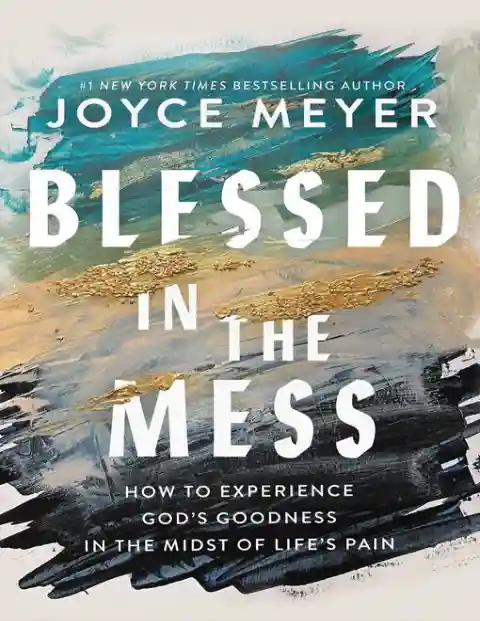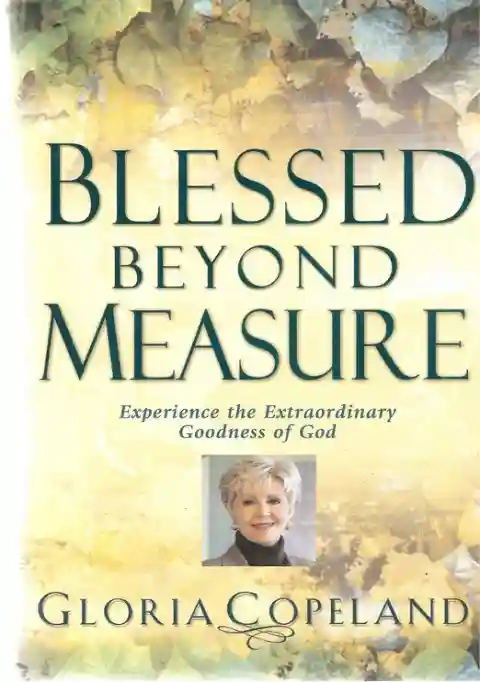


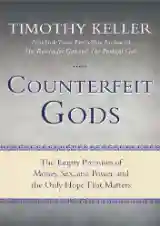
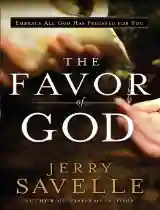
About the Book
"Blessed Beyond Measure" by Gloria Copeland explores the concept of living a life filled with God's blessings and favor. Through personal anecdotes and biblical teachings, Copeland provides insights on how to align one's thoughts and actions with God's promises for abundance and prosperity. The book encourages readers to trust in God's plan and embrace a mindset of gratitude and faith to unlock the fullness of blessings in their lives.
A.W. Tozer (Aiden Wilson Tozer)
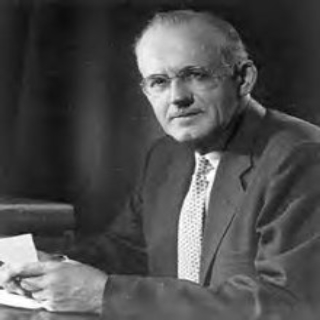 Early life
Tozer hailed from a tiny farming community in western La Jose, Pennsylvania. He was converted to Christianity as a teenager in Akron, Ohio: While on his way home from work at a tire company, he overheard a street preacher say, "If you don't know how to be saved ... just call on God, saying, 'Lord, be merciful to me a sinner.'" Upon returning home, he climbed into the attic and heeded the preacher's advice.
Pastor
In 1919, five years after his conversion and without formal education in Christian theology, Tozer accepted an offer to serve as pastor of his first church. That began 44 years of ministry associated with the Christian and Missionary Alliance (C&MA), a Protestant Evangelical denomination, 33 of them serving as a pastor in several different congregations (his first, a small storefront church in Nutter Fort, West Virginia). Later, he served thirty years (1928 to 1959) as the pastor of Southside Alliance Church in Chicago; the final years of his life he spent as pastor of Avenue Road Church in Toronto, Ontario, Canada. Observing contemporary Christian living, Tozer felt that the church was on a dangerous course toward compromising with "worldly" concerns.
Born into poverty, Tozer was self-educated and taught himself what he missed in high school and university.
Author
Tozer began writing in 1931 for the denominational magazine of the Christian and Missionary Alliance, Alliance Weekly (now Alliance Life), which became the platform from which his writing career emerged. He later wrote the monthly column “There’s Truth in It” (1936–37) and “A Word in Season” (1944–46). In May 1950, he became the editor of the Alliance Weekly, a position he filled until his death in 1963.
At the urging of David W. Fant, publications secretary of the C&MA, Tozer wrote biographies of A. B. Simpson (1943) and Robert A. Jaffray (1947). It was the publication of his third book, The Pursuit of God (1948), that made Tozer a household name among evangelicals. In addition to the 12 books he published in his lifetime, more than 40 other books have been compiled from his magazine features, editorials, and transcribed sermons.
During his lifetime, Tozer’s works were published by Christian Publications, Inc., the denominational press operated by the C&MA. The publishing house declared bankruptcy in 2006 and was purchased by WingSpread Publishers of Camp Hill, Pennsylvania.[8] In November 2013, Moody Publishers acquired Wingspread from parent company Zur Ltd., a transaction that included more than 60 Tozer books and pamphlets. Some of Tozer’s works are now in the public domain and have been issued by multiple publishers.
Personal life
Tozer had seven children, six sons and a daughter. Living a simple and non-materialistic lifestyle, he and his wife, Ada Cecelia Pfautz, never owned a car, preferring bus and train travel. Even after becoming a well-known Christian author, Tozer signed away much of his royalties to those who were in need.
Prayer was of vital personal importance for Tozer. "His preaching as well as his writings were but extensions of his prayer life," comments his biographer, James L. Snyder, in the book In Pursuit of God: The Life Of A.W. Tozer. "He had the ability to make his listeners face themselves in the light of what God was saying to them," writes Snyder.
Death and legacy
Tozer died on May 13, 1963, after suffering a heart attack. He was buried in Chicago, and later the family had his remains reinterred at Ellet Cemetery, Akron, Ohio. A simple marker reads: A. W. Tozer—A Man of God. The Alliance Weekly ran a memorial issue with numerous tributes and excerpts. The same issue also featured “God’s Greatest Gift to Man," a transcription of his final sermon. A few months prior to his death, Tozer had submitted the manuscript to The Christian Book of Mystical Verse, which was released in 1964 as his final book. His official publisher, Christian Publications, released many titles after his death, based on his magazine articles and sermon transcriptions. These continue in print with Moody Publishers. Several other publishers have released his public domain works.
In 2000, The Pursuit of God was named to Christianity Today’s list of 100 “Books of the Century.” In 2006, Knowledge of the Holy was named in “The Top 50 Books That Have Shaped Evangelicals.” Contemporary Christian music artist Lauren Barlow of BarlowGirl later published a compilation of stories told by 59 artists, writers, and leaders about A.W. Tozer’s personal inspiration.
Early life
Tozer hailed from a tiny farming community in western La Jose, Pennsylvania. He was converted to Christianity as a teenager in Akron, Ohio: While on his way home from work at a tire company, he overheard a street preacher say, "If you don't know how to be saved ... just call on God, saying, 'Lord, be merciful to me a sinner.'" Upon returning home, he climbed into the attic and heeded the preacher's advice.
Pastor
In 1919, five years after his conversion and without formal education in Christian theology, Tozer accepted an offer to serve as pastor of his first church. That began 44 years of ministry associated with the Christian and Missionary Alliance (C&MA), a Protestant Evangelical denomination, 33 of them serving as a pastor in several different congregations (his first, a small storefront church in Nutter Fort, West Virginia). Later, he served thirty years (1928 to 1959) as the pastor of Southside Alliance Church in Chicago; the final years of his life he spent as pastor of Avenue Road Church in Toronto, Ontario, Canada. Observing contemporary Christian living, Tozer felt that the church was on a dangerous course toward compromising with "worldly" concerns.
Born into poverty, Tozer was self-educated and taught himself what he missed in high school and university.
Author
Tozer began writing in 1931 for the denominational magazine of the Christian and Missionary Alliance, Alliance Weekly (now Alliance Life), which became the platform from which his writing career emerged. He later wrote the monthly column “There’s Truth in It” (1936–37) and “A Word in Season” (1944–46). In May 1950, he became the editor of the Alliance Weekly, a position he filled until his death in 1963.
At the urging of David W. Fant, publications secretary of the C&MA, Tozer wrote biographies of A. B. Simpson (1943) and Robert A. Jaffray (1947). It was the publication of his third book, The Pursuit of God (1948), that made Tozer a household name among evangelicals. In addition to the 12 books he published in his lifetime, more than 40 other books have been compiled from his magazine features, editorials, and transcribed sermons.
During his lifetime, Tozer’s works were published by Christian Publications, Inc., the denominational press operated by the C&MA. The publishing house declared bankruptcy in 2006 and was purchased by WingSpread Publishers of Camp Hill, Pennsylvania.[8] In November 2013, Moody Publishers acquired Wingspread from parent company Zur Ltd., a transaction that included more than 60 Tozer books and pamphlets. Some of Tozer’s works are now in the public domain and have been issued by multiple publishers.
Personal life
Tozer had seven children, six sons and a daughter. Living a simple and non-materialistic lifestyle, he and his wife, Ada Cecelia Pfautz, never owned a car, preferring bus and train travel. Even after becoming a well-known Christian author, Tozer signed away much of his royalties to those who were in need.
Prayer was of vital personal importance for Tozer. "His preaching as well as his writings were but extensions of his prayer life," comments his biographer, James L. Snyder, in the book In Pursuit of God: The Life Of A.W. Tozer. "He had the ability to make his listeners face themselves in the light of what God was saying to them," writes Snyder.
Death and legacy
Tozer died on May 13, 1963, after suffering a heart attack. He was buried in Chicago, and later the family had his remains reinterred at Ellet Cemetery, Akron, Ohio. A simple marker reads: A. W. Tozer—A Man of God. The Alliance Weekly ran a memorial issue with numerous tributes and excerpts. The same issue also featured “God’s Greatest Gift to Man," a transcription of his final sermon. A few months prior to his death, Tozer had submitted the manuscript to The Christian Book of Mystical Verse, which was released in 1964 as his final book. His official publisher, Christian Publications, released many titles after his death, based on his magazine articles and sermon transcriptions. These continue in print with Moody Publishers. Several other publishers have released his public domain works.
In 2000, The Pursuit of God was named to Christianity Today’s list of 100 “Books of the Century.” In 2006, Knowledge of the Holy was named in “The Top 50 Books That Have Shaped Evangelicals.” Contemporary Christian music artist Lauren Barlow of BarlowGirl later published a compilation of stories told by 59 artists, writers, and leaders about A.W. Tozer’s personal inspiration.
Can I Follow My New Heart
“Why shouldn’t I follow my heart? If I am a Christian — if God has caused me to be ‘born again’ and has given me ‘a new heart’ — isn’t my new heart trustworthy?” Readers have raised some version of this objection when I’ve exhorted Christians, “Don’t follow your heart.” And the objection is warranted. After all, the Bible clearly teaches that in this era of the new covenant, God writes his law on our new hearts so that we willingly follow him (Jeremiah 31:31–34; Hebrews 8:8–12). This would seem to not merely imply, but even mandate, that Christians should follow their hearts. But the Bible’s description of what a regenerated person actually experiences in this age reveals a more spiritually and psychologically complex picture — one that I believe gives Christians biblical warrant to cultivate a healthy suspicion of what they recognize as their hearts’ desires. So, while we may, and hopefully will, reach a point in our lives as Christians where it’s right, at times, to follow our hearts, allow me to make a brief case that the phrase actually undermines Christians as they labor and struggle to discern their various desires, and that Scripture itself discourages us from thinking this way. War Within How might we summarize the complex picture the Bible paints of the born-again experience in this already-not-yet age? The New Testament explains that when the Spirit brings us from spiritual death to spiritual life (John 5:24; Romans 6:13), we enter a strange new reality. Our regenerated new self emerges, “created after the likeness of God in true righteousness and holiness.” And yet our “old self, which belongs to [our] former manner of life,” is still “corrupt through deceitful desires” (Ephesians 4:22–24). We are “born of the Spirit” (John 3:6) while still inhabiting the “flesh,” our “body of death” in which “nothing good dwells” (Romans 7:18, 24). “The hearts of regenerated people are not yet fully free from the influence of their flesh.” When Christians are born again, we enter into a lifelong internal war where “the desires of the flesh are against the Spirit, and the desires of the Spirit are against the flesh, for these are opposed to each other, to keep you from doing the things you want to do” (Galatians 5:17). Stepping back and viewing these desires objectively, “the works of the flesh” that result from fleshly desires “are evident,” and so is “the fruit of the Spirit” (Galatians 5:19–23). But Christians often struggle — on the ground, in real time — to discern the desires of the Spirit from the desires of the flesh. This is why the New Testament Epistles are full of exhortations and corrections addressed to Christians. James tells his readers (and us at relevant times) that their “passions are at war within” them (James 4:1). Peter warns his readers (and us), “Do not be conformed to the passions of your former ignorance” (1 Peter 1:14). Paul describes this internal experience of warring passions as “wretched” (Romans 7:24). And he admonishes the Colossian Christians (and us) with strong language: “Put to death therefore what is earthly in you: sexual immorality, impurity, passion, evil desire, and covetousness, which is idolatry” (Colossians 3:5). Why did these apostles feel the need to speak this way to regenerated people? Because the hearts of these regenerated people were not yet fully free from the influence of their flesh, their old selves. Follow the Spirit Much of the Christian life is a war to die to remaining sin and live by the Spirit. John Piper calls it “the main battle of the Christian life”: The main battle is to see our hearts renovated, recalibrated, so that we don’t want to do those sinful external behaviors, and don’t just need willpower not to do them, but the root has been severed and we have different desires. In other words, the goal of change — of sanctification, of the Christian life — is to be so changed that we can and ought to follow our desires. That’s exactly right. And when we have been so changed through progressive sanctification, so renovated that our hearts (and therefore our desires, dispositions, motives, emotions, and passions) are, as Piper says, “calibrated to Christ,” then we should follow our hearts. However, at any given time within our churches, small groups, friendships, and families, different Christians are at different places for different reasons in this heart-renovation process. Some hearts are more sanctified, and therefore more reliable to follow, than others. I think that’s why we don’t hear the apostles generally counsel us to follow our hearts in our fight of faith against remaining sin, but rather to follow the Holy Spirit. Let Not Sin Reign Paul is the one who delves most deeply into this issue: “I say, walk by the Spirit, and you will not gratify the desires of the flesh” (Galatians 5:16). He devotes most of Romans 6–8 to explaining the nature of the strange new-self/old-self, Spirit/flesh reality of the Christian life, including Romans 8:13: “If you live according to the flesh you will die, but if by the Spirit you put to death the deeds of the body, you will live.” Paul lays the theological foundation of our understanding by explaining “that our old self was crucified with [Christ] in order that [our] body of sin might be brought to nothing, so that we would no longer be enslaved to sin” (Romans 6:6). Our new selves were “raised with Christ” (Colossians 3:1) so that “we too might walk in newness of life” (Romans 6:4). Therefore, we “must consider [ourselves] dead to sin and alive to God in Christ Jesus” (Romans 6:11). In light of this, Paul admonishes us, Let not sin therefore reign in your mortal body, to make you obey its passions. Do not present your members to sin as instruments for unrighteousness, but present yourselves to God as those who have been brought from death to life, and your members to God as instruments for righteousness. For sin will have no dominion over you, since you are not under law but under grace. (Romans 6:12–14) And how do we do this? By learning to “set [our] minds on the things of the Spirit” and not on “the things of the flesh” (Romans 8:5) — by learning to follow the Spirit, to “walk by the Spirit” (Galatians 5:16), because “all who are led by the Spirit of God are sons of God” (Romans 8:14). Follow the Treasure One of the reasons I find “follow your heart” generally unhelpful as counsel for Christians is that many of us, from the time we were young, have absorbed this as a pop-cultural creed that says if we just look deep into our hearts, we’ll be shown our deepest truth, and discover the way we should go. Given the significant amount our sinful flesh still influences our hearts, it’s not hard to see how this phrase can easily increase confusion when applying it to the Christian life. “Some hearts are more sanctified, and therefore more reliable to follow, than others.” I also don’t believe the Bible encourages that idea since, when it comes to engaging our hearts, far and away what we hear in it is counsel to “direct our hearts,” not to follow them. We see that clearly in Paul’s instructions above. God made our hearts to follow, not to lead. And what do our hearts follow? Jesus gives the clearest answer: “Where your treasure is, there your heart will be also” (Matthew 6:21). In time, our heart always pursues (follows) our treasure. When we are born again, the eyes of our hearts are enlightened (Ephesians 1:18) and, through faith, we begin to see the Treasure: God himself in Christ. And since our heart learns to pursue the object that stirs its greatest affections, its treasure, I suggest we not counsel each other to “follow your heart,” but instead to “follow the Treasure.” Looking into our hearts for direction can be spiritually hazardous. It is usually more helpful for us to direct our hearts to what is most valuable and delightful. Which is why I believe David counsels us, “Delight yourself in the Lord, and he will give you the desires of your heart” (Psalm 37:4). Article by Jon Bloom