
GIP Library icon

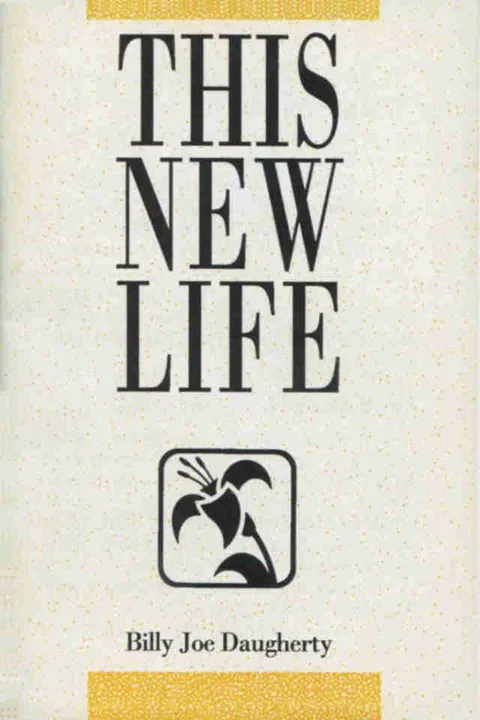
This New Life This New Life

This New Life Order Printed Copy

  • Author: Billy Joe Daugherty
  • Size: 1.29MB | 83 pages
  • |
Continue with
Google Twitter
LOG IN TO REVIEW

Exceptional piece. Highly recommended!

- naa ayorkor (a day ago)

Inspiring; I had one book from years ago and I mailed it out to my brother who began going to church recently. I sent for it in print to reread after not reading for many years.

- angela graves (4 months ago)

Inspiring, I was much impacted.

- angela graves (4 months ago)

No comment! Reading in progess...

- ngendahayo alphonse (10 months ago)

No comment! Reading in progess...

- ngendahayo alphonse (10 months ago)

Exceptional piece. Highly recommended!

- vvaleche _ (2 years ago)

About the Book


"This New Life" is a Christian book that focuses on the importance of being born again and experiencing new life through faith in Jesus Christ. It offers practical guidance on how to live a transformed life of purpose, joy, and fulfillment by following biblical principles and relying on God's grace. The author, Billy Joe Daugherty, emphasizes the power of God to bring about meaningful change and renewal in the lives of believers.

Fanny Crosby

Fanny Crosby "Oh, what a happy soul I am, / although I cannot see! / I am resolved that in this world / Contented I will be." Francis Jane Crosby wrote more than 9,000 hymns, some of which are among the most popular in every Christian denomination. She wrote so many that she was forced to use pen names lest the hymnals be filled with her name above all others. And, for most people, the most remarkable thing about her was that she had done so in spite of her blindness. "I think it is a great pity that the Master did not give you sight when he showered so many other gifts upon you," remarked one well-meaning preacher. Fanny Crosby responded at once, as she had heard such comments before. "Do you know that if at birth I had been able to make one petition, it would have been that I was born blind?" said the poet, who had been able to see only for her first six weeks of life. "Because when I get to heaven, the first face that shall ever gladden my sight will be that of my Savior." Blinded by a quack Born in Putnam County, New York, Crosby became ill within two months. Unfortunately, the family doctor was away, and another man—pretending to be a certified doctor—treated her by prescribing hot mustard poultices to be applied to her eyes. Her illness eventually relented, but the treatment left her blind. When the doctor was revealed to be a quack, he disappeared. A few months later, Crosby's father died. Her mother was forced to find work as a maid to support the family, and Fanny was mostly raised by her Christian grandmother. Her love of poetry began early—her first verse, written at age 8, echoed her lifelong refusal to feel sorry for herself: Oh, what a happy soul I am, although I cannot see! I am resolved that in this world Contented I will be. How many blessings I enjoy That other people don't, To weep and sigh because I'm blind I cannot, and I won't! While she enjoyed her poetry, she zealously memorized the Bible. Memorizing five chapters a week, even as a child she could recite the Pentateuch, the Gospels, Proverbs, the Song of Solomon, and many psalms chapter and verse. Her mother's hard work paid off. Shortly before her fifteenth birthday, Crosby was sent to the recently founded New York Institute for the Blind, which would be her home for 23 years: 12 as a student, 11 as a teacher. She initially indulged in her own poetry and was called upon to pen verses for various occasions. In time the principal asked her to avoid such "distractions" in favor of her general instruction. "We have no right to be vain in the presence of the Owner and Creator of all things," he said. It was the work of a traveling phrenologist (one who studies the shape and irregularities of the skull for insights into character and mental capacity) that changed the school's mind and again ignited her passion. Though his study is now the ridicule of science, the phrenologist's words were to prove prophetic: "Here is a poetess. Give her every possible encouragement. Read the best books to her and teach her the finest that is in poetry. You will hear from this young lady some day." Poetry for presidents It didn't take long. By age 23 Crosby was addressing Congress and making friendships with presidents. In fact, she knew all the chief executives of her lifetime, especially Grover Cleveland, who served as secretary for the Institute for the Blind before his election. Another member of the institute, former pupil Alexander van Alstine, married Crosby in 1858. Considered one of New York's best organists, he wrote the music to many of Crosby's hymns. Crosby herself put music to only a few of hers, though she played harp, piano, guitar, and other instruments. More often, musicians came to her for lyrics. For example, one day musician William Doane dropped by her home for a surprise visit, begging her to put some words to a tune he had recently written and which he was to perform at an upcoming Sunday School convention. The only problem was that his train to the convention was leaving in 35 minutes. He sat at the piano and played the tune. "Your music says, 'Safe in the Arms of Jesus,'" Crosby said, scribbling out the hymn's words immediately. "Read it on the train and hurry. You don't want to be late!" The hymn became one of Crosby's most famous. Though she was under contract to submit three hymns a week to her publisher and often wrote six or seven a day (for a dollar or two each), many became incredibly popular. When Dwight Moody and Ira Sankey began to use them in their crusades, they received even more attention. Among them are "Blessed Assurance," "All the Way My Savior Leads Me," "To God Be the Glory," "Pass Me Not, O Gentle Savior," "Safe in the Arms of Jesus," "Rescue the Perishing," and "Jesus Keep Me Near the Cross." She could write very complex hymns and compose music with a more classical structure (she could even improvise it), but she preferred to write simple, sentimental verses that could be used for evangelism. She continued to write her poetry up to her death, a month shy of her ninety-fifth birthday. "You will reach the river brink, some sweet day, bye and bye," was her last stanza.

God Wrote a Book

We actually have the words of God. This is almost too good to be true. And yet how often are we so accustomed to this reality — one of the greatest wonders in all the universe — that it barely moves us to handle the Bible with care (and awe), or at least to access his words with the frequency they deserve? Familiarity can breed contempt, or at least neglect. While scarcity drives demand, abundance can lead to apathy. For many of us, we have multiple Bibles on our shelves, in multiple translations. We have copies on our computers and phones. We have access to the very words of God like never before — yet how often do we appreciate, and marvel at, the wonder of what we have? Wonder of Having One of the greatest facts in all of history is that God gave us a Book. He gave us a Book! He has spoken. He has revealed himself to us through prophets and apostles, and appointed that they write down his words and that they be preserved. We have his words! We can hear in our souls the very voice of God himself by his Spirit through his Book. “No word of God is a dead word.” Think of all God went to, and what patience, to make his self-revelation accessible to us here in the twenty-first century. Long ago, at many times, and in many ways, God spoke through the prophets (Hebrews 1:1). Then, in the fullness of time, he sent his own Son, his own self, in full humanity, as his revealed Word par excellence, in the person of Christ, represented to us by his authoritative, apostolic spokesmen in the new covenant. For centuries, God’s word was copied by hand, and preserved with the utmost diligence and care. Then, for the last 500 years of the printing press, God’s word has gone far and wide like never before. Men and women gave their lives, upsetting the apple carts of man-made religion, to translate the words of God into the heart language of their people. And now, in the digital revolution, access to God’s own words has exploded exponentially again, and yet — and yet — in such abundance, do we marvel at what we have? And do we, as individuals and as churches, make the most of what infinite riches we have in such access to the Scriptures? His Words, Our Great Reward The psalmists were in awe of what they had. In particular, Psalms 19 and 119 pay tribute to the wonder of having God’s words. For instance: The law of the Lord is perfect, reviving the soul; the testimony of the Lord is sure, making wise the simple; the precepts of the Lord are right, rejoicing the heart; the commandment of the Lord is pure, enlightening the eyes; the fear of the Lord is clean, enduring forever; the rules of the Lord are true, and righteous altogether. More to be desired are they than gold, even much fine gold; sweeter also than honey and drippings of the honeycomb. Moreover, by them is your servant warned; in keeping them there is great reward. (Psalm 19:7–11) “We come to his word, like holy hedonists, stalking joy.” God is honored when we approach his words as those that revive the soul and rejoice the heart, as those that are more to be desired than gold and sweeter than honey. The summary and culmination of Psalm 19’s unashamed tribute to God’s words is this: great reward. He means for us to experience his words as “my delight” (Psalm 1:2; 119:16, 24), as “the joy of my heart” (Psalm 119:111), as “the delight of my heart” (Jeremiah 15:16), as kindling for the fires of our joy. Not only has God spoken in this Book we call the Bible, but he is speaking. Writing about Psalm 95 in particular (and applicable to all the Scriptures), Hebrews says “the word of God is living and active, sharper than any two-edged sword, piercing to the division of soul and of spirit, of joints and of marrow, and discerning the thoughts and intentions of the heart” (Hebrews 4:12). No word of God is a dead word. Even Hebrews — the New Testament letter plainest on the old covenant being “obsolete” in its demands upon new-covenant Christians (Hebrews 8:13) — professes that old-covenant revelation, while no longer binding, is indeed “living and active.” “Is not my word like fire,” God declares through Jeremiah, “and like a hammer that breaks the rock in pieces?” (Jeremiah 23:29). From cover to cover, Genesis to Revelation, God has captured for his church his objective, “external word” (as Luther called it) which he speaks (present tense) to his people through the subjective, internal power of his Spirit dwelling in us. We hear God’s voice in his word by his Spirit. And so, Hebrews exhorts us, “See that you do not refuse him who is speaking” (Hebrews 12:25). Wonder of Handling So then, how will we who marvel at having God’s living and active words not also fall to the floor in amazement that he invites us — even more, he insists — that we handle his word. It is no private message to Timothy, but to the whole church reading over his shoulder, when Paul writes, Do your best to present yourself to God as one approved, a worker who has no need to be ashamed, rightly handling the word of truth. (2 Timothy 2:15) The charge lands first on Timothy, as Paul’s delegate in Ephesus, and then on pastors (both then and today) who formally and publicly “handle the word” for the feeding and forming of the church. But the summons to rightly handle the word of truth (both in the gospel word and in the written Scriptures) is a mantle for the whole church to gladly bear. In the midst of a world of destructive words, God calls his church to first receive (have) and then respond to (handle) his words. As human words of death fly around us from all sides — in the air, on the page, on our screens — he gives us his own life-giving words to steady our souls and the souls of others. As the world quarrels about words, “which does no good, but only ruins the hearers” (2 Timothy 2:14) and coughs up “irreverent babble” that leads “people into more and more ungodliness” and spreads like gangrene (2 Timothy 2:16–17), God gives us an oasis in the gift of his words (2 Timothy 2:15). We receive them for free, but that doesn’t mean we take them lightly or expend little energy to handle them well. Make Every Effort God, through Paul, says “do your best” — literally, be zealous, be eager, make every effort — “to present yourself to God as one approved.” We orient Godward first and foremost in our handling of his word, then only secondarily to others. Which will make us “a worker who has no need to be ashamed.” Being a worker requires work, labor, the exertion of effort, the expending of energy, the investment of time, the patience of lifelong learning. To do so without cutting corners (“unashamed”) or mishandling the task. And in particular, for building others up, not tearing others down. For showing others the feast, not showing ourselves to have been right. “God gives us his own life-giving words to steady our souls and the souls of others.” “Rightly handling” — guiding along a straight path — harkens to the vision Paul casts in 2 Corinthians of his own straightforwardness with God’s word. Paul was not coy about hard truths. He was not evasive. He was not a verbal gymnast, gyrating around humanly offensive divine oracles. Rather, he was frank, honest, candid, sincere. “We are not, like so many, peddlers of God’s word,” he declares, “but as men of sincerity, as commissioned by God, in the sight of God we speak in Christ” (2 Corinthians 2:17). He has more to say about such sincerity: We have renounced disgraceful, underhanded ways. We refuse to practice cunning or to tamper with God’s word, but by the open statement of the truth we would commend ourselves to everyone’s conscience in the sight of God. (2 Corinthians 4:2) Listening Like Hedonists But rightly handling God’s word doesn’t just mean we’re convinced of its truthfulness and handle it as such. Rightly handling doesn’t only include rigorous careful analysis and forthright unapologetic candor. Rightly handling includes the psalmists’ intense spiritual sensibilities. To see in and through God’s words his “great reward,” and knowing him to be a rewarder of those who seek him (Hebrews 11:6). In other words, we come to his word like holy hedonists, stalking joy. Worldly hedonists pursue the pleasures of sin; they don’t wait on them to arrive. And so do Christian Hedonists. We don’t wait around for holy pleasures. We don’t passively engage God himself through his own words. We stalk. We pursue. We read actively, and study, and meditate. When we are persuaded that God himself is indeed the greatest reward, is there any better avenue to pursue than his own words? At Desiring God, we don’t aim or pretend to be unique. However flippantly or earnestly others handle God’s words, we mean to receive them with the utter seriousness and joyful awe they deserve — he deserves. God wrote a Book. And gave it to us. Let’s give ourselves to this wonder, and marvel that we get to handle his words. Article by David Mathis

Feedback
Suggestionsuggestion box
x